David Gregory Roberts
Books by this author (1)
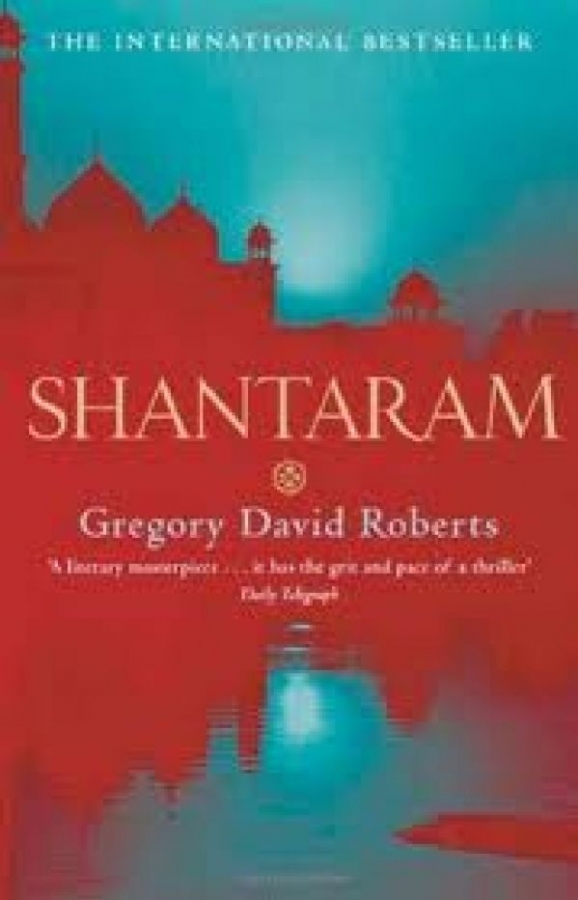
Shantaram
*Shantaram* is a book of roughly 1,200 pages and, in some reviews, has even been compared to *War and Peace*. In reality, it is a bloated potboiler, an implausible yarn that blends every Western stereotype about India with that inevitable refrain claiming economic backwardness should be celebrated as cultural authenticity. The trouble is that the novel—written, it must be said, in excellent English—is verbose, tedious, devoid of action, and lacking any psychological depth in its characters, whose personalities remain mere outlines, beginning with the protagonist himself. I must confess that my judgment, harsh as it is, rests on less than half the book: exhausted and disheartened, I resolved to abandon the reading, something I almost never do. It may well be that the second half of the novel is splendid, but I leave the burden of proof to other, far more patient readers. The plot purports to draw from the author's own life. The protagonist has escaped from an Australian prison and sought refuge in the vast, multifaceted expanse of Bombay. There he falls in with a circle of Western expatriates living on the borderline between the Indian world and the West. Circumstance, curiosity, and his friendship with a local man (Prabaker, the sole character delineated with any care) lead him to abandon this stance of "spectator": > I suddenly realized that if I wanted to live here, in Bombay, the city I had fallen in love with, I had to change, I had to get involved.... I had to expect it to drag me into the flow of its joy and its rage. Sooner or later, I knew, I would have to leave the safe zones and throw myself into the violence of the crowd, putting my own body on the line . And so he does, going to live in one of the city's many slums. From this point on, the implausibilities begin to mount: he sets up a clinic to provide basic first aid to the slum dwellers, befriends a syndicate of mafiosi who rule the shantytown (gangsters who happen to love debating philosophy), even finds the occasion to embrace a bear, fights wild dogs, and on and on. The episodes follow one another without any coherent thread, assembling every trope a tourist might expect from India. The narrative, which aims to be gritty and realistic, is instead steeped in hypocrisy and contrivance. To be sure, our protagonist is moved by the suffering, the squalor, and the sudden outbursts of violence among the populace, yet he complacently basks in the communal solidarity that permeates the poor, blind to the fact that these values are not rooted in an aspiration for change, but stem rather from resignation—from the passive acceptance of an unjust world. Indeed, change is deemed pointless: > when we act, even with the best intentions, when we interfere with the world, we always risk a new disaster that might not have directly stemmed from our action, but would not have happened without us. Some of the worst injustices are caused by people trying to change things . With such a philosophy, it comes as no surprise that the protagonist feels far more at ease with the mafiosi who run the city and the circle of Westerners idling away their days smoking marijuana. Nor should anyone be shocked when he finds himself embroiled in gang warfare. Yet on that portion I cannot comment because, as I have already mentioned, I put the book down. The sheer elegance and fluency of the prose arouse the suspicion that this book is fundamentally a marketing product—artfully engineered around a tired, overused trope in Western literature and culture: the fugitive who discovers a new lease on life in multifaceted India. > Like all fugitives, the more successful I was, the longer and further I went, the less of my identity I retained. But there were people, some who could reach me, some new friends for this new identity I was learning to inhabit..... such a desperate crowd—the richest and the most wretched, educated and illiterate, virtuous and criminal, old and young—it seemed the only thing they had in common was the power to make me feel something Western egocentrism at its finest! Why avoid it? It is tedious, cloying, and thoroughly exasperating.