Joseph O'Connor
Books by this author (1)
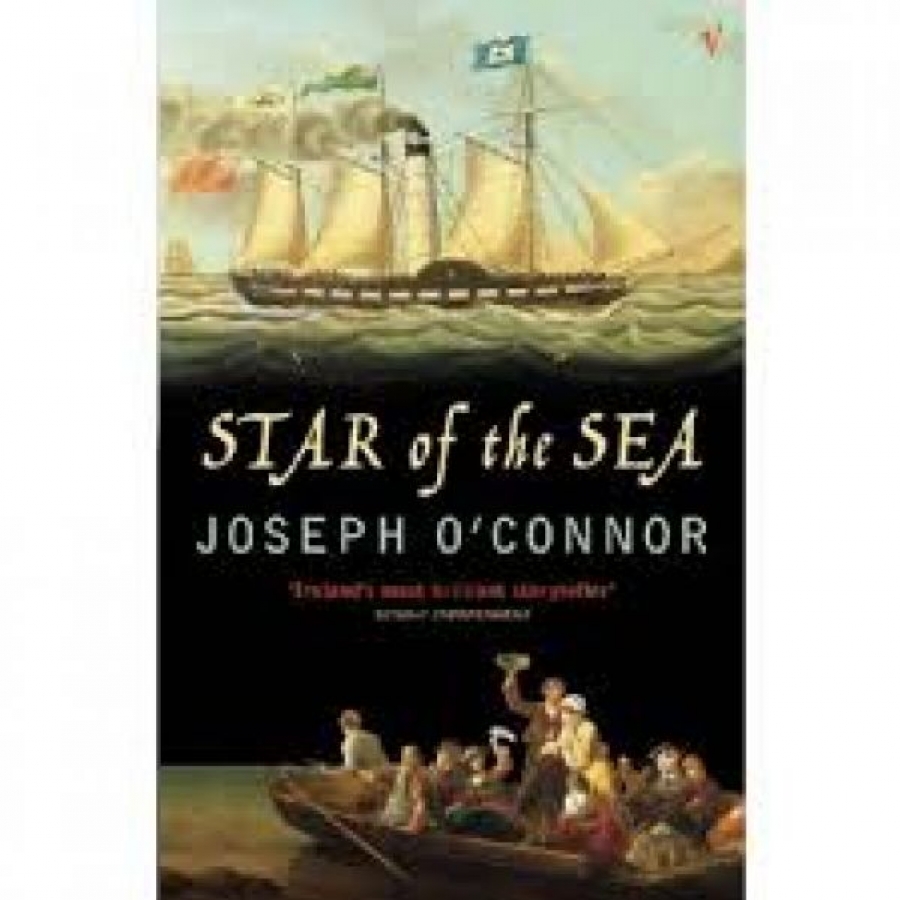
Star of the Sea: Farewell to Old Ireland
Between 1845 and 1849, a famine struck Ireland, giving rise to massive emigration toward Great Britain, the United States, and Canada. It was an enormous mass of people pushed to their absolute limits, malnourished and afflicted by typhus, tuberculosis, and cholera, already reduced to poverty and starvation in previous years by the rapacious policies of the landlords. The novel aims to recount this human tragedy and does so in an original, intriguing way: in the bitter winter of 1847, a ship sets sail for New York carrying hundreds of people fleeing a devastated land. > The ship was not bound for America, but for any country or territory that was not the United Kingdom; no matter how hostile and cold it might be . In tones reminiscent of Conrad, if not Melville himself, the author presents the ship as > a colossal beast of oppressive weight, its vertebrae creaking as if about to snap, dragged by some deity through their final tribulation, its skeletal frame already half-devoid of life and we passengers its parasites. (...) the shattered organ of a once majestic cathedral ; the metaphor, in short, of a ruined Ireland, of a desperate people. The multiple narrative voices are seductive as well, such as the captain’s log, which punctuates the days of the voyage with a roster of those who succumbed to disease and wasting; or the letters of certain passengers, bearing witness to hope, but also to the toil and despair of the emigrants. It is a pity that the plot and characters neither sustain this narrative approach nor reflect the historical and existential tragedy the work intends to portray. Aboard, alongside hundreds of emigrants, are a maid with a devastating secret, a bankrupt landlord with his family, a writer chasing elusive success, and a murderer thirsting for revenge. The lives of these characters are intertwined. Dissolving everything in its wake, the Great Famine shattered conventions and hierarchies, simultaneously releasing latent energies and repressed desires: one is finally free, yet this freedom also leads to self-destruction. At the center of the story stands the figure of the landlord, David Merridith: in love with the maid—whom we discover to be his sister—he must resign himself to a platonic relationship that no longer makes sense in this new state of affairs; drawn to darker, more ambiguous sex, he entered into a marriage of convenience rather than love, and mourns the life he could have had; driven by social aspirations, he has assumed, in spite of himself, the role of the "villain" toward his tenants, so much so that he fuels their hatred and desire for revenge. In the end, David Merridith dies mysteriously (murdered? suicide?), freeing the other protagonists from his now burdensome presence and allowing them to forge a new life in America. Does he embody the old society, and does his demise bear witness to a rupture with the past? Begun with high expectations, the novel soon collapses into yet another hodgepodge: it lingers over the characters' backstories, abandoning the ship and its passengers to recount the premises in exhaustive detail, stripping away any sense of surprise; it dwells at length on lurid, violent scenes, even on the wretched David Merridith’s syphilis; it strains to deliver a broad yet predictable panorama of mid-nineteenth-century Ireland and England. By attempting to pack in too many themes and situations, the author renders the plot tedious and prolix, fraying the narrative style, which sheds its Conradian, imaginative evocations only to become banal and redundant. Why not read it? It is long and boring.