
Bel-Ami
The novel is largely set in Paris during the 1880s, the period of the Third Republic following the fall of Napoleon III’s Empire. France, governed by an unscrupulous and corrupt political class, is embarking on its colonial adventure with the conquest of North Africa. Georges Duroy is a young man > tall, well-built, fair, with a reddish-tinged chestnut blondness, upturned moustaches that seeme

Cécile is Dead
This is likely not one of Simenon’s finest novels. The plot is exceedingly simple: the niece, who served as a maid, kills her sick aunt when the latter refuses to give her money for her brother. Rummaging through the drawers, she discovers old papers proving that the aunt, together with her lover, had murdered her husband fifteen years earlier. The aunt’s former lover, who remains her business

The Count of Monte Cristo
The plot of the novel is well known. Edmond Dantès is wrongfully imprisoned. He manages to escape, becomes immensely wealthy, and consequently devotes his life to vengeance through a series of deceptions and acts of cruelty. The novel appears to have been inspired by a true story. It unfolds across three distinct levels: adventure, sustained only at times by a gripping pace, as in the first pa

Desert
This is a book that develops along two narrative paths that are seemingly distinct, yet bound together by an ideal thread. On the one hand, it narrates the story of a desert people, followers of a sheikh revered as a saint, who intend to resist the French conquest of Saharan Africa. The desperate march of these people is seen through the eyes of a boy, who may well be the grandfather of Lalla, t
The Abyssinian
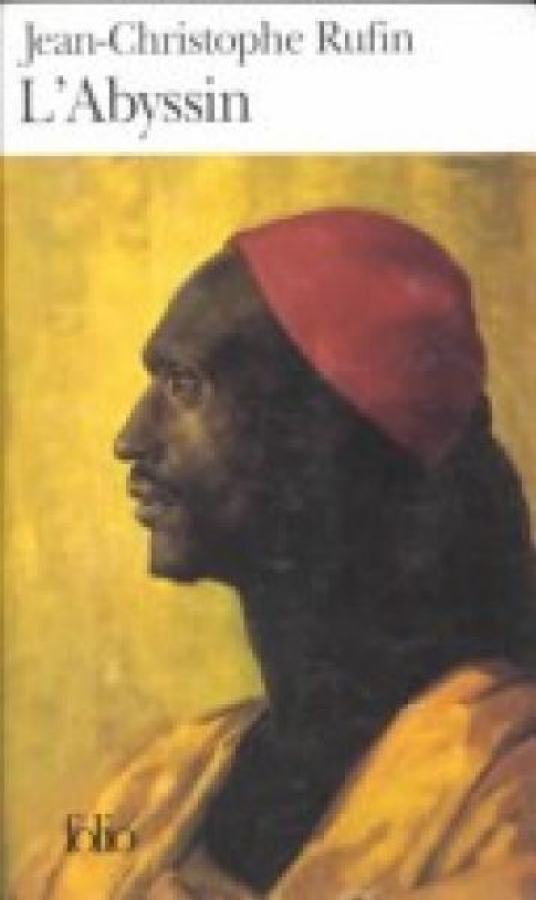
The novel is set in the late seventeenth century, during the reign of Louis XIV, and recounts the exploits of a Frenchman, Poncet, who journeys to Abyssinia on an expedition mounted by the Jesuits to restore ties with the empire fifty years after the expulsion of Catholic priests. The protagonist is an adventurous young man who commits himself to this enterprise out of love for the daughter of th

The Saint-Fiacre Affair
Maigret returns to the village where he grew up, as an elderly countess has died and he suspects she was murdered. All the figures of a potentially sordid affair are present: the countess’s young lover, the playboy son living the high life, a young parish priest who perhaps knows more than he lets on, and so forth. What emerges is a portrait of a provincial milieu, sketched, in truth, in a super

Leo the African
Set between the fifteenth and sixteenth centuries, the novel recounts the life of Hassan al-Wazzan, known as Leo Africanus. Forced to leave Granada following the Castilian conquest, the protagonist leads an adventurous life: first in Fez in North Africa, then in Cairo, and subsequently in Rome; he also undertakes numerous journeys, encountering widely disparate figures and milieus. As with all t
The Tenant
Elie Nagéar is a young cosmopolitan who grew up and lived for a long time across many countries, particularly in Turkey. On his journey to Europe, he meets Sylvie, with whom he has a relationship. The young woman works in a nightclub, and in no time the two squander what little money they possess. Seized by desperation during a train journey from Brussels to Paris, Elie robs and kills a wealthy

Madame Bovary
The novel recounts the fortunes of Madame Bovary, who, married to a provincial doctor, attempts to escape a prosaic and tedious existence by pursuing a series of affairs and leading an extravagant lifestyle—choices that ultimately lead her to financial ruin, emotional desolation, and, inevitably, suicide. It is a celebrated novel, widely considered the wellspring of nineteenth-century realism, w
Michael Strogoff
Michel Strogoff > was tall, vigorous, broad-shouldered, deep-chested... he could endure to the utmost cold, hunger, thirst, and fatigue : an iron body and a heart of gold. In this manner, Verne introduces the protagonist right from the outset. The setting is Tsarist Russia, likely in the second half of the nineteenth century. An army of Tartars is overrunning Eastern Siberia and threatens to
Les Misérables
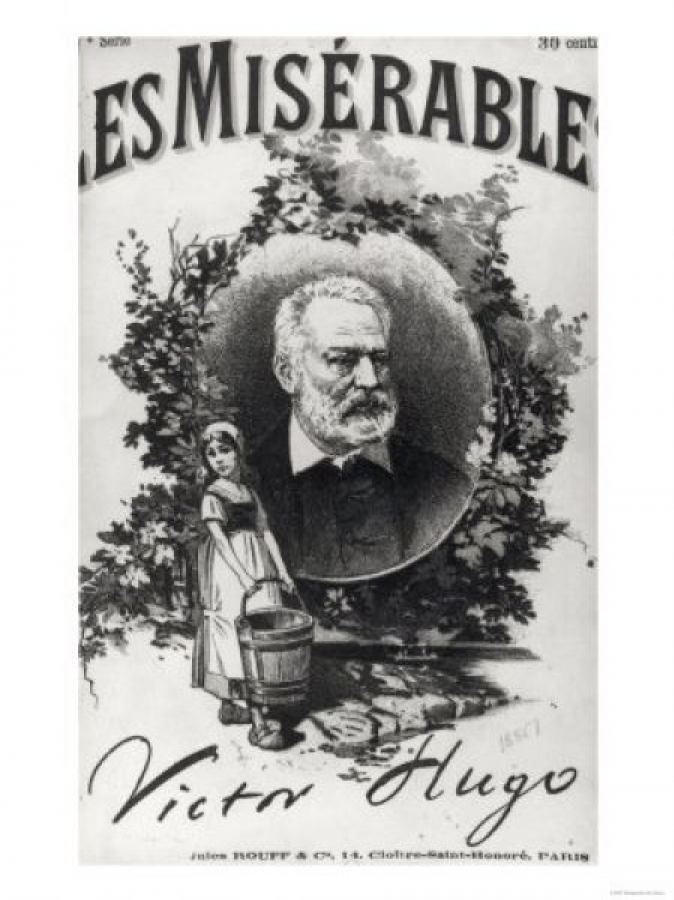
The novel chronicles the life of Jean Valjean, a convict who, following an encounter with a bishop (a saint), is transformed into a good and righteous man: he first becomes a wealthy industrialist, then, returned to prison, escapes in order to save and raise a young girl, Cosette, who, upon reaching adulthood, falls in love with a young revolutionary. Jean Valjean rescues the young man from certa

Monsieur Malaussène
In the neighborhood of Belleville lives the Malaussène tribe, and with them a myriad of characters. Belleville is a Parisian periphery, ravaged by the postmodernist manias of architects, the stupidity of politicians, and the greed of speculators; but it is also a magical place, a sort of Sherwood Forest, where Robin Hood is Benjamin Malaussène and the Sheriff is embodied by those who seek to evic

The Death of Belle
A teacher who has always led a quiet, monotonous life is thrown into turmoil by the murder of a young woman who had been staying with him for several months. One evening, in fact, the protagonist finds himself home alone, as his wife has gone out to play cards with friends. The girl returns home, gives an absent-minded greeting, and goes straight to her room. In the morning, she is found dead.

Nana
The novel is set in Paris in the years immediately preceding the fall of Napoleon III’s empire. Nana is an eighteen-year-old girl endowed with a peculiar charm that stems, far more than from beauty itself, from her sensuality, youthfulness, and demeanor. From the outset, Zola presents her as a goddess, a deity of vulgarity and scandal. > Nana, very tall, very robust for her eighteen years (in

Father Goriot
Balzac lived in the first half of the nineteenth century and thus depicts the society of Louis-Philippe. The novel recounts the story of a man who, out of love for his daughters, leads a wretched and despised life. His paternal devotion stands in stark contrast to a society dominated by money, appearances, and climbing the social ladder at all costs. The approach is moralistic, the style tediou

Gate of Heavenly Peace
The novel opens with the events of Tiananmen Square and the flight of one of the revolt’s instigators (the protagonist, Ayamei): the young woman takes refuge with a fishing family in an isolated area, where she is hunted by the Chinese army under the command of a young officer, Zhao. To evade capture, Ayamei flees into the woods and immerses herself in a new life, in close contact with nature, an


The Red and the Black
The novel chronicles the fortunes of Julien Sorel: the son of a carpenter, he manages through his own drive and intellect to climb the social ladder, first within the provincial bourgeoisie and subsequently among the Parisian aristocracy. He is engaged as a tutor to the Mayor’s children, and soon embarks on an affair with the Mayor’s wife. He then pursues his studies in a seminary and, through a

Female Terrorists
The author is an American writer, but I read the book in its French translation. A young man, the son of an Irish woman and an Egyptian father who abandoned him, lives in sharp conflict with American society—a conflict that also reflects his troubled relationship with his mother, a free-spirited woman full of artistic ideas, and an idealized vision of his father’s society: the Muslim world. He d
The Life of Euripides
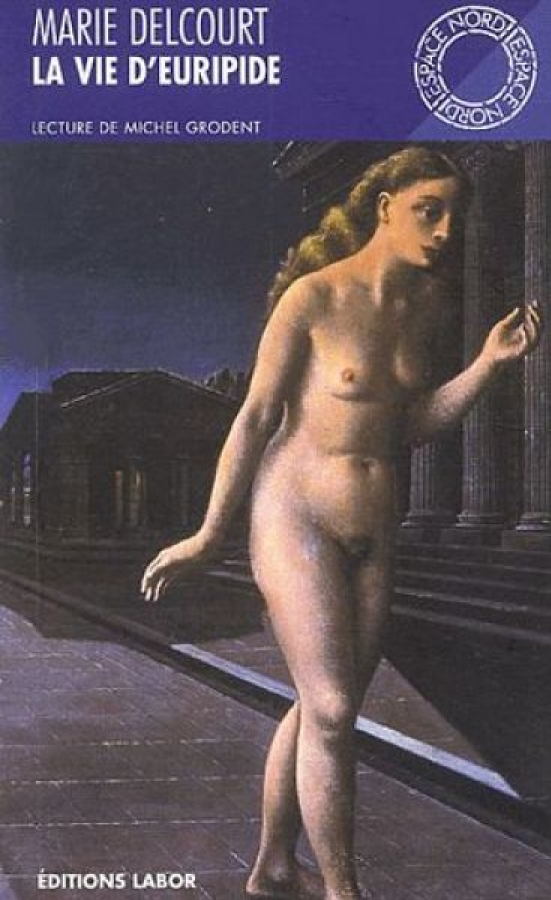
Euripides is one of the three great tragic playwrights of ancient Greece (the other two being Aeschylus and Sophocles) and lived between 480 and 408 B. C. in a historical period characterized by three fundamental phases: the peak years of Athens under the governance of Pericles, the prolonged Peloponnesian War between Athens and Sparta with the consequent decline of the former’s political and cu