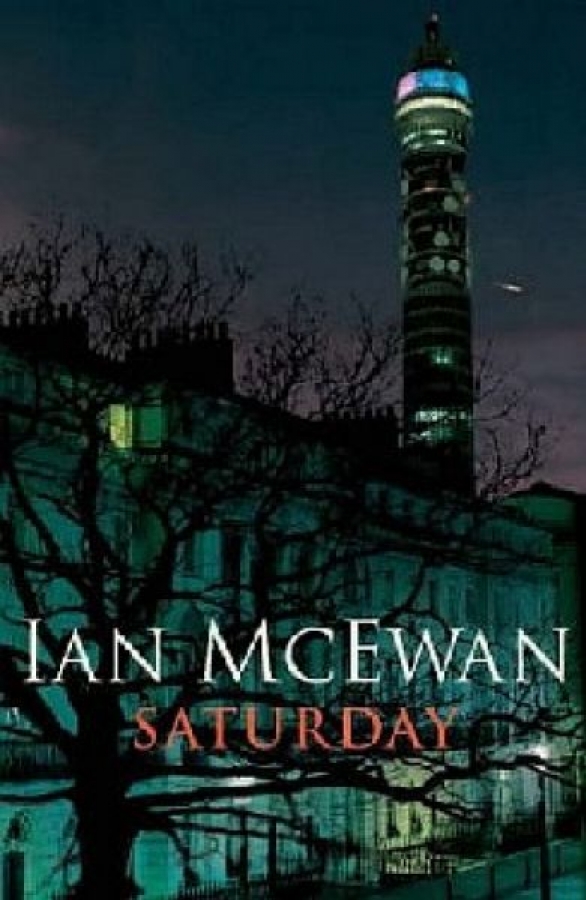
Saturday
Henry is a neurosurgeon living in London with his wife, a lawyer, and two children: his son, a musician, and his daughter, a poet temporarily living in Paris. He wakes up one Saturday morning, watches an airplane make an emergency landing from his window, and imagines it to be an act of terrorism. Thus begins Saturday, a day shaped both by broader events (television news reports on the impending war in Iraq, the anti-war pacifist march, the aftermath of the plane's emergency landing) and private occurrences (his relationship with his wife, a squash match with a friend, a visit to his mother suffering from Alzheimer’s, attending his son's gig, preparing dinner for his daughter’s return and the arrival of his father-in-law, himself an eminent poet). The narrative unfolds within this contrast between the catastrophism of the external world and the quest for domestic peace, for a serene existence beyond the external turbulence. This attempt fails, and a minor car accident is enough to let violence and the unforeseen burst into intimate, family life. To avoid the peace march, Henry commits a traffic violation and collides with a car carrying a group of thugs, who attempt to assault the surgeon. Henry nevertheless manages to extricate himself from a perilous situation by destabilizing the thugs' ringleader, named Baxter, recognizing that he suffers from a severe neurodegenerative disorder. Baxter vows revenge for the humiliation and breaks into Henry's home just as the family is celebrating the arrival of the daughter and the grandfather, the renowned poet. Baxter threatens Henry’s wife and orders the young woman to strip: amid extreme tension, she recites lines of poetry, which mollify Baxter; he abandons his violent intent and is subsequently pushed down the stairs by Henry and his son. The novel concludes with Henry’s decision to operate on Baxter, who was gravely injured, followed by a series of existential reflections on the surgeon’s part: > all he feels is fear. He is weak and ignorant, frightened of the unpredictable consequences of an action that has slipped out of control and is generating new events, new consequences, until you are led to a place where you never dreamed of being and would never have chosen, a knife to your throat . The book revolves around deeply philosophical themes: human helplessness in the face of an increasingly inexplicable world, the impact of catastrophism on everyday life, the pursuit of domestic serenity, the fragility of the barriers separating the outside world from intimacy, the burden of heredity and a life beyond our control, and the role of affective bonds. Yet the narrative's most compelling theme is the clash between scientific culture—which strives to impose order and rationality—and literary culture, poetry in particular, which interprets the world through frameworks irreducible to scientific reason and, perhaps for this very reason, succeeds in grasping the innermost meaning of things and resolving crises. It is the poem recited by his daughter that draws Baxter out of his madness, not Henry’s logical reasoning. What, then, is the way out of a situation that can no longer be comprehended through the tenets of scientific rationality? One finds oneself at an impasse, encapsulated by the words of the poet Matthew Arnold: > ah, love, let us be true to one another! For the world, which seems to lie before us like a land of dreams, so various, so beautiful, so new. Hath really neither joy, nor light, nor love, nor certitude, nor peace, nor help for pain; and we are here as on a darkling plain, swept with confused alarms of struggle and flight, where ignorant armies clash by night . The clash between desire (the love that makes us see the world as a land of dreams) and reality, which appears to us only as a bearer of death—is this contradiction not resolvable solely through a rational approach? The heavy philosophical content and the multiplicity of themes do not serve the narrative pace or the cohesion of the discourse. It is, as usual, very well written, yet at times it leans too heavily into intellectualism, and the characters remain flattened within assigned roles that conform more to stereotypes than to any genuine depth of character.
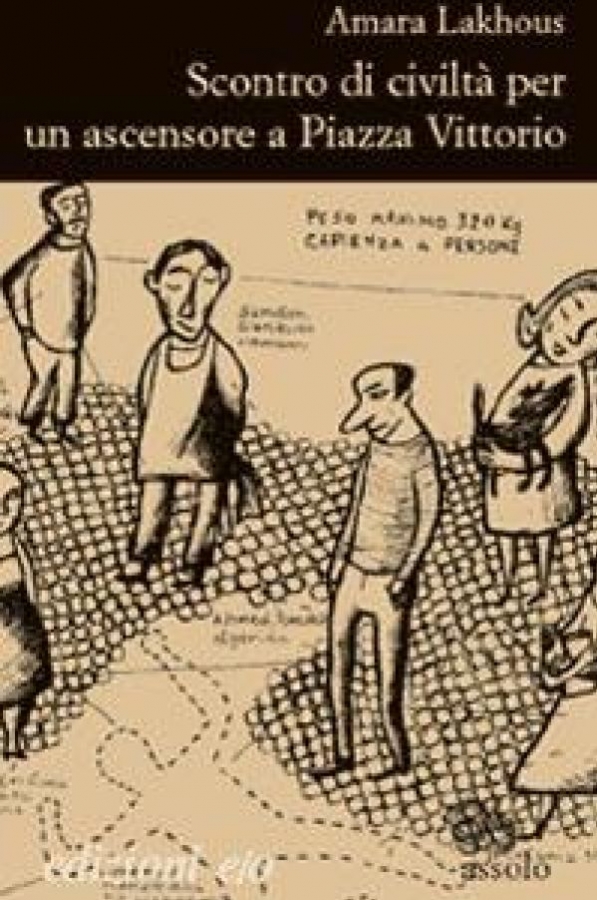
Clash of Civilizations Over an Elevator in Piazza Vittorio
The Italian edition is a revision, also undertaken by the author, of the original Arabic publication of 2003, which bore another title: “how to be suckled by the she-wolf without her biting you.” The two titles, in Italian and in Arabic, constitute two possible interpretive keys to the book. The setting is Piazza Vittorio in Rome, the multicultural venue par excellence, and specifically an apartment building inhabited by a diverse cast of characters: from the Neapolitan concierge to a melancholy university professor from Milan, to a young Dutchman passionate about Italian Neorealism. Revolving around the building is a multiform humanity that, despite mutual misunderstandings and cultural and linguistic differences, shares a single conviction: their esteem and trust in Amedeo. He appears, and strikes us, as the Italian we would all wish to be in a multicultural society: cultured, kind, polite, tolerant, and ready to help regardless of skin color, religion, or country of origin. These are the reasons why everyone rejects the idea that Amedeo could have committed a murder—and what is more, in the building’s elevator, which he avoided using out of respect for the concierge. > He looked at me with a smile and said: I’ve changed my mind, I’ll take the stairs. I couldn’t believe my ears and asked myself: are there still men who respect women in this country? . Yet what is even more incredible is that everyone, Italians and foreigners alike, is astounded that Amedeo is not Italian. After all, foreigners are all ill-mannered and ignorant. But who is Amedeo? And this is the second interpretive key. Amedeo, with his flawless Italian and his vast knowledge of Rome, is in reality Ahmed, an Algerian who fled his homeland after his fiancée was brutally murdered. His is a flight from the horrors of the past, from a world he wishes to leave behind, in mind as well as in body. In Rome he found Stefania—naive, idealistic, and curious—and fell in love with Piazza Vittorio, with its clash of civilizations. > Rome has Termini Station. Termini means the journey is over. There is something strange about this city. It is very difficult to leave. Perhaps the water from its fountains has been mixed with some peculiar substance of sorcerous origin . Yet Rome can also wound you, with its bureaucratic red tape, with the coldness and violence of a society in decline, bereft of human solidarity. Ahmed, deep down, wants to be neither Italian nor Algerian: he would like to simply be Ahmed. Moreover, the memory of the past belongs to him alone, its wounds to be tended in solitude. > Oh my open wound that will never heal! I have no solace except in howling . The book’s fundamental merit lies in its writing. To begin with, an inspired choice is the alternation between the unfolding of events as related by the various characters—thereby foregrounding their differing points of view—and the autobiographical, diary-like notes of Amedeo/Ahmed. These are introspective, reading almost as the narrative of a personal journey of liberation from the past and discovery of the future. Furthermore, the affectionately ironic style does much to prevent the narrative from lapsing into moralizing or pseudo-sociological analysis when depicting the latent racism among Italians (structured along the classic hierarchy: North – Southern Italy – Global South), the despair and nostalgia of the foreigners, and the coldness and harshness of Italian life. The characters are sketched with such close attention to the individuality of each, whether Italian or foreign, that a multitude of lights and shadows emerges, rather than that binarism (Italian – foreigner, good – evil) that so much of the media seeks to impose upon an Italian society that, though resistant, is subjected to it. Why read it? Light, entertaining, yet profound.
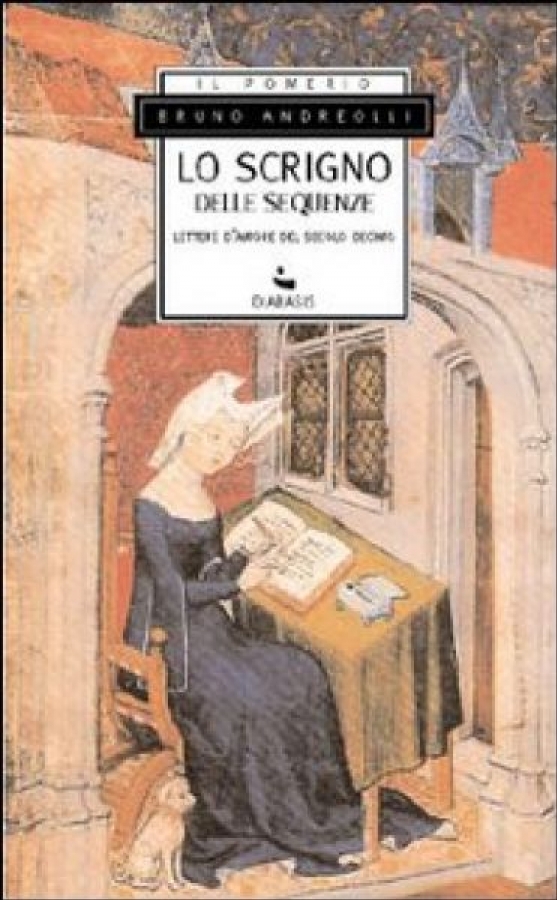
The Casket of Sequences
The book is set in the year 900 and recounts the story of a young man raised by a countess. Unwittingly, the young man kills his father and, at the countess’s bedside, reads letters that shed light on his life. The book is thoroughly enjoyable; the harsh medieval milieu is depicted with great skill, complemented by scenes of family life and domestic settings.
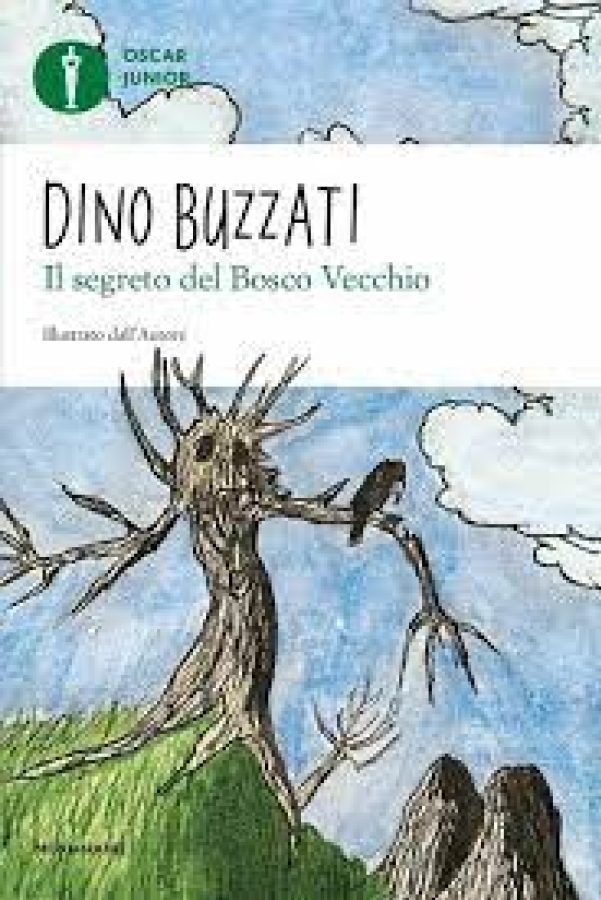
The Secret of the Old Woods
At the beginning of the story, Dino Buzzati imagines that a nineteenth-century abbot, «with concise and very clear accounts», speaks of «a wondrous vision» upon beholding the old wood; in a footnote, the author observes how some men grasp the secrets of the woods, perceiving them by «nature», while others will never possess this sensitivity, > and will pass impassive (...) alongside the tenebrous forests, without even suspecting what goes on inside . Communion with the trees, the capacity to grasp their magic, belongs to children; as Bernardo explains—the tree-genie who took upon himself the burdensome task of conversing with adults— > at a certain age all of you, men, change. Nothing remains of what you were as children. You become unrecognizable . Adulthood causes one to lose the quality of feeling part of the whole, of playing in the woods alongside the animals, of understanding the birdsong, of perceiving and distinguishing the grand, multicolored orchestra of the forest’s sounds. Since adults will never love nature, the genie Bernardo became friends with the old owner, persuading him to leave the old wood untouched. What an ordeal to spend evenings in long games of cards, in tedious conversations, while > through the window, along with the scent of most precious resins, drifted the deep voice of his brothers, singing carefree ! The situation changes when the old owner dies and the new master arrives. Procolo, a retired colonel, is a rigid, somber, solitary man, impervious to any communion with the woods, which he views merely as an opportunity for exploitation. It is not that he is greedy; he is simply a petty soul, and how can one who lacks generosity ever find pleasure in the rustlings and scents of the woods? He allies himself with the wind Matteo to bend the tree-genies and force them to work for him in exploiting the forest; he kills the magpie that stands sentinel over the house, only to plunge into the silence of the night, locked within his nightmares. Wretched and wicked, he seeks to rid himself of young Benvenuto, the heir to the wood and his ward; with the aid of the wind Matteo, he does not hesitate to abandon the boy in wild tracts of the forest, where Benvenuto surely would have died. He fails, believing that no one knows of his murderous intent. But when he ventures into the depths of the forest, > the birdsong fades, the squirrels and dormice flee, silence settles upon the boughs, and at times ominous storm clouds even appear in the sky. (...) Evidently he struck a discordant note in that joyful corner of the woods; evidently trees and birds could not endure him . Even his shadow abandons him, so disgusted is it by the barrenness of its lifelong companion. Procolo is alone. And yet, little by little, reluctant and surprised, during a sleepless night Procolo recognized the sounds of the forest. He counted fifteen of them, meticulously noting down each one. > But two or three times, that night, there was also true silence, the solemn silence of ancient woods, incomparable to any other in the world, which very few men have ever heard . And the goodness that dwells in all human beings is finally liberated from the performance of self, from that «false self» that had accompanied him throughout his life. Procolo dies, yet he is saved. Buzzati’s tale can be interpreted as a fascinating metaphor for the human soul, where the woods are not Dante’s «dark wood» but a kind of Shinto paradise in which trees are benevolent genies and the winds are hostile, dark forces: a depiction, in short, of the intricate tangle of consciousness. I prefer to interpret *The Secret of the Old Woods* literally, as a great fable of the forest, devoid of ulterior meanings. Raised by parents who loved the mountains and made me spend long summers amidst the greenery of the Alps, walking among the trees was always part of my life, without my understanding why. Reading Buzzati’s tale made me understand my passion. And it is precisely for this reason that I juxtapose it with Petrarch, fully aware of how daring such a connection is. When Francesco Petrarch recounts his walks in Provence and Tuscany, I recognize the feeling that stirs within me as I, too, make my way through the forest: the longing for detachment from the frenzy of the world, finding oneself again, solitary, silent, immersed in physical activity, permeated by the vitality of the trees, conscious of the bond connecting all living beings. Often, wandering freely and aimlessly amidst the lights and sounds of the forest, the lines of Canto XXXV of the *Canzoniere* come to mind: > alone and pensively the most deserted fields/I pace and measure out with slow and tardy steps,/and keep my watchful eyes alert to flee/wherever human imprint marks the sand .
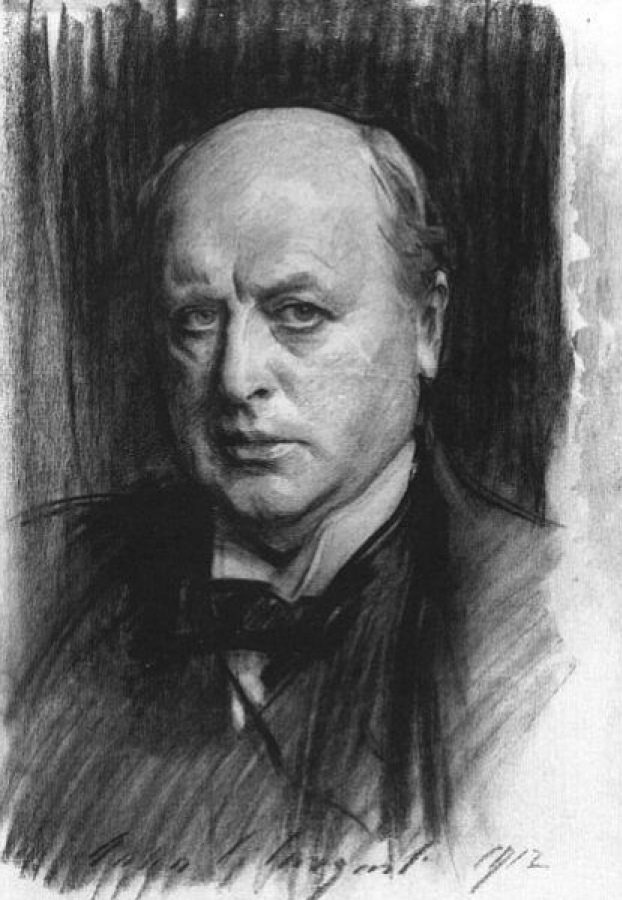
Selected Short Stories
According to the introduction, the four stories encapsulate the author’s style and evolution. The first story revolves around a love of myth and beauty. In *The Last of the Valerii*, an Italian count has married a wealthy and beautiful American heiress, yet falls in love with a statue of Juno unearthed on his estate. The narrative is related by a character who seems to stand in for the author, watching with amusement, wonder, and keen interest as a living being falls in love with a statue. In *The Real Thing*, an artist who routinely works as a book illustrator is approached by a genteel couple fallen on hard times. They ask to serve as models for the artist, who initially agrees, but soon realizes that real life is one thing, and a figure in an artistic representation is quite another. The story is thus entirely constructed around the tension between real life and artistic expression, which is itself the offspring of the imagination. *The Lesson of the Master*, the least successful of the stories, takes duplicity as its subject. A young writer falls in love with a young woman, but is persuaded by an older writer to devote himself entirely to art: marriage or any strong romantic attachment are, after all, disruptive forces, compelling one to confront the prosaic nature of ordinary life. Upon returning from an extended journey to Italy, the young writer discovers that his “master” has married the young woman: it was all a ruse. Finally, the last story, *Daisy Miller*, is set in continental Europe, and specifically in Rome. Several of the author’s signature themes are present: Americans abroad; an independent yet naive young American woman; the corrupting Italian; and the smitten young lover. The settings are those of the upper middle class traveling abroad, and a Rome fraught with malarial fevers, however captivating in the remnants of a great civilization. The contrast between American society—uncouth yet wholesome—and European, particularly Italian, society—decadent yet the heir to a grand culture—is unmistakable. James’s style is invariably fascinating, at times convoluted, yet richly evocative. In particular, it is the descriptions of nature, cities, and settings that constitute the author’s greatest strength, whereas the dialogue often proves tedious and predictable.
The Path to the Spiders' Nests
It is Calvino’s first novel. The protagonist is a young boy, Pin, who undergoes an experience that makes him grow up rapidly. The setting is the Ligurian Riviera during the partisan war. Pin lives with his sister, who works as a prostitute and collaborates with the Germans. The boy frequents the tavern and keeps company with the adults, who talk about women and drink wine. The men at the tavern convince Pin to steal a pistol from a German who frequents his sister. The boy hides the pistol near the burrows that he imagines spiders build. He is imprisoned, escapes, and joins the partisans, where he continually witnesses the affairs of adults: violence, betrayal, love, lies. He flees the partisans and encounters one of them, Cousin, who once took him by the hand when Pin was alone and abandoned. He trusts him and reveals where his sister lives. In reality, Cousin wants to know so he can go and kill her. Pin is betrayed once again and finds himself alone, abandoned by all. Despite its apparent realism, it is a “fantastic” novel. The real story is that of childhood and its encounter with the adult world. Pin talks like a grown-up, but he is still a child, searching for affection and friendship. Yet in truth, he finds it only in the landscape, in the spiders’ nests, in a fantastic world.
Serpents in Paradise; Rites of Death
Set in Barcelona, the novels center on Inspector Petra Delicado, who tackles a series of police investigations alongside her partner, Deputy Inspector Fermín Garzón. The two officers display little investigative prowess, chasing multiple leads and frequently overlooking crucial clues. In reality, personal affairs always take precedence. In *Death Rites*, an investigation is finally entrusted to Petra Delicado, who, still under the strain of two failed marriages, projects onto the inquiry such aggression that it frequently compromises her interrogations, while often operating with a distinct lack of lucidity. In *Serpents in Paradise*, it is instead a longing for a different life (defined by an orderly domestic ménage, a beautiful home, and above all, children) that leads Petra Delicado to become ensnared by the culprit, to the extent of abandoning any line of inquiry and missing an important clue. Ultimately, the detective plot is merely an occasion to portray events and situations invariably marked by profound solitude and a fundamental falseness in personal relationships. These are, after all, two facets of an existential dilemma that appear mutually contradictory: to experience sincere and honest relationships, one must live in solitude. Barcelona remains merely in the background, almost nonexistent. The author relies on dialogue and brief descriptions of the settings in which the characters move, but lacks all those sociological references and digressions so characteristic of Montalbán’s books. Certain settings, the narrative pace, and the depiction of the characters recall the American detective novel, particularly that of Raymond Chandler.
The Emerald
In New York, the author meets a strange character, a gemstone expert or perhaps a magician, who convinces him to go to a French village, where he will find an emerald that will reveal his future. The author is persuaded, partly intrigued by what this strange character tells him, partly because he hopes to track down an old flame, Mariolina, and present himself with a jewel of great value. Arriving in the French village, he takes lodging in an old hotel, where he falls asleep and seems to enter a strange dream. He sees the village where he lives, Tellaro, near La Spezia, vastly different from what he remembers, and he no longer recognizes the people: > it is as if they were all new: others. And it is as if I myself were someone else . In the dream he is actually a painter named Andrea Tellarini, living in an isolated house with a dog. A visitor brings him word that in a French village (the very one where he is actually staying), he has received an inheritance and must therefore go there. He becomes increasingly aware that he lives in an uncanny world, where, following the Third World War, the globe is divided into two confederations: that of the North, dominated by the Russians, technological and technocratic, and that of the South, dominated by the Arabs and the Chinese, Levantine and agrarian. Both confederations are dictatorships, two police states dominated by military forces and the secret services. Between the two confederations runs a Line, roughly traversing Southern Tuscany and Rome, which cannot be crossed because it is contaminated and therefore lethal. The painter lives in the North within a dictatorial state, where everyone is on the state payroll, travel is forbidden, and cinema no longer exists. He obtains permission to go to the French village, where he inherits a large emerald, which he resolves to use in order to search for Mariolina. She, however, lives in the South, and so he must cross the Line. He sets out on the journey together with his son (in the dream, he discovered he had a son). The Line is no longer contaminated, and in Rome he encounters some gypsies who salvage treasures from the abandoned city and sell them to a truck driver (in reality, a spy), who transports them South, to Naples. The painter manages to reach Naples with the truck driver, with whom he is enticed into a homosexual encounter. In Naples, he meets Mariolina again, but also discovers that the emerald is fake. His scheme of growing rich and winning back Mariolina has failed; instead, he is dragged into a power struggle between Mariolina's allies and her enemies, for whom the truck driver is a spy. Mariolina herself proves to be an avaricious woman, thirsting for power. Captured by Mariolina's enemies, he is brought to Rome and gets caught in a firefight with the gypsies: the dream breaks off abruptly as his wife, summoned by the innkeeper, wakes him. In fact, he had allegedly not been sleeping and dreaming, but had been writing the dream down for fifteen days without sleep and without food. It is a fantastic novel, built entirely around the device of the dream as an occasion for an unleashing of nightmares, desires, and fears regarding the future. > I was constructing this dream, complicating it, entangling it, splitting it: a captious, adventurous, fantastic, faerie dream: I was dreaming this dream solely to touch a fragment of my petty reality, of my little self. Who knows, perhaps it was not even a dream: but a delirium fraught with insurmountable and agonizing contradictions . The dream was, in any case, the discovery of a boiling life. > In my dream of discovery I did not wish to go any further. Better to stop here, I told myself. Better to wake in time and sleep again, afterwards, dreamless or with bland dreams that are forgotten and not worth remembering . Several themes run through the novel: a cruel future, dominated by military or bandit dictatorships: technology has ultimately led to the destruction of the Western political system and its collapse into states lacking the rule of law. This upheaval may herald the beginning of a new renaissance, precisely because it has destroyed a culture that was already decaying. In this regard, the reflections on cinema are illuminating. > All that layering of techniques, that paste, that elaborate concoction of acting, dance, drama, scenography, lights, colors, moans: that colossal manneristic, advertising, vulgarly scientific swindle has revealed itself today as a typical—indeed emblematic and exclusive—product of the defunct industrial and consumerist society . > If there is any hope of peace and brotherhood with the South, that hope lies in our reborn and unwitting sense of art ; the recovery of a primitive and simple world, namely that of the gypsies. It is no coincidence that they inhabit a Rome that is ghostly yet alive. > I stopped on the edge and looked all around, near and far, at other valleys and other hills; I contemplated, frightened and fascinated, those horrible alps with their riddled walls, that strange nature, and that matter... They were shells of old mollusks, empty eye-sockets of skulls from which the softness, mobility, and intelligence of life had withdrawn forever. And suddenly I understood. They were the hollows where the desire for life entered and from which life itself emerged: dead, however, now, dead; material images of a final sarcasm . In a D'Annunzian style, the author reflects upon the transformation of life, finding in nature's destruction of the city, in its abandonment, the starting points for rebirth. Yet it is not society that will revive it, but that of simple men, of a people—the gypsies—who have rejected industrial and consumerist society; the diverse dimensions of life. In reality, the author is inhabiting another dimension—not so much what he would have wished to be, but the reality and the persona he could have been. Does the possibility of another life exist? Are there other worlds within us, where nightmares but also aspirations might be realized? The author's dream is the construction of that other world, of the other life the author could have lived. The dream broke off precisely > so as to see no more, so as not to know what lay at the bottom of my whole story . For Paolo Pasolini, Soldati's writing > is devoid of all viscosity, which is to say, of clinging to the reader, of possessing him, of exerting an unacknowledged authority over him . Pasolini speaks of lightness and a relentless reference to something else, to an alternative. The dream device allows the author to play without explaining: for example, what did the emerald signify? What purpose did the entire affair serve in relation to the opening of the tale? As his friend Enzo Giachino wrote in a letter to Soldati, > I am convinced that a more cultured and subtle reader would be able to unravel the hidden meaning of so many episodes, which eludes me .
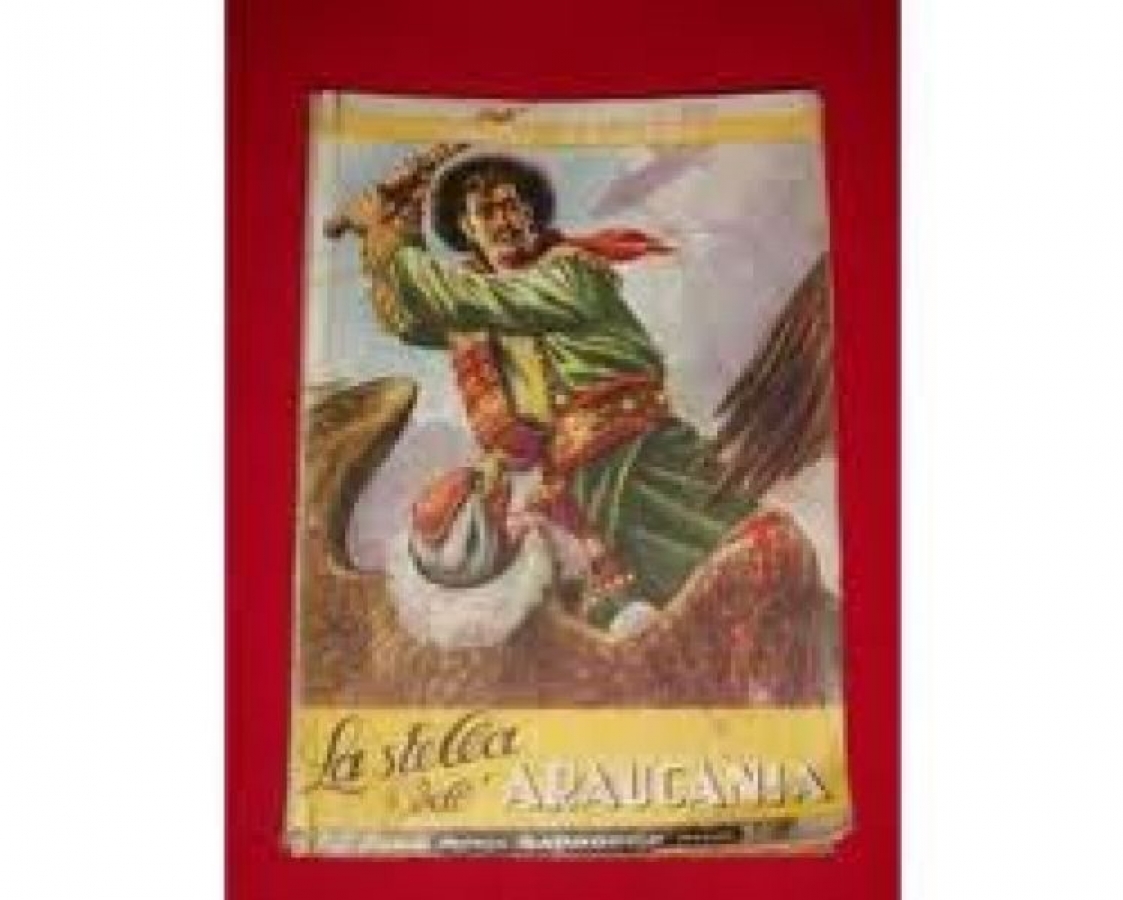
The Star of Araucanía
The star of Araucania is the young Mariquita, “of marvelous beauty,” who, between the two cousins, Piotre and Alonzo, chose the latter—more gentle and elegant than his coarse, brusque counterpart. Fate dictates that Alonzo is shipwrecked in the wild lands of Tierra del Fuego, and only Piotre’s ship can brave the sea during the terrible winter of the Strait of Magellan. In a dramatic encounter, taking place no less during a condor hunt, Mariquita is forced into a painful bargain: to promise to marry Piotre if he provides his ship and his skill as a captain to go and rescue Alonzo. The expedition originates in an act of blackmail, Piotre’s coercion of the young woman, who lives in deep anguish because Alonzo’s salvation will compel her into an unwanted marriage. Her feelings change radically once Mariquita discovers Piotre’s courage and rectitude: first while navigating stormy seas and colossal icebergs, then during the furious clash with the cannibals who inhabit Tierra del Fuego. As in all of Salgari’s books, plot twists follow in rapid succession, but this tale also features an intriguing inversion of personality, emblematic of how distance from civilization unveils man’s true character. Alonzo has become the chieftain of the cannibal tribe and condones the slaughter and consumption of Piotre’s sailors by the savages. Indeed, he would even be willing to offer up his own cousin as food, so as to rid himself of his rival. > “I no longer recognize the Alonzo of old,” said Mariquita,... “one would say that constant contact with these wretched savages has hardened his heart!... Alonzo, you frighten me!” . Evidently, Mariquita’s choice to break the engagement and marry Piotre is now justified as well by Alonzo’s villainy, whose fate can only culminate in death during a dramatic duel with his cousin in the frigid Antarctic waters. In truth, Mariquita remains perpetually in the background, swept along by events and by the shifting of passions. The novel’s true protagonist is Piotre, whom Salgari introduces in such a way as to accentuate this man’s inner conflict: > steel-colored eyes that held a certain wild flash and betrayed an indefinable roughness, but also sadness . Pride would urge him to reject Mariquita, yet love compels him to accept marrying her even without being loved in return. And it is the perils they must face together (in which Mariquita too proves herself a bold and vigorous woman) and their increasingly frequent physical proximity that soften Piotre’s spirit, laying the groundwork for a love no longer bred of pride and resentment. During the flight from the cannibals, Salgari pens lines reminiscent of D’Annunzio’s sensuality: > and he pressed Mariquita ever tighter to his chest, with a kind of frenzy, running desperately... when the hair of the young Araucanian woman, undone in that mad dash, whipped against his face or coiled around his neck, he lifted his eyes and looked at her, smiling, overjoyed to hold against his breast the woman he had loved so dearly . On the other hand, > Mariquita, resting against the whaler’s broad chest, her hands clasped around his powerful neck, looked at him with admiration . The narrative of this falling in love, rooted in Piotre’s valor and rebirth, would be trite and mawkish were it not set against Tierra del Fuego. In this novel, the environment does not simply serve as a backdrop to the adventures; it forcefully bursts forth, becoming a protagonist in its own right. It offers more than just the occasion for thrilling pages—among the finest being the passage of Piotre’s ship between two gigantic icebergs converging with destructive force upon the vessel. The depiction of Tierra del Fuego gives rise to a fantastical, incredible, compelling chronicle of a world teeming with a multitude of birds, grassy plains, “mostly covered with moss,” vast forests, and rugged, inaccessible coasts. Even the inhabitants are extraordinary—either towering giants or stunted dwarfs, but invariably grotesque. Why read it? I am not entirely sure why it is considered one of Salgari’s minor novels. In reality, it is a breathless read that introduces startling lands and characters.
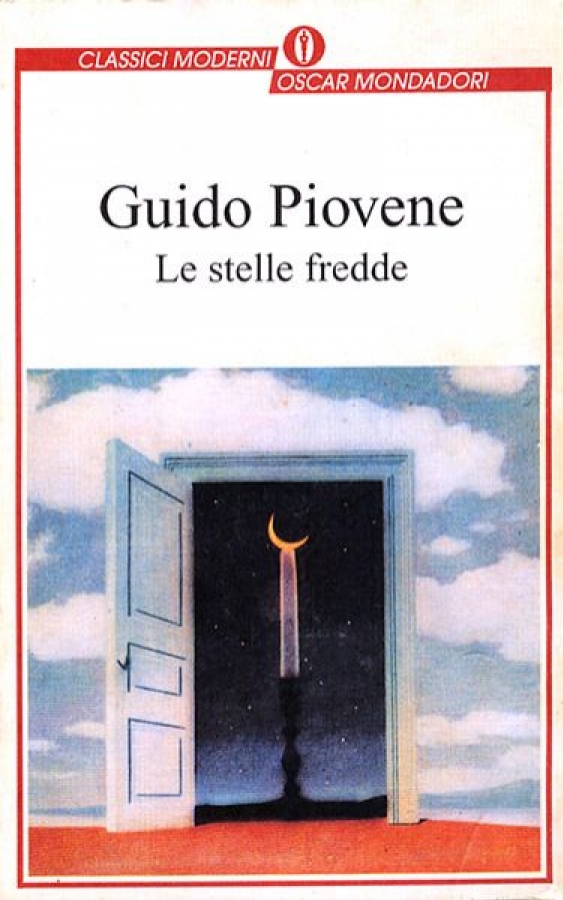
The Cold Stars
This is a highly complex book, in certain respects difficult to interpret, with pronounced philosophical undertones. The protagonist, an advertising executive, decides to abandon his job and the city to change his life, returning to the countryside where he owns a house. At the moment of making this decision, his attending physician introduces him to a young girl—entirely normal and very bright—who is nevertheless convinced that “she moves, but everyone else stands still.” When the protagonist asks whether he is alive or dead, given that in the girl’s eyes he does not move, the answer is unequivocal: “dead.” This encounter sets the plot of the novel in motion, charting a path toward the pulverization of the boundary between life and death: only the world is motionless, while living beings drift in a kind of limbo, in a state of perpetual transience. Upon arriving at the country house, the protagonist sees once more a cherry tree, which > radiated a great, almost boundless energy, transmitting an invisible vibration like ethereal waves reaching the stars; it was the energy of gods, of animals, and of the dead . As long as the cherry tree was alive, a certainty emanated from it, an “immense vocabulary”; but when the cherry tree is uprooted, the boundary between life and death collapses, making possible > the intrusion of another world into our habitual one, and our slipping into it from one moment to the next . A trajectory begins: first, the protagonist attempts to detach himself from the world; then, Dostoevsky’s return from the realm of the dead, channeled through the uprooted roots of the cherry tree, makes him realize that the only certainty is the world itself, cataloging and photographing everything, while living beings are nothing but illusion and transition: > I looked at the photographs of the cherry tree, and I understood that I too was a photograph, preserved in some archive. I was like a planet tracing an orbit with all its inhabitants, its cities, and its landscapes. The memory of the world had recorded everything and remembered everything . In this immutable world > nothing and no one exists that does not fall into it: person, thing, sound, smell, thought . The Self is lost in the immensity of the universe, in an enormous tree whose entire vocabulary is impossible to decipher, yet “the tangle of its branches permeates everything with its whiteness.” The descriptions of the landscape are magnificent, as are the dialogues, whereas the narrative frequently loses itself in philosophical digressions, at times redundant and prolix.
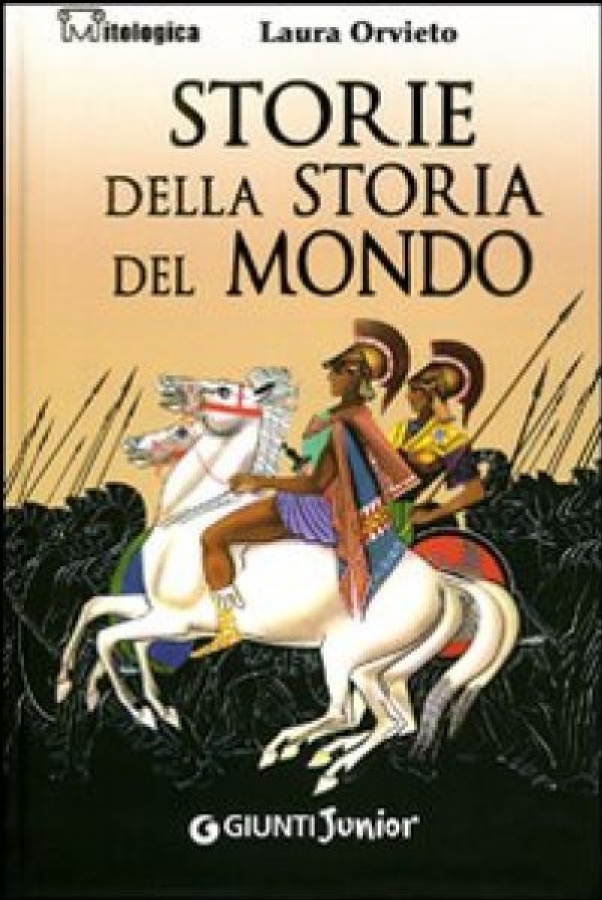
Stories of the History of the World
It is a book for young readers written in the early twentieth century. It recounts the Trojan War, blending episodes from the *Iliad* with others drawn from Greek tragedies. Though aimed at young readers, it is written in a clear language, yet remains rich in terms of both syntax and constraints. The intent is also moralistic, conveying a society grounded in simple, common-sense values: friendship, loyalty, but also the understanding of error and a disdain for war. The book is very fine.
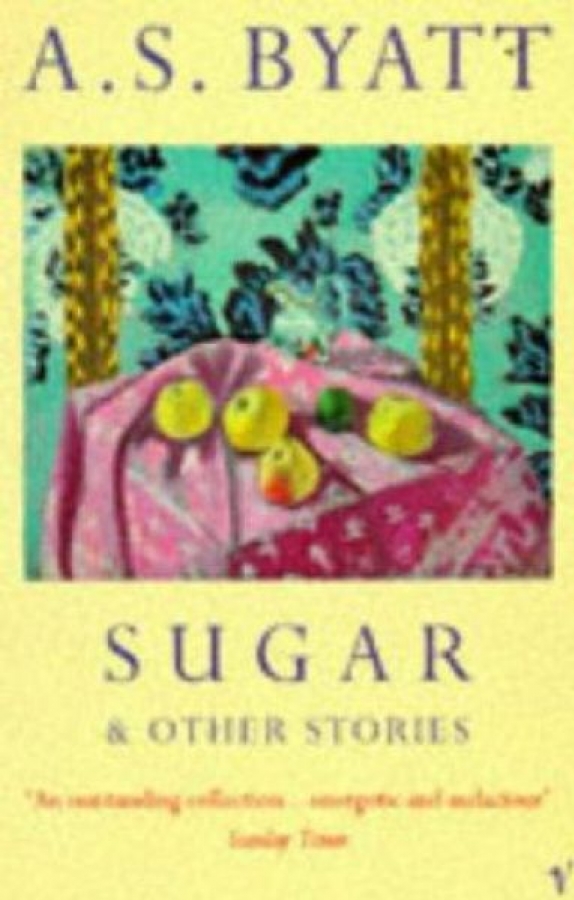
Sugar (in Sugar and other stories)
This is a short story. The narrator’s father is admitted to a hospital in Amsterdam, where he has been diagnosed with prostate cancer, which will soon lead to his death. He is a taciturn and reserved man who opens up to his daughter, the narrator, speaking of the family and the grandfather. One of the themes is his wife’s habit of “telling lies”—that is, inventing family episodes. The narrator thus realizes that “much of my past could have been fabricated by my mother.” The theme of the story is the family myth: the capacity to mythologize, idealize, and imagine a familial memory, which subsequently exerts a decisive influence on the mental, psychological, and cultural development of descendants. > During those extreme weeks in Amsterdam I thought about origins. I thought around my grandfather. I also thought about certain origin myths I had pieced together as a child to explain things that were important, my sense of being from the north, the fear of art, the inevitability of the end . Mythological elaboration is the defining element of this memory, which does not photograph reality, is not history, but allows one to receive a world of values and sensations. The narrator imagines that her paternal family was like the pantheon of Norse gods, “wild, extravagant, harsh, sturdy, and terrifying,” and that > her mother’s lies were to sweeten and soften my father’s stormy, cold world . Invention in storytelling is a way to free ourselves from grief, from the barrenness of life, from the inexorable approach of death: > what is all this, this entire story I am telling you, if not a careful selection of things that can be spoken, that can be brought into the light of day? Alongside this construction stretch the dark shadows of unspoken things, because I do not want to, or do not dare to say them, or else I do not remember them, have misunderstood them, have forgotten them, or never knew them . If life is not what is real, but what is remembered and therefore narrated, then life is literature. It does not restore people to us: “none of these words can bring him back to us.” Only the myth and the story remain. A short story, yet one of profound depth, both philosophical and literary. The style is highly effective, constructed around an elaborate yet lucid syntax that makes reading it both pleasurable and effortless.