Malombra
Benedetto Croce panned this novel, Fogazzaro’s first, observing that it lacked “the central intuition that dominates all others,” offering instead an irritating confusion. One is tempted to agree with him if one allows oneself to be led merely by the plot, with its innumerable secondary episodes. If, however, the book is read from the perspective of one of its protagonists, Corrado Silla, it becomes evident that one is faced with the narrative of a troubled spiritual journey, unfolding amid existential unrest and the quest for faith—the only thing capable of providing balance and serenity. Silla, behind whom the author conceals himself, is an > intellect lacking lucidity, mystical in its tendencies, powerful through certain fleeting intuitions rather than by any steady, inherent vigor.. he had vague, unpractical ideas, an ardent spiritualist.... he loved, even in slight matters, to lean upon some grand general principle . He has written a short story, ignored by both the public and the critics, which has nevertheless aroused considerable interest in Marina di Malombra, a young aristocrat, orphaned and penniless, taken in on that account by a wealthy uncle. The writer portrays her before the mirror: > from the ample dressing gown emerged, as from a white cloud, the slender, elegant neck, and between two torrents of dark-blonde hair, wherein shone two large, piercing eyes, fashioned for dominion and for voluptuousness... with a toss of her head she cast behind her shoulders the two torrents of hair and who knows how many turbid thoughts . Silla and Marina share many affinities, above all a restlessness that manifests in impulsive actions and in disordered, hallucinatory meditations; yet poor Corrado, weak and insecure, is overwhelmed by the woman, who banishes him, seeks him out, desperately summons him, professes her love, and ultimately kills him. Marina, on the other hand, is ruled by the phantoms of the past—specifically, by the mad determination to avenge the murder of an ancestress, the first wife of her uncle’s father. She sees in Corrado the reincarnation of the murderer and, despite loving him, must nevertheless punish him with death. The relationship between Silla and Marina has no rational, psychological foundation; it belongs entirely to the realm of the magical, the fantastic, and the dream. Silla’s fault lies in succumbing to the dark allure of a spiritualism unanchored to faith, to rationality, and to the order of the Catholic religion. Conversely, the other narrative thread, the pairing of Silla and Edith, develops around the search for faith. Edith is a German girl who has come to Italy to be reunited with her father, an aging exile who had found refuge with Marina’s uncle. > She was graceful in her black dress, exceedingly simple, short but not excessively so, with a small bunch of violets at her waist.... in her delicate, faintly rosy face, the mouth and eyes bore a more pronounced expression of firmness. It is strange how those eyes expressed an understanding of real life, tempered with goodness..... as though another spirit infused into hers, a melancholic spirit, were somewhat revived by her gaiety . Faith governs Edith’s personality and directs her feelings and conduct. “Edith’s elegant, dark figure, which he clothed in poetry,” captivates Silla, who yearns to find in her the balance he so desperately needs. > And he felt within himself a serene light, a warmth so distant, it seemed to him, from indifference as from passion, a rising of some indefinable faith . Yet the summons of Marina’s dark allure proves too potent for Silla, just as Edith is too confined within a religion of sacrifice and duty to fight with the necessary passion for the love she nonetheless harbors for Corrado. And “the demon of somber voluptuousness” leads Silla to his death. Edith is left with nothing but the memory of what her life might have been, a destiny she accepts with Christian resignation. Meager consolation and a thoroughly hypocritical justification for a bloodless love, incapable of fighting for the beloved! And what kind of religion is it that leads to timid passivity, to being mere spectators of one’s own life and that of others? Beyond the lack of cohesion underscored by Croce, the fundamental flaw of the book lies in the purely literary treatment of the characters, who rarely take on real life. Moreover, the entire novel is steeped in, and weighed down by, lengthy philosophical and religious digressions, as abstract as the depiction of its protagonists. The most compelling feature of the book is its landscapes. Nature is painted in bold strokes—at times somber and tempestuous, at others luminous and serene. Above all, nature possesses “a soul,” one that is indeed living and real: a soul that reflects and amplifies the characters’ emotions, thereby bestowing upon them at least a semblance of vitality. Like mankind, nature is fraught with contradictions, admirably synthesized in descriptions of the landscape such as this: > a lake modest in size and fame, passionate, changeable; now violet, now green, now leaden; at times, toward the plain, even azure . The contemplation of the landscape captures the eternal yearning of the human soul: > oh amorous fury of blossoms reaching toward the omnipotent sun, exultant grasses, drunken with wind, what solace to be you, to live your single-day life, to feel memory fall silent, and the heart, and that wearying tumult of thoughts relentlessly battling together, making and unmaking the future . Why avoid reading it? It is a tedious, prolix, inconclusive book.

The Maintenance of the Senses
> They whisper among the neon lights/under the canopy. They want/me to strain my ears/and recognize them one by one/as the night trains arrive/at the station of memory. Who are you?/Where do you come from? I would like to ask,/but my shadow swerves/on the platform of so many sudden/departures, my heart shrivels,/air runs short...: Is my wife with you?/Let me hear her voice once more/I plead, flinging my arms open/in a dream now extinguished (Stefano Simoncelli, from *Terza copia del gelo*, 2014). The protagonist/narrator is a reporter, perpetually abroad; and so he was when his wife Chiara died suddenly. > I wasn't there. I was far away, on an assignment. Photographs of Chiara are everywhere, almost as though he wanted her still present, yet he never speaks of her, > the pain has self-fertilized, has expanded. Burdened by loss and guilt because he was absent at the moment of his wife's death, he lets himself go, neglects his work, abandons friendships, feels like > a usurer of feelings. It is into this state of existential crisis that Martino bursts: an eight-year-old boy with Asperger's syndrome, one of the many forms of autism. His daughter Nina brings him to him, leaving the father to manage the child on his own. It is an unusual encounter: a man who let himself drift with the flow of existence, and a boy for whom it was enough to sit nearby, turn on a computer, without necessarily having to converse or get involved, > always without exchanging too many confidences, but also without distress. From this stems a slender story, in which an adult and a child help each other discover a bond that transcends the dimension of responsibility, solidarity, and sentiment. There is no striking, salvific ending, nothing that offers us a moral, a lesson: the story concludes with an embrace. > I would have liked to embrace him, raise my hand and then my arm, and finally gently take him by the shoulder and hold him tight. (...) "What are you thinking about?", he had asked me, just as my thought was about to be filed away in the drawer of resignation. "About the fact that I'd like to hug you." (...) He hadn't answered, keeping his lips pressed together for a while. Then he had leaned into me, burying his head under my armpit and starting to tap gently. And so the dead can return, > leaving behind only fragments that no longer have a place in memory. What gives us the strength to move forward is not remembrance, but caring for others: call it Love. The novel's title does not reflect the meaning of the story: rather than *maintenance of the senses*, it ought to be titled *discovery of the senses*—not those we habitually think of today: sex or romantic relationships (in truth, the protagonist stumbles into a few fleeting affairs); I refer to that physical bond that employs the entire spectrum of our senses without expecting anything in return, be it play or gratification. It is a pity that Faggiani addressed such an important topic, that of the discovery of the senses, by framing it within an escape from the city, in an exceptional setting such as the mountains. Which of us can afford to go and live in a chalet in the woods? And who can afford to live > as we wanted to live , free, watching > the Earth turn without hearing its noise?. It is not clear whether this is an autobiographical story; what is certain is that the context is too flimsy to give depth to the narrative, beyond some interesting, yet fragmentary and sporadic insights. The writing is the novel’s fundamental merit, even if the style is at times journalistic, with an overabundance of periods, gerunds, and verbless clauses. Take this example: > But he hadn't answered me (already Word's grammar checker would have marked as an error the "but > after the period), probably he was negotiating, reassuring, supporting someone. Someone else, instead of yours truly. Wasn't a comma sufficient before someone else"? And aren't three gerunds in a row too many? The narrative develops slowly, without twists; the characters remain suspended, without their inner turmoil ever truly being understood: so many feelings crowd in, yet always on the surface. Why not read it? Too fragile.

I like you to death
Monica lives in New York and wants to be a writer; instead, she works in a clothing store. After a series of romantic misadventures, she meets an English publisher (a veritable “Prince Charming”), who not only falls in love with her but enables her to publish a book. This is a novel riddled with clichés (Monica lives with a ditzy Puerto Rican woman who gets pregnant, and a gay man), sappy sentimentality, and banalities. The story could just as easily be set in Rome as in New York, and utterly lacks any depth in its exploration of emotions and events. Yet do such books really find success?

Days at the Morisaki Bookshop
The impetus to read this short novel arises from the desire to understand why we read books, and consequently why we are so enthralled by the bookstore—that singular shop where paper volumes, large and small, yet always charming and inviting, rest upon the shelves. Who among us book lovers would not want to work in a bookstore! In this case, we are speaking of a secondhand bookshop, some volumes valuable, others commercial, in a Tokyo neighborhood where one sees nothing but bookstores on either side of the street. “A playground for book lovers,” murmurs Takako, the protagonist and narrator, after emerging from the subway station. She left a secure job after a disastrous love affair and has spent months shut away at home, sleeping all day. An uncle phoned her—an eccentric character who inherited her great-grandfather’s bookstore—proposing that she lend a hand running the shop, while also offering her a small lodging, crammed with books, dusty, with an overpowering smell of mold: a perfect den for a depressed soul like Takako. There is the risk that daily life will not truly change; after a few hours in the bookstore, she can slip back under the covers to sleep. But there are the books. > Those old books concealed stories unimaginable to me. And I do not refer only to what they recounted. In each one I found traces of the past . In particular, the young woman was struck by a sentence by Kajii Motojiro (a Japanese writer who lived in the first half of the twentieth century): > what does it mean to look? It means transferring onto an object part of our soul, if not its entirety . It is an evident Shinto approach, typical of Japanese culture, which reveals our relationship with the book: in reading, one feels an affinity with the writer and at the same time understands oneself better, in a mysterious involvement nourished by the words as well as by the scent and touch of ink and paper. The book is like a tree, like flowers and their insects, like animals, a landscape, a work of art: it is something that speaks through physical signs. Soon, however, Takako perceives the limits of the book. > In the bookstore I had found warmth and serenity, but I could not settle for that, or I would never have grown. I would have remained fragile. I had to leave, to take back the reins of my existence . We are at page 59; up to this point, the story is intriguing: from here on, it slips into a banal, saccharine tale of a girl in search of herself. To be sure, it would have been an exaggeration to expect a book on literature like Azar Nafisi's (*Reading Lolita in Tehran*, see the review on this site); we would have settled for Sosuke Natsukawa's *The Cat Who Saved Books* (see the review on this site), a verbose and at times banal tale, yet captivating in its hazy, mysterious atmosphere. Treating our indecipherable bond with books and the bookstore as the author has done stirs in us both disappointment and indignation. Why not read it? It is superficial.
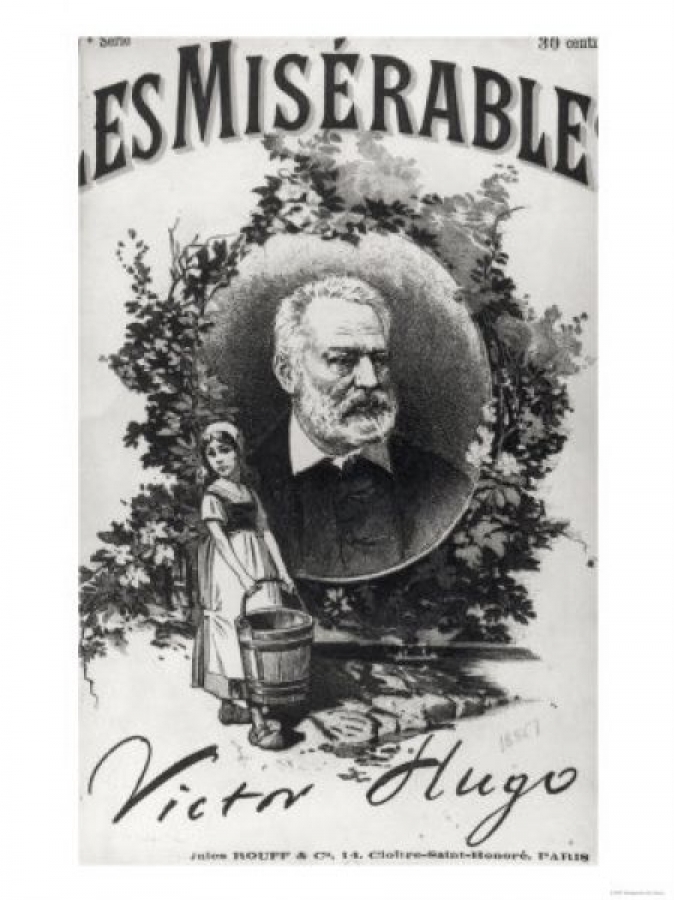
Les Misérables
The novel chronicles the life of Jean Valjean, a convict who, following an encounter with a bishop (a saint), is transformed into a good and righteous man: he first becomes a wealthy industrialist, then, returned to prison, escapes in order to save and raise a young girl, Cosette, who, upon reaching adulthood, falls in love with a young revolutionary. Jean Valjean rescues the young man from certain death (during the 1832 rebellion), and then chooses to disappear so as not to jeopardize the couple's future with his status as an escaped convict. Yet goodness triumphs and, as the author writes, “the night was starless and profoundly dark.” Doubtless in the shadows, some immense angel had come forth, with outspread wings, to await the soul from the supreme shadow to the supreme dawn. As Victor Hugo wrote: “the book which the reader has before his eyes at this moment is, from one end to the other, in its entirety and in its details, whatever its intermittences, exceptions, and lacunae, the march from evil to good. From the unjust toward the just, from the false to the true, from night to day, from appetite to conscience, from putrefaction to life; from bestiality to duty, from hell to heaven, from nothingness to God. Starting point: matter; destination: the soul. The hydra (evil) at the beginning, the angel at the end > This conception is based on faith in progress (which Hugo identifies with God, and therefore with a humanistic and Christian socialism) and on the uprising of the world of the wretched > driven by unstoppable social forces. From this point of view, the countless characters in the novel become archetypes > , representatives of a role to be fulfilled in the great transformation of the world, and thus devoid of any true depth: feelings and motivations are only ostensibly analyzed and explored; in reality, it is merely a succession of rhetorical devices (the interrogative form predominates) to illustrate contradictions and dilemmas that do not belong to the intimate sphere (and in this sense universal), but rather to a social and historical function. One need only think of the conversion > of Jean Valjean and the analysis of the crises of conscience the protagonist faces throughout the novel (the decision to appear at a trial to prevent an innocent man from paying for his crimes, and the decision to withdraw into the shadows so as not to jeopardize the young couple's happiness): in every case, one is confronted with a sort of divine illumination and moral imperative, while the depiction of the character's resulting misery (due to the loss of Cosette) is flat and schematic. Even more paradoxical and astonishingly devoid of any psychological or philosophical depth is one of the most dramatic episodes in the entire novel. Inspector Javert (Jean Valjean’s relentless persecutor) is caught in a vice between human law, which demands the arrest of the former convict, and his conscience, which compels him to release Jean Valjean, who had saved his life. His inability to break free from this dilemma drives him to suicide. It is clear that Hugo intends to attack bureaucratic, callous approaches to the enforcement of the law—a law that is often unjust because partisan (Javert’s final piece of writing, a mere list of recommendations for the chief of police, is incisive and remarkably effective). Yet one need only imagine what a Dostoevsky would have made of the contradiction between the human conscience and the imperatives imposed by institutional rules and norms to realize how far removed the French author is from the modern spirit, anchored as he is to a cold, moralistic vision of humanity and its struggles. His depiction of French history (from the French Revolution to the Citizen King) is likewise a series of epic events governed by Providence: the very defeat at Waterloo is attributed to a destiny bent on closing the Napoleonic era in order to inaugurate a new phase of social transformation that will lead to the great upheavals of 1848. Yet do individuals and social classes truly exist, or is everything already predetermined by an obscure, immanent force, at once religious and scientific: Progress? *Les Misérables* is a deeply dated work, enclosed within nineteenth-century culture, with little left to say to the man of postmodernism and globalization. As often happens with great authors (take Dante’s *Divine Comedy* itself), the most valuable parts involve components and approaches that cannot be traced back to the stated intentions. Victor Hugo is a Romantic author who ceaselessly pursues the grotesque and the visionary: stylistic traits that occasionally render the reading cumbersome, yet contribute to producing pages of great beauty and suspense. Consider the description of Cosette, an eight-year-old child sent to fetch water in the dead of night, watching the setting of Jupiter and feeling the surrounding nature seem to stir to capture her: the tall grasses swarmed beneath the north wind like eels. The rocks twisted like long claw-armed arms, seeking to seize prey…. > ; of the episode of the trap set by the criminals for Jean Valjean, so full of twists and unforeseen turns; and finally of the magnificent chapter ( Comment de frère on devient père > ) in which the two abandoned children seize the bread thrown to the swans to feed themselves. In a few pages, the author manages to capture the stillness of the Jardin du Luxembourg, the solitude of childhood, the solidarity among children, and the narrow-minded hypocrisy of bourgeois culture. The novel’s true masterpiece is the episode of the elephant: a striking, visually magnificent scene in which a monument built to glorify power becomes the sanctuary of three children. Then there is another protagonist of the novel: the city of Paris. The author’s toponomastic precision, the minute description of streets and houses (many of which had already vanished during Victor Hugo’s own lifetime), provide a romantic setting for the novel and its backdrop. This is prior to the grands boulevards, in the midst of a reticular city where it is easy to lose oneself and disappear. The pages devoted to the Parisian argot spoken among the wretched" are also of great interest, indicating an almost anthropological attentiveness on the author’s part. Yet is the idea of Progress truly authentic, or merely literary and political, concealing in truth a Romantic nostalgia for the Middle Ages and pre-revolutionary history? The novel is, on the whole, prolix, tedious in many stretches, and fundamentally a potboiler.

Monsieur Malaussène
In the neighborhood of Belleville lives the Malaussène tribe, and with them a myriad of characters. Belleville is a Parisian periphery, ravaged by the postmodernist manias of architects, the stupidity of politicians, and the greed of speculators; but it is also a magical place, a sort of Sherwood Forest, where Robin Hood is Benjamin Malaussène and the Sheriff is embodied by those who seek to evict long-standing tenants to demolish the old buildings and erect new ones for corporate offices and the wealthy bourgeoisie. > If one day you ask me what happiness looks like, and you will ask me, I will answer: like here In Belleville, where it is possible to screen the last film in the history of cinema (a film destined to be destroyed afterward) in a forgotten theater, where it is possible to tattoo all the streets of Belleville onto a person's body as a living testament to the neighborhood. In Belleville there is also an illusionist, who makes you see things that are not there; in Belleville > angels, who at times grow bored, are drawn toward us by the warmth and the surging of feelings and are personified in a detective nun. The novel features countless characters and a wealth of intertwining events: murders, disappearances, love affairs, bizarre twists of fate, persecutions. At the center, hero-like, stands Benjamin Malaussène, a fixed point in a magic lantern, in a kaleidoscope full of lights and illusions. There is no real plot, and the novel is difficult to follow. I must confess that I was unable to read it to the end, having lost my way among so many characters and so many words. Yet perhaps this was the author's very purpose: to demonstrate that no rationality governs existence, and that everything unfolds along a tenuous boundary between reality and imagination. Why not read it? Quite frankly, it is deeply muddled and verbose.
The Monster of Casoretto: Six Stories from the Casa di Ringhiera
I read Recami’s *La Casa di Ringhiera* in one breath (see review on this site), finding it one of the finest noirs in the vast panorama of Italian literature: the felicitous conjunction of a comedy of manners with the pacing typical of the best detective fiction. That is why, as soon as I read the review of *Il mostro del Casoretto*, I rushed out to buy it, anticipating the pleasure I had experienced with *La Casa di Ringhiera*. Perhaps because my expectations were so high, the disappointment proved all the more painful. The book is a collection of short stories which, with the exception of the last, feature the pensioner Amedeo Consonni, the grandfatherly detective. In the first story, *Il mostro del Casoretto*, Consonni is accused of sexually molesting a young girl; to punish him, the child’s relatives lock him in an abandoned farmhouse to make him pay. Consonni manages to break free, but is persuaded by Angela—whom we discover to be his aging sweetheart—to return to the scene of his captivity so the police can catch his tormentors red-handed. It is a flimsy plot, relying on salacious situations rather than narrative twists and social atmosphere. The second story, *Chi ha pane non ha denti, chi ha denti non ha pane*, is undoubtedly the most pleasant of the collection. Here we find the return of several characters and situations already familiar from *La Casa di Ringhiera*: Mr. De Angelis holds a grudge against a neighbor’s dog that keeps urinating on the wheels of his BMW, and decides to lock the animal inside an abandoned cold-storage unit in the building’s basement. It will be Gianmarco and Margherita, two children from the tenement, who inadvertently free the little dog, sparing De Angelis an indictment for pet theft and animal cruelty. It is a light and wry tale, in which Consonni returns to being the kindly grandfather figure. Later, perhaps at a loss for how to further develop the world of the tenement, Recami departs from the Lombard setting, moving the stories to Florence and Sardinia, with Consonni cast as the victim of misunderstandings. It is pointless to dwell on these stories. The verdict cannot be anything but harsh. The stories lack both plot and character development. Consonni emerges reduced to the figure of a lecherous, rather foolish old man who takes Viagra to engage in sexual intercourse, with the sole result of being caught in his underpants with an erect male member (why insist on such vulgarities?). His girlfriend Angela is a stout woman still in pursuit of sex, and the relationship between Amedeo and the lady bears none of the grace found in the poems of an elderly Ungaretti, still capable of falling in love: > you appeared at the doorway/in a red dress(...) it was on a Monday/to hold hands/and speak happily/no refuge was found/save in a sad garden/of the convulsive city . (September 12, 1966, from the collection *Ungà 1966-1968*). How difficult it is to chronicle the affections and dreams of us old folk! Why read it? It is a disappointment.

Mrs. Dalloway
The novel unfolds in London over the course of a single day, in the years immediately following the First World War: for most of the time, the characters move, reflect, and dream in the streets and parks of the British capital, readily recognizable locations. One’s mind immediately turns to Joyce’s *Ulysses*, a comparison valid only due to the "anti-novel" nature of Woolf’s book, just as with that of the Irish writer. While the latter intends to write an "Homeric poem"—and thus a mythic one—grounded upon a fiercely realistic premise (Dublin and its inhabitants are flesh and blood before Bloom), Woolf operates within a stream of consciousness in an interior space and time, transcending external context, present, and past. As the writer remarked in a 1919 essay > life is not a series of gig lamps symmetrically arranged; life is a luminous halo, a semi-transparent envelope surrounding us from the beginning of consciousness to the end . (from the introduction by Sergio Perosa, Oscar Mondadori Edition, 1979). It is > a magical suspense like that of a swimmer before diving into the deep, bright sea beneath him, with waves threatening to break, yet gently parting only the surface, stirring it, hiding and covering it as if spreading pearls over water lilies. We should not expect a plot; we must instead look for flashes of suggestion and poetry within a story that is simple, mundane, and intense all at once, because it speaks of the recognition of oneself. There is a first core, consisting of Clarissa Dalloway, an English noblewoman in her fifties, well-married with offspring, who awaits the return of an old flame from India. Is it the moment to reflect on her past, on missed opportunities? Only in part; in truth, Clarissa, entirely absorbed in her role, is particularly disturbed that her husband has left her at home to attend Lady Bruton's renowned gatherings. Walking through London’s noisy and crowded streets—so deeply loved by her for that very reason—Clarissa > felt the oddest sense of being invisible; unseen; unknown; there being no more marrying, no more having of children now, but only this astonishing and rather solemn progress with the rest of them, up Bond Street, being Mrs. Dalloway, not even Clarissa any more, only Mrs. Richard Dalloway . In those moments, a contradictory feeling overcomes her: of estrangement from life and, at the same time, immersion in it, in its background noise without the filter of imagination and poetry: in this frame of mind, locked within her own consciousness in a baffling autism, Clarissa recognizes herself, her prosaic contentment in a solid and socially accepted life. Ultimately, what has she suffered? The absence of an erstwhile presumed lover. Far more dramatic is the second core, unfortunately merely sketched out. It is the tale of Septimus’s madness and the desperate love of his wife, Rezia. The man fought in the First World War, witnessed massacres, was present at the death of his closest friend. He suffered profoundly; what point is there in living on? > Rezia put on her hat, and ran through fields of wheat, where could it ever be?, up a hill, somewhere near the sea, for ships could be seen, gulls and butterflies; and they were sitting on the top of a cliff, (...) and the caress of the sea, which seemed to cradle them in the hollow of a shell, and murmured in her ear; and she lay upon the beach, strewn it seemed to her she was, like flowers scattered over a grave. He is dead, she said, smiling at the poor old woman watching over her . The narrative style is highly poetic and constitutes the novel's defining feature. Plot and characters dissolve within consciousness, serving merely as an occasion for a richly evocative prose, abundant in metaphors and heavily reliant on reverie. Woolf fails to give realistic depth to the narrative, and whenever she abandons the poetic style, she easily lapses into melodrama, as in the cited conclusion of Rezia’s ravings. The writer rejects involvement; she pursues, regrettably, philosophical and psychological aims prevalent in her time, seeking detachment from her characters and their story, and in doing so, she pulverizes and renders sterile the entire narrative. Why not read it? Boring, prolix, inconclusive.