Finished reading on: March 24, 2019
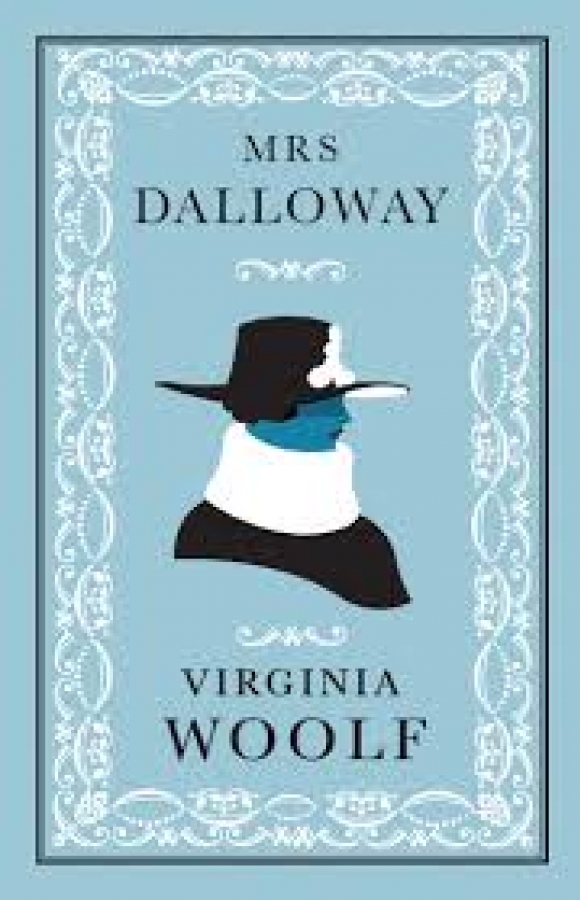
Mrs. Dalloway
AI Translation Notice: This review was translated from the original Italian using artificial intelligence. Book quotes and excerpts are translated interpretations and will not match the author's original English phrasing or official published translations.
The novel unfolds in London over the course of a single day, in the years immediately following the First World War: for most of the time, the characters move, reflect, and dream in the streets and parks of the British capital, readily recognizable locations. One’s mind immediately turns to Joyce’s Ulysses, a comparison valid only due to the "anti-novel" nature of Woolf’s book, just as with that of the Irish writer. While the latter intends to write an "Homeric poem"—and thus a mythic one—grounded upon a fiercely realistic premise (Dublin and its inhabitants are flesh and blood before Bloom), Woolf operates within a stream of consciousness in an interior space and time, transcending external context, present, and past. As the writer remarked in a 1919 essay
life is not a series of gig lamps symmetrically arranged; life is a luminous halo, a semi-transparent envelope surrounding us from the beginning of consciousness to the end
. (from the introduction by Sergio Perosa, Oscar Mondadori Edition, 1979). It is
a magical suspense like that of a swimmer before diving into the deep, bright sea beneath him, with waves threatening to break, yet gently parting only the surface, stirring it, hiding and covering it as if spreading pearls over water lilies.
We should not expect a plot; we must instead look for flashes of suggestion and poetry within a story that is simple, mundane, and intense all at once, because it speaks of the recognition of oneself. There is a first core, consisting of Clarissa Dalloway, an English noblewoman in her fifties, well-married with offspring, who awaits the return of an old flame from India. Is it the moment to reflect on her past, on missed opportunities? Only in part; in truth, Clarissa, entirely absorbed in her role, is particularly disturbed that her husband has left her at home to attend Lady Bruton's renowned gatherings. Walking through London’s noisy and crowded streets—so deeply loved by her for that very reason—Clarissa
felt the oddest sense of being invisible; unseen; unknown; there being no more marrying, no more having of children now, but only this astonishing and rather solemn progress with the rest of them, up Bond Street, being Mrs. Dalloway, not even Clarissa any more, only Mrs. Richard Dalloway
. In those moments, a contradictory feeling overcomes her: of estrangement from life and, at the same time, immersion in it, in its background noise without the filter of imagination and poetry: in this frame of mind, locked within her own consciousness in a baffling autism, Clarissa recognizes herself, her prosaic contentment in a solid and socially accepted life. Ultimately, what has she suffered? The absence of an erstwhile presumed lover. Far more dramatic is the second core, unfortunately merely sketched out. It is the tale of Septimus’s madness and the desperate love of his wife, Rezia. The man fought in the First World War, witnessed massacres, was present at the death of his closest friend. He suffered profoundly; what point is there in living on?
Rezia put on her hat, and ran through fields of wheat, where could it ever be?, up a hill, somewhere near the sea, for ships could be seen, gulls and butterflies; and they were sitting on the top of a cliff, (...) and the caress of the sea, which seemed to cradle them in the hollow of a shell, and murmured in her ear; and she lay upon the beach, strewn it seemed to her she was, like flowers scattered over a grave. He is dead, she said, smiling at the poor old woman watching over her
.
The narrative style is highly poetic and constitutes the novel's defining feature. Plot and characters dissolve within consciousness, serving merely as an occasion for a richly evocative prose, abundant in metaphors and heavily reliant on reverie. Woolf fails to give realistic depth to the narrative, and whenever she abandons the poetic style, she easily lapses into melodrama, as in the cited conclusion of Rezia’s ravings. The writer rejects involvement; she pursues, regrettably, philosophical and psychological aims prevalent in her time, seeking detachment from her characters and their story, and in doing so, she pulverizes and renders sterile the entire narrative.
Why not read it? Boring, prolix, inconclusive.