Finished reading on: November 02, 2025
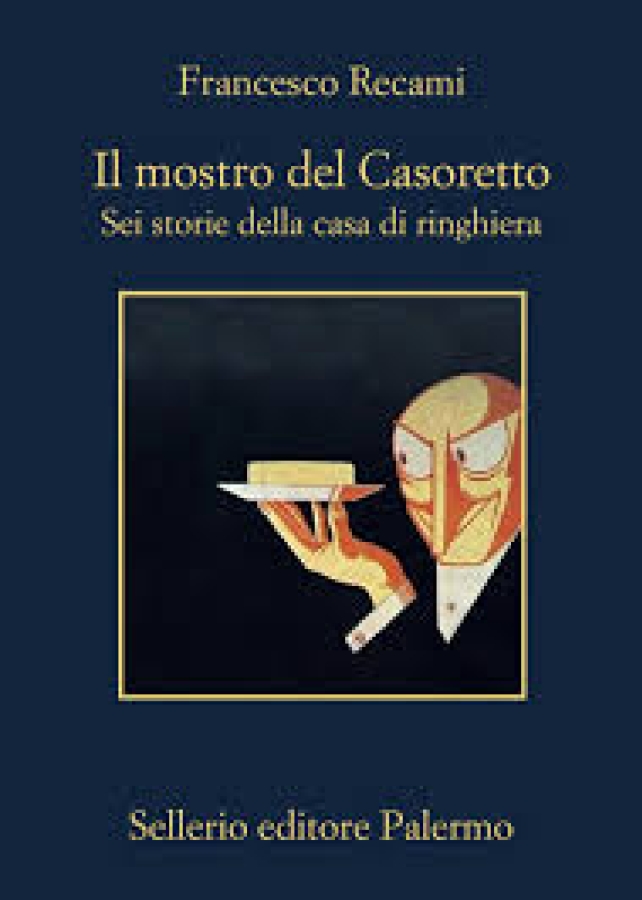
The Monster of Casoretto: Six Stories from the Casa di Ringhiera
Title of the original version reviewed: «Il mostro del Casoretto sei storie della casa di ringhiera»
AI Translation Notice: This review was translated from the original Italian using artificial intelligence. Book quotes and excerpts are translated interpretations and will not match the author's original English phrasing or official published translations.
I read Recami’s La Casa di Ringhiera in one breath (see review on this site), finding it one of the finest noirs in the vast panorama of Italian literature: the felicitous conjunction of a comedy of manners with the pacing typical of the best detective fiction. That is why, as soon as I read the review of Il mostro del Casoretto, I rushed out to buy it, anticipating the pleasure I had experienced with La Casa di Ringhiera. Perhaps because my expectations were so high, the disappointment proved all the more painful. The book is a collection of short stories which, with the exception of the last, feature the pensioner Amedeo Consonni, the grandfatherly detective. In the first story, Il mostro del Casoretto, Consonni is accused of sexually molesting a young girl; to punish him, the child’s relatives lock him in an abandoned farmhouse to make him pay. Consonni manages to break free, but is persuaded by Angela—whom we discover to be his aging sweetheart—to return to the scene of his captivity so the police can catch his tormentors red-handed. It is a flimsy plot, relying on salacious situations rather than narrative twists and social atmosphere. The second story, Chi ha pane non ha denti, chi ha denti non ha pane, is undoubtedly the most pleasant of the collection. Here we find the return of several characters and situations already familiar from La Casa di Ringhiera: Mr. De Angelis holds a grudge against a neighbor’s dog that keeps urinating on the wheels of his BMW, and decides to lock the animal inside an abandoned cold-storage unit in the building’s basement. It will be Gianmarco and Margherita, two children from the tenement, who inadvertently free the little dog, sparing De Angelis an indictment for pet theft and animal cruelty. It is a light and wry tale, in which Consonni returns to being the kindly grandfather figure. Later, perhaps at a loss for how to further develop the world of the tenement, Recami departs from the Lombard setting, moving the stories to Florence and Sardinia, with Consonni cast as the victim of misunderstandings. It is pointless to dwell on these stories.
The verdict cannot be anything but harsh. The stories lack both plot and character development. Consonni emerges reduced to the figure of a lecherous, rather foolish old man who takes Viagra to engage in sexual intercourse, with the sole result of being caught in his underpants with an erect male member (why insist on such vulgarities?). His girlfriend Angela is a stout woman still in pursuit of sex, and the relationship between Amedeo and the lady bears none of the grace found in the poems of an elderly Ungaretti, still capable of falling in love:
you appeared at the doorway/in a red dress(...) it was on a Monday/to hold hands/and speak happily/no refuge was found/save in a sad garden/of the convulsive city
. (September 12, 1966, from the collection Ungà 1966-1968). How difficult it is to chronicle the affections and dreams of us old folk!
Why read it? It is a disappointment.