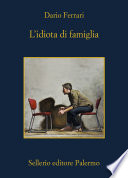
The Family Idiot
In the final years of his life, Immanuel Kant suffered from dementia: expelled from the university, isolated from society, the great philosopher penned thousands of pages in a delirious attempt to arrive at the truth of reality, rather than stop at its interpretation. With an inspired intuition, the author imagines that “Herr Professor”—as he was called by his children and students—met the same fate as Kant: losing his cognitive faculties and sliding into dementia after years of rigorous, frigid teaching of history and philosophy, strictly within the rigid, rational frameworks of Marxism. To care for his ailing father, the son leaves Rome to return to Viareggio; among his father's papers, he discovers a manuscript recounting, in the form of a novel, the “Three Days of Viareggio,” a violent popular uprising in May 1920 that was bloodily suppressed by the Italian government. These are notes written in a muddled hand, forcing the son into an arduous transcription. What comes as a surprise, given the father's unyielding Marxism, is the exaltation of anarchism and the title of the narrative: “*indifeso fervore*”—a celebrated verse by Sandro Penna, a poet whose transgressive poetry was worlds apart from the moral outlook of “Herr Professor” as his son had known him. Who truly was “Herr Professor”? This father forever poised to disapprove of his son, from the way he played tennis (more concerned with keeping his hair tidy than moving on the court) to his decision to drop out of his Philosophy degree to become a translator—and, to make matters worse, from English, a language his father despised. It could have been the occasion to turn Dementia—the cognitive and physical decline of a man—into an opportunity to rediscover his figure and his life, to know him better, and even to finally decipher oneself within one of the fundamental relationships of our existence. Instead, as the author states in the afterword: “I cannot help putting the bookish before the real. May reality not hold it against me if it always comes in second.” The father’s illness, the return to Viareggio, and the departure from Rome serve merely as pretexts for witty dialogue between characters, for subtle ironies regarding the social and cultural dynamics of our society, and for digressions—at times interesting, but more often useless and redundant. A grating, overly intellectualized framework pervades the entire narrative, stripping it of psychological depth and rendering it prolix and rambling. The novel can serve as a starting point for a broader reflection on Italian literature. We often witness authors who enjoy considerable visibility and garner favorable reviews from critics and avid readers alike. *L'idiota di famiglia*, for instance, was featured on *Petrarca*, a prominent television program dedicated to culture and books in particular. One might think of novels vastly different from one another yet consistently showered with accolades, such as *Alma* by Federica Manzon, *Almarina* by Valeria Parrella, *La Ferocia* by Nicola Lagioia, or *Con le peggiori intenzioni* by Alessandro Piperno (see the reviews of the cited books on this site): all acclaimed, yet fragile in plot and prose, and above all trapped within pre-established literary formulas that neither reflect Italian sociological reality nor genuinely probe the feelings and psychology of their characters. An oscillation between nostalgia and pessimism prevails, the plots are frequently insubstantial, and the characters easily slip into stereotypes. One has to wonder whether, in these assessments, membership in certain publishing circles takes precedence over genuine narrative quality. By dint of such “niche” novels, there is a risk that our literature will drift toward irrelevance, dragging the language down with it. Why avoid it? This novel is irritating.
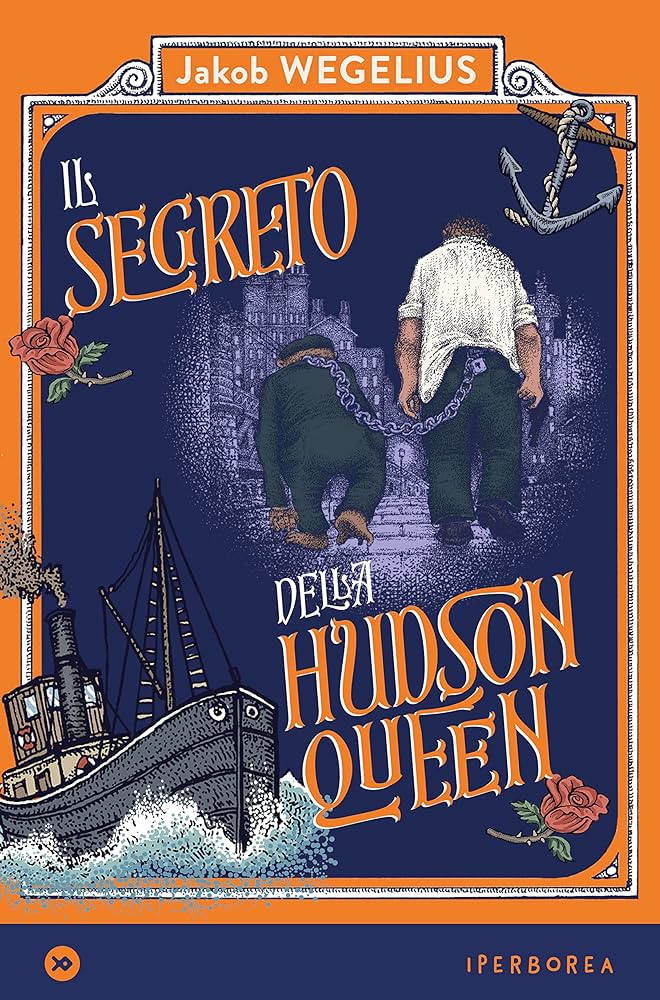
The Secret of the Hudson Queen
It is singular to review this novel immediately after reading Emilio Salgari's *La perla sanguinosa* (see the review on this site): a curious coincidence, almost as if pearls were inherently the bearers of adventure and misfortune. And indeed, when Sally Jones and the Chief find a pearl necklace hidden in a secret compartment within their ship’s steering wheel, Sally, with the wisdom of an intelligent ape, experiences > an unpleasant sensation in the pit of my stomach. (...) The pearls of the necklace (...) seemed to emanate a faint, mysterious light from within. Unlike Salgari’s fantastical setting, here the pearls lead us into the "underworld" of seafaring cities: violent and perilous slums for our ape, seemingly fragile and defenseless. The narrative resumes from the point where we left it in the previous novel (see the review of *The Murderer’s Ape* on this site); yet here the element of surprise is missing because we already know Sally, and we are deprived of both the charm of a seafaring, piratical Lisbon and the savor of noir intrigue. The story unfolds in Glasgow. Sally and the Chief set off in search of the pearls' presumed owner, the orphan Rose, abandoned as a child by her father, who wished to bequeath the jewel to her as a form of redemption. They find themselves plunged into the underworld of the English city: the Chief is forced to captain a ship smuggling alcohol to America, while Sally is held hostage by a criminal gang. Harassment, clashes between underworld syndicates, violent nightlife, and even boxing bouts follow in rapid succession, sweeping up the poor, frightened Sally, who becomes an object of curiosity, derision, and exploitation. Sally is guarded by Bernie the Butcher: a hulking, rather dim-witted young man notorious for his sudden, uncontrollable rages, himself the victim of mockery and abuse at the hands of the other criminals, and even his own sister. It is the friendship between Sally and Bernie that forms the crux of the story. Sally has numerous opportunities to escape, yet she stays to help poor Bernie, not wanting to leave him alone, determined to defend and save him. Faced with the blaze consuming the house in which his sister might perish, Bernie gathered momentum to throw himself into the fire as well, and then > I wrapped my long arms around him, (...) immediately took him by the arm and led him back onto the bridge, away from the burning building. The wise and gentle Sally discovers herself no longer fragile, but a mother figure to the hulking Bernie. How far removed we are from the mysterious and melancholic atmosphere of *The Murderer’s Ape*! All the enchantment of the previous novel has dissolved into a verbose plot, where the twists fail to lend rhythm to the narrative. One plods along, hoping to recover the characters, the drama, and the writing that had once held us so spellbound. It is a futile quest; only the friendship between Sally and Bernie rescues the work from utter disappointment, yet it is a relationship merely sketched, lacking in depth, that fails to truly engage. Why not read it? It is boring.
The Loser
>. If one wishes to attempt to understand this tale, delirious in so many ways, it is best to go to YouTube to watch and listen to Bach's *Goldberg Variations*, played on the piano by the "legendary" Glenn Gould. One must do so because Bernhard speaks of "genius" and of what happens to anyone who encounters a personality unreachable in artistic stature: one cannot help but be a "loser." >. The first-person narrator, Wertheimer, and Glenn find themselves in Salzburg as pupils of a renowned piano teacher. The first two are young virtuoso pianists who could have enjoyed successful concert careers; yet the encounter with genius proves fatal, for both realize they can never measure up to the "legendary" Glenn, that they would never be capable of playing the *Goldberg Variations* as their friend does. Both—the narrator and Wertheimer—abandon music: the former even gives away his splendid Steinway and retreats to Madrid to write about Glenn, caught in a frantic and inconclusive revision of the great pianist's work; the latter shuts himself away in a solitary hunting lodge, strumming an out-of-tune piano. Upon hearing of Glenn's sudden death, Wertheimer kills himself. The narrator seeks to understand the deeper reasons behind his friend's suicide. Had he always been unhappy, like those depressives who carry within themselves the "pain of living"? Is it the fate of "losers"—>? Or was >? To fathom the mystery behind his friend's suicide, the narrator has Wertheimer's final dwelling opened—the place where he had holed up—and discovers a worthless grand piano, >, upon which rests the sheet music for the *Goldberg Variations*; and the narrator, too, longs to return to the piano after years away, to measure himself against genius, and perhaps he as well will lose himself in the attempt to emulate the legendary Glenn. After reading this tale, one might exclaim: "Long live mediocrity!" What suffering lies in every artist who cannot emulate genius! Perhaps Francesco Petrarch's depression stemmed from his jealousy of Dante, as his friend Boccaccio affectionately pointed out to him; and for this reason he attempted, with the *Triumphs* and *Africa*, to write two epic poems that would rival the supremacy of the *Divine Comedy*—and dramatically failed. And what of Dante, who in Canto XXV of the *Inferno* hurls a challenge at Ovid, claiming his own superiority in the poetic invention of metamorphoses: "Let Ovid now be silent of Cadmus and Arethusa, / for if him into a serpent and her into a fountain / he turns in verse, I envy him not" (lines 97–99). To console ourselves, nothing remains but to cage great men >. For the legendary Glenn, the sentence is a YouTube video: having fled the concert stage for an isolated country house, he will be condemned to be listened to for eternity as a pianist "imprisoned" by his own renown; we, mediocre men, shall be truly free because we are anonymous. The plot of the tale is non-existent; it resembles a soliloquy, with a fluid yet at times nonsensical syntax, marked by a cadence reminiscent of theatre rather than prose: everything has unraveled, nothing makes sense, one can only recount the recurrence of thoughts and memories—even then with profound doubts, under the rhetorical refrain "so he said, I thought." Why not read it? It is tremendously exhausting. It can sit nicely on a bookshelf to make a fine show of our culture.
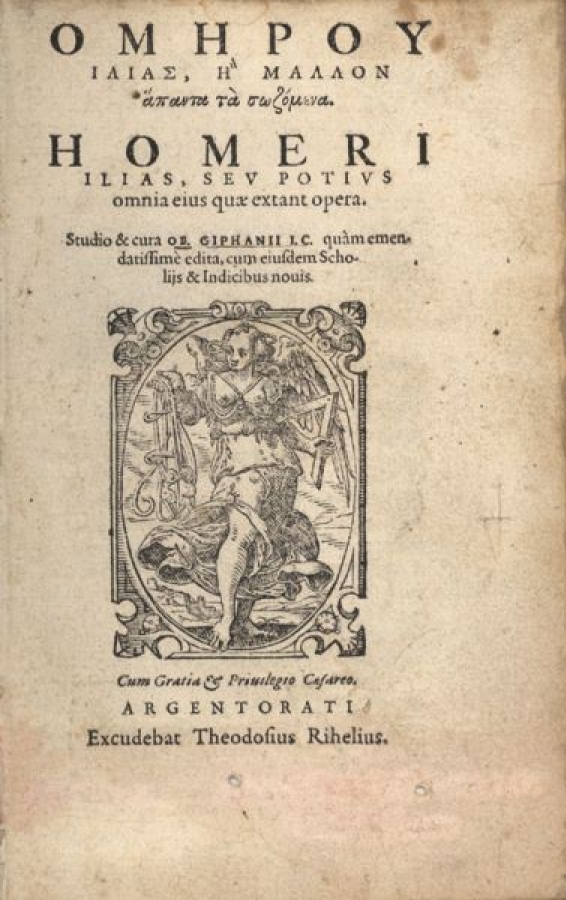
The Iliad
*The Iliad* unfolds over a brief period of time, yet it captures the most salient events of the Trojan War. The incipit is the quarrel between Agamemnon and Achilles over the possession of an enslaved woman, yet in truth, Achilles is calling Agamemnon’s authority into question. The hero resolves to withdraw from the fighting, triggering a sequence of clashes that, despite alternating fortunes, steadily tilt toward the defeat of the Achaeans, culminating in the Trojans setting fire to one of the Greek ships. The assembly of Achaean chieftains repeatedly dispatches embassies to Achilles urging him to rejoin the fray; instead, Patroclus, the hero’s dearest companion, enters the combat and is slain by Hector. Achilles rejoins the war to avenge Patroclus, unleashes wholesale slaughter, and kills Hector. Priam nevertheless succeeds in assuaging Achilles’ wrath and recovering Hector’s body to grant him a proper burial. The plot is relatively simple, yet it is complicated by the presence of multiple narrative tiers: each theme develops across three planes: the community of the gods, the community of men, and individual emotions, the latter perpetually subordinated to the will and unyielding codes of the community, even before the dictates of divinity. The first theme is the struggle for the governance of the community, and consequently, for power. The epic opens precisely with the conflict between Agamemnon and Achilles, yet the striving for the assertion of authority remains a constant. One need only consider Hector's decision not to withdraw behind the walls of Troy and instead fight on open ground solely to assert his authority against Polydamas, who was counseling him to do so: > now, while the son of devious-plotting Cronus has granted me to win glory by the ships, driving the Achaeans back to the sea, fool, you must not utter such advice among the people; no Trojan will obey you, I will not allow it . Yet this very clash for power is equally present among the gods: Poseidon remarks to Hera, who is fearful that Achilles might succumb to a god, > let us go and sit apart, rather, upon the lookout... if then Ares begins the strife, or Phoebus Apollo, or if they hold Achilles back, straightway then from our side will a clash of war arise; and very soon, methinks, beaten, they will return to Olympus, back among the other gods, vanquished by force beneath our hands . The same theme of power emerges distinctly in the assembly of Book XIX, wherein Achilles wishes to rejoin the battle immediately to avenge Patroclus and grant him a worthy burial, while the other chieftains insist that Achilles formally accept Agamemnon’s gifts, thereby affirming the latter’s authority. The second theme is, naturally, war: the most predictable and indeed the most tedious of themes, save for the battle among the gods, which reaches conspicuous peaks of comedy and mockery of the divinities. The martial accounts fragment and seem designed merely to exalt the stature of the heroes and the fallen. The third theme is composed of familial sentiments: affection for friends, filial love, reverence for elders, the grief over the loss of loved ones. This is the theme closest to modern sensibilities, where the epic modulates into pathos in certain passages: the exchange between Hector and Andromache, Thetis’s love for Achilles, and the latter’s agony over Patroclus: Hector > placed his son in his wife's arms: and she drew him to her fragrant bosom, smiling through her tears; her husband was moved to pity as he beheld her, and caressed her with his hand ... yet the community's laws hold greater sway than individual sentiments, > go now, return home, and attend to your own tasks, the loom and the distaff; and bid the handmaidens set about their work; for war shall be the business of men, of all men and of me above all, as many as were born in Ilium (Book VI). Into these themes interweave other narrative threads (parentheses within the epic), such as the magnificent Book XVIII (the forging of Achilles’ armor) and Book XXI, particularly the defense of the Trojans by the river Xanthus and its defeat by fire. On the whole, the epic is tedious and fragmented, and certainly falls short of the *Odyssey*.
I Am a Cat
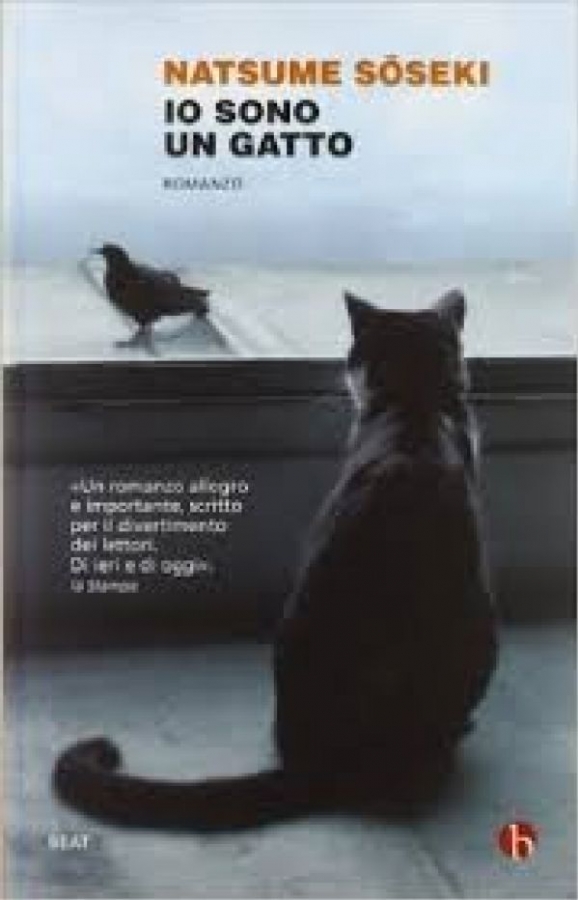
The protagonist and narrator of this novel is a cat: a stray taken into the home of a teacher, unloved yet tolerated out of sheer inertia. This is how our hero defines himself: > I do not grow fat because I eat no delicacies, but I am in passable condition and get by day after day without limping . Like all of his kind, our cat’s stillness and indolence conceal great wisdom, a profound capacity for reflection on the events of the human world. And this is why whoever were to read > the book distractedly, convinced that it was a work of little value, will suddenly realize they are faced with something very different, something that seems facile but is as profound as the doctrine of Buddha, and will no longer dare read it sprawled on the tatami with legs askew, skipping lines . We are in Japan at the beginning of the twentieth century, during the war with Russia, which would end in the resounding victory of the nascent Japanese empire. It is a long transitional phase, from the traditional, insular culture of the shoguns to an opening toward the Western world, its literature, and its science. Gathered at the teacher’s house in endless, pointless chatter are various intellectuals: the skeptic, witty and superficial; the young physicist, lost in scientific research whose purpose eludes comprehension; the Zen philosopher, yearning for a spirituality no longer truly felt; and finally, the young businessman, eager to strike it rich. At the center is the teacher: misanthropic, closed like «an oyster», selfish, spending all his time in his study, officially to read the countless books he purchases by squandering his modest teacher’s salary > But what is he doing, lying face down on this blanket with a long past, his chin resting on his hands, a cigarette between his fingers? Nothing, he just lies there idling. It is possible that in his dandruff-sprinkled head reflections on the grand schemes of things turn like a wheel of fire, but observing him from the outside, you would never tell. Yet, the cat is immensely grateful to the teacher, for he allows him to witness an emblematic cross-section of human society; a gathering of fabulists, to be sure, but one that provides our hero with «a thousand experiences», and us readers with pearls of wisdom. For instance, the cat visits a public bathhouse, where all men appear equal in their nudity, and suddenly there emerges a > a giant. Nietzsche’s superman. The king of demons, The commander-in-chief of brutes. (...) And on my way, I reflect. Among those men naked as worms, who in their effort to become all equal stripped off their trousers, haori, and hakama, an equally naked hero emerged who imposed his authority upon the others. I deduce from this that human beings may strip down as much as they like, they will never achieve equality . And what of narcissism? Observing the teacher looking in the mirror and lamenting his face, so disagreeable, the cat reflects that > when one is dissatisfied with oneself, when in the grip of discouragement, there is no more effective remedy than looking in the mirror. One gains an immediate and clear perception of beauty and ugliness. One marvels at having lived up to that moment showing such a face to the world. And this sudden awareness is a precious moment in a person’s life. Nothing is more useful to the human being than the perception of their own stupidity . We all know that cats are very patient; but everything has its limits! In the face of senseless babble, the vacuity of words, the poverty of feelings, and a background noise in which traditional philosophies (Buddhism and Confucianism) as well as Western thought dissolve, even a feline can take no more; and so he gets drunk and lets himself die. > Enough now, let it go as it will. I am tired of fighting... (...) Little by little I feel better. (...) Where I am. what I am doing, is completely indifferent to me. I only know that I feel good. (...) I sweep away sun and moon, pulverize heaven and earth and enter the mystery of eternal peace, I am dying, And dying I achieve peace. (...) I give thanks. I give thanks . At a certain point in this long novel, a doubt arises, at once fascinating and unsettling: could the cat and the teacher be parts of the very same person? The sage and the dullard? The engaged and the indifferent? And could this tale, written not long before his death, be Soseki’s spiritual testament? If this were the case, the book takes on an extremely modern, almost psychoanalytic mantle, a fresco of the complexity and ambivalence of the human soul, a precursor to those ambiguous and evanescent traits that would accompany great Japanese literature. The book is decidedly boring. There is no plot; the characters are stereotypes, the dialogues are protracted and serve merely as pretexts for musings; the cat’s digressions are more compelling, yet to be grasped in their fullness they would require a profound knowledge of Japanese history and culture. The translation is of a very high caliber, elevating the prose, which is the novel’s sole redeeming feature; the explanatory notes are meticulous and exhaustive, enriching our knowledge of Japanese society and inviting us to study it. Why not read it? It is boring.