Finished reading on: August 01, 2007
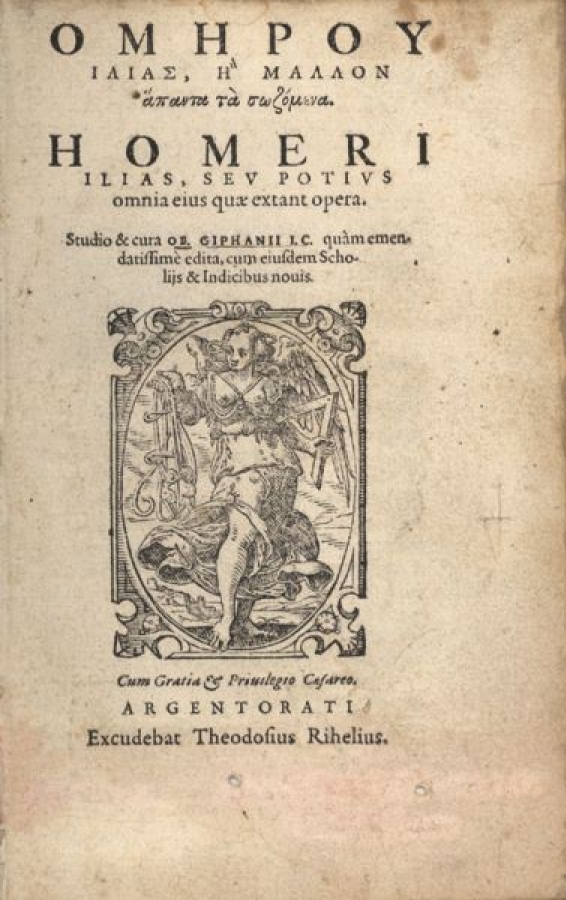
The Iliad
Title of the original version reviewed: «Iliade»
AI Translation Notice: This review was translated from the original Italian using artificial intelligence. Book quotes and excerpts are translated interpretations and will not match the author's original English phrasing or official published translations.
The Iliad unfolds over a brief period of time, yet it captures the most salient events of the Trojan War.
The incipit is the quarrel between Agamemnon and Achilles over the possession of an enslaved woman, yet in truth, Achilles is calling Agamemnon’s authority into question.
The hero resolves to withdraw from the fighting, triggering a sequence of clashes that, despite alternating fortunes, steadily tilt toward the defeat of the Achaeans, culminating in the Trojans setting fire to one of the Greek ships.
The assembly of Achaean chieftains repeatedly dispatches embassies to Achilles urging him to rejoin the fray; instead, Patroclus, the hero’s dearest companion, enters the combat and is slain by Hector.
Achilles rejoins the war to avenge Patroclus, unleashes wholesale slaughter, and kills Hector.
Priam nevertheless succeeds in assuaging Achilles’ wrath and recovering Hector’s body to grant him a proper burial.
The plot is relatively simple, yet it is complicated by the presence of multiple narrative tiers: each theme develops across three planes: the community of the gods, the community of men, and individual emotions, the latter perpetually subordinated to the will and unyielding codes of the community, even before the dictates of divinity.
The first theme is the struggle for the governance of the community, and consequently, for power.
The epic opens precisely with the conflict between Agamemnon and Achilles, yet the striving for the assertion of authority remains a constant.
One need only consider Hector's decision not to withdraw behind the walls of Troy and instead fight on open ground solely to assert his authority against Polydamas, who was counseling him to do so:
now, while the son of devious-plotting Cronus has granted me to win glory by the ships, driving the Achaeans back to the sea, fool, you must not utter such advice among the people; no Trojan will obey you, I will not allow it
.
Yet this very clash for power is equally present among the gods: Poseidon remarks to Hera, who is fearful that Achilles might succumb to a god,
let us go and sit apart, rather, upon the lookout...
if then Ares begins the strife, or Phoebus Apollo, or if they hold Achilles back, straightway then from our side will a clash of war arise; and very soon, methinks, beaten, they will return to Olympus, back among the other gods, vanquished by force beneath our hands
.
The same theme of power emerges distinctly in the assembly of Book XIX, wherein Achilles wishes to rejoin the battle immediately to avenge Patroclus and grant him a worthy burial, while the other chieftains insist that Achilles formally accept Agamemnon’s gifts, thereby affirming the latter’s authority.
The second theme is, naturally, war: the most predictable and indeed the most tedious of themes, save for the battle among the gods, which reaches conspicuous peaks of comedy and mockery of the divinities.
The martial accounts fragment and seem designed merely to exalt the stature of the heroes and the fallen.
The third theme is composed of familial sentiments: affection for friends, filial love, reverence for elders, the grief over the loss of loved ones.
This is the theme closest to modern sensibilities, where the epic modulates into pathos in certain passages: the exchange between Hector and Andromache, Thetis’s love for Achilles, and the latter’s agony over Patroclus: Hector
placed his son in his wife's arms: and she drew him to her fragrant bosom, smiling through her tears; her husband was moved to pity as he beheld her, and caressed her with his hand
...
yet the community's laws hold greater sway than individual sentiments,
go now, return home, and attend to your own tasks, the loom and the distaff; and bid the handmaidens set about their work; for war shall be the business of men, of all men and of me above all, as many as were born in Ilium
(Book VI).
Into these themes interweave other narrative threads (parentheses within the epic), such as the magnificent Book XVIII (the forging of Achilles’ armor) and Book XXI, particularly the defense of the Trojans by the river Xanthus and its defeat by fire.
On the whole, the epic is tedious and fragmented, and certainly falls short of the Odyssey.