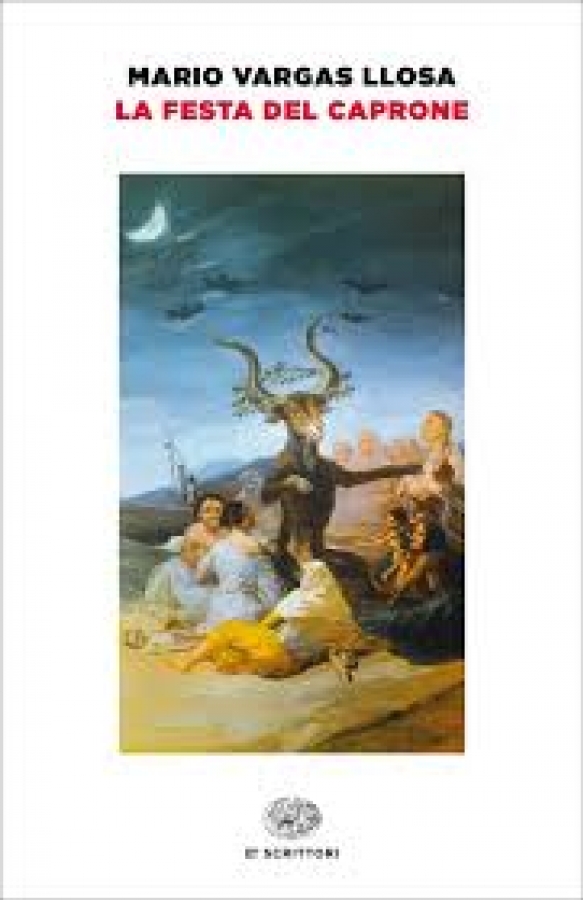
The Feast of the Goat
What are the mechanisms that uphold a dictatorship? Vargas Llosa sets out from history, from real protagonists and events, to investigate the dark allure of the despot, and he does so starting from a cruel character in whom the peculiarities of tyranny have been distilled, stripped of the smokescreen of ideologies and good manners. We read from the Treccani Encyclopedia that Trujillo ruled the Dominican Republic from 1930 to 1961 > through dictatorial methods until his death, thanks to his control over the armed forces, that exercised (directly or through members of his family) over the national economy, and the systematic resort to terrorist methods against his opponents ; and, I would add, through the backing of the United States and the Church, who saw him as a bulwark against communism. We are in the final phase: the regime’s atrocities have driven the United States and the Church to abandon Trujillo, strangling the small country with sanctions and isolating the dictator internationally. There are three narrative strands, running in parallel and later intertwining, always circling the baneful figure of Trujillo. Urania, a successful young woman living in New York, returns to Santo Domingo to visit her aging father, confined to bed in an almost vegetative state. For many pages we do not comprehend so much rancor toward her father; we only know that Urania > had not managed to overcome the insurmountable revulsion, the disgust men inspired in her... you had never wanted to get treatment . In the second narrative strand, the setting is where Trujillo will be assassinated and where the conspirators anxiously wait (first called executioners, then patriots): they are a heterogeneous group of figures, driven by revenge or by revulsion toward a cruel regime; they were once beneficiaries of the dictator and remain bound to him by a love-hate relationship: a > paralysis, the numbing of the will, of reason and free will that that contemptible character—dapper to the point of ridicule, with his fluting little voice and hypnotist's eyes—exercised over Dominicans, rich or poor, learned or unlettered, friends or foes . His assassination is a catharsis, a deliverance from a tragic spell, rather than a political act. And finally, we find ourselves before Trujillo and his court: the depraved, sadistic sons, the greedy and thousand-times-betrayed wife, the puppet president, the police chief—the perpetrator of the most heinous tortures and crimes—the cunning pettifogger, and many others. All live in perpetual dread: it is the Chief’s habit to dismiss them, expropriate their wealth, cast them into prison, have them killed, on a mere whim, to assert his power over life and death. And they submit; if they fall from grace, they yearn to return to the tyrant's good graces, ready for anything, like Urania's father, formerly an esteemed senate president and then cast aside without explanation. The country is falling apart, inflation and poverty run rampant, the regime is fracturing, yet just hours before his assassination, Trujillo is concerned with only one thing: he is unable to use "the part of the body I will not name" (Patrizia Valduga *La tentazione*). The narrative unfolds slowly, at times verbosely, until one reaches several splendid chapters, for which alone the book is worth reading. The conspiracy hinges on the commander of the Armed Forces, who was supposed to intervene swiftly and decisively upon news of Trujillo's death. Instead, he stalls, temporizes, > plunged into that kind of hypnosis, he thought that perhaps his indolence was due to the fact that, although the Chief's body was dead, his soul, his spirit, or whatever it was called, continued to hold him in thrall . And like the conspirators of July 25, 1943, when the Grand Council of Fascism effectively ousted Mussolini, our conspirator slips into the quicksand of torment. Next, we follow the puppet president in his seizure of power, > a defenseless little man who wrote verses and seemed of so little consequence in this world of real men with pistols and submachine guns , and, allowing for the obvious differences, the mind turns to Dino Grandi or to Pietro Badoglio himself, accomplices to the Fascist dictatorship yet ultimately its gravediggers. And finally, in the last and dramatic chapter, we understand the depth of Urania's bitterness. While still a young girl, her father sold her to the dictator simply to regain the Chief’s favor. And he, > taking her by the arm, threw her down beside him. (...) That mass of flesh crushed her, suffocated her against the mattress. (...) But the suffocation did not prevent her from feeling the roughness of that hand, of those fingers exploring, groping, and forcing their way into her . Many words can be used to describe a tyranny, yet it is epitomized in its most ancestral and brutal manifestation: rape. I am not aware whether there exists a great novel on the Fascist dictatorship capable of probing the dark fascination of tyranny as Vargas Llosa has done. Were such a narrative to exist, it would bring out of the shadows the lavish court that surrounded the dictator: his double-breasted blackshirts, the illustrious heirs of the liberal class, the magniloquent and craven intellectuals—either naive or merely pandering—the cowardly, complaisant generals, and the many women whom Mussolini used and cast aside, or dragged with him to his death. If I were the ANPI, the National Association of Italian Partisans, I would entrust Vargas Llosa with the task of giving us such a fresco, to answer the question: > who was it? (...) Whose fault is it? And all those who died, poor souls? (...) I saw them die, it was all useless... he felt like foolishly bursting into tears (Mario Tobino *Il clandestino*, see review on this site). Masterfully translated, the novel is nevertheless too long, and in particular the extensive reliance on dialogues—often soliloquies—burdens the narrative; it fails to enchant or nourish the imagination, remaining somewhat cold and detached. The writer stands at a distance from the reality of the Dominican Republic; he is a spectator to a drama, interested in investigating the mechanisms of cruelty and dominion without allowing himself to become involved, driven instead by a barely concealed irony. This approach prevents the reader from truly feeling the weight of the characters' dramatic and harrowing ordeals, the tragedy of a nation. Why read it? A profound inquiry into tyranny.
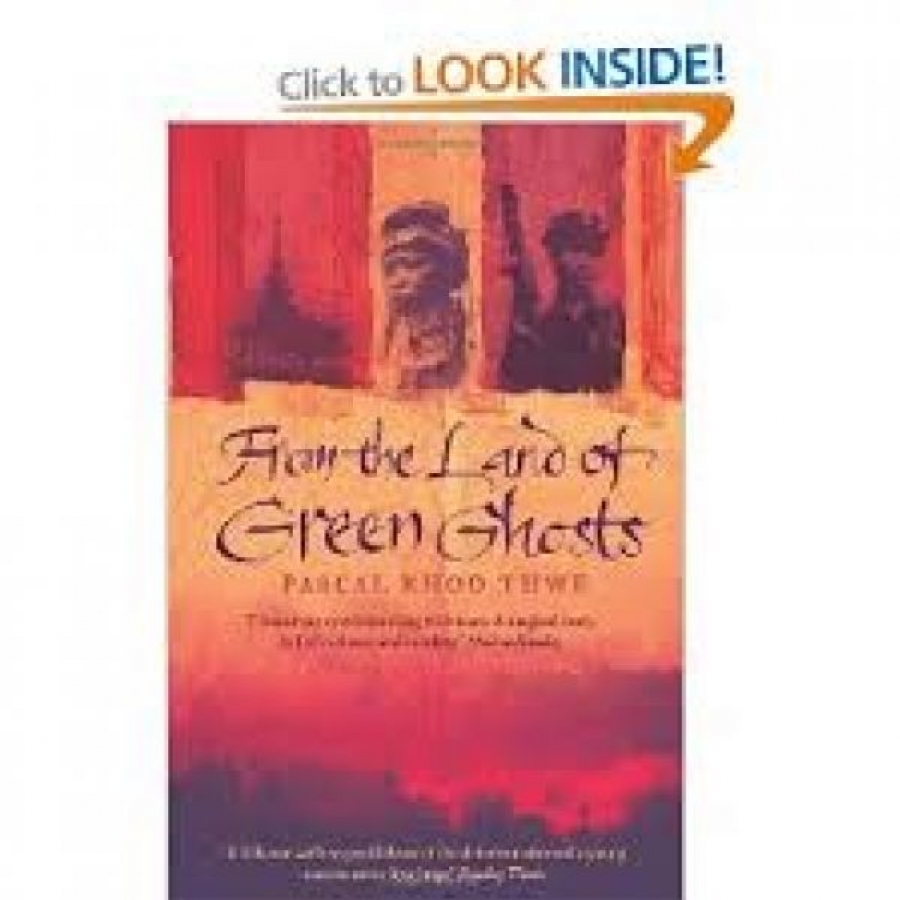
From the Land of Green Ghosts (The Boy Who Spoke to the Wind)
I have always wondered why Italian editions do not retain the original title. It often conveys the sense of the book far better, as in the case of *From the Land of Green Ghosts*, which became, who knows why, *Il ragazzo che parlava col vento*. The title "from the land of green ghosts" neatly encapsulates the autobiography of one who, to save himself, had to forfeit his own identity through detachment from the spirits of an ancestral world made of lush fruits, rice paddies, forests, water, birds, and animals. Then again, misunderstanding must be this novel's destiny, if in his preface John Casey himself—Pascal's savior, mentor, and friend—offers this definition: > this is less a book of politics and history than a spiritual autobiography, in which, uniquely, (Pascal) writes from the perspective of a member of a Bronze Age tribal society, recently opened to the outside world, and at the same time of someone who ultimately managed to receive a Western education at a famous English university . Truly an arrogant and reductive assessment for someone who endured terrible atrocities, witnessing the material and social destruction of Burma! The novel is divided into three parts. The first part, "Tribal Idyll," depicts a tribal, agrarian world on the fringes of the great forests. > We were Padaung, we were Catholic, and we seemed to live in a world of our own, with our ceremonies and traditions. We had no sense that anything different could break in. The feeling of being safe showed me that we were living in paradise . The author describes for us, as meticulously as an anthropologist, the customs, way of life, and natural environment of the Padaung, even detailing, with a wealth of particulars curious to us, the food and the manner of cooking it. We discover ancestor worship, the formidable authority of the elders, and the spiritualistic and magical elements that characterize every moment of life. Even though Catholic—and the same holds true for Buddhists—the tribe jealously continues to preserve its traditions, all while observing the precepts of the new religion. His paternal grandmother's tales permeate Pascal's childhood: they are grim stories, like all folklore of peasant societies, yet in them animals, particularly birds, seal the fate of men. One day, the young Pascal catches an owl and wishes to cook it, but his grandmother tells him to speak to it and release it, so that one day he might call upon it for help. > Years later, when I was in the greatest danger, that memory became fraught with meaning for me . Through his involvement with the parish, Pascal receives an initial education and develops a passion for learning. He leaves the village to attend first a seminary, then university. He becomes a student, which places him in the most dynamic and politicized segment of Burmese society. Toward the regime—authoritarian, cruel, mendacious, and corrupt—Pascal has yet to take a stand. There is no political consciousness, and even the grief over the imprisonment and death of his girlfriend does not seem to translate into a deliberate taking of sides. Yet he is a student, and therefore an enemy of the regime. He must flee and hide in the jungle. The second part, "Revolution and Struggle," recounts Pascal’s experiences among the rebels, who have entrenched themselves in the border areas between Burma and Thailand. Through Pascal’s pen, we witness countless atrocities; suffice it to say that Burmese soldiers advance through minefields—laid, moreover, by themselves—by herding beaten, terrorized, and starving civilians ahead of them, clearing a path through bodies torn apart by explosions. Such is the cruelty that even > the animals and birds, which regularly drank from the river, fled, leaving only the human beings trapped in a fit of madness . The third part, "Rescue," recounts how Pascal managed to escape to Thailand and reach England, where he would become a professor of English literature. The story has a happy ending, yet there is a disturbing revelation. In Cambridge, at a dinner party at the home of English friends, he learns that he was singled out for rescue because years earlier his hosts had attended a circus performance of "giraffe women"—Padaung women with elongated necks adorned with metal rings; in short, Western man delights in preserving specimens of rare and endangered species. Yet is Pascal aware of this? No, because as the closing lines tell us, by now his dreams are > images all jumbled together, the elements overlapping. Snow might fall on the jungles, or palm trees grow on the Alps. The visions are often blurred by mist . It is a long novel, dominated by a flat narrative style incapable of conveying sensations and emotions. It is as if he were a reporter investigating, describing, filing an account. While the facts undeniably speak for themselves, it is not the writing that grips us; it is the history of Burma itself. It is no coincidence that the narrative engages the reader in the second part, as the tempo accelerates and the episodes of war and violence cannot fail to shatter us. Yet even here, the narrating "I" and protagonist, Pascal, appears almost as a bystander, a social scientist. Could it be that the author is forced to write in a language not his own? Or is this apparent detachment a psychological shield to survive, to defend against memory, against a destructive existential grief? Why skip it? The book is worth reading only if one harbors a deep interest in the landscape and history of Burma.
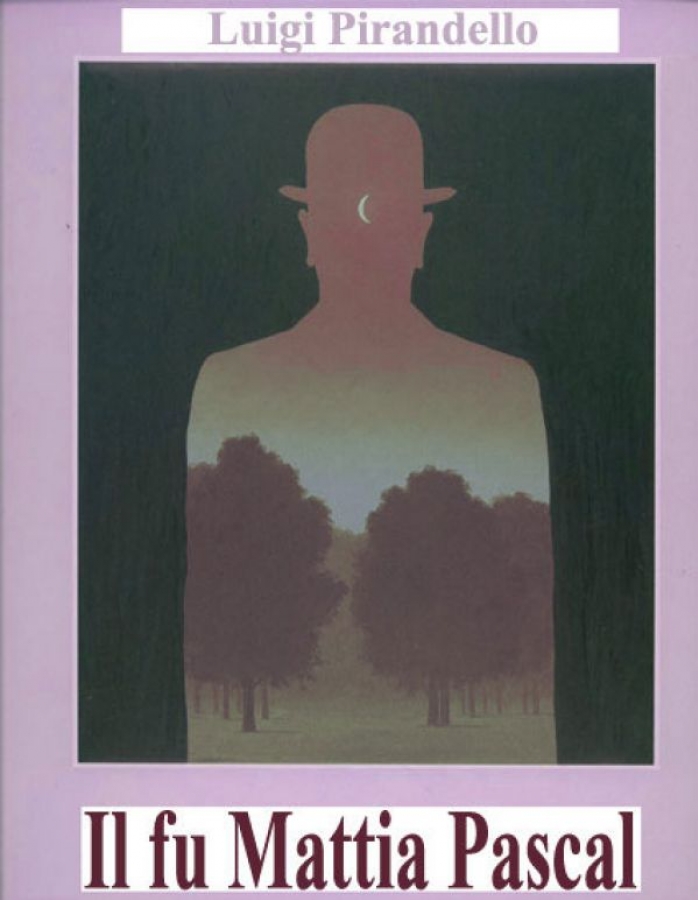
The Late Mattia Pascal
Mattia Pascal lives in a provincial town and has found himself, almost by chance, married, poor, and working as a librarian. He suffers from the stagnation of his existence and is terrified by the idea of living “thus, always, until death, without any change, ever…”. Seeking a momentary escape, he flees to Monte Carlo, where he gambles at the casino and wins a substantial sum. He then discovers that in his hometown the unrecognizable body of a suicide victim has been found, presumed to be him, Mattia. This is the most felicitous part of the novel: briskly paced, ironic, rich in well-crafted portraits and an effective depiction of provincial life and the milieu of casino gamblers. Upon the news of his presumed death, Mattia decides to disappear, to become another man, freed from all ties to the past, > with my conscience made virgin and transparent once more, and the vigilant spirit of my new self . This is, however, an illusion, for within deceit he cannot live authentically. He becomes fully aware of this when he falls in love with a woman to whom he cannot declare himself. In truth, Pirandello is not so much interested in the drama of Mattia Pascal the man as in the paradox of a character who has managed to deceive even death. Is life not perhaps an immense mystery, Pirandello asks himself, and “all this mystery does not exist outside of us, but only within us,” and > what if death did not exist, but were merely the extinction of the wretched feeling we have of it ? In the second part of the novel, the author loses interest in the study of characters and situations, which become increasingly predictable and mundane, focusing instead on his cherished theme: life as an illusion, as a hall of mirrors reflecting consciousness—a consciousness that is, moreover, false and deceitful—of the self. The narrative pace becomes slow and repetitive, the dialogues are in many instances redundant, and the book loses the freshness and originality of its opening pages. The conclusion of the novel comes as no surprise. Trapped within a web of lies, Mattia Pascal decides to stage a second suicide—that is, to die once again—and return to being Mattia Pascal. Yet his wife has remarried, rightly believing herself a widow; thus Mattia Pascal, even having returned to “real” life, must continue to live in deceit and falsehood. He is now, irrevocably, the Late Mattia Pascal. The desire to “evaporate,” as the Japanese say, is one of the never truly voiced aspirations of every human being. Can one retrace one's steps? Can one live another life? Pirandello seems to answer in the negative, not because he believes that what matters are the authentic relationships we maintain with people and with the environment in which we live, but because he is convinced that everything is an illusion and a deception. This is the theme of Pirandello’s major plays, which, from a stylistic standpoint, hinge on the dialectic between characters—an extraordinarily effective device for unveiling the lie in which we live. Transferred to the novel, this approach renders it ponderous, diminishing the pleasure of the reading experience. Why read it? The momentum and irony of the novel’s first part compensate for the sluggishness of the second.
The Funeral of Aunt Stana
“If this were, for instance, a Hemingway story, by the second paragraph its protagonist would already be shooting fascists, (...) a nurse would have fallen in love with him (...). Naturally, she would be a woman so wonderful and caring that she would die along with the baby during childbirth, if only to save him from the monotony of family life. (...) However, I am not Hemingway. Looking at things realistically, for the most part I am merely an extra in my own story.” The narrator—such a nonentity that we are not even told her name—is a young woman who spends her time glued to the TV, binge-watching her beloved shows. How do the Japanese manage to barricade themselves inside; don’t they have mothers? And hers forces our protagonist to abandon her cozy, protective den to attend the funeral of Aunt Stana, who choked to death on a chicken bone. She finds herself thrust into ancestral, corroded family ties in the village of her childhood, where adolescent dynamics—long repressed or simply buried in the deepest recesses of the soul—resurface. The narrative is caustically ironic and yet so violent that it repeatedly forces the narrator to pause “and take a breath of fresh air.” The relatives are extreme figures, caricatures of the archetypes found in every family: the overbearing and the submissive personalities, the mutual hatred and contempt calcified over decades, the rote repetition of habits and gestures, the vulgar greed over a prospective inheritance. And at the center of it all is she, the narrator, invisible, just as when “the bus drivers would drive right past me without stopping, even when I stood in the middle of the station, even waving my hand at them.” Events rapidly escalate. A torrential downpour sweeps everything away, dragging our protagonist into a ditch of mud where she might finally rot in peace; though, knowing her luck, archaeological excavations will likely exhume her centuries later: “there’s simply no way people will ever leave you in peace!” That is, until a stroke of fortune lands her a thick roll of euros hidden inside an overcoat. “At that moment, a brilliant idea flashed through my mind. I’d love to tell you all about it in detail, but unfortunately I don’t have the time. The hill above me is about to vanish in a terrible explosion, and right now I don’t much feel like sticking around for the show. I have to leave at once. If I don't hurry, everything could easily turn to dust.” The novel is set in Bosnia, yet the backdrop could easily be Japan, Italy, or anywhere else in the world. Both the allure and the limitation of many Eastern European writers lie in the universality of their stories. As in László Krasznahorkai’s *The Melancholy of Resistance* and Elvira Mujčić’s *La buona condotta* (see the reviews on this site), here too the author operates within an ahistorical, surreal, and Kafkaesque dimension. If, on the one hand, the reader sees themselves reflected in the narrative (who among us hasn't attended a funeral among complete strangers for relatives?), on the other, one fails to sense the tragedy of a nation like Bosnia and Herzegovina—torn for years by religious, linguistic, and national divides, perpetually teetering on the brink of civil war. Or is this an escape from a harsh, harrowing reality that frees the writer to tell extraordinary tales, as the author suggests in the afterword? From a narrative standpoint, the prose flows smoothly within a well-constructed plot, even if it ultimately grows repetitive and predictable. While it is true that the narrator is merely an “extra,” the story becomes far more compelling precisely when she steps forward, offering evocative windows into her life and oneiric departures—glimpses into her personality that are all too brief. Why read it? For its biting, surreal dissection of the family unit.
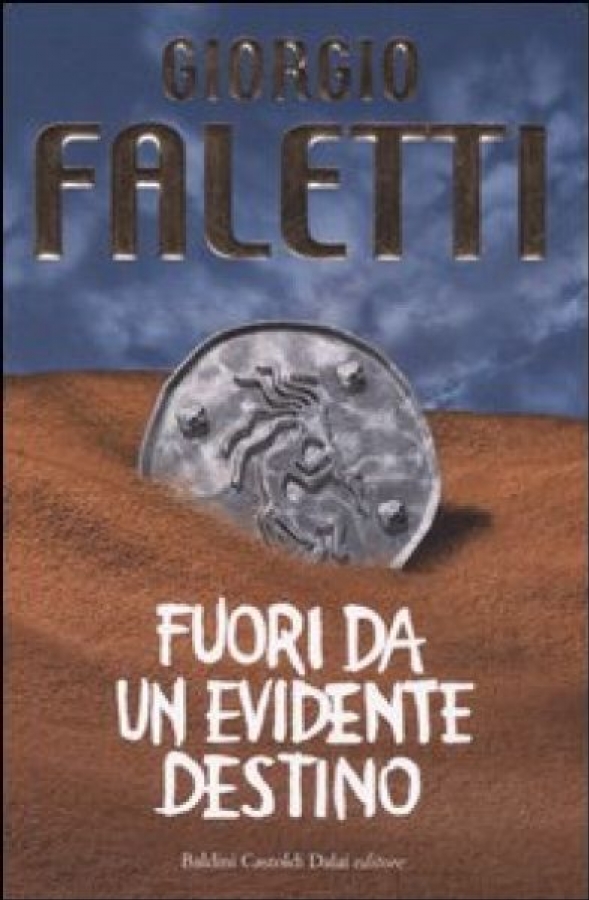
Outside an Evident Destiny
The setting is an American town in Navajo territory. Jim, half-Indian and half-white, returns to his hometown only to become embroiled in a series of murders committed by an avenging shadow, unleashed by an Indian ancestor to exact vengeance for a massacre perpetrated by adventurers. It is a return to the past—both the distant one and the more immediate past tied to Jim’s childhood and his choice to leave his hometown behind. The book’s conclusion is partly predictable—the culprits of both yesterday and today meet their punishment—and partly bitter, as Jim must sacrifice himself, taking his own life to halt the vengeful fury of the shadow, which is his own shadow. The story is overly New Age, as is its style. Yet the narrative pace remains brisk, making for an enjoyable and compelling read.