Giorgio Faletti
Books by this author (4)
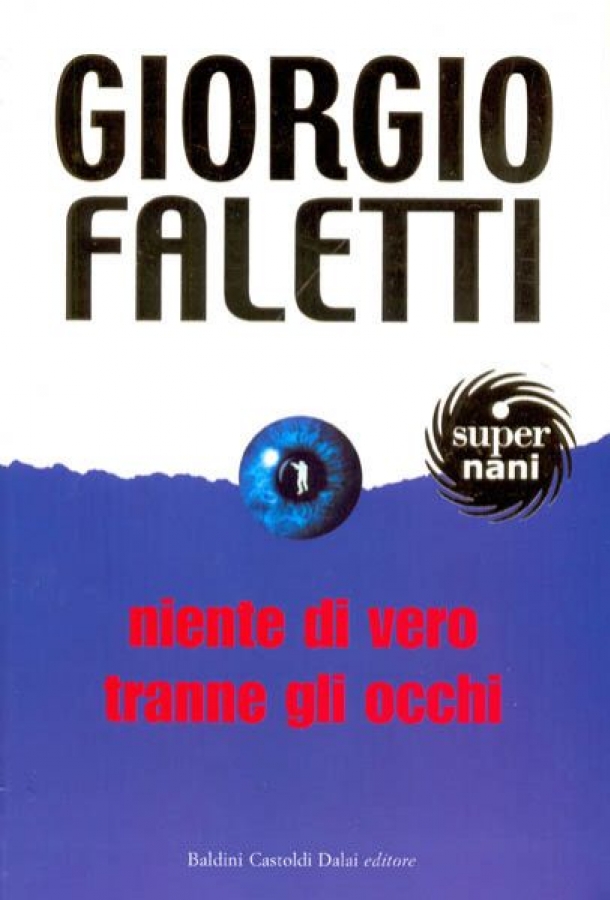
Nothing is true except the eyes
With this novel as well, Faletti confirms his standing as a fine author of American-style thrillers. An excellent style and a brisk narrative pace that nonetheless leaves room for evocations of the mysteries surrounding life and human relationships. The only flaw lies in the fact that the protagonist sees the scenes through the eyes of one of the murder victims—eyes that were transplanted into her. It is an implausible conceit that introduces a jarring note, one that is, moreover, superfluous to the unfolding of the plot.
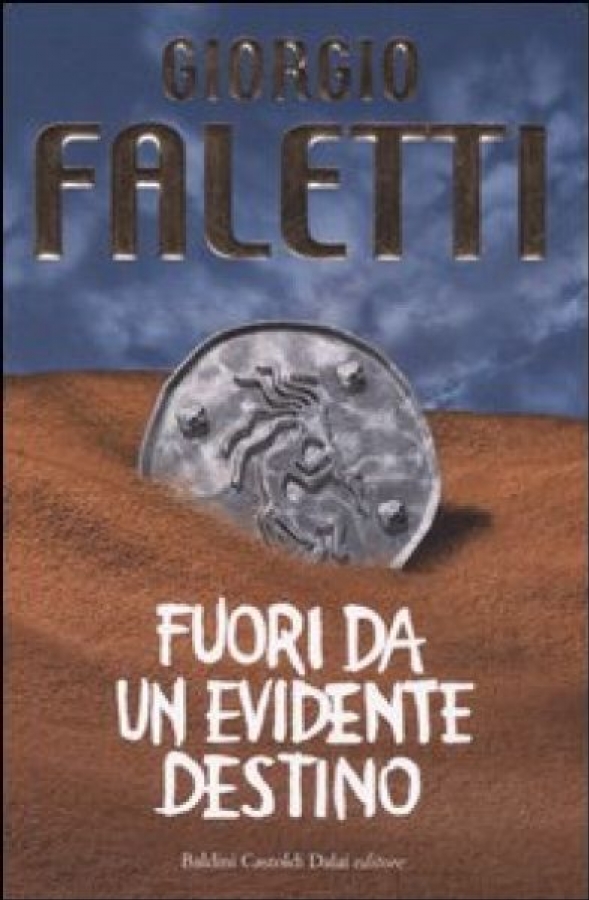
Outside an Evident Destiny
The setting is an American town in Navajo territory. Jim, half-Indian and half-white, returns to his hometown only to become embroiled in a series of murders committed by an avenging shadow, unleashed by an Indian ancestor to exact vengeance for a massacre perpetrated by adventurers. It is a return to the past—both the distant one and the more immediate past tied to Jim’s childhood and his choice to leave his hometown behind. The book’s conclusion is partly predictable—the culprits of both yesterday and today meet their punishment—and partly bitter, as Jim must sacrifice himself, taking his own life to halt the vengeful fury of the shadow, which is his own shadow. The story is overly New Age, as is its style. Yet the narrative pace remains brisk, making for an enjoyable and compelling read.
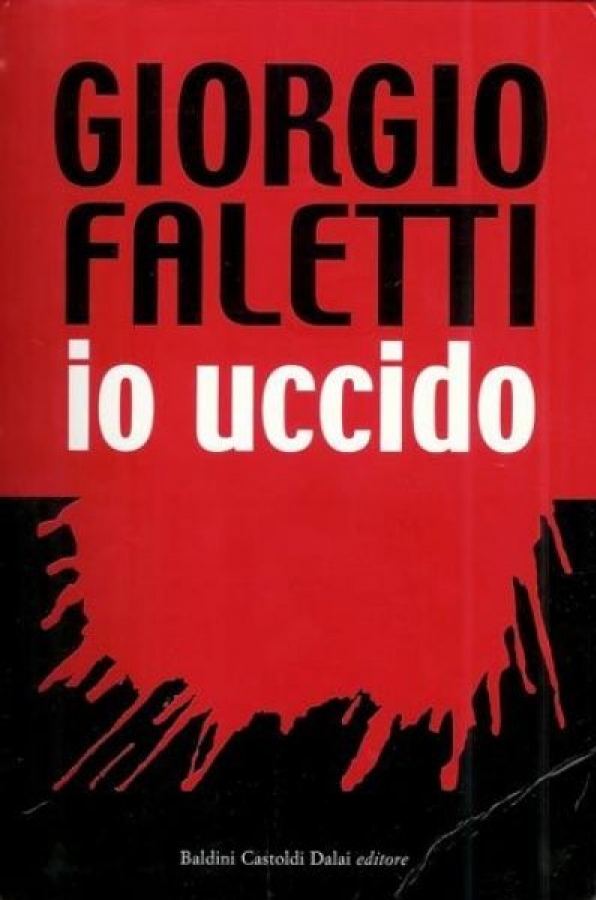
I Kill
The novel concerns a string of murders committed in Monte Carlo by a psychopath who slaughters a series of celebrities in the grip of a vengeful delirium, seeking to restore a face to his brother, born ill-fated and murdered by their father. An American agent finds himself heading the investigation amidst a tangle of subplots and plot twists. It is a quintessential genre novel, echoing the style and narrative pace of books by Ludlum, Le Carré, and the like: a detective story that relies neither on setting (here reduced to the bare essentials) nor on in-depth character development, nor, ultimately, on suspense. Instead, it relies on narrative velocity and, in this case, on pleasant, lucid prose. It is a good book, perhaps overly long (as novels of this genre tend to be), redundant (for instance, from the discovery of the killer’s identity up to his apprehension), hurried (in how the protagonist uncovers the killer’s identity), and ultimately rather implausible regarding the final confrontation between the protagonist and the “villainous” general. Other passages firmly capture the reader's interest and attention: the initial murder aboard the boat, the phone calls to the radio station, the French commissaire’s search in Aix-en-Provence, and, finally, the killer's capture. At last, Italian literature too has entered a literary genre that has enjoyed—and continues to enjoy—immense success both abroad and in Italy.
I am god
> Wars end. Hate lasts forever. Hatred harbored for years had driven a man to litter a city with bombs. Hatred had driven another to detonate them . The consequences of that insane game that is war provide the ideal backdrop for a thriller. The novel’s premise is the return of a Vietnam veteran, surviving yet monstrously disfigured by napalm, the incendiary weapon widely used by the Americans during the war. As one would say today in polite terms, it was "friendly fire" that reduced the man to the horrific state in which he finds himself: taken prisoner by the Viet Cong and used as a human shield, he was struck by units of his own army, despite their having clearly recognized him. Hatred and vengeance are unleashed against his own fellow citizens, as he confides to his only friend: > I believe it would take the lives of many men to feel the pain I felt in those few months in the hospital . Many years must pass until a series of explosions strikes New York, claiming numerous victims. The investigation is assigned to a young detective, Vivien, who is partnered with Russell, a failed writer from a wealthy family who has come into possession of information crucial to identifying the culprit. As is typical in thrillers, the novel unfolds along two parallel narrative threads: the unraveling of the police investigation, full of plot twists and intricate developments, and the personal lives of the two protagonists, who ultimately fall in love. Among the story’s many offshoots, there is also a priest who reportedly took the killer's confession regarding the murders: the conditional mood is necessary here, as this very confession is the novel's pivotal juncture, one that might allow an attentive reader (certainly not the undersigned, who failed to grasp it) to deduce the killer's identity. The novel is undoubtedly the finest Faletti has written: the story is well-constructed, the plot rich with incidents and characters that nonetheless weave smoothly into the overarching narrative. The prose is even and composed, simple yet effective at the same time. If a criticism must be made, it concerns the novel’s finale, which, as is often the case with thrillers, is insufficiently developed and arrives devoid of tension and suspense. Perhaps the author should have devoted greater care to the conclusion, even at the expense of trimming some of the book’s redundant passages. Why read it? It reads exceedingly well, and the narrative commands the reader's attention.