
From Life
The book is a collection of short stories published by a very young Matilde Serao at the age of twenty-two. In 1883, the twenty-six-year-old author, after "four years of militant artistic life," wished she could "change everything," finding these juvenile writings flawed in form, lacking "depth of impressions," and muddled by an "encumbrance of ideas." Reading them more than a century later, this judgment appears overly harsh: Serao approaches the world with surprising lucidity and a disruptive, mocking zest for life. In the story entitled *Per i bagni*, the author imagines a friend writing to Lulù, voicing a suspicion: > your bathing suit is too elegant. Of dark blue linen, embroidered with red thread, (...) the large straw hat with its cluster of poppies; the little straw-cloth shoes, tied with criss-cross ribbons—too much elegance to remain idle and ineffective. (...) Your bathing suit is too pretty for you not to want to show it to someone with your little figure inside it. Is it not so? (...) Do not smile, wretched creature, do not lose yourself in your dream: the cruelest disillusionment awaits you, the most horrible reality. (...) If you see a man in a bathing suit in the water, stripped of his unpleasant garments, he seems to you the most pitiable, the most lamentable thing on the face of the earth. (...) Oh Lulù, you who are neither an American, an emancipated woman, an old maid, a supervised wife nor a supervising one, but simply a fair, adorable creature, (...) Oh fair-haired, blue-eyed, gentle Lulù, oh my little woman, do not go swimming with those gentlemen and those ladies! Far removed from mere appearances, averse to the bourgeois destiny of woman, the young Matilde does not want a > fine, light, scented, subtle love, abandoned, resumed; (...) but nothing more than a shadow, a pale sort of love . Nor, however, does she intend to be swept away by passion, to become subservient to a man’s will; and she wonders, alongside the protagonist of her story *Fulvia*, whether she will be able and will know how to love. In truth, the writer wishes to experience social and cultural events intensely, rather than shutting herself away in a confined domestic sphere. Even when she sketches the "fleeting and sweet impressions" of the Campanian countryside and comfortable bourgeois settings, even before the sunset over Pompeii, the writer acknowledges that > we enter into life, pale and feverish pilgrims, with an ardent desire for great deeds, great passions, great horizons. (...) And tossed about, shaken, driven forward, jolted in the perennial struggle between idea and word, dismantling old ideals to forge new ones, (...) we are intimately happy . Where to stand? Serao asks herself in the story *Alla decima Musa*. > Above: a quiet, silent little room, with a softly warm atmosphere. A lamp sheds its steady, peaceful light over the pages of an engaging book; here and there a smile of friendship or love, the hours slipping by slow and placid, like beautiful, languishing figures. Below: the street, wet, muddy, slippery with mire, trampled by thousands of feet; (...) the coming, the going, the encounter, the jostling of a dense, continuous, ever-renewing crowd, speaking, laughing, shouting, clamoring, singing, yelling. (...) Then the reader is seized by a nostalgia for the street, for the fog, for the agitation; he feels a sharp desire to plunge into that tumult, to enjoy that spectacle, to contribute his share, to feel small, obliterated, absorbed: he fights no longer, he yields: and with a gigantic gust, the street vanquishes the little room . Perhaps, as Serao herself noted, there is too much of an "encumbrance of ideas," as is natural in an adolescent; yet the stories remain delightful because they exude, through the characters, the descriptions of settings, and the very words themselves, an irrepressible sensuality, a desire for fresh transgression. The narrative style is varied, shifting from tight dialogue to meticulous description, sustained throughout by a rich and elegant lexicon. The syntax is not always assured, the punctuation is at times rough, but the prose is effective, striking straight to the mark. Why read it? It is a wonderful discovery.
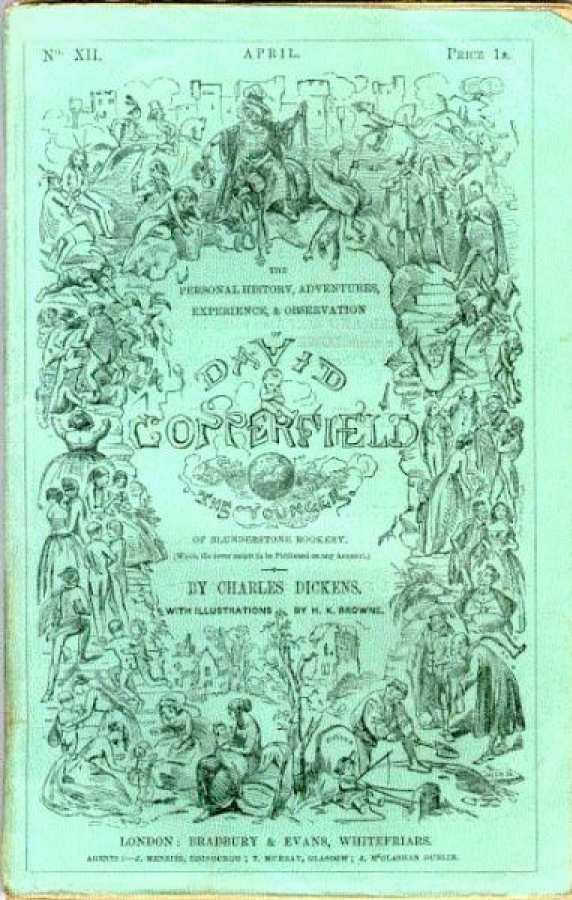
David Copperfield
The novel recounts the life of David Copperfield, who, after a happy childhood with his mother and a nurse, is persecuted by his stepfather. He is sent to a harsh, authoritarian school and, upon the death of his mother, is forced to work in a factory while still a child. He is subsequently taken in by an aunt, who provides him with comfort, an education, and the means for an apprenticeship at a law office. Over time, the young David grows into manhood, working hard, marrying, and gradually establishing himself as a writer. Upon his wife’s death, he embarks on a long journey, which allows him to realize his love for a childhood friend (Agnes), whom he marries upon his return to England. The novel is rich in characters and situations (grotesque, melodramatic, emblematic of contemporary society and widespread social injustice, representative of a harsh and hypocritical morality), such that David’s fortunes intertwine with other subplots, all culminating in happy endings, yet often encumbering the narrative and rendering it prolix, rambling, and fragmentary. Individual episodes stand out more vividly than the overarching plot, while the heightened exaggeration of the characters, for good or ill, comes at the expense of substance and depth in the portrayal of the figures' emotions and distinct idiosyncrasies. In truth, everything revolves around David and his representation of reality; the throng of other characters and the settings themselves constitute «background noise» or a frame within which the imagination of both author and protagonist unfolds. *David Copperfield* has been defined as an autobiographical novel, but this is only partially true. In fact, it is a novel of nostalgia for childhood and of return to a paradise, constituted precisely by the serene maternal sphere and by the figure of Agnes, ever cherished and sought after for her very tranquility and steadfastness. What prevails is a reality interpreted through a melancholic imagination: all events are seen through the eyes of a child, who narrates an unreal England, embellished (even amid its suffering and injustice) by the trusting, idealized vision typical of childhood. From this perspective, it is emblematic, and particularly evocative, how the author conceptualizes the ideal place of refuge: it is a boat, inside which one feels safe even as the waves swell and the wind rises outside, in that it ensures an emotional equilibrium and a peace that are ultimately destroyed by the arrival of adult betrayal and passion, and, metaphorically, by a storm that claims both the betrayer and the betrayed. The style features an exceptionally rich vocabulary and is characterized by a sentence structure that is often difficult to follow. The frequent use of dialectal forms further increases the difficulty of the reading experience.

Demetrio Pianelli
The novel is set in Milan at the end of the nineteenth century: a city with its > broad straight avenues and luxury shops, (...) the movement of the trams and the bustle of busy people, intent on making money, working, producing, paying little heed to idle chatter, enjoying life without fuss or fancy ; in the background of human affairs a great clamor prevails, and yet not so far away lies the serene countryside, even the sight of Monte Rosa. What can a poor devil do in a city > more good than bad, which willingly feeds those who work, but where (...) he who knows not how to dissemble knows not how to rule ? Demetrio Pianelli is a petty clerk, with “a low forehead covered with hair,” who leads a life paced by ironclad habits and modest joys. Here is how De Marchi describes Pianelli’s arrival at his workplace. > He opened the drawer and checked the two rolls in their paper wrapper. He gave a quick inspection to his round hat, (...) and placed it inside its little dust cover on the hanger. Then he opened another drawer and drew out the two oversleeves of glazed cloth that he wore for writing. He slipped them on: gave his hands a nervous, brisk rub, closing his eyes, crumpling every wrinkle on his face . The three small rooms where he lives have a little terrace, from which Pianelli can admire the flowers, and even more “the grasses, the simple weeds, clad only in green”; and when he wishes to take a breath of fresh air, it suffices for him to go for a stroll, > a few miles outside Porta Romana, (...) the classic land of greenery, of water meadows, of emerald pastures, long, wide, stretching as far as the eye can see, nestled deep among the rows of gray willows and trembling poplars . This man’s life is overturned by the suicide of his younger brother, Cesarino, known as Lord Cosmetico: handsome and elegant, he enjoyed life, and his young wife (nicknamed “the Beautiful Bigot”), lived beyond his means, ran into heavy debt, and, unable to face dishonor and imprisonment, chose to take his own life, entrusting Demetrio with his wife and three children—two young boys and a girl. At first, Demetrio refuses to shoulder the burden of his brother’s family and settle his debts; later, under the pleading of his niece, he agrees to rush to their aid. > Demetrio (...) felt beneath the hardened rock, flowing like a river, a deep emotion seeking a way out. (...) Demetrio curled up in his sullenness like a dry leaf. The nerves of his face twitched beneath the hard bark. (...) Why should I not have the will to help you? Ah, well then, (...) I too have known poverty and know what it tastes like: but against poverty there is only one remedy: the will to work and thrift, thrift and the will to work . Poor Demetrio! He thinks it is that simple, that it is enough to be a hard worker and an earnest man to be appreciated and to win—why not?—even the affection of his beautiful sister-in-law, thus building the family he never had. It takes far more than that! A solid financial standing is required, like that of the landowner cousin—he, indeed, can aspire to the “Beautiful Bigot.” Is Demetrio, then, one of the defeated? When he learns that his head of office, the powerful Cavalier Balzalotti, has attempted to seduce his sister-in-law, Demetrio rebels against hierarchy, against the secure job, against his fate as a wretched petty clerk, and shouts his utter contempt at the scoundrel before his flabbergasted colleagues. > People who judge in broad strokes might believe that the others had won, that is, the powerful and the scoundrels , yet even against the author’s intentions, we believe that an honest gentleman has won. For most critics, the novel’s theme is resignation, reminiscent of Manzoni. In a petty-bourgeois, hypocritical context, watchful of pennies and property, steeped in a bigoted and superstitious religiosity, those at the bottom of the social ladder have no choice but to surrender, scraping by in their own quiet corner. Outside the “shell,” out in the world, there is room only for those who know the art of living, which > consists, it seems, in taking things as God sends them and letting them go as the Devil takes them (according to the wisdom of Cavalier Balzalotti). And so it is that the novel’s various characters move, to the point of appearing as stereotypes, even caricatures, varnished with subtle irony. Yet this is not the case for Demetrio: true, he is a curmudgeon, “an object out of use,” yet for that very reason he embodies a stubborn and indomitable courage, a detachment from the noisy, futile clamor; in this way, he conveys to us a message of “resistance,” despite it all. The distinctive feature of De Marchi’s narrative style is irony, nurtured by idioms and turns of phrase drawn from the Lombard tongue. In this way, the writer breaks radically with Manzoni; he contaminates standard Italian and brings us back down to earth, into the spoken language. It is, unfortunately, a folkloric use of dialect, one that foreshadows what would come much later, in the second half of the twentieth century; one need only think of Camilleri and De Cataldo. De Marchi, however, is timid; he lacks the courage to go all the way, and dialect remains an affected device, an end in itself. Why read it? A delightfully depicted petty-bourgeois Milan, a humble and unwitting hero.

Divorce Islamic Style on Viale Marconi
Issa is actually an Italian young man named Christian. He has a perfect command of Arabic. Consequently, the secret services decide to recruit him and dispatch him to Viale Marconi in Rome under the guise of a Tunisian immigrant. His mission is to gather intelligence on a suspected terrorist cell, allegedly operating out of a call center. Sofia—or rather Safia—is an Egyptian woman who married a compatriot through an arranged marriage. Her husband works as a pizza maker in Rome, is deeply religious, and forces Sofia to wear the veil. Issa and Sofia’s stories unfold in parallel. Each tells their own story: a literary device that fails to lend vibrancy and appeal to the narrative, ultimately rendering it superficial due to the limited scope afforded to the protagonists. For Issa, being a Tunisian immigrant entails discovering the realities of immigration: precariousness, fear, overcrowded apartments, domineering landlords and employers, clashes of nationalities, and, above all, the divide between practicing and non-practicing believers. For Sofia, life in Rome represents an opportunity to carve out spaces of freedom and pursue her dream of becoming a hairdresser. Sofia is religious yet independent in her judgments, and she chafes under the prejudices and authoritarianism of a husband she does not love. Issa and Sofia meet only by chance and for fleeting moments, but it is clear from their exchanged glances and mutual attentiveness that something has sparked between them. Their relationship could shift from a state of suspension, typical of secret lovers, to something more concrete and intimate. Issa receives a request from Sofia’s husband to marry his wife, whom he has repudiated in a fit of rage. Under Islamic law, Sofia and her husband can only remarry after the ex-wife has wed another man, consummated the marriage, and subsequently divorced. Sofia welcomes the idea, not out of any desire to return to her husband, but because she is in love with Issa. Yet the young man cannot bring himself to decide, as he is reluctant to deceive Sofia: he is, in fact, neither Tunisian nor Muslim. The ending holds a surprise that cannot be revealed. Still, the question remains: will Issa and Sofia end up together? Lakhous is a splendid writer: short sentences, concise character sketches, and a subtle irony are the primary strengths of his writing. In this novel, however, the urge to dwell on social and cultural reflections (concerning the Muslim world, immigrants, and Italians) comes at the expense of narrative pacing. The story is at times tedious and predictable, feeling somewhat contrived. Only in flashes do the authenticity and brio that characterized the author’s previous book return. Why read it? It is enjoyable, interesting, and in many respects instructive. One grows fond of the two characters, so much so that one longs to know how their love story concludes, just like in a telenovela.
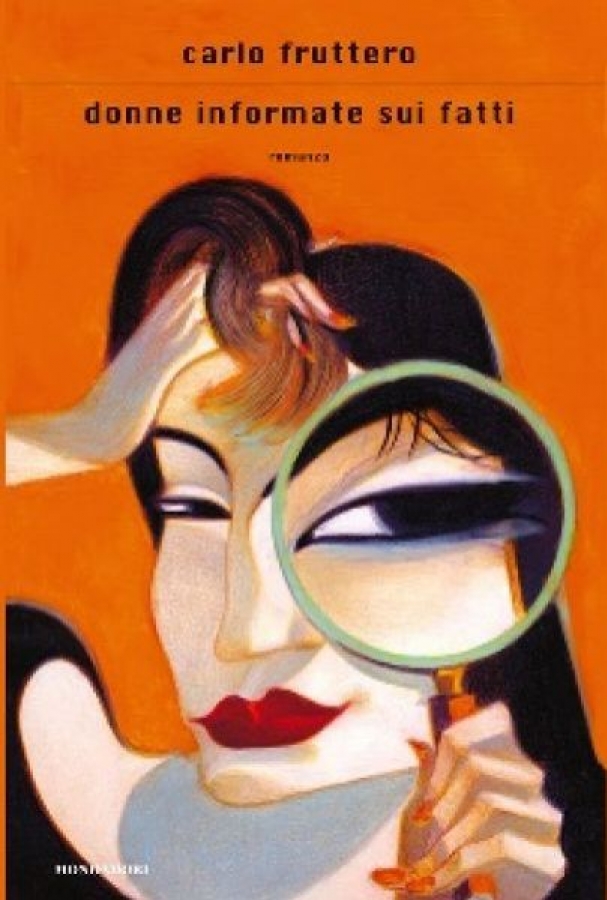
Women Informed of the Facts
In upper-bourgeois Turin, a crime is committed: a former Romanian prostitute, married to a wealthy banker, is found strangled. It is later revealed that she was killed by two thugs, hired by the banker's "dear" friend, jealous and bent on revenge after being rejected. The narrative unfolds through the accounts of women involved in one way or another in the crime: the caretaker who discovered the body, a barmaid who was present at the scene of the crime, a volunteer, a female carabiniere, a journalist, the daughter, and the banker’s dear friend. A series of female portraits takes shape, complete with their family histories, their loves, and their ideas. The book is thoroughly enjoyable, the pacing is consistently brisk, and the prose is at once elegant and simple. One senses formidable craftsmanship, yet it lacks vigor. The characters remain in the background, the plot develops slowly, devoid of plot twists, only to draw to a predictable close.

Dreams in a time of war
Thiongʼo is a Kenyan writer, and in this book he recounts his youth in 1950s Kenya, torn apart by ruthless British repression. It is not a political or historical text, although references to figures and events in the history of the African nation are numerous. > Despite my dashed hopes, the events, even the arrival of British battalions, were largely abstract, happening in a misty land as far away as a story in a distant setting alternating between dreams and nightmares . And indeed, amid dramatic events and social upheavals, the young Thiongʼo pursues a stubborn desire for schooling and education, leading him from the seemingly sealed fate of a peasant to that of a writer. This is the profound core of the book: it is possible to keep dreams alive even in times of war. Thiongʼo was born into a typical Kikuyu family. His father is a small landowner with four wives and many children. The portrayal of this community, with its multitude of brothers and sisters, is the finest part of the book. The author offers a vivid, affectionate representation, rich in memory and steeped in nostalgia. It is a happy childhood anchored by a cornerstone, his mother, who wishes for her son to “always seek the best, whatever the difficulties and obstacles.” And it is by listening to peasant tales and songs that the child “begins to hear the music in words,” the magic of choice, arrangement, cadence—everything that makes a story so beautiful and endures so long in memory. Thiongʼo falls in love with words, both written and spoken, and from that moment on, his destiny is sealed. Family upheavals and national events leave a deep mark on the boy’s adolescence: his mother is repudiated by his father, the extended family disintegrates, and British repression brings death, injustice, and devastation. The educational path itself is fraught with obstacles, as schools must often shut down or conform to British dictates, which oppose the cultural advancement of the local population. In spite of everything, the boy masters English, even having to learn it from an absurd textbook describing two Oxford boys discovering London. He knows everything about the British capital and little to nothing about his own country! He devours the great classics of English and world literature, memorizes *Treasure Island*, and it is precisely thanks to this passion for Stevenson’s great novel that he brilliantly passes the entrance exam for secondary school. He is admitted to one of the finest educational institutions in Kenya. The entire community shares in the boy’s triumph, contributing collectively to pay his tuition and provide the young Thiongʼo with the necessary school kit. Indeed, everyone knows full well that > in our times, education and schooling are the path to bettering men and women . The narrative unfolds unevenly. The portrayal of childhood, of the large paternal family, as well as several observations on the school environment, are lively and engaging. The author holds them vividly in his memory and relishes returning to them. When he shifts to recounting the events of the nation—the independence struggle, the British repression—even when narrating dramatic episodes in which he was personally involved, the prose turns cold, resembling a historian’s report, a bystander’s chronicle. The narrative grows ponderous, loses its vitality, and leaves the reader bewildered by events and figures far removed from their familiarity. Nor, on the other hand, does a clear picture emerge of the events leading to independence, for everything remains fragmented, ill-defined, as though the author himself were incapable of reconstructing his country’s history. The English is textbook-like, elegant and precise, yet—at least on the surface—concedes nothing, in either vocabulary or syntactic construction, to the author’s native tongue. And this, too, contributes to an overarching impression of sterility and abstraction. Why read it? The first part of the book offers a highly interesting and intriguing glimpse into Kikuyu society.
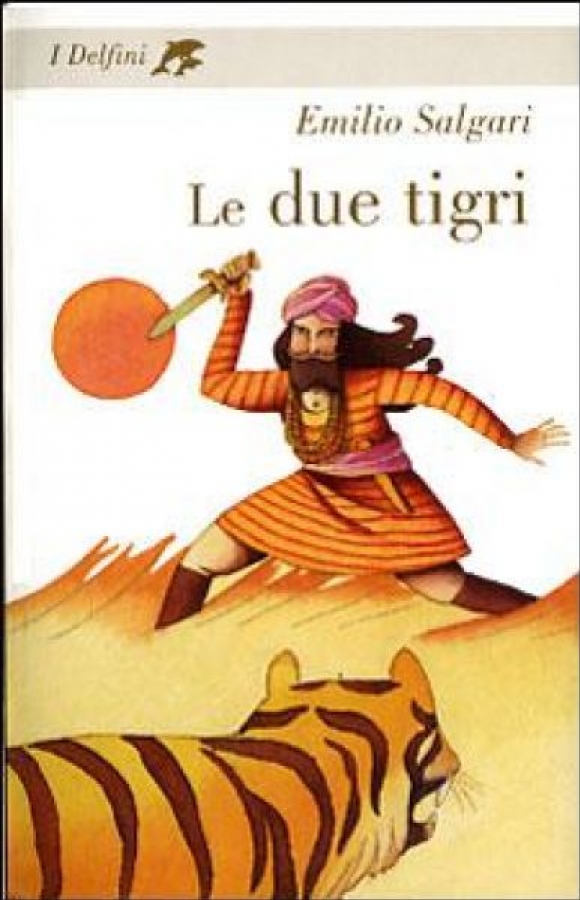
The Two Tigers
The setting is India and the cruel Thugs, who have abducted Tremal-Naik’s daughter to make her the “virgin of the pagoda” in service to the ruthless deity, Kali. Sandokan and Yanez set out to rescue the young girl, embarking on an expedition that leads them into the Ganges Delta—a swampy expanse infested with ferocious beasts and plagued by cholera—down into the subterranean lairs inhabited by the Thugs, and all the way to Delhi at the height of the clash between Indians and the British during the 1857 uprising. All the quintessential ingredients of Salgari’s major novels are present: the hostile environment, treachery, Sandokan’s valor and strength, and the enduring themes of friendship and honor. Yet a theme emerges with striking force—one often latent in Salgari’s fiction, though never fully articulated: that of colonialism and the conqueror’s brutality toward the Indian people. From this standpoint, Sandokan assumes an ambiguous posture: he naturally does not side with the British, even though he owes his survival to a British army safe-conduct and his friendship with a French officer; yet neither does he champion the insurgents, remaining indifferent to the wholesale slaughter of women and children. > Terrifying screams rose from every street, accompanied by tremendous volleys... Let us flee as well, said Sandokan . The Tiger of Mompracem is not the *Black Corsair*: he remains a figure confined to his own pirate sphere, bound to ties of personal friendship that never mature into a genuine political consciousness. He lingers, as it were, suspended between hostility toward the oppressor and the conviction that his individual struggle can be resolved on his own, alongside his companions. It is paradoxical that the Tiger of India, the cruel Suyodhama—leader of the Thugs, ultimately slain by Sandokan—feels the cause of the Indian subcontinent’s independence far more acutely than the pirate of Mompracem, valiant and honorable though the latter may be. Salgari’s own perspective seems quite different, as he concludes the novel with a note of admiration for the leader of the rebels: > by now the insurrection was subdued, and only the brave Tantia Topi, with the beautiful and proud Rani of Jhansie, and a handful of valiant men, still held high the banner of freedom, amid the thick jungles and numerous forests of Bundelkund . Why did he never write a novel about this extraordinary figure?