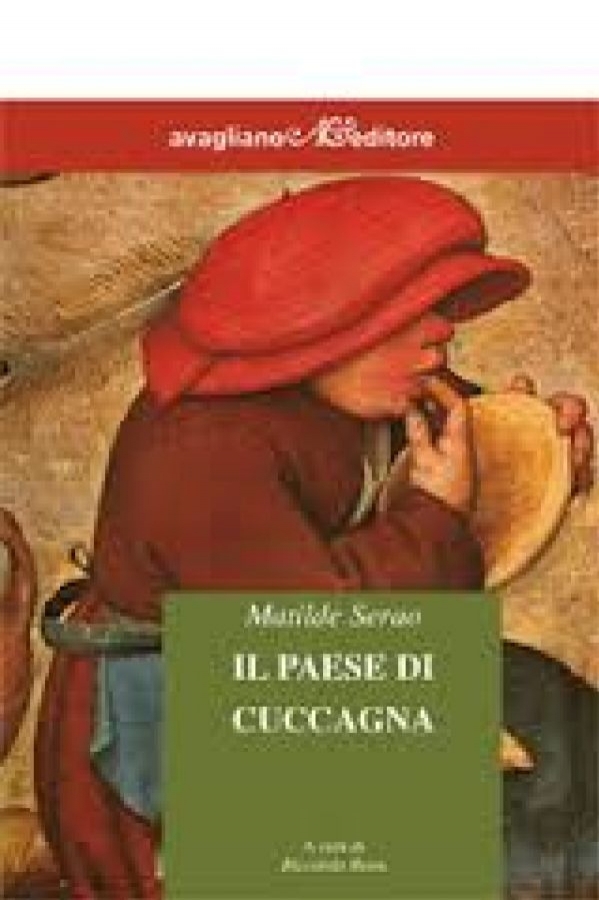
The Land of Cockaigne
A composite crowd, without distinction of sex, wealth, or social standing, gathers awaiting the lottery draw. That morning they feel > the need to eat, to drink, to smoke, feeding vividly on visions of Cockaigne in their imagination, dreaming (...) of a whole bellyful of rich, fatty feasts, devoured in imagination . While the Neapolitan populace, anxious, overexcited, deluded, follows the draw with increasingly wrathful voices up to "a final breath of anger," a young seamstress, delicate and tireless, continues to work; > she seemed so distant, so elusive, so absorbed, in a world utterly detached, different, that the imagination might suppose her more of an image than a reality, more an ideal figure than a living person . The novel intends to expose and deplore the devastating effects of the gambling habit on the material and spiritual conditions of Naples, despite the existence of forces and virtues capable of making this great city prosperous. How Matilde Serao would wish to be stern and realistic! Yet before the impetuous, joyous Neapolitan life, her indignation softens and dissolves into a vivid imagination, through which one can no longer distinguish between fantasy and reality. Take, for instance, the second chapter of the novel: "The Baptism of Agnesina Fragalà, Daddy's Lovely Daughter." Two young newlyweds, happy shopkeepers on Via Toledo, throw a party in honor of their baby girl: it is a kaleidoscope of seductive colors, a clattering of saucers, spoons, glasses, a > union of things pleasing to the eye, good to the palate, delightful to the sense of smell . One is carried away by the expert description of sugary Neapolitan pastries, when, with a dramatic turn of events, the "assisted one" of the spirits appears, > a pale convulsionary, who eats a great deal, who feigns having or has hallucinations, who speaks in riddles (from *Il Ventre di Napoli*). And immediately the guests, even the wealthy loan shark, crowd around this wretched figure, all convinced that some trivial phrase uttered by the charlatan points to a lucky number, to be played in the upcoming lottery draw. Throughout the first part of the novel, Matilde Serao crafts admirable vignettes of Neapolitan life, leading up to the narration of the most sacred moment in the "great imaginary land of Cockaigne": the miracle of San Gennaro. A word of advice may be useful: savor these pages to the fullest without expecting to stand before an Italian Émile Zola, or seeking to trace Verga’s *verismo*. > But just as at the bottom of all the cheerful things of the land of Cockaigne there is an ever-flowing vein of bitterness, this carnival that swept away into buffoonery and masquerades all the gravest matters and people of the city—this carnival was a pitiful thing . Matilde Serao, in her "Neapolitan heart," cannot take cynical pleasure in the nonetheless evocative scenes of the Neapolitan crèche she herself created. The pedagogical and moralizing intent takes over. The second part describes the grim fate met by the novel’s various characters—the culprits of the disaster as well as their victims, yet all "so weak, so wretched, so infinitely unhappy." Such is the despondency that, like the author, we are seized by the > frenzy to flee, to flee, so as to see no more, to hear no more, to endure no longer the spectacle of the bitterest disillusionment . The book is a grand social fresco, yet there are also plotlines and characters from which one can discern other underlying themes, beyond the prevailing depiction of the land of Cockaigne. First and foremost, the female characters are generally the positive figures, even if there is no lack of usurers and swindlers among them. The women are steadfast, grounded, detached from or not wholly consumed by the widespread madness for gambling. What ruins them is their loyalty, pushed beyond all limits, toward the male figure—fiancé, husband, or father. One discerns in Serao a critique of women, all too often incapable of rebelling, of taking full control of their own destiny. The male characters come off poorly, even when, as with Antonio Amati, they possess a strong, sound, rational personality. A doctor and a scientist, he could save poor Bianca Maria, the victim of a mad and cruel father, but he fails to do so. Faced with the daughter's stubborn devotion to paternal authority, he abandons her to her fate, offended and humiliated that the father is placed before him; filial obedience runs too deep in Bianca Maria. > All compassion had vanished from his heart; he felt all the implacable selfishness of immense suffering . Love was fragile, weaker than pride, born of pity rather than true affection. And in this, the woman was once again a victim. The first part of the novel is a masterpiece. In the scenes of Neapolitan life, Serao’s rich and elegant prose finds its ideal setting to express itself at its finest. Granted, the characters lack depth, the plot is not cohesive; they are like so many short stories that seem not to belong to a single narrative. In the second part, the author attempts to pick up the overarching thread, but fails, and the whole remains fragmented. Furthermore, melodramatic and moralistic tones prevail, undermining the tension and dramatic weight of the human tragedies, rendering them predictable and pathetic. Even the account of Bianca Maria’s death, which closes the novel, is so sluggish and tearful as to leave an impression of cloying pietism. Why read it? The first part is a masterpiece.
The Skin
The book is set during World War II, amid the American advance: in Naples and then, in the final chapters, in Rome and Florence. Malaparte serves as a liaison officer between the Americans and the Italians. And from this arises the contrast between a young and simple society (the American one) and one that is by now decadent and in ruins (the European one). Beyond the themes tied to the immediate aftermath of the armistice (the crumbling of Italian society, the civil war, selling oneself out by any means to the new conquerors, what Malaparte calls the new "plague"), the novel is in fact strikingly relevant today. A profound pessimism emerges regarding the future of Europeans, a sense of decay, rot, and death, through episodes that border on the implausible yet correspond to a society that no longer harbors any sense of the future, in which anything is possible. The "new" brought by the Americans unleashes something that lay hidden within European society, destroying its foundations and casting it into a grotesque, amoral, and unsettling dimension. One is left hoping for an extraordinary event (the eruption of Vesuvius) to wipe out this society. Does this novel not also reflect our present reality? It captures the deepest traits of European society: its decadence, its deference toward the powerful, the pursuit of personal gain even at the risk of compromising what is held most dear, the prevailing vulgarity and ignorance. The book is undoubtedly very timely, and its rich, imaginative style captures this sense of decadence and dissolution remarkably well. Its finest quality lies neither in the dialogues nor in the treatment of the characters (in reality, quite flat and conventional), but rather in the descriptions of situations and the passages that express the author's own sentiment: passages invariably characterized by lyrical rhythms and a pursuit of the marvelous, which seem to evoke sixteenth-century Italian literature (Ariosto, perhaps?). In this sense, the book's style stands in sharp contrast to the literature that followed, which would be heavily influenced by American writing and would pursue intimist (Moravia), neorealist (Pavese, Vittorini, etc. ), and fantastic themes (Calvino, Buzzati), all entirely alien to Malaparte. If we compare some recent novels from Anglophone literature itself, we realize that Malaparte’s book is remarkably modern.
The Diamond Square
> I lived as a cat must live: up and down, tail lowered, tail held high, now it is time to eat, now it is time to sleep; with the difference that a cat does not have to work to live. At home we lived without words, and the things I carried inside frightened me because I did not know whether they were mine . The protagonist, Natalia, known as Colombetta, is the first-person narrator. She is a young woman working in a pastry shop. She marries Quinet, a selfish and restless yet charming young man, with whom she has two children. Quinet works as a restorer, but he begins breeding pigeons in the attic of their home. Soon the birds overrun the entire house, and Natalia finds herself enduring an increasingly burdensome and exhausting life, caught between caring for her children, working as a maid for an affluent family, and cleaning the house. Yet it is not the toil that frightens Colombetta; it is the growing sense of living a life that is not her own, but determined by others. This anguish drives her to commit the sole act of rebellion in her life: getting rid of the pigeons by preventing them from breeding. Meanwhile, the civil war breaks out. Quinet leaves to fight with the Republican army, Colombetta loses her job and sinks into deepening destitution, to the point where she can no longer feed her children and resolves to kill them and then herself. It is the darkest hour of her despair: she feels defeated not merely by the dramatic events of the civil war, but by the crushing weight of her own solitude. > I had to turn myself to cork to keep going, because if instead of being made of cork with a heart of ice I had been, as before, made of flesh, which hurts when pinched, I could never have crossed a bridge so high, so narrow, and so long. And I walked through the streets, dirty and desolate by day, dark and blue by night, dressed entirely in black and, perched on top, a sort of white smudge, my face growing tinier and tinier . She goes to a grocer’s shop to buy acid to kill her children and herself, and at that dramatic moment a turning point occurs in her life: the grocer, aware of Quinet’s death, proposes marriage. Once again, Natalia accepts as though the decision belonged to someone else. This new life of comfort for herself and her children does not free her from existential anguish. One day, in a state suspended between reality and dream, she returns to the old house she once shared with Quinet. She searches for a hole near the lock, which had been plugged with cork. > I began digging out little pieces of cork with the tip of the knife. And the cork crumbled and flaked away. I removed all the cork, and only then did I realize that I could not get in .Colombetta then goes to *Piazza del Diamante*, once full of life and now «an empty box made of old houses with the sky for a lid». And upon her shoulder > perched a satin-ruffed pigeon, unlike any I had ever seen, with lacquered feathers, and I felt a storm wind whirling inside the funnel now almost sealed, and with my arms over my face to shield myself from I knew not what, I let out a hellish scream. A scream I must have harbored inside for many years, and from my mouth came a tiny sliver of nothing, and that tiny sliver of nothing that had lived so long within me was my youth fleeing with a scream that I could not comprehend... detachment? . The novel unfolds through the perspective of the first-person narrator, Natalia. This literary device makes the protagonist's detachment—almost that of a bystander—from the events of her own life all the more striking. Natalia narrates in a painstaking and detailed manner (consider the description of the house where she works as a maid, or the splendid depiction, almost a painting!, of *Piazza del Diamante* teeming with life), yet it all reads like the field notes of a geographer, of an explorer. Alongside this seemingly realistic representation of life are Natalia's dreams, largely revolving around birds, pigeons, and the presence of the figures who have dominated her life. Existential anguish and the sense of emptiness do not manifest in the recounting of real events; rather, they find expression solely within the symbolic realm. From this vantage point, the episodes involving the pigeons constitute, perhaps, the bridge between realism and symbolism—virtually the physical embodiment of the protagonist's existential dread. It is a magnificent novel, seemingly simple in style, yet fundamentally built upon sentence structure. The author has no need for a surplus of words, an excess of adjectives, nor for imposing an intense pace on the narrative: syntax is the very instrument that imparts narrative power to the novel. Why read it? It is a captivating novel, intricate and demanding to interpret, yet one that confronts a universal theme: the difficulty of living life as protagonists rather than mere spectators.
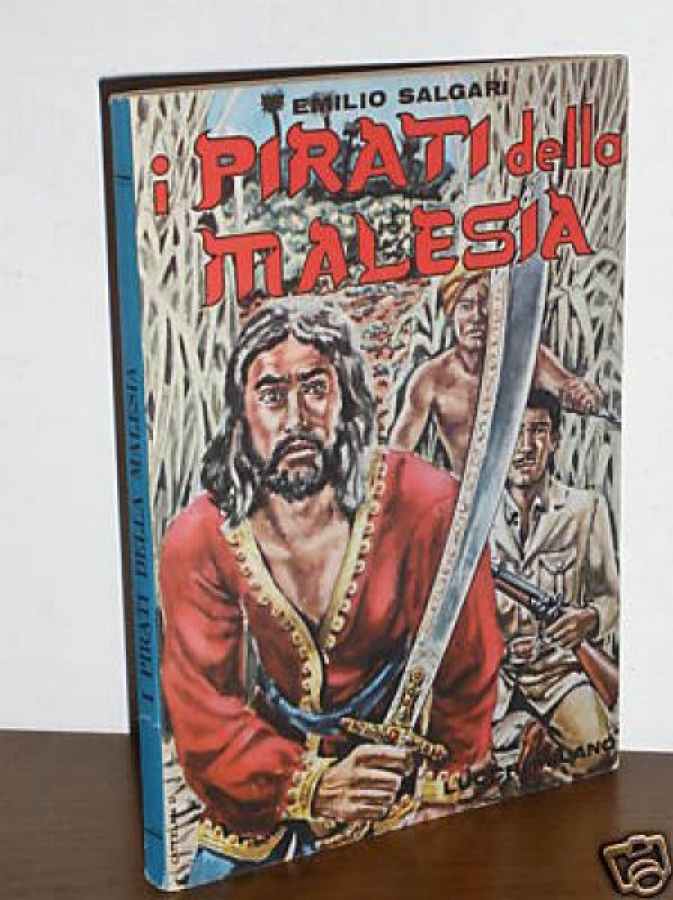
The Pirates of Malaysia
The pirates of Malaysia attack a ship aboard which Kammamuri is traveling with a young girl, mad. Kammamuri’s courage convinces Sandokan to spare his life and help free the girl’s fiancé, who is held prisoner by Rajah James Brooke. A series of intense adventures unfolds, leading to Sandokan’s victory over the Rajah, the liberation of the girl’s fiancé, Tremal-Naik, and the recovery of sanity by the girl herself. The book is characterized by fundamental narrative elements: the setting, the forests of Borneo and the maritime world, described with swift, evocative brushstrokes aimed at crafting an atmosphere that is both fascinating and somber. It is an engaging yet perilous context, far removed from the Western world, concealing not so much a taste for the exotic, but a desire for discovery and an awareness of nature as hostile to man; the heroes, in that all the characters, even the "mad" girl, seem to harbor no doubts and move without hesitation. Loyalty, courage, pride, dignity, and contempt for death are the sentiments that drive and define the novel's characters. In this sense, Salgari expresses a "will to power," a conception of the superman typical of his era. The characters have pre-defined roles: Sandokan, the fearless hero yet capable of weeping at the memory of his lost love; Yanes, the cunning and cold calculator; Kammamuri, the devoted and skilled servant, and so forth. There are no nuances or ambiguities in these figures; the narrative pace is relentless, characterized by rapid dialogues, concise descriptions, continuous moments of suspense, and sudden scene changes, even if it must be said that the final chapters appear rushed to the point that the Rajah's defeat seems scarcely consistent with the intelligence and strength displayed in other chapters by Sandokan's adversary. Magnificent is the chapter describing the revolt of the convicts up to their massacre by the savages. Salgari’s narrative pace anticipates the structure of cinematic screenplays and confirms the modernity of this author, beyond his style—at times elevated and rhetorical, typically nineteenth-century. The modernity and originality of Salgari’s narrative style emerge from two peculiarities: the artificial device of accumulation, whereby, for instance, within a few pages and in a single forest a multitude of fearsome or bizarre animals can converge, which answers > not only to the need to keep the reader in suspense, but also to offer within a limited space the world as spectacle and wonder (*Introduzione a Salgari*, Bruno Traversetti, p. 42); the method of the eternal return (a sort of search for lost time), whereby the heroes have always lost a state of stability (for example, Sandokan was a prince) and tend to return to that state, even distinguishing themselves from ordinary characters (for example, Sandokan is pleased that his wife’s uncle, an English lord, recognizes him as a nephew). The reference is always to a "conventional society" that has been destroyed by an extraordinary event. These devices are widespread in modern adventure cinema, and it is precisely the pursuit of this equilibrium, never fully recovered, that makes Salgari an extremely contemporary author, and from certain viewpoints, an unsettling one.
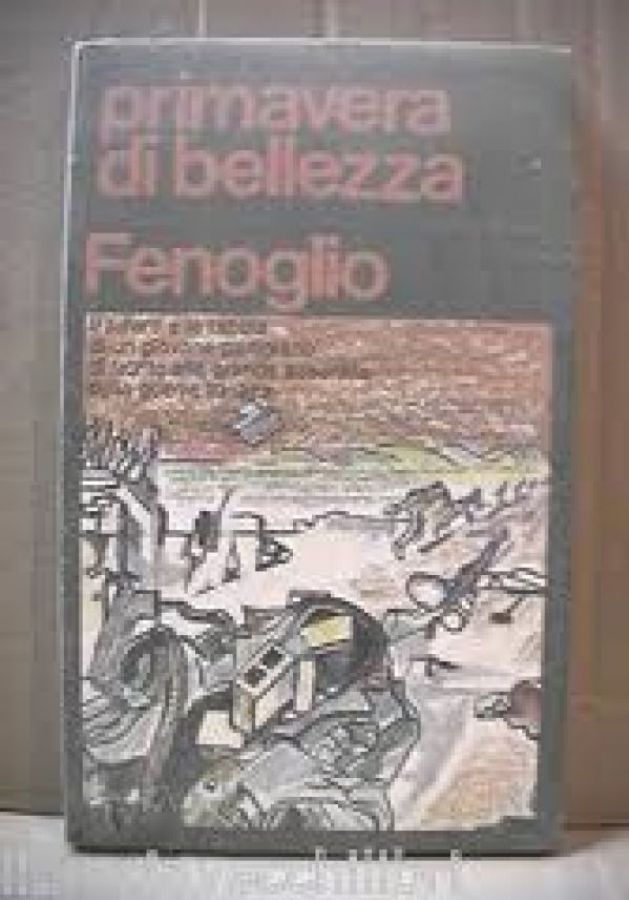
Spring of Beauty
The novel is set in 1943, during the dramatic months that led to the fall of Mussolini—replaced by Badoglio—the Armistice of September 8, and the king's flight from Rome. In this brief span of time, Italians came to realize what the Fascist regime had truly been, and into what disaster it had plunged them. Like the novel's protagonist, the officer cadet Johnny, Italians were seized by an indignation that > loaded them like a shell into the mouth of a cannon: murderous swine, filthy bluffer! . The novel recounts, precisely, this tragic coming-of-age, narrating it from the perspective of young soldiers left to their own devices, as was the entire country. The novel opens in a barracks in Piedmont, where Johnny is attending an officer cadet course. The military environment is slipshod, marked more by hollow rituals than genuine training. In truth, no one, not even the highest-ranking officers, believes in Italy's victory or in the war's justification. Discouragement and pessimism prevail. A disconnect exists between reality and the repetitive, futile drills to which the young recruits are stubbornly held. > Exhausted by that excess of freedom and oblivion, he had to lean against the trunk of a poplar; he felt the soft, warm bark, and failed to hear the distant trumpet sound the cease-fire. This by the river was reality; the morbid dream was the Italian army . How unreal appear the slogans painted on the walls, «Vincere», when the Italian troops, «greasy, down-at-heel, gypsylike», are transferred to Rome: it seems the American army has landed in Sicily. The officer cadets' hope of seeing combat swiftly fades. They are stationed in a barracks in Montesacro, resuming their pointless drills. > It wasn't so bad after all, an entire, fairly close-knit squad idling in the delightful quiet of a nearly deserted barracks.... it felt like being in a clinic . The armistice catches them completely unprepared. Johnny, with a group of comrades, is guarding an ammunition depot in the Roman countryside when he sees droves of soldiers arriving, half in civilian clothes and half in uniform, fleeing Rome. The king, Badoglio, and the senior officers have abandoned the capital without leaving orders on how to act: > resist the Germans, do not resist, kill the Germans, do not open fire on the Germans, do not surrender your weapons, self-disarm.... hurry up and find yourselves some civilian rags, too . Resignation and flight prevail; after all, «it had to end somehow». «Full of misery, with no room left for fear», Johnny too resolves to return home to Piedmont. A journey begins aboard trains overflowing with fugitives, while at the stations Germans round up Italian soldiers to dispatch them to concentration camps in Germany. Often, some of the Italians are shot on the spot when attempting to escape. > The stench of that Italian multitude, bowed, attempting to do the smallest and most necessary things with an air of absolute harmlessness and submission. Often beneath the shed roofs a brutish German call rang out, and then those little soldiers, so trim and solid, cut irresistibly through the suspended Italian mass toward mysterious appointments and duties . These few lines render magnificently how Italians had been reduced by an improvident and cowardly ruling class: an abandonment mirrored by the aimless efficiency of Hitler's army. Two nations in disarray, albeit in markedly different ways. Johnny miraculously manages to reach Piedmont, just a few kilometers from home, when he encounters a detachment of soldiers who have resolved not to surrender and to fight the Germans. He decides to join the partisans, certainly not out of political conviction, but out of an emotional impulse, so as not to feel > too inferior to a spit... because it repels him to come out of it like that (like a fugitive) . Johnny's fate is sealed during an assault on a convoy: > the German was coming, a young face and an old uniform, and now lowered the already-aimed machinepistol. Johnny perceived an infinitesimal click . The splendor of this novel does not reside solely in Johnny's tragic and emblematic story. Its exceptional nature lies in the language used: rich, imaginative, and inventive. It is as if Fenoglio sought to transfigure history, refusing to reduce it to a dry and cold report. The Italian language is molded to forge a suspended, unreal atmosphere, as though everything that happened to Johnny had not truly occurred, but belonged to a nightmare—both personal and national. Reading this marvelous book, one feels overcome by an intense melancholy, for what Italy was, but also for what our language might have become, had it not withered into a hasty, impoverished, and sterile narrative style. Why read it? It is the account of a momentous juncture in our history, and a captivating read.