Beppe Fenoglio
Books by this author (4)
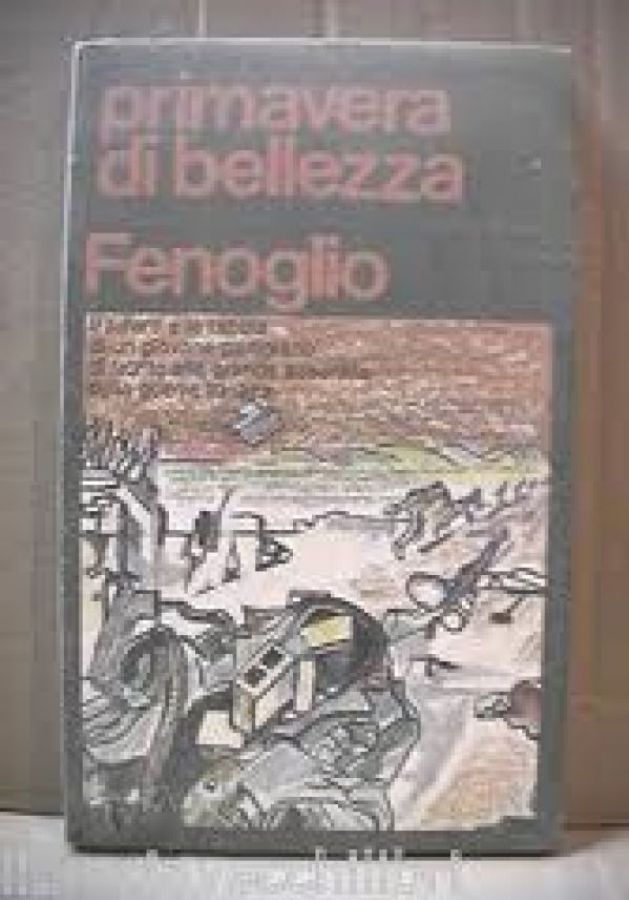
Spring of Beauty
The novel is set in 1943, during the dramatic months that led to the fall of Mussolini—replaced by Badoglio—the Armistice of September 8, and the king's flight from Rome. In this brief span of time, Italians came to realize what the Fascist regime had truly been, and into what disaster it had plunged them. Like the novel's protagonist, the officer cadet Johnny, Italians were seized by an indignation that > loaded them like a shell into the mouth of a cannon: murderous swine, filthy bluffer! . The novel recounts, precisely, this tragic coming-of-age, narrating it from the perspective of young soldiers left to their own devices, as was the entire country. The novel opens in a barracks in Piedmont, where Johnny is attending an officer cadet course. The military environment is slipshod, marked more by hollow rituals than genuine training. In truth, no one, not even the highest-ranking officers, believes in Italy's victory or in the war's justification. Discouragement and pessimism prevail. A disconnect exists between reality and the repetitive, futile drills to which the young recruits are stubbornly held. > Exhausted by that excess of freedom and oblivion, he had to lean against the trunk of a poplar; he felt the soft, warm bark, and failed to hear the distant trumpet sound the cease-fire. This by the river was reality; the morbid dream was the Italian army . How unreal appear the slogans painted on the walls, «Vincere», when the Italian troops, «greasy, down-at-heel, gypsylike», are transferred to Rome: it seems the American army has landed in Sicily. The officer cadets' hope of seeing combat swiftly fades. They are stationed in a barracks in Montesacro, resuming their pointless drills. > It wasn't so bad after all, an entire, fairly close-knit squad idling in the delightful quiet of a nearly deserted barracks.... it felt like being in a clinic . The armistice catches them completely unprepared. Johnny, with a group of comrades, is guarding an ammunition depot in the Roman countryside when he sees droves of soldiers arriving, half in civilian clothes and half in uniform, fleeing Rome. The king, Badoglio, and the senior officers have abandoned the capital without leaving orders on how to act: > resist the Germans, do not resist, kill the Germans, do not open fire on the Germans, do not surrender your weapons, self-disarm.... hurry up and find yourselves some civilian rags, too . Resignation and flight prevail; after all, «it had to end somehow». «Full of misery, with no room left for fear», Johnny too resolves to return home to Piedmont. A journey begins aboard trains overflowing with fugitives, while at the stations Germans round up Italian soldiers to dispatch them to concentration camps in Germany. Often, some of the Italians are shot on the spot when attempting to escape. > The stench of that Italian multitude, bowed, attempting to do the smallest and most necessary things with an air of absolute harmlessness and submission. Often beneath the shed roofs a brutish German call rang out, and then those little soldiers, so trim and solid, cut irresistibly through the suspended Italian mass toward mysterious appointments and duties . These few lines render magnificently how Italians had been reduced by an improvident and cowardly ruling class: an abandonment mirrored by the aimless efficiency of Hitler's army. Two nations in disarray, albeit in markedly different ways. Johnny miraculously manages to reach Piedmont, just a few kilometers from home, when he encounters a detachment of soldiers who have resolved not to surrender and to fight the Germans. He decides to join the partisans, certainly not out of political conviction, but out of an emotional impulse, so as not to feel > too inferior to a spit... because it repels him to come out of it like that (like a fugitive) . Johnny's fate is sealed during an assault on a convoy: > the German was coming, a young face and an old uniform, and now lowered the already-aimed machinepistol. Johnny perceived an infinitesimal click . The splendor of this novel does not reside solely in Johnny's tragic and emblematic story. Its exceptional nature lies in the language used: rich, imaginative, and inventive. It is as if Fenoglio sought to transfigure history, refusing to reduce it to a dry and cold report. The Italian language is molded to forge a suspended, unreal atmosphere, as though everything that happened to Johnny had not truly occurred, but belonged to a nightmare—both personal and national. Reading this marvelous book, one feels overcome by an intense melancholy, for what Italy was, but also for what our language might have become, had it not withered into a hasty, impoverished, and sterile narrative style. Why read it? It is the account of a momentous juncture in our history, and a captivating read.
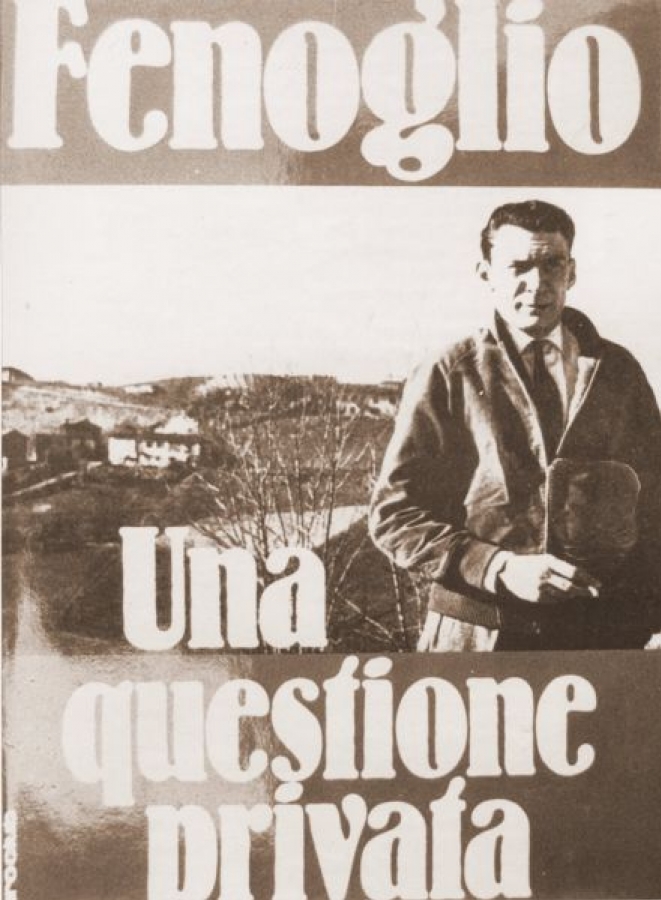
A Private Affair
The book is set in the hills of Alba during the Resistance. Milton is a partisan who returns to the house where he used to visit, and secretly love, Fulvia, and learns that she allegedly had a relationship with Giorgio, who has also become a partisan. To uncover the truth, he sets out in search of Giorgio, who has meanwhile been captured by the Fascists and faces execution by firing squad. Milton attempts to capture a prisoner to have a hostage to trade with the Fascists; failing in this endeavor, he returns to the villa, only to be pursued by the Fascists, who had set an ambush in the house. The narrative can be interpreted from multiple perspectives: Milton’s love story for Fulvia, which transcends political passion, a > novel of amorous madness and chivalric pursuits like *Orlando Furioso*, and at the same time there is the Resistance just as it was, inside and out (Italo Calvino, preface to *Il sentiero dei nidi di ragno*, 1964); the partisan war as an existential tragedy that "is born in the woods, along the rivers, on the hills, among the ravines, the rivulets, the paths of his Piedmont" (Geno Pampaloni); the raw and objective depiction of violence as the sole meaning of human relations, a theme already present in the short story collection *I ventitré giorni della città di Alba*. All of these interpretations are plausible, because, as Italo Calvino further wrote: > it is an absurd, mysterious book, in which what is pursued is pursued to pursue something else, and this other thing to pursue yet another, and one never arrives at the true why . I, however, like to think that one of the book’s central themes is the coexistence of the life typical of peacetime with a climate of war, manifesting both in the survival of the emotional realm (jealousy, friendship, practical jokes, grudges between neighbors) and in the acclimation to the conditions imposed by violence and precariousness. From this perspective, one need only think of the episode in the stable, where a group of partisans rests while an old woman knits and a young boy does his homework. > By the kitchen doorway an old woman sat on a child's low chair, spinning from a distaff. Her hair seemed made of the very same material as the yarn. "Good evening, ma'am," Milton said to her. Beside the old woman, a boy kneeling on a layer of sacks was writing his homework on an overturned tub . War is violence and cruelty, yet human beings must continue to survive; they must strive to live with it. This is the deepest violence of war. The novel is magnificent: the style is spare yet at the same time evocative and suggestive, above all in its rendering of the landscape and atmosphere.
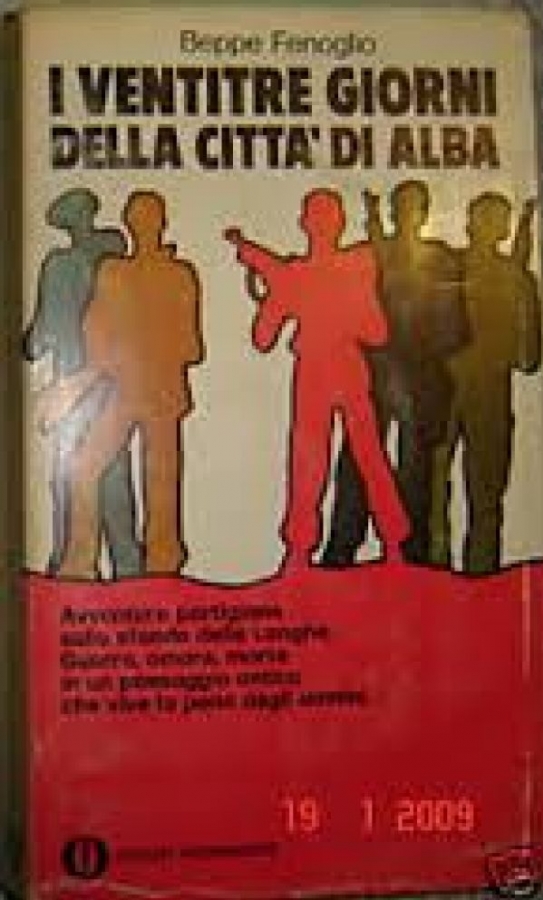
The Twenty-Three Days of the City of Alba
> It was the wildest parade in modern history: in uniforms alone, there was enough for a hundred carnivals. (...) Alongside the men marched the female partisans, dressed in men’s clothes, and here someone in the crowd began to murmur—Ah, poor Italy!—because these girls had faces and a gait that set all the townspeople winking . The partisans’ conquest of Alba lasted less than a month, and Fenoglio traces a realistic chronicle of it, devoid of rhetoric; at its center lies the contradictory nature of man. > But they weren't all whoring, of course; in fact, most were out commandeering cars, tires, and petrol. Not without quarreling among themselves with their safeties off, they tracked down and seized a great number of automobiles, with which they began a thrilling driving school along the ring road . Yet why does one become a partisan? To understand Fenoglio’s answer to this question, one must reverse the order of the stories, starting from the final ones, which seem ostensibly removed from the events of the liberation war. In *Pioggia e la Sposa*, a young boy is dragged by his aunt to a wedding, despite the torrential rain, which forces him (a «city-dressed boy») to cover himself with his priest-cousin’s hat. We understand that the boy has lost his mother; he is alone, and his aunt, stern and surly, is his only source of affection: > I saw that her eyes, together with her hand, grazed my soaked hair, and this time her hand was relaxed and tender, just as my mother’s hand had always been, and even her eyes seemed extraordinarily kind toward me, and less dark . Solitude turns into an anticipation of death in *L’odore della morte*: the protagonist, now a grown man, happens upon a girl and begins following her, merely to pass the time. He is attacked by her fiancé, but during the struggle he felt > that smell (...) already everywhere inside, having passed through his nostrils, his mouth, and his pores, unstoppable as the very power that distilled it; it must have already enfolded his brain, for he felt mad . In the other stories that do not deal with the partisan struggle, solitude, the prosaic nature, and the futility of life are recurring themes; flight, the resignation to an unhappy fate, and in some cases even suicide seem to be the only possible outcomes of the human condition. Thus, the choice to become a partisan is not the fruit of ideals; it is, rather, a revolt against an existence devoid of prospects. In the story *Un altro muro*, Max has been captured by the Fascists; he dreams of «the face of his corpse» and shouts to his cellmate: > do you feel up to dying for the idea? I don't. And what idea, anyway? If you search inside yourself, do you find the idea? I don't. And neither do you . At that moment > he hated his friends and comrades; he saw them that night roaming the high hills, free and masters of their own lives, armed, untroubled, and proud; he saw the hills illuminated as if by day by the moonlight on the frozen snow; he felt the wind coming in from the sea, sweeping through the great pass between the Apennines and the Alps . It is not the ideals of Justice and Freedom that move the partisans, but the desire for a primordial freedom: an indecipherable mixture of pent-up energy, of a longing for change, of standing alongside others on the right side. Yet partisan life does not resolve existential predicaments: either because death arrives too soon, or because war brings further violence and destruction in its wake. And in the end, once the liberation has been achieved, returning to a normal life is no longer possible and, as in *Ettore va al lavoro*, one knows only how to embrace the gun once more and go rob former Fascists. All the stories are remarkable, but one is especially so: *Gli inizi del partigiano Raoul*. > He intended to take Raoul as his nom de guerre. Along a completely deserted road he walked with a light heart; despite having left his widowed mother alone back in the village, he felt like nobody’s son—and that is the ideal condition for doing the two truly grave and hard things for an individual: going to war and emigrating . His headlong courage soon turns into revulsion at the life that awaits him: > what good is my education to me? Here, to hold out, you have to become a brute! And I don’t have it in me, I am good! Oh mama, mama! He thought back to dawn that very same day—could it really have been only eight hours ago? At night he regains his confidence while standing sentry, but when his watch ends and he finds himself back in a squalid, cavernous room, the sense of wretchedness returns, followed by fear. > How could the others sleep with such abandon? Were they certain they would live to see the morning? (...) The barn door flew open with a resounding bang, and the doorway filled with men clad entirely in black, as if masked from head to foot. (...) The beams of light terminated in white circles like so many tiny moons, zeroing in one by one on the faces of all the partisans. Whether due to that artificial light or something else, they were already all faces of corpses, with motionless eyelids and wide-open eyes. (...) Delio asked him—Slept well for your first time? There was a hint of malice in his voice.... È lʼincubo di un semplice ragazzo, non di un eroe. Fenoglio’s writing is consummate, now mature and confident. It loses certain idiosyncratic traits, such as the richness of idiom and the quest for neologisms. At times, it feels as though one were reading Cesare Pavese. Why read it? Magnificent stories: a mirror of the human condition.
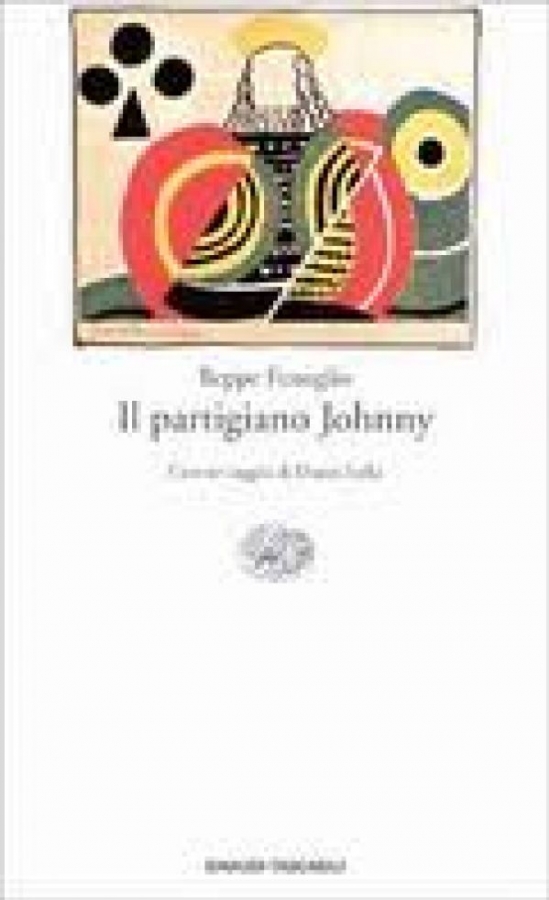
Johnny the Partisan
The events between 8 September 1943 and February 1945 form the historical backdrop of the novel. These are the years of the partisan war. An officer cadet in Rome, Johnny left the army, like so many others following the announcement of the armistice and the ensuing general chaos. He returned home, to Alba. A young intellectual passionate about English literature, he belongs to a lower-middle-class family. His parents would have him hide quietly, without exposing himself. But the young man decides to abandon > a fluid position, remediable from any fatal impact through pretense, subterfuge, or cunning , taking a stand instead > in the great dualism at the price of immediate, unquestionable execution . And then > he set out for the highest hills, the ancestral land that would aid him in its motionless possible, in the vortex of the black wind... in the name of the authentic people of Italy, to oppose fascism, to judge and execute, to decide militarily and civilly . He stumbles upon a Garibaldini brigade, tied to the communists. Like many of his comrades, political ideologies do not interest him; what matters is fighting fascism. He meets Tito, a shrewd young peasant, so far removed from him in culture and social origins, yet so close in partisan brotherhood. He was > happy and eager to mingle with the men, with all of them. They had fought with him, had been born and lived, each with their own origin... to find themselves together in that battle . He kills his first man: > the boy was dancing thirty meters away, blinded by his own courage... Johnny shot him without haste, without ferocity.... he propped himself up on his elbows in an ascensional suspension before his first dead man . The clash with the fascists breaks up the brigade, too poorly armed to resist. Johnny goes in search of another partisan formation and encounters the so-called *badogliani*, closer to his own political sensibilities. He finds a bourgeois environment more familiar to him, and it is with them, in the hill villages around Alba, that he spends the long stalemate of the winter of 1943–1944. Although better organized and equipped than the Garibaldini units, they are utterly unprepared to withstand the joint fascist and German offensive in the summer of 1944. The struggle is brutal and unequal. Johnny sees many of his comrades die and is reduced to a small core, including his friends Pierre and Ettore, with whom he takes refuge in a farmhouse. Yet Pierre flees to the city, where hiding is easier, while Ettore is captured along with the peasant woman who had sheltered and fed them. Desperate and alone, he faces the long, bitter winter of 1944–1945. He hides in the wildest reaches of the woods, in the ravines carved out by torrents, occasionally seeking food and shelter from the peasants, who are themselves exhausted and terrified. > His heart broke with longing for the ancient community, that factious, reproachable, at times repellent community, and for the old battlegrounds and the companionship of the living, the dead, the captured... He yearned to regroup, he would have given half his blood for it, Where is Nord (the partisan commander's nom de guerre)... January 31st is an absurd date to reunite. That morning you will rise and call out, but only the silence of the hills will answer you . By the end of the winter, very little remains of the naive, idealistic student. The loss of his dearest friends, the massacres he was forced to witness, the cold, the hunger, the squalor have turned him into a solitary fighter. When, in January 1945, the partisan ranks begin to reorganize and swell once more (with the Allies' final advance now drawing near), > Johnny was no longer at home there; that patch, far from fading, was widening. He could no longer endure fellowship or routine; he skirted collectivity, patrols, and sentry duty . The naive cry, “Long live us!, forever until the end of human history,” which he had voiced when feeling profoundly united with his comrades, has transformed into a sense of dissatisfaction, of disillusionment with others, driving him to disobey and seek a brave and solitary death. The novel is the ideal sequel to *Primavera di bellezza*, another of Fenoglio's masterpieces. While in that book the author chronicled the political maturation of a young man becoming aware of what fascism was and of the need to bear an individual witness of rebellion, in *Il partigiano Johnny* Fenoglio recounts a young man's partisan journey and how the events of the war and the harshness of the environment left an indelible, unpredictable imprint on his character. While remaining steadfast in his determination to “say no all the way,” never to surrender, by the war's end Johnny can no longer feel part of a broader community—the partisan army—desiring instead to fight the fascists alone, like a solitary hero. And as one reads on, both the language and the relationship between Johnny and his surroundings evolve. If at the beginning of the novel the prose is steeped in English words, as if to convey the protagonist's literary realm, the Anglo-Saxon terms gradually grow scarcer, until Johnny eventually betrays his beloved English tongue, rejecting the role of interpreter in favor of that of a combatant. Similarly, the hill country begins as a backdrop, only to take on an increasingly prominent role as protagonist as the story progresses, almost melding with Johnny's new persona. The woods, the ravines, the villages perched on the mountains, the fog and the frost, the peasant world with its livestock and its dogs, fierce or friendly, become the protagonist's new reality as, like a modern-day Robin Hood, he wages his solitary battle against the villains. In this respect, Fenoglio's book is a magnificent narrative of the Resistance—not the rhetorical one intended to exalt collective history and the emergence of a national consciousness. Paradoxically, the trajectory in the novel is reversed: from a civic and political vision, however naive and unrefined, the protagonist arrives at an individualistic and disenchanted conception of the idealized partisan war. Fenoglio's immense fascination lies in the expressive creativity of his language: > an ungrammaticalized language, ductile, capable of being dismantled and reassembled in its constituent elements with extraordinary fluidity... a magmatic language with which to collaborate creatively. The result is a prose incessantly yielding lexical, morphological, and syntactic neologisms (Dante Isella: *La lingua del partigiano Johnny*). It could have marked an intriguing direction of development for Italian literature. No one followed it, squandering the opportunity to inject fresh, original vitality into a language as stagnant as Italian had become. A weakness of the novel lies in its lack of compactness, leading to a narrative plot that is often sprawling. The relentless focus on the protagonist fails to provide dynamism and dialectic to the system of characters, who, in turn, lack sufficient depth and autonomy to counter the overbearing presence of Johnny's character. It is an epic and individualistic book *par excellence*. Why read it? It is a fascinating book, above all for its language.