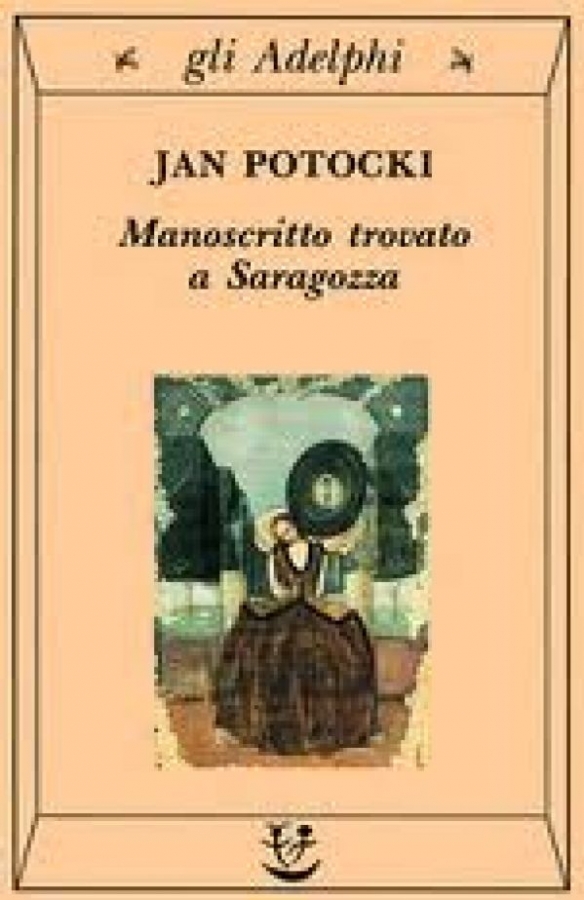
The Manuscript Found in Saragossa
The best introduction to this strange book is the figure of its author: Count Potocki, who lived between 1761 and 1815, when he died by suicide. A great traveler, ethnographer, archaeologist, geographer, and philologist, Potocki was the quintessential exponent of the eighteenth-century Enlightenment: his curiosity and immense erudition were placed at the service of a rational approach to reality. A keen observer of religions and customs, Potocki was likewise drawn to esotericism, spiritualism, and the realm of the fantastic in general. The complex interplay between reason and mystery is the guiding thread of the manuscript, whose own history is no less obscure and unbelievable: written in French, it was lost, resurfaced in a translation from an alleged Polish version, and finally what may be the original French text was recovered. Constructed in the form of the *Decameron*, as a series of novellas divided into days, the novel recounts the adventures of Alfonso, who must cross the Sierra Morena to reach Madrid. In fact, the young protagonist—and narrator—makes very little headway, as he finds himself sucked into an infernal and mysterious loop between the gallows of two hanged men and an abandoned inn: in the morning he awakes among decomposing bodies, by day he travels toward the inn, and at night he is visited by two splendid women who claim to be his cousins. In this continuous shuttling back and forth, he encounters other characters who tell him their stories, fraught with apparitions, skeletons, and supernatural retributions. Despite situations that obsessively defy rational explanation, Alfonso continually attempts to find a rationale for them and refuses to accept the existence of mystery. > Perhaps at the inn I had been given a draught to put me to sleep, after which nothing could be easier than to transport me during my slumber beneath the fatal gallows. Pacheco (a madman or demoniac whom Alfonso encounters) might have lost an eye in an entirely different accident than through his amorous liaison with the two hanged men, and his frightful tale could well be a fable.... But slowly he is overcome by a sort of «annihilation of all my faculties».....( he begins to realize the existence of a powerful cabal) > which seems to have no other purpose than to conceal who knows what secret, or to bewitch me with sorceries that I sometimes partially manage to penetrate, but which then, through other circumstances, soon plunge me back into doubt. It is clear that I, too, am part of this invisible chain . Reason wavers before the inexplicable, and vast erudition can be, at best, «agreeable company,» yet it risks ending up like the hundred volumes of another character in the novel: gnawed and destroyed by rats. The narrative structure is founded upon the singular repetition of the same prophecy: an ever-identical situation, reproduced and multiplied through a series of fantastical combinations that seem to have a single aim: to assault the stability of rational interpretation. This repetitiveness, which might otherwise render the reading tedious, is sustained by an explosion of narrative invention and by a style that is pleasing, imaginative, and often ironic. Thirsting for experience and knowledge, Potocki meant to tell us, with this unfinished novel, that life is wondrous. Why read it? It is an enjoyable and fantastical book.
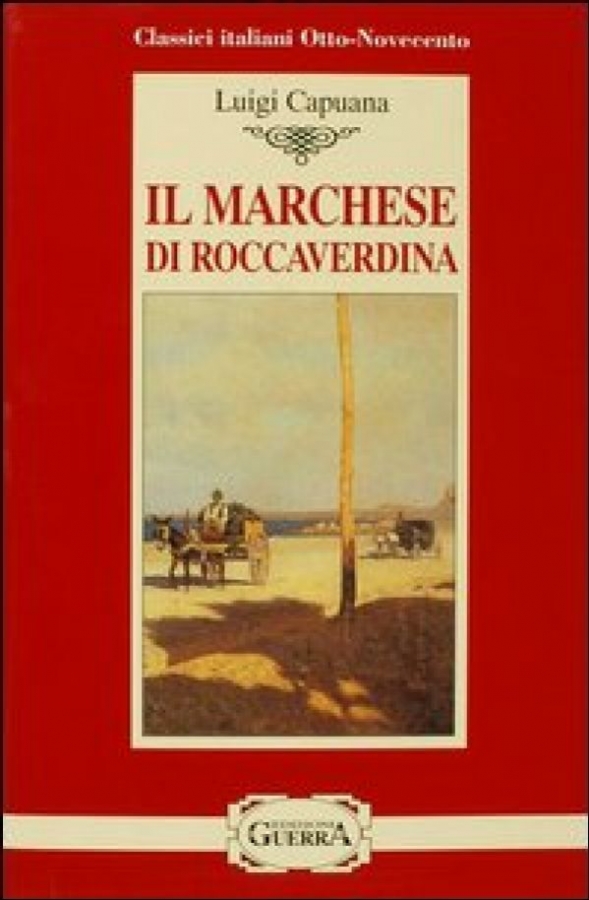
The Marquis of Roccaverdina
The setting is the Sicilian countryside of the second half of the nineteenth century. Rabbàto is a small town, long awaiting rain to put an end to the drought that is driving the entire community to destitution and hunger. The Marquis of Roccaverdina is a wealthy landowner who lives as though the world were immutable and acknowledged his boundless power over things and people. He had long taken a peasant woman, Agrippina Solmo, as his mistress. To keep up appearances, he decides to give her in marriage to his bailiff, on the condition that the marriage must remain unconsummated. Jealousy drives him to murder the bailiff and then to orchestrate the conviction of a poor peasant, who will perish in prison. He feels no true remorse for these outrages (the abandonment of his mistress, the murder of the bailiff, and the condemnation of an innocent man), since, after all, they are merely common folk and to the Marquis of Roccaverdina everything is permitted. Rather, he senses a creeping fear, “the usual apprehension of perils lurking in the shadows.” The abandoned mistress and the murdered bailiff “would suddenly appear and just as suddenly vanish,” and > he felt the strange sensation of walking upon unstable ground that might collapse beneath his feet at any moment . It is cowardice that acts as the catalyst driving the Marquis—previously so confident in himself and his social standing—to doubt, to reflect upon the very existence of God and the validity of religion, upon mankind, and upon himself. In vain, he seeks solace in feverish activity, throwing himself into politics, launching an enterprise to modernize wine production, and marrying a local noblewoman. Only the sight of the countryside, bathed in rain, affords him a measure of peace: > let us leave this subject, for now. Look. The countryside looks like a garden! An immense expanse of green, in a thousand shades of green, from tender to somber, almost black; a triumph, a frenzy of vegetation even in the most unyielding soils, which had never borne a single blade of grass! The suicide of a peasant, from whom he had extorted land through threats and abuse of power, unleashes the madness that leads the Marquis into dementia and, ultimately, to death. In his final illness, only his mistress remains at his bedside to attend to him, a testament to a love that transcends social hierarchy. Yet appearances prove stronger than affection: the poor woman cannot remain at the moment of the Marquis’s passing, and she > let herself be dragged away, offering no resistance, humble and resigned as she had always been, convinced herself that she could no longer remain there, because her destiny had willed it so! It is a complex novel: on the one hand, a rigid and immutable social order within which the characters move according to predetermined roles; on the other, the figure of the Marquis of Roccaverdina, who seeks to break these social moulds, both from an economic standpoint (new crops, modern processing methods, technical innovation, cooperative models among producers) and in the realm of personal affections and feelings. The Marquis has no love for his own social milieu; he feels far more at ease among the peasants, with the old servant woman who raised him, and with the mistress for whom he killed. His madness stems precisely from the contradiction between an unfettered, almost “superhuman” will, and the inability to shake off cultural and social conditioning, superstitions, and the dread of divine retribution. Why read it? It is an absorbing read and a strikingly modern novel. The figure of the Marquis of Roccaverdina is emblematic of an inner conflict typical of our own time.
Mastro Don Gesualdo
The novel is set in Sicily in the first half of the nineteenth century: an ancestral, arid land, > a sun-scorched expanse, hills upon hills, tumbling over one another, bare, parched, stony, scattered with rare and stunted olive trees, with dusty prickly pears . Ever since his youth, Mastro Don Gesualdo has toiled relentlessly to amass wealth and > defend his property against everyone, to pursue his own interest, with not a single person in the town who was not his enemy, or a dangerous and dreaded ally . Moreover, as a commoner outside the circle of local landowners, he must therefore > always conceal the fever of profit, the blow of bad news, the surge of joy; and always keep a closed face, a watchful eye, a grave mouth! He has the opportunity to escape the marginalization to which his peasant origins condemn him: he can marry Bianca, a member of the ancient yet decadent aristocratic Trao lineage. At a reception hosted by an exponent of the local nobility, Don Gesualdo ( > freshly shaven, dressed in fine cloth, with a brand-new hat between hands eaten away by lime ) makes his entrance among the town's notables, only to realize that marriage will not allow him to lower his guard. And it is precisely to take revenge for the icy, contemptuous reception of his marriage by his wife’s relatives that Mastro Don Gesualdo flouts all local traditions by taking on the lease of the communal lands entirely alone, and at an exorbitant rent. The description of the auction is one of the finest passages in the novel, depicting the landowners as they attempt to repel Don Gesualdo’s assault, then seek to invalidate the auction, and finally try to broker a deal—exerting pressure on Bianca as well, and thus appealing to the very kinship ties they had previously repudiated. Yet our protagonist presses onward along his path, steadfast in his position > with his foolish little smirk, the only one who did not lose his head in that bedlam . Don Gesualdo’s victory—first and foremost a social one—concludes the first part of the novel, undoubtedly the most accomplished, owing to the detachment with which Verga narrates, through brisk and rapid dialogue, the dynamics of money and relationships within the local petty aristocracy. The characters seem like puppets trapped within their social roles: there is no psychological introspection; instead, the cold facts speak for themselves. Subsequently, an ideological and stylistic shift takes place: the novel descends into a sugary sentimentalism, taking on the characteristics of a serialized feuilleton. Bianca proves to be an obedient yet distant wife, who shows neither affection nor intimacy toward Don Gesualdo, thereby reaffirming the disparity of their social origins. Their only daughter, Isabella—perhaps the product of an earlier liaison of Bianca's—grows up spoiled and contemptuous toward her father, whom she too regards as a coarse peasant, failing to grasp his sacrifices and toil. Don Gesualdo, now aged and ill, sees the estate he accumulated with such hardship squandered by his daughter and son-in-law, and dies amidst indifference and solitude. And yet, even on his deathbed, he commends to his daughter > his property, to protect it, to defend it.... He explained what his estates had cost him... he reviewed them all lovingly.... he described them minutely, clod by clod, his voice trembling, his hands trembling, the blood still flushing his face, tears welling in his eyes . Only out of a pang of conscience does he implore his daughter to give something (“you will consider it a gratuity”) to the illegitimate children he had by a servant woman—the only person who ever truly loved him. Numerous critics consider the novel to be the > demystification of the social climber.... implicitly aimed at striking at the core values of bourgeois society itself (Romano Luperini 1968) and the chronicling > of the rifts induced in the fabric of an archaic economy and a peasant society by a capitalist-bourgeois economy and society, governed by a brutal, exclusive economic code, by the alienating logic of wealth and possession (Vitilio Masiello 1972). This interpretive approach is superficial and reductive when set against the complexity of Verga’s pessimism. While it is true that the author has his character state that “everyone in the world pursues their own interest, and goes their own way,” it is equally true that the accumulation of property is perceived by Don Gesualdo as a calling—one about which he can only lament, but from which he cannot escape. Likewise, the other characters are all trapped in a social destiny that forces them to live in existential—and at times physical—misery. One need only consider the figure of Bianca herself—among several others in the novel—who is forced to marry a man she does not love and spends her entire life frail and ill. And so, perhaps, the true interpretive key to the novel lies in the impact wrought upon the human personality by an immobile, static social structure that permits neither ascent nor escape. One of the earliest commentators on the novel observed that Verga never reveals > his characters through the internal workings of their soul: he makes them act, he does not show them in the act of thinking (Guido Mazzoni 1890). This authorial approach lapses into superficiality and obscurity in the second half of the novel, where the narrative pace becomes relaxed, fluid, yet conventional. In the first part, up to the magnificent auction scene for the lease of the communal lands, the predominance of dialogue over narration and the reliance on brief character sketches are remarkably original literary devices designed to distance the author and capture the protagonists, highlighting their total surrender to their social roles and effacing the inner stirrings of thought: they are not conscious subjects, but societal marionettes. Why read it? It can at times make for demanding reading, but the novel’s first part is well worth the effort.
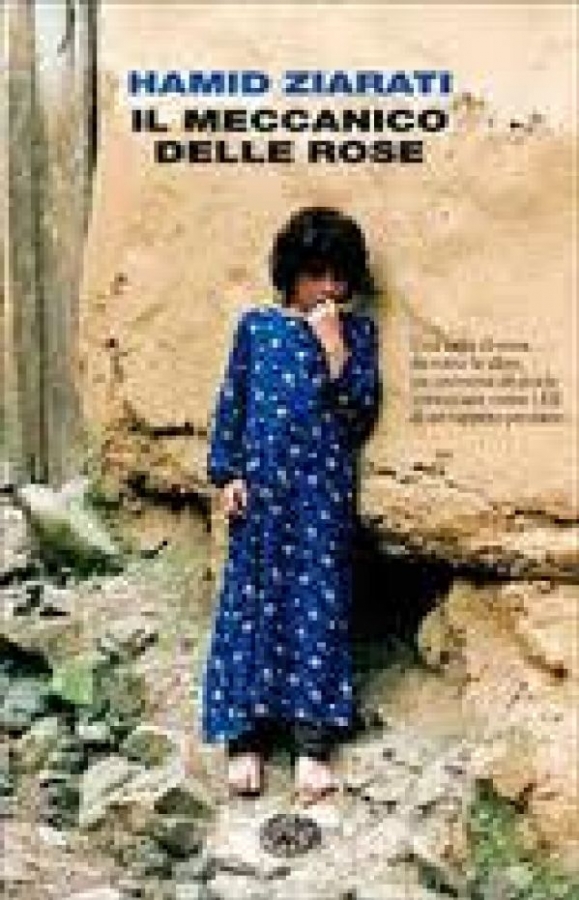
The Rose Mechanic
The novel, written in Italian, is set in a country never named, yet readily identifiable as Iran, before and after the Khomeinist revolution. There is perhaps a protagonist, Reza, but he is a figure merely "brushed upon," about whom we know little because his character and fate are determined by the circumstances and personalities of the other characters. Or perhaps he has no need to express himself because "he > is steadfast, with just the right dose of opportunism and selfishness to survive, while those around him are too fragile to endure in a harsh and cruel world. The novel is structured into five chapters, corresponding to the characters who shape Reza's fate. In the first chapter, Akbar takes advantage of the people's credulity to replace his stillborn son with an infant, Khodadad, abandoned on his doorstep. To do so, however, he must cry miracle, thereby offending faith and sealing the fate of Khodadad, who from that moment on will be marked as one favored by God, as one capable of raising the dead. Akbar then commits another sin: he makes love to his sister-in-law, who will later give birth to Reza. The entire narrative thus originates from a dual deception, and it is as though a curse hangs over all subsequent events. In the second chapter, Khodadad, no longer able to bear the role of the miraculously saved > , flees together with Reza to seek a new life in the big city. To convince his friend to follow him, Khodadad leads him to the cemetery, where there is an empty grave, already dug so as not to be caught unprepared by God's inevitable summons. Going to the city, the boy says, is the only way we have to save ourselves from that end there." Yet the practical and prosaic Reza rightly replies to him, "if it's not there, it will be elsewhere > . Life in the city proves far more difficult than they had anticipated, though it must be said that Reza adapts much better than Khodadad. During an altercation with their master, who refuses to pay them, Khodadad is mortally wounded while Reza kills the man. The two boys flee, deciding to part ways. And so Khodadad fades away alone, with the sole consolation of the angel of death, Ezrail, who swayed him, singing in his ear, in a whisper, the lullaby of oblivion, the only one he knew > . In the third chapter, the novel recounts the sad tale of Donya, which, it must be said, hews a bit too closely to the plots of many a nineteenth-century tearjerker. After a wretched adolescence brought on by a cruel stepmother, the girl falls in love with the classic gentleman > of good family and is forced to marry a man she does not love—namely Reza, who has in the meantime become a skilled and prosperous mechanic. Between the two there is neither love nor, even less, passion; yet while Donya suffers deeply from an incomplete, comfortable marital life, brightened by a daughter but emotionally barren, Reza seems content enough, accepting—perhaps with excessive submissiveness—his wife's coldness. Donya's only moment of relative happiness consists of visiting the cemetery of a nearby shrine, where the woman imagines praying over her dead mother's grave: she sits on the ground, and with a small stone knocks three times to draw her mother's attention and let her know she is there to pray for her soul > . Donya's life might have drawn to a prosaic close in a resigned yet peaceful marriage (Reza is, after all, a decent man), were it not shattered, driving her to suicide, by the tragic end of Mahtab, her beloved daughter. The fourth chapter is without question the most dramatic, in many respects harrowing. The girl is arrested by the Khomeinist police, tortured, and strangled. Her only fault is being engaged to a lawyer who defends his clients—often impoverished prostitutes—with excessive fervor. And at the moment of death, Mahtab takes refuge in wonderful childhood memories, imagining she hears her father's words. The darkness and the crack-free silence cradled her. A warm, gentle voice soothed her eardrums with words that reached her liquid, light > . In the final chapter we discover that Reza has had a long relationship with a prostitute, Laleh. It is in fact she who financed Reza's business, enabling him to become a wealthy mechanic. On the verge of death, she longs for Reza to come and say goodbye to her—she who had always helped him. Yet he does not come. If she recovers, he will come and take her away, so he told her. So much pain? He doesn't come. Yet she does not resign herself. The night still seems very long. Sleep does not cradle her. Will the end ever arrive? > For many commentators, the meaning of this book lies in the quotation of verses by a great Iranian poet, which read we played amidst this for a while, then we ended up, one after the other, in the basket of oblivion > . We are not the ones who forge our destiny, which is, in any case, a trifling thing before God. Without doubt, the novel is steeped in a profound religiosity, a sort of existential resignation that finds peace only in the notion that all of life is God's will. Yet one also senses, throughout the book, an abiding desire to escape from the prose of existence: an escape that ultimately can be achieved only through death. To be resurrected lighter and with wings, she tells herself. She must become lighter, with wings, and fly far away. Far away from there. Up high. But then? How to find one's bearings? Which compass to look to? Which qibla to trust? And what if she gets lost all over again? The book's principal virtue is its prose: simple, elegant, delicate. The numerous dialogues do not thin out the narrative; on the contrary, they allow for a deeper exploration of the characters. The complexity of Iranian society emerges vividly, caught between a deep-seated religiosity and modern aspirations. Lingering too extensively on detail, drawing out the various characters' stories, causes the tension to slacken and works against a sharp focus on the fundamental themes, which are neither easily discerned nor fully developed. Why read it? Splendid prose, an intriguing and at times gripping narrative.
The Almond Picker
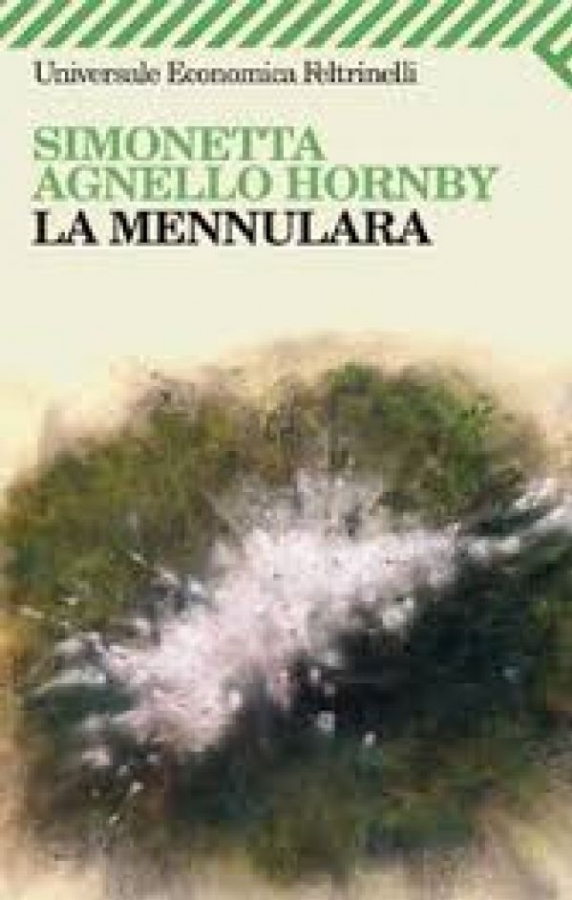
> We know next to nothing about her, and that's that. The fact is she was good at her job and liked being in charge, and that’s where everyone’s troubles began. Masters like having good workers, but they don't like being bossed around. If they had listened to her, they’d be richer still, but we always remain poor and slighted, even in death . This is how Don Paolino, former chauffeur to the Alfallipe family, sums up the fate of Maria Rosalia Inzerillo, known as the Mennulara, who died at the age of fifty-five. The novel opens with the woman’s death and slowly unravels the mystery of this «criata» (servant): born into utter poverty, she was forced from childhood to work harvesting almonds (hence her nickname); taken into service in the Alfallipe household, she became the shrewd administrator of an ailing estate; and ultimately took the helm of the family, ensuring its financial survival. This is how Orazio Alfallipe describes her, recalling the day he fell hopelessly in love with her. > I saw her, slender and petite. (...) She wore a pale slip, wet from splashes of water. I trained the binoculars on her, spellbound by the rhythmic sway of her body, her small, pointed breasts, and her youthful, harmonious arms. She was beautiful. (...) She watched me circumspectly, yet without fear. What is that?, she said, pointing to the binoculars. (...) Teach me how to look, she said. (...) A sense of wonder welled up in my chest, overwhelming me... The Mennulara’s death upends the small town of Roccacolomba, in a timeless Sicily: people pass judgment, often harshly critical, on the woman’s life, gossiping about the funeral and especially about the Alfallipes' conduct. The latter are convinced that the Mennulara harbored substantial hidden funds; they expect a rich inheritance, but find no such testamentary provisions. Growing increasingly exasperated, they fail to comply with the woman's directives regarding the obituary and the funeral. Yet even from the grave, she continues to direct the family, forcing them to do her bidding; in particular, she leaves precise instructions to retrieve ancient Greek ceramics and have them appraised by an expert. Because these artifacts had been purchased from grave robbers—and thus could not be legitimately traded—the Mennulara had commissioned copies, and it was these that were submitted for appraisal, securing a certificate of forgery that would allow the pieces to be taken abroad and sold. Blinded by greed and foolishness, the Alfallipes cannot conceive of so clever an expedient; their disdain for the Mennulara, a mere «criata», leads them to suspect some obscure deception. Yet hadn't she served them all her life, salvaging their estate? She was a servant, nonetheless. Upon reading the appraisal, they believe they have been duped; overwhelmed by rage and hatred for the woman, in a fury they shatter both the counterfeit copies and the authentic originals. Before the astonished and amused town, they divest themselves of their long-awaited inheritance and squander the last vestiges of their respectability. In devastating the ceramics, they also obliterate the «mute witness» to the relationship between Orazio and the Mennulara, and to their shared passion for art and history. Must the feelings of a «criata» be respected in a timeless Sicily? Certainly not. The question is whether the Mennulara is a positive figure, an engine of social change, or if her story is, once again, the testimony of a defeat, the acceptance of an inevitable and immutable destiny. Indeed, the Mennulara believed she could elevate herself («she had estranged herself from people of her own station») without altering social hierarchies; she renounced everything, endured a clandestine affair with her master, bore the contempt of the Alfallipes—for whom she was the cornerstone—and, in the end, failed to preserve her spiritual legacy, the collection of ceramics, the testament to an existence. The Mennulara is a defeated figure. But so too are the numerous characters of Roccacolomba: they gossip, at times they seem to rebel, at others they voice wise and benevolent reflections, yet they invariably yield to power and social immobility. This is the profound meaning of the novel, as well as of the figure of the Mennulara: there is no civic future for Sicily. The novel is nearly flawless up to page 152, up to the scene of the ceramics' destruction. Then, for reasons unknown, the author felt compelled to lay bare the Mennulara’s life, resorting to lengthy explanations rather than relying on the plot and the interplay of characters. It was needless, detrimental to the overall pacing of the narrative. It was a pity, as it drained the tension from the story. Why read it? It is enjoyable, engaging, «a majestic entertainment» (Aldo Busi)
Lies and Sorcery
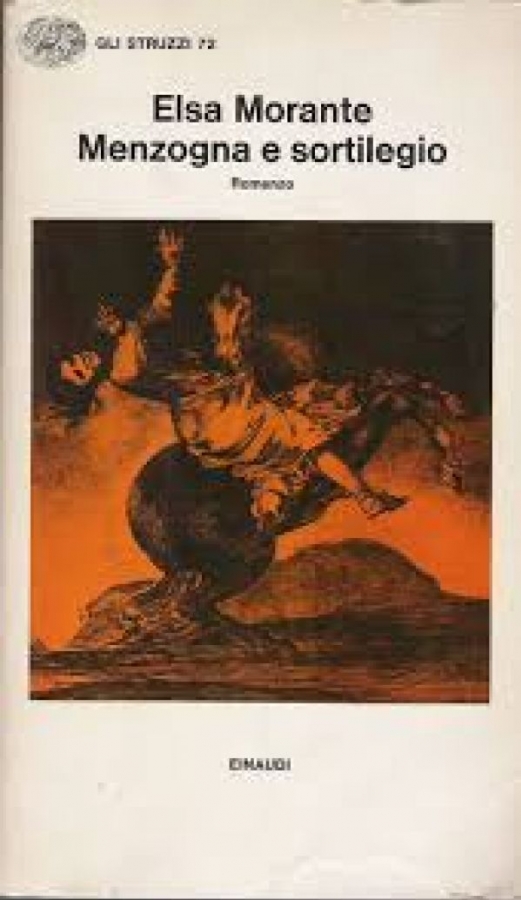
Elisa wanders through the rooms, in silence and solitude, and when she unexpectedly catches sight of her own reflection, she seems to see > a shape moving in these funereal, solitary waters, (...) like a jellyfish , not a saint: “rather a witch.” It is precisely to explain the sorcery that led her to shut herself up in a few rooms that Elisa offers us the tale of her family: and it is “an appearance of shadows,” a “fantastic malady” that speaks of love and death, as in fairy-tale books: “with thee, Fiction, I gird myself, fatuous raiment.” The novel can be divided into two parts. In the first, Elisa has not witnessed the events and characters she narrates: everything is filtered through the reminiscences of those who were still living when she was a child, or through clues, papers, and places. On the other hand, > the past and the future are two fields of mist and vertigo, which the living cannot explore except through fantasy and memory. (...) What is the use of plumbing this palace of death? The mere attempt to plumb it produces anguish and nausea, as when one looks out over a precipice . We will never know whether what she tells us is true, not least because it reads like the narration of a grand deception, of lies meant to cloak the beloved in “fire and splendor.” Thus the maternal grandfather is a scoundrel and a sluggard, yet he captivates his daughter Anna with wondrous tales of travel, jewels, honors, and glory; and Anna forgets that she lives in poverty, venting her rage on her mother Cesira, a petty and desperate woman. The paternal grandparents are hardworking peasants and could have been an anchor of solid substance: their son Francesco, however, was born of the mother’s fleeting affair with a rogue, himself a fabulist and a peddler of "smoke > . One should not be surprised if Francesco, upon going to study in the city, introduces himself as a baron, and one with revolutionary ideas to boot. And what of Edoardo, the wealthy cousin of the destitute Anna: charming, with feminine features, vacuously intelligent, enamored of himself, ready to love, beguile, and betray anyone, purely for the ambiguous pleasure of amusing himself. Anna and Francesco are too naive not to fall into his tempting coils: Anna falls in love with her cousin, dreaming of a bond that can never materialize due to the difference in social standing and, above all, Edoardo’s character, far too superficial for an enduring and responsible relationship; Francesco believes he has found a true friend in Edoardo, unaware that he is being led by the hand from a genuine love (that of the prostitute Rosaria) toward a yearned-for and idealized one, his passion for Anna. And so Anna and Francesco find themselves married, as if under a spell: Anna loves Edoardo and binds herself to Francesco out of despair, while the latter has deceived the woman, masquerading as a wealthy landowner and a young man on the rise. At this point Elisa steps onto the stage, no longer merely the narrator. Henceforth ended is my privilege of attending, a solitary spectator, a comedy of spirits. (...) A lucid insomnia takes hold of me, and in this taciturn and deserted room, henceforth I can interrogate nothing other than my true memory. I can recount nothing, that is, except the things I saw with my own eyes, heard with my own ears, and of which my father and mother, in their differing insanities, made me their confidante and witness > . To be protagonists is an act of maturity, and at the same time of sorrow, because one cannot defend oneself with imaginary remembrance. Memories, like animals that have lain in hibernation, stir at my call, and approach me with velvety, funereal steps > . The experience of the adolescent Elisa is truly extraordinary; she is not merely a party to a toxic and perverse relationship, the cause of her parents’ psychophysical decline; the girl is swallowed into a kind of triangulation with Francesco and Anna on one side, and on the other the ghost of Edoardo, dead of consumption. To humor Concetta, Edoardo’s now-deranged mother, but in reality to gratify herself, Anna invents an epistolary exchange of letters from her cousin. What virtue did this counterfeit correspondence possess? > Dwelling within it, full of feast and fire, was a Thought: (...) it possessed inspired movements, chivalric demeanor, and a coquetry cast, like a bold and light armor, over its bitter voluptuousness. Moreover, its shadowy beauty flaunted adolescent fatuity like an oriflamme, that dear, venial fatuity > . But who was truly the author of this correspondence? The Cousin in his ethereal form as a ghost, or Satan, as might appear from the infernal postmarks > of the letters, or Anna herself, as any doctor would have said, hybrid fruit of a poor, morbid mind”. Were this so, “the counterfeit Epistolary turns within me into a mirror, in which Anna’s beloved face appears to me so disfigured and contorted that memory, will, and fantasy urge me to choose a lie in place of this diagnosis. (...) Of Anna, of this twofold idol of mine, of my sleeping, precious Phoenix, it makes an object of wretchedness and pity. And finally, over the fantastic Epistolary, over our renowned correspondence, it sheds the dismal pallor of insanity, and the shapeless tedium of death > . And then the fantastic Epistolary, just like the novel as a whole, comes to be a stanza of love”, a desperate way by which “the spirit that presides over childish things” seeks to overcome death, “at least in play. The novel has a nineteenth-century architecture: a complex plot, meticulous description of settings, in-depth character analysis, richly vaporous prose of refined elegance. One must not, however, be deceived; if love and death are tightly interwoven—because as soon as one loves, one already knows the beloved will perish—only dreaming, fantasizing, lying to others and to oneself allow us to survive, to keep suffering at bay. The sorcery lies in this: Elisa prefers to shut herself in the solitary rooms, pursuing her own shadows, rather than reckon with reality and retrace the demented aspirations of those who came before her. Does the novel not speak, perhaps, of Elisa’s consciousness? Might it not be the fruit of her diseased mind? Only Alvaro the Cat, Elisa’s faithful companion, knows. When every light is quenched, kindle your pupils in the dark, o torch of my half-sleep, and the solemn truce cracks, a thousand ephemeral torches blaze, childish tigers chase one another in sweet deliria". In reading *Menzogna e Sortilegio*, the mind turns to Thomas Mann. We are in Southern Italy; the colors and characters are those of our South; and yet there is the same demolition of the traditional novel, and one breathes the very same air of decay, of slow decline toward death. Its excessive length is regrettable: we are before a work of great originality, which deserves to be rediscovered and read anew. Why read it? Splendid writing, and long live the imagination!
The Better Life
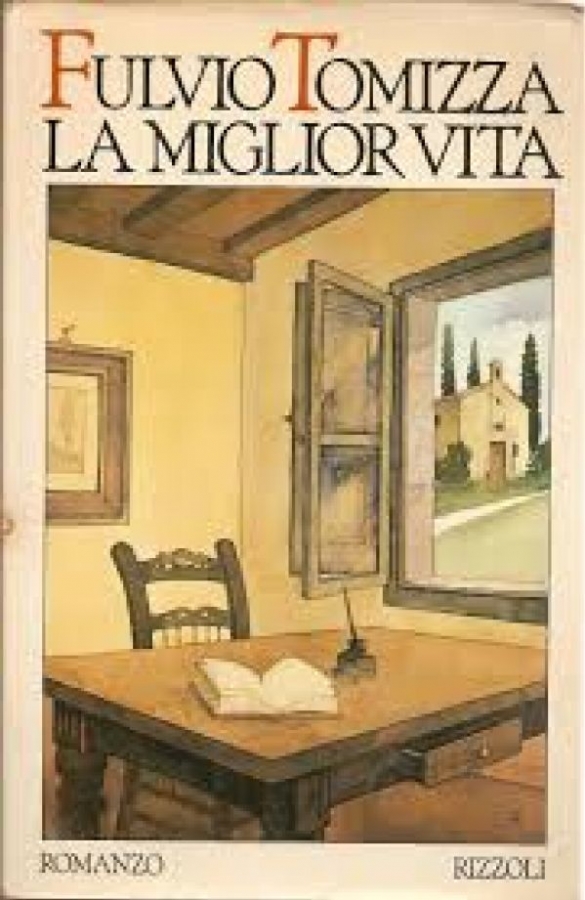
The novel is set in a small Istrian village, spanning a period from the early twentieth century to the 1970s. The narrative charts the momentous events of the century just past: the final years of the Austrian Empire, the First World War, annexation to Italy, the partisan war, and ultimately integration into Yugoslavia following the 1947 peace treaty. These historical events had a profound impact on a border community composed of Croats and Italians: the former in the majority and generally poor peasants, the latter a minority of wealthy landowners. Yet it is not the social theme that interests the author, even though it naturally surfaces throughout the narrative, especially in the frequent blending of Croatian and Italian—one of the book's most compelling features. The theme of the story is entirely internal and can be distilled into a single subject: religion and its function for the individual and for a small community. Tomizza envisions an elderly sacristan recounting his life, and that of his fellow villagers, through the succession of parish priests over the years. > How many priests had I not had to deal with: priests with mothers, with sisters, with housekeepers, and priests on their own. During sleepless hours they revolved before my eyes like a carousel reflecting myself and at the same time the political circumstances of their era. I pondered in the dark that each could have appeared better to me, and each worse, depending on the times, but also by virtue of my own changing way of being and assessing them. (...) Why did I stay? It is hard to answer today, for it is hard to be believed. I felt I was serving the church, and through it the community, not the priests, who were all destined to pass away. I had wedded myself to that service, to that duty, even before Palmira, and everything else came second, Palmira included. Yet I was resolved to forge another path for our son, and this commitment partly redeemed me, even in her eyes . This quotation encapsulates the long journey of the protagonist-narrator, which leads him to drift away from religion as he witnesses the decline of the parish he serves throughout his life. > The church is a building like any other; it will end, as is predictable, without making much of an impression: atop the hills one can still see the walls of small churches from centuries past, engulfed by briars. Yet back then there was a recovery, and people returned to the fields as well. Will it happen again? I doubt it. Born to a sacristan, he becomes one while still young. The priests who follow one another are profoundly different: some ignorant and coarse, others overbearing and arrogant, still others frail individuals, quick to sin with wine and women. Only one, a young Croatian priest, seemed to embody what is expected of a man of the cloth. Yet later, when he sees him again as a bishop, he realizes that he too has become false and hypocritical. > From him I would have expected to hear, or at least read upon his face, the disillusionment, the wounds that could not fail to have been inflicted. (...) In earlier times, would he not have been prouder, if not more compassionate? . And so, left without a parish priest to serve, the old sacristan has no choice but to become the chronicler of his people. In the book's final, deeply evocative pages, the protagonist recounts the lives of some of his fellow villagers, such as *gnagna* Zvana Zuncolin, a "stooped, dark little woman," or Michelin, once "a handsome, dark man with gypsy eyes," who spent a lifetime as a drunkard to forget the woman he loved: he remains famous for the phrase, "there are no spare parts for man." The narrative style is not always effortless, yet the reading moves briskly because one remains captivated by the story of a community—first isolated and hidden, then increasingly caught up in momentous events. In Tomizza's narrative, never folkloric or nostalgic, religion intertwines with ancestral pagan customs and new, ostensibly secular and anticlerical mores. And the church is always there, "somehow simply present," with its registers of births and deaths, written partly in Croatian and partly in Italian, in hands both clear and obscure: a presence from which the protagonist wishes to escape, yet cannot, because > it adhered perfectly to that which I had always learned to know and, for convenience, am accustomed to calling ordinary (life), yet it did not completely coincide with it, while still enchanting me, while still helping me discover hidden or unnoticed facets of real life . Yet by thus contenting itself with "its own full power," religion does not resolve the mystery of death, leaving the individual alone and questioning at life's most solemn moment. > Does the void of the heavens descend upon the earth, or does the better life open wide above us? This I did not know, that the world dies with every death of a man . Why read it? Allow yourself to be enchanted by the story of an ordinary life in a small Istrian village, between Croatia and Italy.
The Mill on the Po
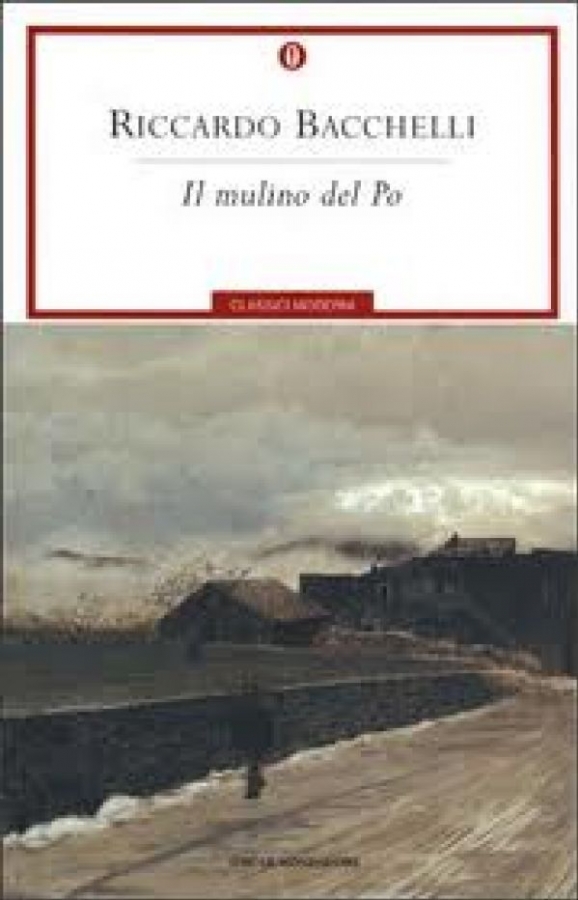
*Il Mulino del Po* is defined by its author as a historical novel, chronicling the fortunes of a family of millers from Ferrara between 1815 and the First World War. Bacchelli’s aim is to narrate the history of Italy from the perspective of the humble, > to win for poetry a century, a moment of the mighty humility of the common people, civilized in Italy with a civilization of their own, at times evasive and secret, yet always unmistakable and never crushed by so great, so illustrious, and yet so heavy a burden of history . In the first volume, *Dio ti salvi*, Lazzaro Scacerni finds himself, despite himself, swept up in the great rout of Napoleon's army in Russia. During the disastrous retreat, a dying Italian officer reveals how to recover a cache of precious sacred objects looted from the churches of Ferrara during the Jacobin era. Having returned to Italy, Scacerni uses the proceeds from selling these objects to build a watermill, the *San Michele*, thus becoming a miller of the Po. Until 1860, the Po served as the border between the Papal States and Austria, a hotbed of smuggling frequented by thieves and scoundrels. Scacerni is blackmailed by a fence and gang leader, the Raguseo, to whom he had sold the precious items. Just as he resolves to kill the Raguseo, the latter is murdered. Scacerni saves both himself and his soul. > The question arose explicitly during the long, brooding hours beside the millstones of white and yellow flour, as he reflected on all that God had wrought to save him: and why did He do it? Yet he understood there was no answer, save in an act of grace . The second volume, *La miseria viene in barca*, centers on Giuseppe—nicknamed Coniglio Mannaro—son of Lazzaro, and Cecilia, daughter of the Matto di Paneparso, another Po miller. On a stormy day, Cecilia’s mill is swept away by the tumultuous current and saved by Lazzaro, who virtually takes the girl in as his daughter. Coniglio Mannaro rejects his father’s trade and, greedy for money, embarks on a career as a broker, often by dishonest and unscrupulous means. Cecilia, by contrast, is rugged, wild, and upright, devoted to the mills and the Po. Coniglio Mannaro tricks Cecilia into marriage, and she bears him seven children. The two spouses remain forever estranged, deeply divided by their values and allegiances: Cecilia bound to the river and the children, Giuseppe to the land and to money. Above all, she is revolted by her husband’s dishonesty in personal relationships and business dealings. But retribution > would come from the river; of this she was certain, born as she was in a land where everything—the land itself, good and evil alike—was given and taken away by the river, so that river and fortune were one and the same . Indeed, during the great flood of 1872 (among the book’s most gripping pages), Coniglio Mannaro loses his lands, swallowed forever by the waters of the great river. In a dramatic scene, amid the height of the storm, Cecilia rescues her husband, who, driven mad, had lingered on the embankment and was about to be swept away by the raging waters. In the third volume, *Mondo vecchio sempre nuovo*, Cecilia, battling poverty and hunger, is forced to send two of her daughters into domestic service. One of them, the fair and virtuous Berta, goes to work for a peasant family, where a young man, Orbino, has long been in love with her. In a magnificent chapter, *I giorni della ghirlanda*, which ought to be read in every school, Bacchelli retraces the cycle of rural life throughout the year up to the harvest festival. These pages reveal the author’s profound love for the countryside and the life of the peasantry. Yet alongside the passage of the seasons, the love between Berta and Orbino matures—a modest, well-guarded love, for the two youths have resolved to "fare la prova" (as consummating love before marriage was called back then) only once their union has been sanctioned by their families. A curse weighs upon the destiny of the Scacernis, born of an original sin. It is an era of struggle in the Ferrarese countryside between landowners and the peasant league. Cecilia sides with the masters, solely because she is a woman of the river, bound to tradition, who refuses to take orders from the peasants. Not only must the two young lovers part, but the hatred toward the Scacernis leads to slander against Berta to such a degree that, in a moment of madness, her brother murders Orbino. As in a Greek tragedy, on the banks of the Po, one witnesses the ritual purification of the poor youth's corpse by his unconsummated, chaste bride. For Bacchelli, this is a metaphor for life and death. > The world is no more than misfortune, against which rebelling is even more futile than suffering. To be born is nothing other than to come here to die, as vain as the flowing of the river.... like the river giving up corpses, man's hour dissolves into the time that bears it. There hope falters, charity dies, faith is lost . Just as the saga of the Scacerni family comes to a tragic close, so too ends the history of the mills of the Po, supplanted by steam mills. And with them dissolves the hope of Bacchelli the man and of his world, that of the peasantry. > A family, a people, a land: I did not invent them, I came upon them.... he who has told their tale suddenly feels the void . It is a great book, open to multiple readings. First and foremost, there are the great river and the Ferrarese landscape. This is the most compelling aspect, not merely as a historical testimony, but for the author's ability to depict both the world of the waters and that of the peasantry. Secondly, Bacchelli creates an expansive historical fresco of Italian history, grounded in the contrast between the waning values of the Risorgimento and the resilience of the Italian people—a strength the author traces back to the Catholic faith. And here Bacchelli’s nostalgia emerges unmistakably for a world that modernity has weakened, engulfed, and radically altered: that temporal realm of the popes, which may have been hypocritical, antiquated, and rife with privilege, yet allowed poor folk to survive without being crushed by an extortionate landlord, by taxes, and by the trade union leagues themselves, which the author sharply criticizes. Finally, there is the religious theme: God’s mercy is mysterious, yet it unfailingly operates to grant the righteous their due. Why read it? Reading the work in its entirety is very heavy going, as Bacchelli struggles to sustain the narrative momentum; nevertheless, certain passages, particularly those bound to the natural environment, are strikingly beautiful and insightful. It is best read as a curated selection of excerpts.