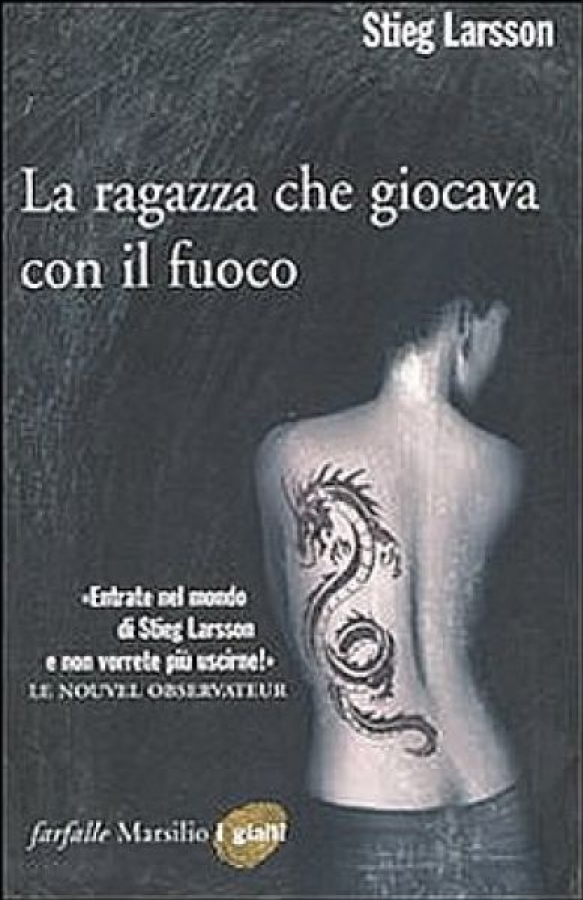
The Girl Who Played with Fire
The novel is, in some ways, a continuation of the previous book. This time the protagonist is the girl, Lisbeth Salander. The opening is slow and leisurely. Lisbeth, now immensely wealthy, lives in the Caribbean and later returns to Sweden, where she resumes a relationship with an old friend and reconnects with her former guardian, hospitalized after a stroke. The journalist, on the other hand, is involved in an investigation into sexual exploitation, conducted by a couple—a university researcher and a journalist. Meanwhile, Lisbeth’s new guardian, a depraved lawyer, seeks revenge against the girl, who holds him in her grip with video footage showing him raping her, and thus enlists a gang of criminals. At this point, the novel takes on a more intense rhythm: the lawyer is murdered with the same gun used that same night to assassinate the university researcher and her cohabiting journalist partner. Lisbeth is accused, dredging up the old narrative of the girl’s psychological instability. The entire country is drawn into the hunt for her, whom both the mass media and the police depict as a psychopath. It is evident that the truth is entirely different: the girl had been branded a psychopath (and consequently first committed to an asylum and later placed under guardianship) because she was the daughter of a notorious Russian spy who had defected to Sweden. The girl’s father was in fact—he, truly—a violent psychopath, and he is behind the murders out of fear that the truth will be exposed. A series of adventures ensues, but in the end the girl is saved, this time, by her journalist friend: > she opened her eyes a little and stared at him for a long moment. Her gaze was unfocused. He heard her murmur something so softly that he could barely make out the words, goddamn Kalle Blomkvist . The themes of sex and sexual violence against women remain the central subjects of the book. Added to these are two others, which gain prominence as the novel unfolds: on the one hand, a corrupt and superficial police apparatus; on the other, child social services, which often operate according to conventional formulas and under pressure from psychologists and experts who are themselves corrupt and dominated by obsessions and stereotypes. Lisbeth was a victim not only of the secret services, who wanted to institutionalize her to avoid complications in managing an inconvenient figure, as her father was, but she also suffers from the entrenched attitudes of the social welfare system, which views «outsiders» as a threat to social cohesion, irrespective of their intelligence and fundamental honesty. It is the antisocial individual who causes disturbance and must somehow be removed. The book is weighed down by too many «digressions» and characters relative to the central plot; at times, the dialogue proves prolix and repetitive, just as certain narrative resolutions appear somewhat predictable and implausible: for instance, the police failing to examine the murdered journalist’s computer, the presence of a giant—incidentally the girl’s half-brother—who seems invincible because he cannot feel pain, yet is easily chained up by Blomkvist, and the girl’s survival, managing to save herself despite having been buried alive.
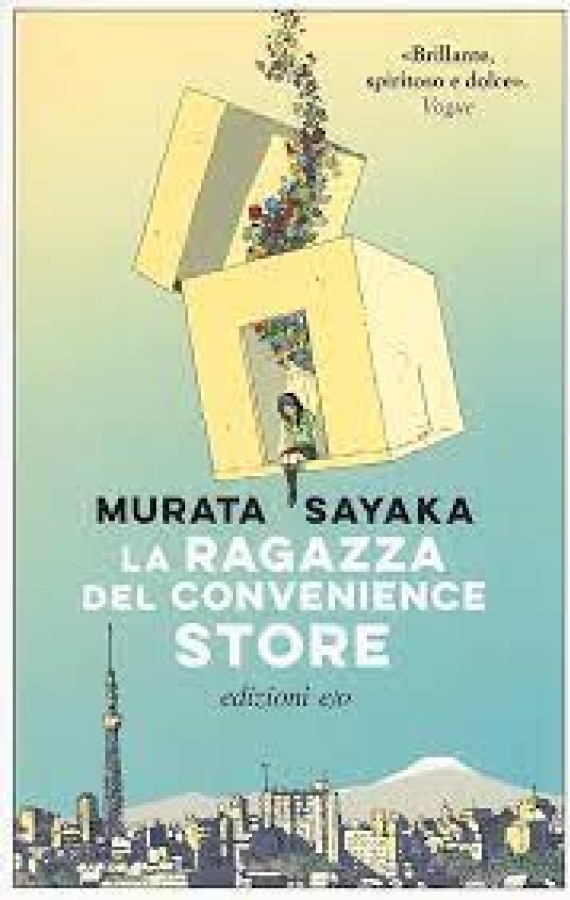
Convenience Store Woman
In Japan, *konbini* are small convenience stores stocking everything; and it is here that a story unfolds, seemingly light and predictable, which instead confronts a crucial issue: as the protagonist observes following a conversation with her sister, people prefer someone who is > "normal," even if plagued with problems, to a sister who is quiet but "abnormal," from another planet. Keiko grew up in a peaceful household, with attentive parents and a loving sister; yet from early childhood she was a "strange" girl—antisocial, at times even aggressive. The widespread disapproval following singular acts, such as killing a sparrow, led her to withdraw into herself. > I was approaching adulthood, the hour of truth, and kept telling myself that I had to be cured at all costs. The turning point comes when she is hired at a *konbini*. After a brief training period, Keiko learns how to stock shelves, highlighting promotional items, keep the store clean, and, above all, greet customers in a loud voice. > Irasshaimase! (welcome, in Japanese) I cried (...) bowing by the book and beginning to scan the items. In that moment, for the first time in my life, I savored the feeling of having found my place in the world. I am born, at last!, I thought elatedly. (...) The repeated chime that heralds the entrance of customers rings out like church bells. The rectangular box of luminous, transparent glass takes me into itself. A perfect world, which continues to turn relentlessly. I hold a blind, absolute faith in this gleaming microcosm— With gentle irony, the author guides us to appreciate life in the *konbini*: the bustle of customers, colleagues growing increasingly indistinguishable in their demeanor and even their accents, the succession of store managers, each to be accepted along with their flaws, and then the merchandise on the shelves—the heart of the store—products that have evolved over time to adapt to shifting patterns of consumption. The years go by; Keiko grows older under her part-time contract, living in a squalid studio apartment, still a virgin. She is content, fulfilled by the "music of the *konbini*," > a myriad of sounds blending together and seeping endlessly into me. For her parents and sister, for her friends as well as her own coworkers, Keiko cannot be happy because she is different, estranged from social conventions dictating that a woman must marry, procreate and raise children, and hold a secure job with a decent wage. To justify her "strange" life, Keiko invents an illness, but this excuse cannot hold up for long. To silence everyone—and not out of affection—Keiko takes in a selfish, deadbeat young man; at last, she can claim to have a man, perhaps even marry. > Virgin, spinster, and a poor *konbini* clerk, (...) everyone will believe you are sexually the same, and you will be just like all the other women on the planet. Yet Keiko discovers that within her "gleaming microcosm" she is no longer merely the clerk to be dealt with professionally; she is a vulnerable woman, before whom > it was no longer my eighth manager, but merely a male of the human species, eager like all the rest to see one of his own kind mate and reproduce. In the name of the perpetuation of the species. What is left to do? Flee the *konbini* in search of something else, or recognize without pretense that > even before being a human being, I am a *konbini* clerk? With engaging prose and a narrative detached from psychologisms and moral judgments, the author shows us that not everyone must belong to the "tribe of the normal," that the pursuit of happiness takes many paths, and that embracing one's own—however modest and devoid of ambition—allows one to be at peace with oneself. In the tale of the *konbini* girl, there is undeniably a critique of Japanese social conventions; from a distance, there also emerges the desire to turn inward, to avoid being inevitably ensnared by love, sex, and childbearing. The *konbini* functions like a monastery where a woman can finally be free, shielded by the armor of professionalism within a workplace that is stationary, yet radiant with lights and sounds. The plot is tenuous, the narrative develops slowly, burdened by long, often tedious and inconclusive dialogues. The secondary characters are either banal or implausible, serving merely as foils to the protagonist: she never truly breaks free, in fact, from her own "narrating I," ironic and sharp, yet ultimately stale and predictable.
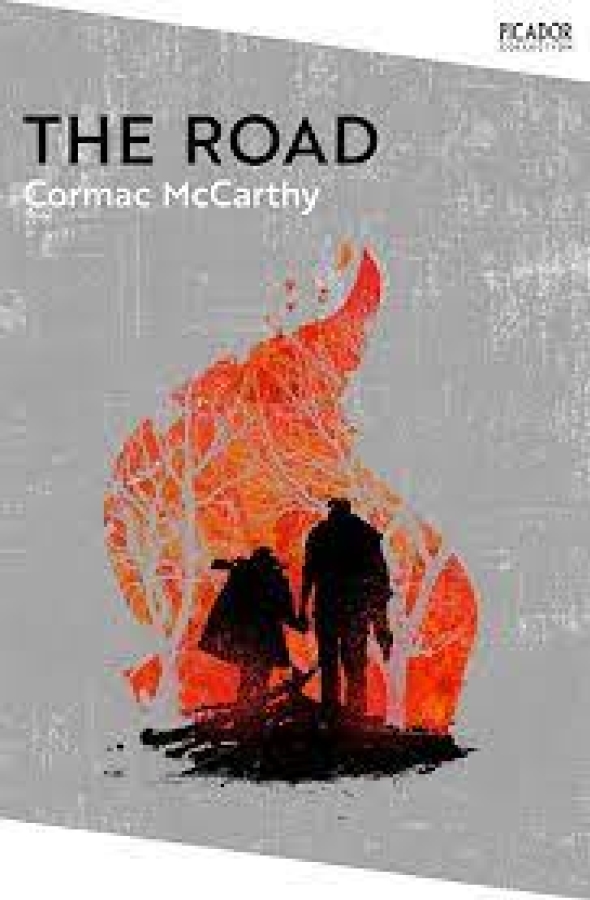
The road
> The ashes of the lost world spread across the desolate wasteland, (carried) hither and thither into the void by storm winds. Hauled and tossed and hauled again. Everything torn from its roots. Unsupported in the dusty air. Sustained by a breath, trembling and brief. If only my heart were stone . In a post-apocalyptic era (following an unspecified catastrophe) > all food stores had been exhausted and murder was everywhere upon the earth. The world was soon largely peopled by men who would eat their children before their very eyes, and the cities themselves were ruled by bands of filthy scavengers who rummaged through the rubble and crawled from the refuse, (lit only) by the white of teeth and eyes, carrying charred and anonymous tins of food in nylon bags, like patrons in the restaurants of hell. (...) Out on the road the pilgrims sank down, fell, and died, and the veiled and barren earth (like a shroud) continued to glide with the sun and revolve again like the trackless, unmarked course of any sister world, unnamed and unreachable in the primordial dark. This lengthy quotation gives a sense of this novel’s style: lyrical, rich in evocative imagery, syntactically and lexically intricate, difficult to translate, captivating to critics, far less so to ordinary readers. Evoking the author’s own words introduces the setting of the slender plot: a father and his son, still a young boy, journey through a devastated world of charred trees and desolate wastes, bereft of animals and plant life, amid other human beings who have turned to cannibalism to survive. The father knows he will soon die (the dust is killing him) and wants to lead his son to the sea: he is convinced that along the coast there are still "good people." They could stop, but they cannot, for they risk being ambushed by murderous gangs. > Ten thousand dreams buried within their wandering souls. They went on. Crossing the lost world on a cart, hidden like rats. The dead nights in their fixity and deader still in the darkness. So cold . The father shows no pity; he does not answer cries for help, refuses to be moved by human beings who will likely become food for others and desperately beg for aid; he cannot afford to, having a mission: to survive and bring the boy to safety. The son, by contrast, is the critical conscience; not only does he plead for humanity, but he demands that his father remain consistent with the stories he tells him. "You want me to tell you stories," the man says. > The boy looked at him and looked away. (...) Those stories are not true. They don't have to be true. They are stories. Yes (says the boy). But in stories we are always helping people and instead we don't help other people.(...) Well. I think we are still here. A lot of bad things have happened but we are still here . When they reach the coast, there is no scent of the sea; the water is not blue but gray, covered in ash, > only fish bones in their millions scattered along the beach as far as the eye can see like a line of death. A huge salt sepulchre. Senseless. Senseless . The novel can be interpreted in many ways. One can read the narrative literally, as the tale of what will become of us after a catastrophe—whether climatic, pandemic, or nuclear; yet too many narrative elements are missing (not least the causes of the environmental disaster) to suggest that the author intended to write a standard dystopian work. One might turn to another of McCarthy's books (see the review of *All the Pretty Horses* on this site), in which the writer dwells on the demise of the cowboy world and wild horses across the green plains of the West; *The Road*, too, is set across vast prairies, albeit ravaged by catastrophe, as if the author had returned to mourn, now without hope, the inexorable and agonizing loss of his world—transformed into an apocalyptic landscape by the disorderly and pervasive spread of factories, reckless overdevelopment, and shopping malls with their glut of commodities. How vast our hoard of goods and food must be if, even after years of looting, we can still unearth something useful amid the rubble and refuse! Reading it imparts a metaphysical sense of existence, beyond time and space, transcending the individual story. The journey of the two pilgrims is a metaphor for Death, a march toward the end of being. Not only is there no meaning in living in a horrifying reality where even memory slips away and dreams can only be nightmares; death is our inevitable arrival, yet dying is an agonizing ordeal in a world devoid of peace. Viewed from this perspective, the narrative centers entirely on the bond between father and son. Why does the man go on living and struggling? Why does he insist on recounting stories falsely steeped in humanity? Why does he deceive the boy? A powerful message emerges: our attachment to life must not reside in material possessions, in the mundane routine of an increasingly futile, fragile, and painful existence; we insist on not dying because we must still protect our loved ones. When an eschatology no longer exists—be it the City of God or the Sun of the Future—all that remains is to anchor ourselves to our responsibilities toward those nearest to us, in foundational bonds such as that between father and son. The narrative is structured in brief paragraphs, like a collection of prose poems that could almost stand alone. The fascination of the reading lies precisely in the sound that springs from the lexical richness of the words and an unconventional syntactic structure, hovering as if suspended and inexplicable. It is a tour de force of stylistic mastery, yet a quest for effect that comes at the expense of the story: everything repeats in an eternal return; the landscapes, situations, and dialogues (effectively confined to father and son) unfold monotonically and, in the end, predictably. One waits anxiously for something to break the tedium, yet nothing comes, save for an improbable ending. A sense of oppression lingers, and perhaps that was precisely the author’s intent. Still, the book's immense success remains hard to fathom; it is prolix, and reaching the end is a struggle. Why read it? Solely out of obligation, and drawn by its stylistic mastery.

Russian novel
The novel is set in Russia between 1987 and 1991, during the Mikhail Gorbachev years, amid those turbulent events that led to the dissolution of the Soviet Union in December of that same year. What unfolded was > a carpet woven of countless threads , a sort of Rubik's cube across which fingers chase > the colored squares that never click into the right place. To untangle this knot, without success, Barbero imagines "someone" recounting what occurred: a first-person narrator, perhaps an obscure Muscovite Jewish actor who, faced with a demonstration of anti-Zionist hatred, > suddenly had a flash of an idea which, for who knows what reason, did not seem monstrous to him at all, but rather most felicitous: well now, he thought, I will stand by and watch, and then I will describe everything in my novel. For, of course, how else could one survive such filth?. And if the plot lacks the order of great nineteenth-century novels, one must resign oneself to it, for it is devised by an actor, or perhaps by a historian who, like Ariosto with *Orlando Furioso*, is delighting in the captivating passion of storytelling. Besides, even the great Emmanuel Carrère lost his way describing recent Russian events (see *Limonov* on this site). The novel revolves around two characters. Tania, a young historian, has decided to write her doctoral dissertation on the obscure disappearance of Party officials in Baku during the 1940s. Why are they no longer mentioned in the minutes of congresses and regional committees? It must be a delicate matter, since the novel itself opens with a scene at once amusing and alarming: two envoys from Baku dump tomato sauce over the desk and suit of Tania's supervisor to make him understand that it would be best for the girl to abandon her inquiry into what happened. > Never mind the merits and the faults. But oblivion, no. A free people must remember , and with the resolve of one who believes in "historical truth" as a moral imperative for the researcher, Tania sets off for Baku to uncover the mystery, unbeknownst to the Historical Institute where she works, and at the risk of her life. Nazar is a federal prosecutor: he believes fiercely in justice—a legality by now eroded by the Brezhnevian swamp—nostalgic as he is for Stalinist severity, to the point of championing capital punishment (at home he proudly keeps the "pink slips" recording the executions of his death sentences!). He is assigned to investigate the murder of an ayatollah in Baku; it is feared that Armenians might be blamed, unleashing the vengeful fury of the Azerbaijanis: we are witnessing the disintegration of Soviet power. As in a thriller, the two plotlines unfold with twists, moments of danger in distant Baku as well as in a safer Moscow, intertwining in surprising and haphazard ways. In a world disintegrating in terms of values as well as state institutions, who cares about historical or judicial truth? Nothing remains but to withdraw into familial affection. Losing oneself in the narrative, a doubt arises: is Barbero speaking of Russia or of Italy? Rampant corruption at every level, the intertwining of political power and criminality, ideology reduced to mere ritual, the complete absence of any vision of the future, the disregard for "truths" except on the part of a stubborn few—all are elements we find in our own country's recent history. As in *Limonov*, one must admit that dissolving societies, whether Russian or Italian, possess a certain allure, especially when described ironically, without passing pointless moral judgments. Moreover, the world of historians is depicted in its inner workings, where power, complacency, archival research, and methodology mingle in unpredictable ways, and only those driven by an unshakeable faith, like Tania, can see it through to the end. Barbero speaks of himself, as both historian and Italian. Barbero writes the way he speaks: colloquially, with constant parentheticals and delectable descriptions, blending factual events with sketches of social mores, not forgetting a dash of sex. The pages turn briskly and pleasantly; nevertheless, the reader gets lost in the narrative’s countless embellishments, to the detriment of the overall pace—essential in what is ostensibly a thriller—and of a coherent grasp of the plot. Barbero must have realized this toward the end, for he offers a preemptive defense: > And it all comes down to this, that one has to be good: it would be too easy if the first comer were able to write in a flash what crosses the minds of his characters at a moment like this. (...) The pen writes and knows not what, the ink does not corrode the paper, the notebook does not catch fire.... Why read it? Enjoyable and interesting; the figure of Tania is finely drawn.