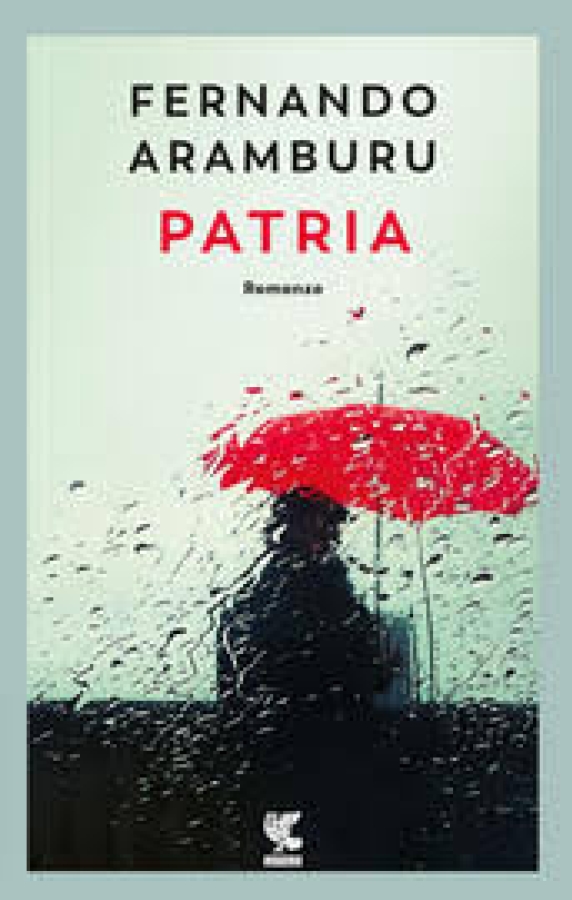
Homeland
On a rainy evening, a small Basque entrepreneur is killed by an ETA commando, a terrorist organization that bloodied Spain from 1968 to 2011, causing over 800 deaths, including 240 civilians (source: Wikipedia). Txato, as the victim was named, had refused to pay protection money, and his assassination was preceded by a barrage of insults and increasing ostracism by the village where the businessman and his family had lived for years. Joxe Mari, the son of Txato’s best friend, is affiliated with ETA and operates underground; on one of the evenings prior to the attack, he was sent on reconnaissance near the victim's house, > no sooner had he started walking than he saw me. The Browning gripped in my pocket, and Txato, what does he do, what on earth does he do, he crosses the street and comes straight toward me. The scene wasn't in the script. “Hey, Joxe Mari. You back? I’m glad.” Those eyes, those huge ears, that friendly demeanor. His father’s friend, who used to buy him ice cream when he was a boy. (...) Don't do it. Don't kill him. They had stood mute facing each other. (...) I am a member of ETA and I've come to execute you. But he hadn't told him. It hadn't come out. High above, the bell had chimed a no. This scene, described on page 445, could have been a possible opening for the novel, lending unity, in my view, to the exploration of the consequences—not social and political, but psychological and existential—of a civil war that tore an entire community apart. Instead, Aramburu narrates the individual stories in a disordered fashion, shifting back and forth, trailing the trajectories of single characters as though they were mundane, predictable, run-of-the-mill tales, invigorated only by their connection to that single terrible event. Txato’s murder destroys long-standing bonds of friendship, dictates everyone's life—their emotional ties as well as the material conditions of their existence—and freezes them into roles defined by hatred and grief. Joxe Mari will end up serving a life sentence, condemned to being a hero of the Basque Country’s liberation. His mother, Miren, takes on the role of the fierce, unyielding protector of her persecuted son, > fanaticized by maternal instinct. Miren’s husband and Txato’s best friend retreats into himself; a coward, he conceals his grief over Txato’s death and his disapproval of Joxe Mari’s choices. The other children have fled that cursed land, just as Txato’s children have. They are all > satellites of a murdered man. Whether they wanted it or not, their respective lives had revolved for long years around that crime, around that ceaseless fire of—of what?—fuck, of sorrow, of grief, and this story must end and I no longer know how. Shattering the paralysis of suffering is Bittori, Txato’s widow, with her decision to return to the village and reopen the old house: > a strange atmosphere enveloped the ornaments, the walls, the furniture, a characteristic odor that, without being sickening, was anything but welcoming. And it was the same smell my mother's clothes give off when I hug her. We are past 2011; the civil war is over and everyone would like to forget. The parish priest stops Bittori on the street to urge her not to return to the village, > not to reopen old wounds. The woman’s reply is cutting: she is here > to draw out all the pus that is still inside. Otherwise, it will never heal. Resolute, Bittori will succeed in having Joxe Mari ask her for forgiveness, because only then can there be genuine reconciliation, rather than a craven, omertà-bound oblivion. Bittori’s determination will stir all the other protagonists of the story, who will emerge from their suffering to find themselves once again, finally processing their grief and coming to terms with their destiny. The core themes of the book are rupture and reconciliation: violence born of hatred and the will to rebuild fraternity. The author eschews rhetoric and moralism, delving instead deep into the characters' consciences. The figures constantly teeter between painful paralysis and the possibility of liberation from their fate; to achieve this, they need an external force, embodied by Bittori, who casts off the guise of the inconsolable widow to take on that of a tragic heroine—bearer, in spite of herself, of a universal and eternal task: to bring the perpetrator to acknowledge his guilt, to confess it, and in doing so free himself from remorse. Mention has already been made of the narrative's disordered nature. Generally pacing the novel three chapters at a time, the author explores its various characters without establishing a hierarchy of importance, as though there were no true protagonist. This approach grants the reader the freedom to choose the key figure of the tale (for me, Bittori), yet it blurs the focus and hinders the reconstruction of the storylines, which remain inconclusive. The alternation between first and third person as the narrative voice is intriguing at first, creating a disorienting effect. It is a stylistic dexterity that, over time, confounds the narrative: every sentence is interesting, but the whole becomes disjointed. Finally, the novel is very long, prolix, and repetitive. Why read it? The themes addressed are compelling.
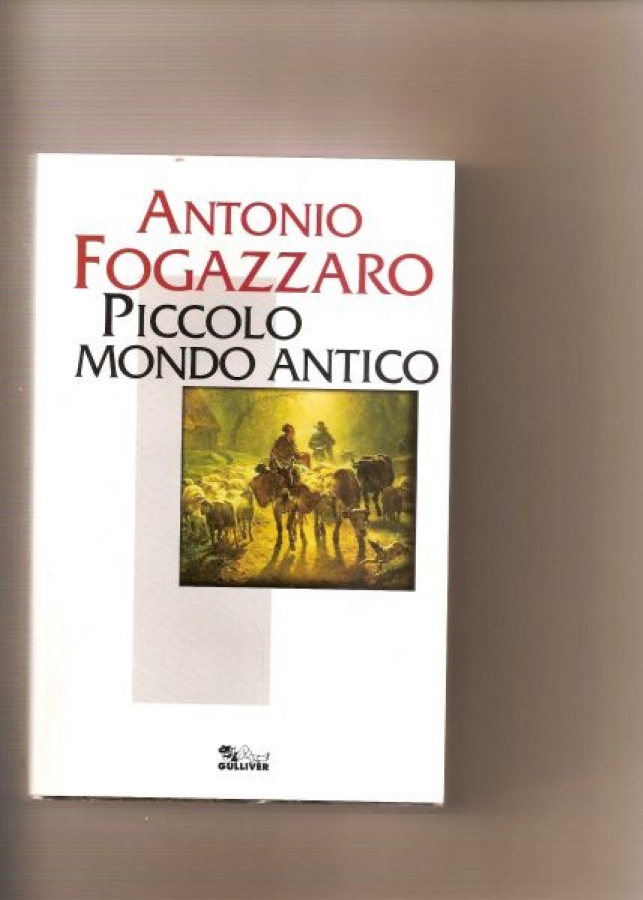
The Little World of the Past
The setting is Lake Lugano, and Valsolda in particular. We are between the two Wars of Independence. Franco is the grandson of a powerful marchioness and is in love with Luisa, a young woman from a respectable and honorable, yet modest, family. The conflict between the marchioness and Franco is not limited to the young man’s love for Luisa, but extends to their divergent political views: the woman is loyal to the Austrian dynasty, the man a staunch patriot. Franco marries Luisa without the marchioness’s knowledge, forcing the young couple to endure financial hardship, which is aggravated at a certain point by the dismissal of Luisa’s uncle—an honest, upright official of the Lombard-Venetian administration—engineered at the behest of the powerful marchioness. Life flows peacefully, revolving around the couple’s young daughter, little Maria. The only discord between husband and wife stems from their differing religious convictions: Franco is a devout and practicing Catholic; Luisa is practically indifferent, an atheist in her conscience. There are also their political ideals, shared by the couple and their small entourage, which, together with their economic struggles, prompt Franco to move to Turin. Finally, domestic harmony is disrupted and further tension is sparked between the spouses by the discovery of a document in which Franco’s grandfather, the marchioness’s late husband, reportedly bequeathed the estate to his grandson. Out of pride, Franco has no intention of enforcing the document concealed by the marchioness; this decision outrages Luisa, not so much for financial reasons as for the injustice endured. Upon the couple’s life—upon the «little world of the past»—tragedy intrudes with the death of Maria, who drowns in the lake. Luisa retreats into a tragic grief, consumed by guilt over the child’s death. Luisa feels barren and cold; a wall rises between husband and wife, threatening to destroy their relationship. The Second War of Independence breaks out; Franco, who has meanwhile returned to work in Turin, invites his wife to meet at Isola Bella prior to his departure for the front. Luisa hesitates deeply, but is persuaded by her uncle; en route to the island, aboard the boat, she observes a group of soldiers heading off to war and realizes that there are sufferings and heartaches far greater than her own. The reunion with Franco is initially cold, then gradually thaws, and the two find one another again, bringing forth a new child. As in all fine stories, love ultimately triumphs. It is, therefore, a romantic tale, one that caused a stir in its day on account of the religious ideas expressed within it. Through the character of Luisa, a sharp critique of religion was advanced—particularly against its official and sanctimonious forms—to the point where she declared that «God is cruel» or even that God does not exist. Viewed through modern eyes, what remains of genuine value in the novel is, instead, the tension between the intimacy of the domestic realm and participation in momentous historical events. At its core lies the depiction of the «little world of the past», which, as the author observes, > was even more secluded from the great world than at present, was more than at present a world of silence and peace, where the officials of Church and State, and, following their venerable example, several loyal subjects as well, dedicated many an hour to edifying contemplation . This world is Valsolda, whose landscape and community the author portrays alike. And it is precisely here that the novel proves weakest: nature is approached with a romantic sensibility, tending toward the «marvelous», evocative of a mere «tourist's» gaze, and ultimately rings hollow and detached; the characters, innumerable as they are, are depicted primarily through their mutual interactions, yet reduce to caricatures of small-town archetypes (the unfaithful maid, the curate, the schoolmaster, the informer, and so forth), without ever managing to achieve a truly ironic portrayal. Even the recourse to dialect fails to lend vibrancy or authenticity to the dialogues, ending up tedious and superfluous. The figure of Franco is flat, even implausible, considering that he endures a horrific tragedy which he seems to surmount with ease. The only character who emerges as contradictory and complex is Luisa: she is conscious of her husband’s frailty, of the vacuity of religion, yet she resigns herself to the social role of wife and mother. Only her daughter’s death shatters this precarious balance, driving her to the brink of madness. Yet, in the end, she redeems herself by reassuming the role assigned to her by society. *Piccolo Mondo Antico* is the novel of an affluent, cultured nineteenth-century Italian bourgeois, convinced that only by shouldering one’s social responsibilities can one attain salvation and mature as an individual. The pre-industrial tradition is thus something to be overcome, as is the inward retreat into personal grievances, petty interpersonal ties, and the pursuit of metaphysical and irrational solutions (religion, spiritualism). The theme of responsibility and the transcendence of the familial and parochial dimension remains remarkably timely in Italian society: perhaps the very superficiality with which it was treated in the novel is the reason why, as history has shown, familism and localism remain the enduring vulnerabilities of Italian society today.
A Penguin in Trieste
The May 1953 issue of the *Giornale di Trieste* reported the news of the arrival in Trieste of the penguin "Marco". > Having arrived from the distant lands of the Cape of Good Hope, where a singular destiny had led him, (...) Marco was seduced by the affectionate attentions of an old sea dog, the boatswain of the motor vessel Europa Drawing inspiration from a real-life event, Carminati has written a coming-of-age novel that lends a touch of lightness to a troubled moment in Trieste’s history, between 1950 and the riots of November 1953, when a protest over the secret agreement between the United States and Yugoslavia—assigning the city to Italy and Istria to Yugoslavia—ended in deaths and injuries. Niccolò is still a child in 1950, > with few worries and plenty of freedom, when he flees Lošinj for Trieste, where he goes to live with an uncle. In a hidden box, he accidentally discovers a telegram reporting that his father was missing, presumed drowned, following the sinking of the steamship on which he was sailing. Why had his uncle never shown it to him? Perhaps > because he wanted me to remain a child for as long as possible, he wanted me to believe in the tooth mouse, Saint Nicholas bearing gifts, the Befana, shooting stars, my father alive somewhere in Africa. I looked out toward the open sea. The waves shuddered: (...) ten years earlier my father had died at sea, and for ten years he had lived only in my imagination. From a newspaper clipping (the January 1953 issue of *Il Tempo*), Niccolò learns that four sailors from the sunken steamship were saved in a lifeboat; what if his father were among them? What if he were still alive somewhere along the shores of the Indian Ocean, where the vessel had gone down? In an act blending hope, courage, and a spirit of adventure, Niccolò signs on as a deckhand on a steamship bound for Cape Town—still an adolescent and, to make matters worse, one who suffers from seasickness. Perhaps the search for his father is merely an occasion to come of age, much like Jim in *Treasure Island* (see the review of *Treasure Island* on this site). > I would return home, Niccolò admits, > with a new map: the one charted by my feet and my eyes. The novel is constructed with great skill and elegance, successfully weaving an adolescent’s feelings, curiosities, and discoveries into an engaging plot, complete with its share of surprises, albeit perhaps somewhat predictable ones. There are no villains! We are overtaken by a sort of hopeful cheer, accustomed as we are to despotic tales even in young adult fiction: consider *Borders no Borders* or the sprawling *Berlin* saga (see the reviews on this site). It is all rather excessive—too facile, one might say, and just as detached from the historical events of Trieste as it is from today’s reality. We must offer a positive perspective, yet we must do so while acknowledging current problems, lest we succumb to the lure of a "pretty fairy tale." The true merit of the novel lies in the writing: elegant, syntactically flawless, and lexically rich. Carminati recovers the very best of our language through a judicious use of punctuation, avoiding the stylistic traps so prevalent today: from the overuse of the full stop, which results in fragmented discourse, as in Nicola Lagioia’s acclaimed *La Ferocia*, to the rambling syntax where the flow of words relies not on punctuation but on mere sound, as in Federica Manzon’s overrated *Alma* (see the reviews on this site). Why read it? It is enjoyable, and it is a fine story. Assessment: medium-low.
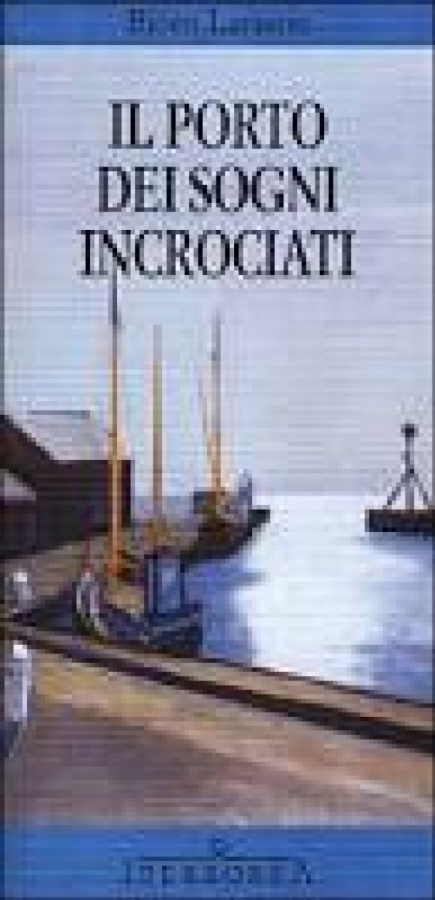
The Port of Crossed Dreams
According to Buddhism, suffering arises from opposing the flow of life and clinging to forms that are deceptively permanent, whether they be things, events, people, or ideas. And yet man is like the flight of a bird or the passage of a fish through water, leaving no trace behind; he is like sailing a boat, guided by the winds. And who better than a sailor personifies this condition of transience? We are in a pub in an Irish town, where four people meet; strangers to one another, yet all living in a port town and all having crossed paths with the captain of a cargo ship: Marcel. Rosa Moreno has the smile of Ingrid Bergman, and risks spending her entire life in the same bar in a small port on the Atlantic coast of Spain: and then > everything seemed black to her, as if life were not worth living . A night spent with Marcel gave her dreams of freedom, the possibility of a new life, but also a tangible legacy: a child. Madame Le Grand is a still-attractive widow who spends her life cataloging the stories of all the sailors passing through her port city, > to ensure that all the people she met left a trace behind, instead of vanishing into nothingness, as if they had never existed . She invites Marcel and his crew to dinner and is fascinated by a man who > did not care to know what comes next, (...) greatest desire: none, because it makes one unhappy . Peter Sympson is a jeweler to whom Marcel entrusts a highly valuable gemstone for sale, while revealing to him the profound meaning of his life: > your hobby is precious stones. Mine is fleeting acquaintances and their dreams of life. Jacob Nielsen is a computer scientist who lives in the world of the internet; at times restlessness takes hold of him, and then it takes only > a gust of wind from the sea to sweep away his longing for elsewhere . He meets Marcel and is captivated by the idea of a network of "intertwined ports," of which the captain he met by chance could be the unwitting fulcrum. > And what if in that way they managed to prove that the world is not an impenetrable chaos, a whirlpool of anonymous human beings drowning and lost in their very profusion and diversity? . Rosa Moreno, Madame Le Grand, Peter Sympson, and Jacob Nielsen are there, by chance in the very same pub, to see the man who pulled them out of their monotonous daily existence and propelled them into a hope-filled uncertainty. All four are deluding themselves. For Marcel > binding himself to other human beings would have been like running a mortal danger. Because who better than he could know that all bonds of that kind can be broken? To be alone and free to dance had become his destiny on this side of the grave . Marcel flees on his sailboat, even after learning that Rosa carries his child in her womb. > Strange is the heart of the sailor: he hopes, he fears, he ventures closer and veers off the coast, at last refits the torn sail, and turns his shattered bow toward the ocean, crestfallen, reversing course ( Robert Louis Stevenson, *Underwoods* from *Poesie*, Oscar Classici Mondadori 1997). Stevenson's beautiful quotation is inappropriate. The great English writer is referring to the sailor's life, his irrepressible longing for solitude. Larsson is not speaking of this: the distant, romantically depicted sea remains on the margins; nor is he truly writing about the characters. Even when we learn of Marcel's childhood, in which the captain suffered the loss of all his kin, we realize that it is not this terrible wound of the past that perpetually drives him to flee. The other characters have suffered too; nonetheless, they desperately seek something solid, certainties and relationships to which they can anchor themselves and for which they can live. The novel is a philosophical narrative. The real theme is the contradiction between permanence and transience: impermanence is not an unstable condition to be escaped; it is the very mode of reality, the sign that leaves no record, "emptiness" as an essential given of human being. What nostalgia for the writing of *The True Story of the Pirate Long John Silver*. Just as the narrative style in that splendid novel is vivid and evocative, here the delivery is flat, prosaic, cold. The events unfold without momentum, developed in a bureaucratic and repetitive manner. Why not read it? Trite, flat, and prosaic.
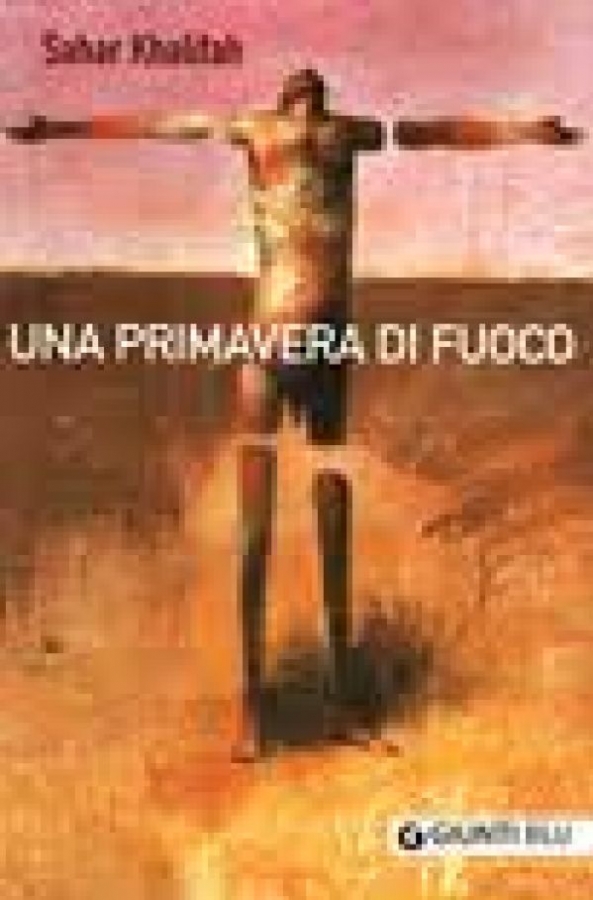
A fiery spring
In the conflict between Israelis and Palestinians, the events between 2000 and 2002 represent a fundamental watershed. Prior to September 2000, the onset of the so-called Second Intifada, there reigned in Palestine > an order imposed by an occupation that had lasted for years and generations, which had become a habit, or rather a routine, a way of life; yet the butterfly continued to struggle, it could catch fire, it could explode and make it falter . And when the visit of Ariel Sharon—then leader of Likud and later Prime Minister of Israel—provoked Palestinian religious sentiment as he prayed on the Esplanade of the Mosques in Jerusalem, a wave of violence erupted, leading to Israel’s military reaction, the siege of Arafat, and the subsequent occupation of the Palestinian territories by Israeli forces. The novel seeks to recount these dramatic events through the eyes of two brothers, Magid and Ahmad, and their friend, Su’ad. The narrative is divided into two parts. In the first—undoubtedly the most evocative and well-structured—the underlying theme revolves around dreams in wartime, anchored by a famous line from Mahmoud Darwish: “leave me alone, let me go where I want to go.” Magid is a splendid young man who dreams of becoming a famous singer. Ahmad is still a boy: shy, introverted, solitary, and sensitive. He strikes up a secret friendship with a young Israeli girl, communicating with her through few words and mostly gestures, across the barbed wire dividing the settlers’ territory from that of the Palestinians. Yet dreams are laden with deceptive hopes! Chance drags the two boys into the dramatic reality that grips their society. Magid is accused, despite his innocence, of the assassination of a high-ranking Palestinian government official, loathed as an alleged collaborator. Forced to flee, he joins the resistance. Ahmad’s story is paradoxical. In an attempt to retrieve his beloved cat, inadvertently taken by his little Israeli friend, he is caught inside the settlement and thrown into prison, suspected—mere child that he is—of being a terrorist. In the second part, the novel shifts perspective. On the one hand, the author pursues a political reflection on the role of the Palestinian Authority. There are more questions than answers. Faced with leaders who seem to favor careerism and visibility over the fulfillment of their people’s hopes, the author wonders whether > is the Cause not like a love story, starting sweet, strong, and overwhelming, and then, with time, withering, dying, and decaying? On the other hand, the female perspective emerges. Su’ad becomes the protagonist; she loves Magid, yet watches him transform into an elegant man dressed in a suit and tie. > With the artist and the revolutionary gone, nothing remains but the opportunist plotting his climb to power... Is this how power diminishes a promising young man?.... And what about us women? What do we know, what do we feel, what do we do? Not much; to them, we are mere background, nothing more . Women are thus left alone, yet within them all the struggles of a people at war are epitomized. > Inner sieges, outer sieges, the siege of society and that of Israel; men know only one. She, on the other hand, endured them all at once . And so only a woman can cry out: > Palestine, piece of the sky, your name upon my lips is a prayer.... a kind of azure prayer stretching as wide as the horizon . The tragedy of the Palestinian people unfolds hand in hand with the withering and dissolution of the passions of adolescence and youth. The book is an elegiac—at times epic—narrative of a homeland’s destruction, from which not even the inner world of intimate affections is spared. > Run, run. Barefoot, half-dressed, in slippers and sandals, with children, without children. The elderly, the aged, and the wounded clambering over rubble, stones, shattered glass, fires, garbage strewn everywhere. And corpses. And the wounded with injuries of every kind and severity—some in the hand, some in the foot, some blinded by the heat blasts, some struck mute and unable to utter a word. And screams. All that remains is the mortification of one’s tears and the humiliation of a life consumed by adverse fate. The novel’s true shortcoming lies in its narrative plot. In the first part, it manages to maintain an internal logic; this, however, splinters in the subsequent pages into a confused and disordered succession of events: the epic depiction of the assault on Arafat’s presidential compound and the Palestinians’ flight under military aggression; the musings and disillusionments of Su’ad, who occasionally steps in as narrator (further disorienting the reader); the author’s political reflections, often merely hinted at and thus impenetrable to those unfamiliar with the events; and the elegiac interludes on the pain and despair of the Palestinian people, at times rhetorical and repetitive. It is as though a surge of thoughts overwhelms the author, ultimately to the detriment of both characters and story. The frequent reliance on rhetorical questions further weighs down the prose, never fully concluding either argument or narrative. Why not read it? After an engaging start, the reading grows steadily more fragmented, often redundant and dull.

The Scent of Lemon Leaves
Juliàn is a former inmate of a Nazi concentration camp, > obsessed with a past that no longer mattered to anyone, yet of which he could not forget a single day . On the threshold of old age, he travels to Spain after learning that a group of Nazi war criminals has taken refuge on the Costa Blanca. He is driven by a profound hatred for these "dying monsters," by the desire to instill the very fear and suffering he witnessed and endured in the camp: > I had been left behind, trapped in my own world, with my hatreds, my friends, and my enemies . His path crosses that of Sandra, a pregnant woman in her twenties, uncertain and confused about the direction her life should take. To the aged Juliàn, Sandra appears as the embodiment of the present and the future—realms he has never truly known, consumed as he was by a far stronger sentiment: hatred, and thus the past. > Her hair had various shades ranging from red to black, long on one side and shorter on the other. She also wore a small nose ring. Her eyes were somewhere between green and brown, and she had an aquiline nose. The sunlight striking her face gave her gaze a faintly ironic air . An encounter between two such disparate lives was made possible because Sandra had been taken in by an octogenarian Nazi couple, who, deep down, had been charmed by the girl in the very same way Juliàn was. With growing conviction, Sandra assists Juliàn in his investigation into this ring of criminals. In truth, it gradually becomes apparent that these former Nazis are themselves unhappy old men, locked in their own fantasies of power and youth, trapped in a web of relationships dominated by abuse and even deceit. The futility of hatred becomes increasingly evident to Juliàn, not least because he realizes that his obsession could place the young woman in grave danger. He finally understands that there are things far more important than constantly returning to the past. He at last makes peace with his concentration camp ordeal, to the point of choosing to stay in a retirement home where two elderly Nazis have also found shelter. For Sandra, on the other hand, the events in which she has become entangled propel her into adulthood, leading her to realize that her life’s purpose is to provide a peaceful existence for the child she carries. All she is left with is the memory of her love for a young, alleged Nazi who saved her life. There remains, in some way, an unresolved mystery—something unfinished that she may well carry within her, once again ushering in that fate of perpetual return to the past that had once been Juliàn's. The theme of Nazism, viewed from the perspectives of both tormentor and victim, serves as an opportunity to examine the relationship between past and present, as well as the communication breakdown between generations—a gulf that can only be bridged through "doing" (Juliàn and Sandra coming together in their investigation into the criminal ring) rather than "telling," that is, the narration of lived experience. Yet there is something more to this novel. There is a sense of contrast between the certainty of the old and the uncertainty of the young (Juliàn is as monotonous in his hatred as Sandra is fresh in her naivety), a conflict emblematic of an epochal transition, much like our own historical moment. In this sense, it is telling that Sandra's adulthood begins in a state of suspension that leaves the novel open-ended: what will become of Sandra and her life? The story is told through two alternating voices (Juliàn and Sandra), a literary device that renders the narrative redundant and repetitive. The plot, purporting to be that of a detective investigation, is devoid of incident and narrative twists. The setting is so sparse that it could easily be any generic tourist resort, just as the characters remain thinly sketched, despite confronting ethically and existentially complex themes. Why skip it? It is tedious and trite.