Finished reading on: April 10, 2013
A fiery spring
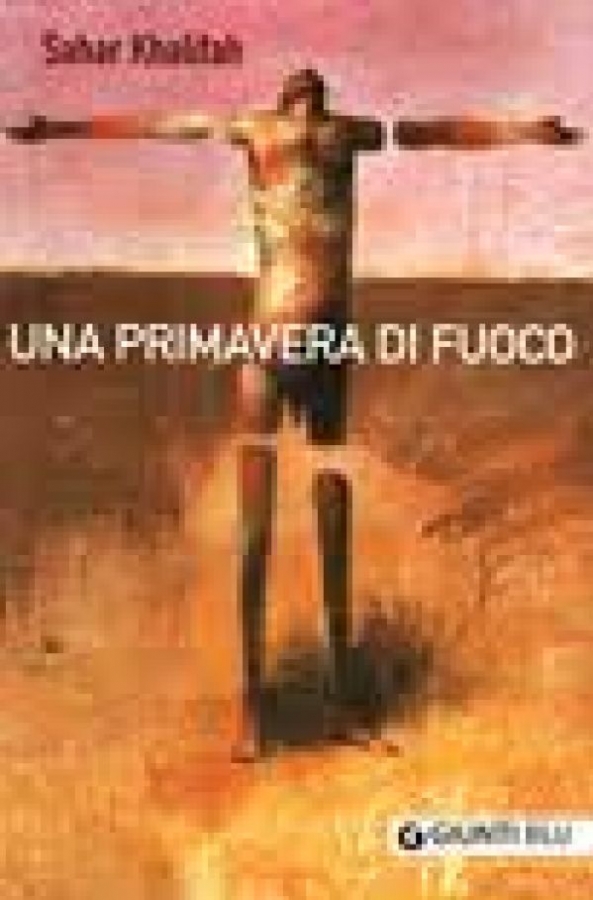
Title of the original version reviewed: «Una primavera di fuoco»
AI Translation Notice: This review was translated from the original Italian using artificial intelligence. Book quotes and excerpts are translated interpretations and will not match the author's original English phrasing or official published translations.
In the conflict between Israelis and Palestinians, the events between 2000 and 2002 represent a fundamental watershed.
Prior to September 2000, the onset of the so-called Second Intifada, there reigned in Palestine
an order imposed by an occupation that had lasted for years and generations, which had become a habit, or rather a routine, a way of life; yet the butterfly continued to struggle, it could catch fire, it could explode and make it falter
.
And when the visit of Ariel Sharon—then leader of Likud and later Prime Minister of Israel—provoked Palestinian religious sentiment as he prayed on the Esplanade of the Mosques in Jerusalem, a wave of violence erupted, leading to Israel’s military reaction, the siege of Arafat, and the subsequent occupation of the Palestinian territories by Israeli forces.
The novel seeks to recount these dramatic events through the eyes of two brothers, Magid and Ahmad, and their friend, Su’ad.
The narrative is divided into two parts.
In the first—undoubtedly the most evocative and well-structured—the underlying theme revolves around dreams in wartime, anchored by a famous line from Mahmoud Darwish: “leave me alone, let me go where I want to go.”
Magid is a splendid young man who dreams of becoming a famous singer.
Ahmad is still a boy: shy, introverted, solitary, and sensitive.
He strikes up a secret friendship with a young Israeli girl, communicating with her through few words and mostly gestures, across the barbed wire dividing the settlers’ territory from that of the Palestinians.
Yet dreams are laden with deceptive hopes! Chance drags the two boys into the dramatic reality that grips their society.
Magid is accused, despite his innocence, of the assassination of a high-ranking Palestinian government official, loathed as an alleged collaborator.
Forced to flee, he joins the resistance.
Ahmad’s story is paradoxical.
In an attempt to retrieve his beloved cat, inadvertently taken by his little Israeli friend, he is caught inside the settlement and thrown into prison, suspected—mere child that he is—of being a terrorist.
In the second part, the novel shifts perspective.
On the one hand, the author pursues a political reflection on the role of the Palestinian Authority.
There are more questions than answers.
Faced with leaders who seem to favor careerism and visibility over the fulfillment of their people’s hopes, the author wonders whether
is the Cause not like a love story, starting sweet, strong, and overwhelming, and then, with time, withering, dying, and decaying?
On the other hand, the female perspective emerges.
Su’ad becomes the protagonist; she loves Magid, yet watches him transform into an elegant man dressed in a suit and tie.
With the artist and the revolutionary gone, nothing remains but the opportunist plotting his climb to power...
Is this how power diminishes a promising young man?....
And what about us women? What do we know, what do we feel, what do we do? Not much; to them, we are mere background, nothing more
.
Women are thus left alone, yet within them all the struggles of a people at war are epitomized.
Inner sieges, outer sieges, the siege of society and that of Israel; men know only one.
She, on the other hand, endured them all at once
.
And so only a woman can cry out:
Palestine, piece of the sky, your name upon my lips is a prayer....
a kind of azure prayer stretching as wide as the horizon
.
The tragedy of the Palestinian people unfolds hand in hand with the withering and dissolution of the passions of adolescence and youth.
The book is an elegiac—at times epic—narrative of a homeland’s destruction, from which not even the inner world of intimate affections is spared.
Run, run.
Barefoot, half-dressed, in slippers and sandals, with children, without children.
The elderly, the aged, and the wounded clambering over rubble, stones, shattered glass, fires, garbage strewn everywhere.
And corpses.
And the wounded with injuries of every kind and severity—some in the hand, some in the foot, some blinded by the heat blasts, some struck mute and unable to utter a word.
And screams.
All that remains is the mortification of one’s tears and the humiliation of a life consumed by adverse fate.
The novel’s true shortcoming lies in its narrative plot.
In the first part, it manages to maintain an internal logic; this, however, splinters in the subsequent pages into a confused and disordered succession of events: the epic depiction of the assault on Arafat’s presidential compound and the Palestinians’ flight under military aggression; the musings and disillusionments of Su’ad, who occasionally steps in as narrator (further disorienting the reader); the author’s political reflections, often merely hinted at and thus impenetrable to those unfamiliar with the events; and the elegiac interludes on the pain and despair of the Palestinian people, at times rhetorical and repetitive.
It is as though a surge of thoughts overwhelms the author, ultimately to the detriment of both characters and story.
The frequent reliance on rhetorical questions further weighs down the prose, never fully concluding either argument or narrative.
Why not read it? After an engaging start, the reading grows steadily more fragmented, often redundant and dull.