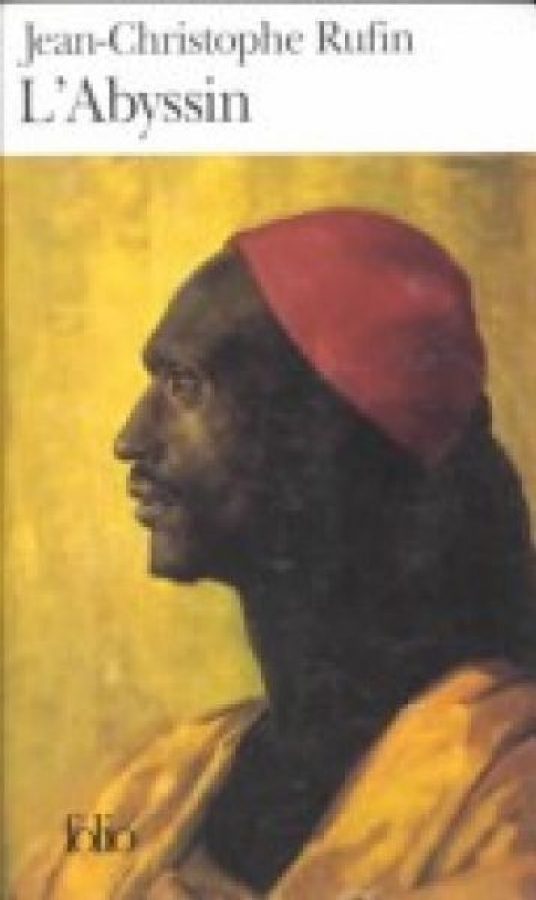
The Abyssinian
The novel is set in the late seventeenth century, during the reign of Louis XIV, and recounts the exploits of a Frenchman, Poncet, who journeys to Abyssinia on an expedition mounted by the Jesuits to restore ties with the empire fifty years after the expulsion of Catholic priests. The protagonist is an adventurous young man who commits himself to this enterprise out of love for the daughter of the French consul in Cairo. He thus finds himself entangled in a web of intrigue between rival religious orders (the Capuchins against the Jesuits) and competing factions within the court of the French king. The story predictably features a happy ending, with the two lovers managing to wed after numerous adventures. The work reads like a cross between *The Three Musketeers* (the great French novel) and the tales of Maalouf, yet it completely lacks historical atmosphere, narrative momentum, and character analysis. For instance, the transformation of the consul’s young daughter from a devout maiden into an adventuress unfolds so flatly as to render it entirely implausible.
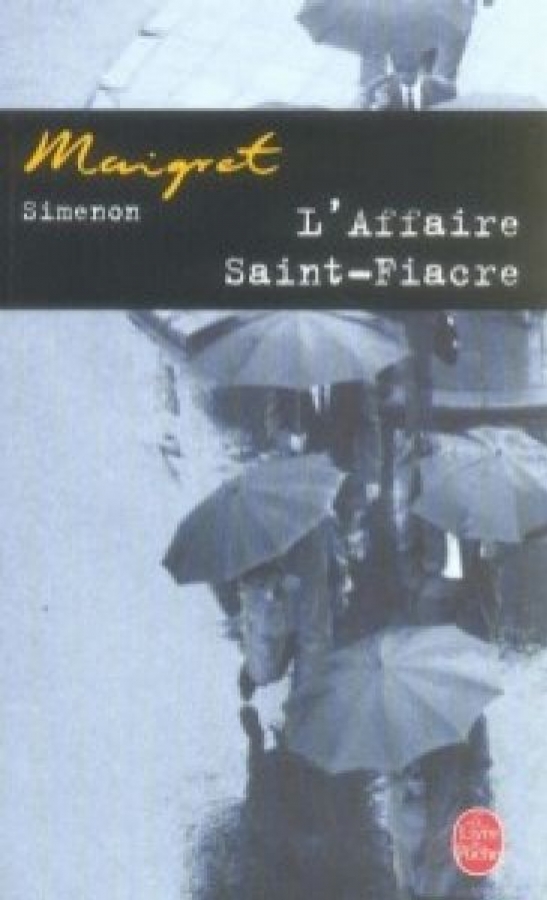
The Saint-Fiacre Affair
Maigret returns to the village where he grew up, as an elderly countess has died and he suspects she was murdered. All the figures of a potentially sordid affair are present: the countess’s young lover, the playboy son living the high life, a young parish priest who perhaps knows more than he lets on, and so forth. What emerges is a portrait of a provincial milieu, sketched, in truth, in a superficial and unengaging manner. The characters, too, emerge flat, devoid of any genuine analysis of the motivations underpinning their actions and the events. The detective element is virtually nonexistent, and Maigret feels more like an extra than a police superintendent capable of steering and managing the investigation. Perhaps I am simply unlucky, as I cannot seem to read a book by Simenon that I truly enjoy.
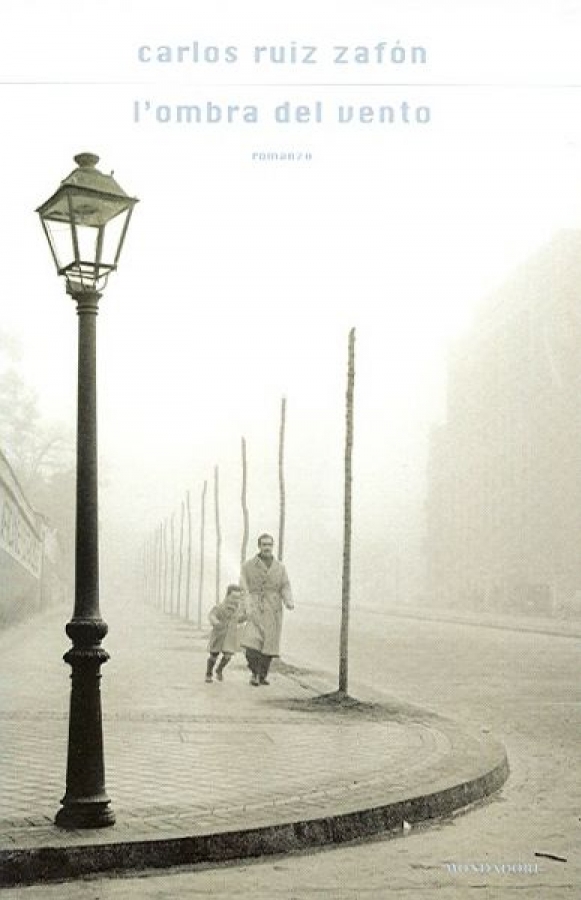
The Shadow of the Wind
The setting is Barcelona during Franco's Spain, in the 1950s. The son of a bookseller is taken by his father (a dealer in antiquarian and rare books) to the Cemetery of Forgotten Books, a repository for all those volumes no one will ever seek out. Here, the boy picks up a novel by a Spanish author. Reading it draws him into a sequence of events that unfolds across his youth, in a sort of parallel narrative: the tribulations that engulfed the author's life (betrayed friendship, love for a girl who turns out to be his sister, her death, and ultimately persecution by a former friend turned brutal police officer) seem to recur in the boy's own existence. The young man gradually uncovers what happened to the author, finds himself similarly hounded by a vicious policeman, and seems destined to lose the woman he loves, just as the writer did. The book concludes with a happy ending: the villain is killed and the young man is free to marry. The opening of the tale seems intriguing, with this premise of forgotten books heralding a plot woven between the mysterious allure of books and the discovery of the life that lies behind the author and the stories told. Yet this promising start is lost in a plot that grows increasingly predictable, where the constant reliance on “telling” (characters recalling episodes from the author’s life) renders the book verbose and often tedious. As so often happens, the novel is too long, overloaded with themes and characters (frequently superfluous to the narrative), and provides far too little sense of place. The result is a touch of boredom.
The Watchmaker of Brest
In his splendid biography of Matteo Ricci (*The Memory Palace of Matteo Ricci*, published in Italy by Adelphi), Jonathan D. Spence recounts how the Jesuit missionary won over the Chinese mandarins with the gift of clocks brought from Europe. What astonished the Confucian elite was the exquisite mechanics of seventeenth-century Europe and the notion that time could be dissected into infinitely small increments, capable of deconstructing and even halting the flow of events. Perhaps this was what de Giovanni had in mind when entitling this novel: a "quasi-noir" that blends the discovery of one's past and identity with the machinations of a shadowy "Entity." There are two temporal dimensions: a washed-out professor of medieval history is prompted by a young journalist to uncover the truth behind the unsolved murder of a magistrate and his driver, only to discover that the killer was his own father—a terrorist from the 1960s and a skilled maker of mechanical devices, ranging from explosives to innocent clocks; on another timeline, set many years earlier, a naive young woman begins a relationship with a powerful cardinal whose assistant, acting on his superior’s instructions, arranges the girl's elimination with the help of a mysterious operative. How do these two storylines intertwine, and how do they culminate, perhaps, on the Atlantic coast—in Brest, no less? We will not reveal that, so as not to spoil the surprise for the reader. Already in a 2022 novel, *L'equazione del cuore* (see the review on this site), the author had departed from classic, deeply atmospheric Italian-style noir to examine the conflict between rationality and emotion, drawing inspiration from the physicist Dirac's equation, according to which bonds of love do not evolve—they remain intertwined forever. Here too, in this narrative, de Giovanni relies on the metaphor of clockwork gears to show how the past incessantly resurfaces, binding two people—the professor and the young journalist—in an unsought yet indissoluble knot. Narratively speaking, the plot is excessively constrained by the criminal schemes of Power, embodied here by the influential Cardinal and his ambitious assistant. Why get bogged down in such an implausible plot, when it would have sufficed to explore the theme of an unaccepted memory—one nonetheless vital if one wishes to live an authentic existence? By attempting to cram together too many subplots and too many literary genres, the author has produced a bloated, redundant potboiler that only fitfully hits the stride of a noir. Further marring the narrative is the layering of temporal planes, which clear up only near the very end, failing to generate any real suspense. Finally, it is regrettable that de Giovanni has severed all ties with Naples, depriving the tale of a rooted setting, which consequently remains entirely evanescent. Why not read it? It is boring.
The Last Lombard
It is a historical novel set in the year 900, during the disintegration of the Lombard world. The protagonist, Arechi, is educated at the papal court, later becomes a powerful lord of Cividale, and returns to the papal court as guardian of the papal throne. He leads a life of crime and intrigue, only to repent on his deathbed. The book is insipid. There is no characterization of the characters, nor of the protagonist himself, who makes inexplicable choices, such as abandoning his beloved wife out of jealousy. Nor is there even any real historical setting, and events simply follow one another as though part of a bare chronicle, with frequent lapses into the macabre and predictable visions of a corrupt and secretive Church.
The Killer's Tears
Children are increasingly the innocent victims of war, violence, and death. One need only consider what we are witnessing today, in Ukraine and Palestine. For a child who has seen their parents murdered, is it still possible to rebuild a life? And can one forge a relationship with the killer capable of saving his soul? This novel is aimed at adolescents, yet it tackles weighty themes—unfortunately through a narrative approach reminiscent of Antoine de Saint-Exupéry's *The Little Prince*: bland, moralistic, implausible (see the review of *The Little Prince* on this site). Pablo lives with his parents in a small house in the far south of Chile, > where no one ever arrives by chance. Angel is a killer. When taken in by Pablo's parents, he cannot help but murder them, because it is the only thing he knows how to do. While Pablo is away from the house, > out there, from the sea, dense rainclouds were rolling in. (...) Angel drew a knife and plunged it into the man's throat, then into the woman's. On the table, wine and blood mingled, staining red all the deep cracks in the wood. Angel does not kill Pablo. > Sparing the brat made him feel relieved. And, besides, he could send him to the well to fetch water. Over time, a complex relationship develops between Angel and Pablo; it is a bond of mutual dependence: for Angel, it is the first time he has ever felt affection for anyone; for Pablo, > Angel is the only person who cared for him, fed him, gave him the fox (which they had taken in when it was still a cub), (...) in a world where only the dead can rest, the living must grit their teeth and endure their existence. One day, walking across the vast and desolate Chilean countryside, Pablo and Angel come across an isolated house in a forest, where an old woodcutter lives. Here, they could live in peace; the goodness inherent in every man could even express itself in Angel. > There are very discreet metamorphoses, said the old man; those that happen to our soul, for example, are not always visible. (...) Angel seized the knife hidden in his pocket; he felt the handle between his fingers. (...) He stepped toward Pablo. (...) He laid his eyes on Pablo. (...) “Here,” he said, “this is for you.” The silence was absolute. The knife blade reflected the flicker of the candles. We can rediscover peace and brotherhood if even the worst of murderers can love a child. An important theme is handled in a superficial and ambiguous way. First and foremost, it is implausible that a child who witnessed the murder of his parents could overcome the trauma as easily as Pablo does: this trivializes Evil, reducing it to something inconsequential. Secondly, love cannot save the soul of a wicked man unless he acknowledges his guilt and seeks forgiveness. Weeping and making a noble gesture are not enough. Why not read it? It is false.
Reading
The book aims to be a middle ground between a praise of books—that is, of reading—and the very meaning of reading. The author surveys numerous writers and texts to ultimately demonstrate how writing manages to portray, in differing ways, seemingly similar situations and contexts. Furthermore, reading is an introspective process through which people actively interpret the resonances emerging from events and words. Writing is thus the conduit between a story and the reader's personal life: rather than merely understanding the writer, the reader pursues their own spiritual path, activated and nourished by reading. Two statements from the book leave a lasting impression, one from the writer’s perspective and the other from the reader’s: Petrarch says in *Epistulae Familiares* > I want my reader, whoever he may be, to think only of me... I do not want him to attend to his business and study at the same time; I do not want him to master effortlessly what I wrote not without effort ; Machiavelli says in a 1513 letter to Vettori: > when evening comes, I return home and enter my study... and for four hours I feel no boredom; I forget every worry, I do not fear poverty; death does not dismay me . The book is an enjoyable read, but it feels a «bit strained», lacking a true underlying thread.
Lion
Social convention would have parents serve as the solid foundation of the family, and children as its fragile walls, in need of guidance and support. In this strange novel, that is not the case. Katia, a divorced mother, lives in uncertainty, > she felt somewhat on the border, between city and countryside, between the world as it had been and the new one just beginning. She was comfortable there, suspended halfway. (...) She had no great desires or hopes. It was merely the notion that perhaps, one fine day, things might take a different turn for her . Leone, on the other hand, a six-year-old boy, possesses an unshakable certainty: he prays, because he believes in Jesus, even if only in the form of a ceramic figurine. What harm is there in that? ask Katia’s friends, mildly incredulous and affectionately wry; yet the child heads in an unexpected direction—and, truth be told, an unconventional one in our falsely devout society. Katia is worried, racked with guilt; Leone of all people, so profoundly disoriented. > A child who seemed to have gotten lost in the middle of something, a wood at night during the age of dinosaurs. (...) At times he seems to her like an angel, stranded in their kitchen, trying to flutter about without a sky . Through a singular lens—the need to pray—the author explores the bond between mother and son. She > felt brimming with tenderness for this child who had come into her life just like that, without her ever having decided on it. Like a mushroom, a flower. (...) A flower might not have any passersby at all, if it happens to grow on a patch of land where no one ever walks. It can happen that a flower is born and no one ever sees it. And what about children? And Leone, who “moved diagonally rather than straight,” who tried to > exist as little as possible. (...) Exercises in nonexistence, one might say. (...) Jesus, please make them stop talking about me . The author avoids any potential psychological detours toward dissecting parent-child relationships; she has no interest in seizing upon the narrative to offer futile wisdom or banal insights: she chronicles the events gently, passing no judgment on the mother or the other adults. This is a virtue—one that might have led us to appreciate the tale had the author managed to impart narrative rhythm to the story, rather than allowing herself to drift into a slow, tedious progression. Perhaps realizing, at a certain point, that the narrative was fraying into nothingness, the author resorted to the miraculous, and even to a new deluge. Prayer becomes redemptive of humanity’s sins, and Leone a miniature, modern-day Jesus. Yet that is not quite it, because—further degrading the quality of the narrative—Mastrocola never commits herself, maintaining a hypocritical, pseudo-secular stance. The reader comes away embittered. It could have been an interesting story; it proved instead to be a cloying tale: if the intention was to demonstrate that there exists within us, from childhood onward, an innate yearning for the sacred, and that prayer is an intrinsic dimension of existence, this theological question is trivialized by a narrative far too inadequate for the subject's complexity. Compounding matters is the prose style: a repetitive writing built upon flat phrasing, marked by an excessive reliance on the full stop, by verbless complete sentences—in short, an approach that willingly slips into the simplistic vernacular of journalistic or television storytelling: there would be nothing wrong with this, were the novel supported by a compelling plot and by a penetrating, evocative analysis of characters and circumstances. Why not read it? It is pointless, and ultimately cloying.
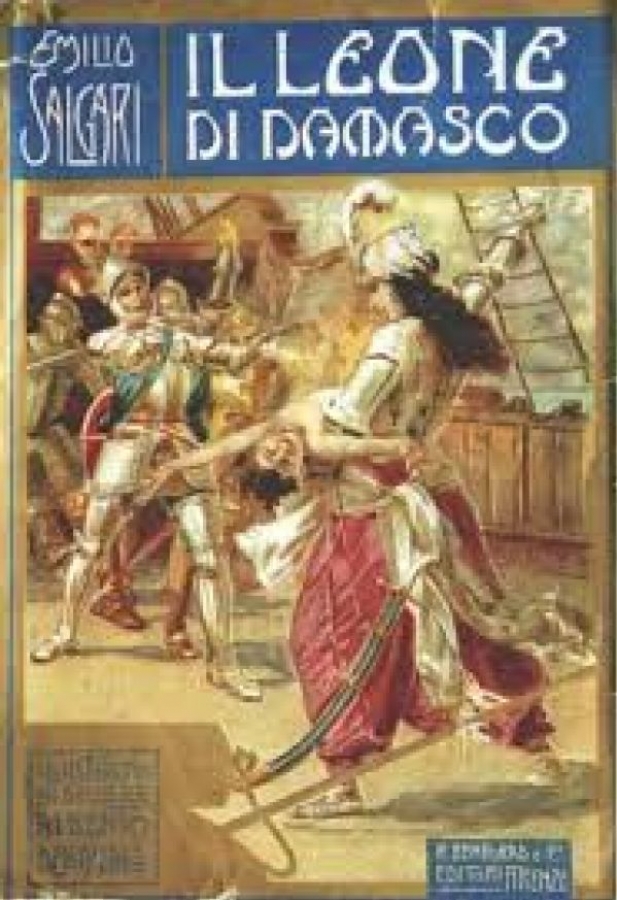
The Lion of Damascus
The novel is meant to be the sequel to *Capitan Tempesta*, a tale set in Famagusta in 1517 during the war between the Venetians and the Turks. The protagonist was a young noblewoman: a skilled swordswoman who, disguised as a man, had set out in search of her betrothed, abducted by the terrible Haradja. Salgari had succeeded in crafting a story full of allure, working upon gender ambiguity, vigorous female figures, and a final plot twist: the love between Capitan Tempesta and the Lion of Damascus—a passion that disregarded different allegiances, both national and religious. One would expect the same intriguing atmosphere and the very same freedom from convention. And the opening shows promise, even if certain signs make it clear from the outset that the story will take a different turn. It begins with the figure of Haradja: > a very beautiful young woman (...) pitch-black eyes, (...) very long, loose hair, of a hue that gleamed like raven wings... (...) the whole of her face had (...) something hard and forceful that instantly betrayed the Turkish woman, ever cruel at heart, as the bloodthirsty sultans of the fifteenth and sixteenth centuries had by then accustomed them to be . Haradja is no longer an unconventional woman: she is part of a cruel and bloodthirsty breed, that of the Turks, and foul black birds, "eaters of the dead," are the living symbol of thousands upon thousands of corpses, left in the sun to be stripped of their flesh. A grim and deathly atmosphere pervades the entire narrative and strips of narrative momentum the adventures that Salgari, despite everything, attempts to construct. Haradja seeks vengeance against Capitan Tempesta, who deceived her by posing as a man and with whom she had become infatuated; she also intends to punish the Lion of Damascus, formerly her betrothed, who had abandoned her for the Christian noblewoman. She therefore kidnaps the couple’s son and the father of the Lion of Damascus. She holds all the cards: overcome by hatred and above all by pride, she challenges Capitan Tempesta to a duel. > The two horses had collided with such impetuosity that they nearly threw their mistresses from the saddle; then came a clattering of weapons against armor. (...) Haradja continued to attack, trying to force down that sword which flashed with fiery gleams beneath the already scorching rays of the sun. (...) By the death of Allah!, cursed the Pasha's niece (Haradja), (...) You stand firm as a rock, do you?.. And yet I shall kill you! (...) A cry was heard, or rather, the howl of a wounded beast; then the great admiral's niece crashed to the ground with a great clash of steel. (...) Finish off the tigress of Hussiff! , shouted the Lion of Damascus; but numerous Turkish soldiers rushed in, preventing Capitan Tempesta from slaying her terrible rival. It is the finest moment of the novel; thereafter, the narrative loses its bite: Haradja and Capitan Tempesta vanish from the story, the Lion of Damascus is present but relegated to the background, faded and irrelevant, while minor characters emerge who, as often happens in Salgari, try to inject brio and establish a dynamic among the roles; meant to act as foils to the protagonist, they merely underscore his insubstantiality. Instead, a real historical figure comes to the fore: Sebastiano Veniero, the great commander of the Venetian fleet, to whom, according to Salgari, the victory of Lepanto against the Turks was owed. The narrative draws to a weary close. The book was published in 1910, a year before the Libyan War (1911–1912), which pitted Italy against the Ottoman Empire. It is possible that Salgari tapped into sentiments widespread among public opinion: the Turk as a cruel oppressor of peoples, bloodthirsty and treacherous. The novel abounds in massacres, tortures, flayings, quarterings, and other gruesome deeds: there is no mercy on the part of the Turks, nor any chivalrous respect for the vanquished. And the Christians know how to die with honor, whispering the *Miserere* "in the excruciating agony of the horrific torment"! Yet there is too much relentless ferocity here to believe that the novel's deathly atmosphere merely answers to an editorial demand or a nationalist resurgence on the author's part. Salgari took his own life the year following its publication, in 1911: the writer was by then living in a profound depression, plagued by frequent self-destructive crises and numerous suicide attempts; the novel mirrors Salgari's despair and his fascination with a gruesome end. At the same time, the narrative suffers from a weariness and an exhaustion of ideas, which the writer desperately tries to compensate for by resorting to prefabricated formulas, no longer embedded within a dynamic narrative framework: evidence of this lies in the repetitiveness of dialogues and scenes, the weakness of the characters, and the sparse descriptions of landscapes—the latter set against a peculiarity of the novel: historical digressions, generally rare in Salgari's oeuvre, a clear sign of a narrative vein that had grown fragile. Why not read it? It is a swan song, a bitter and sorrowful epilogue to a great writer.
The Leopard
The author is billed as a master of the thriller, superior even to Stieg Larsson. In truth, he is merely a pale heir. Harry Hole is a Norwegian crime-squad detective specializing in serial killers. Following an investigation in which the perpetrator attempted to murder his wife and son, Harry quit the force and sank into despair in Hong Kong, amidst alcohol, drugs, and gambling. There, a detective named Kaja tracks him down to convince him to assist the police with another serial killer case. The thriller unfolds, relying primarily on dense dialogue, across several narrative threads: the hunt for the criminal (with multiple investigative leads), the turf war between different factions of the Norwegian police to spearhead the fight against crime, and Harry’s personal struggle in search of his own equilibrium. As one of the potential culprits puts it, > you cannot cheapen your feelings like that. You try to dodge the fact that you, like anyone else, are guided by concepts of right and wrong . And Harry is, deep down, a knight in search of truth, yet he continues to “wander in circles,” unable to find his roots. Throughout the story, he consistently makes the right choices, yet these do not lead him to find “the place to which he belongs.” And the novel closes with Harry, triumphant over crime, but returning to Hong Kong in search of himself. The book is interminable, in the sense that it seems to draw to a close only to reopen again and again, exhausting the reader. The problem is that it lacks suspense, and the protagonists—Harry and Kaja in particular—remain entirely on the surface, their motivations and personal developments never fully coming into focus. Why avoid it? It is a pointless book, fit only for the beach.

The Bookshop on the Hill
Alba Donati lives in Milan and works in the press office of a major publisher. How did she come up with the idea of moving to a remote village in Lunigiana to open a bookshop? The novel revolves around this question, and it does so in diary form, day by day. The author's immediate answer is that > things don't just come to mind; things smolder, ferment, clutter our imagination while we sleep, (...) and at a certain point they knock: here we are, we are your ideas, ready to be heard . Between the folds of the narrative, one can trace another, intimate and familial motive: returning to the house where she had grown up as a child—a house "half habitable and half sunk into nothingness," with two doors, one of which > led to the cellars, a place that added at least a couple of years to the analysis with Dr. Lucia , and the other led up to the attic via a new staircase built by her father, which then continued with a wooden one, because "paternal love had broken off." For anyone who has cherished the dream of opening a bookshop to live among these mysterious and fascinating objects, and at the same time wishes to understand why books sustain us in childhood just as in old age, Alba Donati's diary seems to promise unexplored worlds within the unconscious and the soothing function of literature. Instead, the editor who lived in the publishing world, among critics, publishers, and intellectuals, takes over: rather than a journey toward herself and her roots, the diary takes the shape of a survey of the books beloved by the author. There are numerous reading cues and interesting recommendations, but where is the story of the novice bookseller? Lunigiana dissolves; the daughter, the mother, and the father remain in the background, merely sketched; and even the flock of friends and benefactors remains voiceless. What is worse, however, is that the bookshop itself has no voice—that peculiar kind of shop so difficult to launch and manage today, in the face of such kaleidoscopic confusion. Beyond crowdfunding and "mail-order" sales, was it successful? How much toil did it take? What did she leverage? The diary form places the self at the center and is therefore a means to express anxieties, doubts, sensations, and feelings. Through a diary, one opens up slowly, one step at a time. In this account, the diary is merely a device that weighs down the narrative, rendering it repetitive, fragmented, and prolix. Why not read it? It is dull and banal; only the parade of recommendations holds any interest.