
Family dancing
The central theme of the story is the family, viewed by Leavitt as a closed, central nucleus in which relationships among members are vitiated by convictions and hypocrisies. A family reunion is organized, serving, however, as an occasion for each to expect roles and behaviors from the other that often bear no relation to the individual’s true desires. Not even the discovery of one of the family members’ homosexuality manages to break this pattern, as the gay condition is subsumed within the roles and rules of the bourgeois family. David Leavitt has often been regarded as the writer of homosexuality. In truth, he is the chronicler of the bourgeois family in an open society, which accepts anything provided it is reabsorbed into established frameworks. The elegant and effective prose cannot conceal the passage of time on this story, now dated against the neoconservative wave that has restored to homosexuality its status as an otherness and a threat to the family. Why not read it? Because it is predictable and stale.

Fyodor M. Dostoevsky
The essay is a brief biography of Dostoevsky, accompanied by an in-depth examination of a series of events, figures, and literary works that had a significant impact on the writer’s life. It is a «sort of study guide» that can serve anyone needing to study the author and gain a general framework of the relationships between his life, context, and literary output.
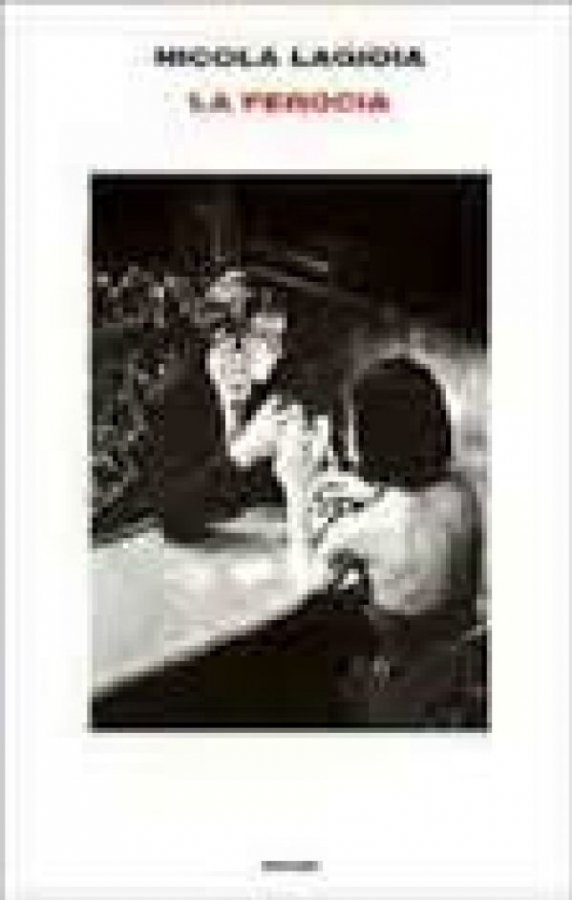
The Ferocity
The book won the 2015 Strega Prize and was framed by many reviews as a sort of Italian-style *Buddenbrooks*: one would expect a fine novel with a pronounced social dimension. Nothing of the sort. It is a dreadful novel, poorly written, intimist-existential, reflecting a perception of reality typical of the 1990s. Bored by the plot, disgusted by the narrative style, I stopped reading at page 237 and can therefore recount the plot only up to a certain point. It begins with the suicide of Clara, the spoiled and eccentric scion of a social-climbing entrepreneurial family from Bari: a scheming and greedy father, a typical Southern building contractor; an absentee mother, placidly satisfied with the affluence they have achieved, and three siblings; an established physician, a twenty-year-old well on her way to becoming just as spoiled as her sister, and Michele, the son of one of the father’s mistresses who died during childbirth. The bond between Clara and Michele is particularly intense, owing also to the young man’s fragility, who finds in his sister—so self-assured—a pillar of support and perhaps an object of love. The novel seeks above all to delve into this relationship, doing so through constant temporal leaps, from the present (Clara dead) to the past, with the young suicide victim still cast as a vivacious girl with an unbridled sex life. Revolving around Clara and Michele, across these different temporal dimensions, are the other family members, all seemingly indifferent to the terrible tragedy that has occurred or to the increasingly morbid nature of the relationship between the two youths. Perhaps because > we are not ourselves, (...) we are driven by forces of which we are unaware, we act without knowing why, we say things whose motive is unknown, crimes without guilt and deaths without apparent cause . Our lives repeat themselves according to the cycle of the seasons, with an inevitability we would like to attribute solely to nature, yet which belongs to us as well. > Startled by the motorbike, the lizard plunged into the blades of grass. It vanished among the branches, tearing in its flight the web of the jumping spider, which, having reassembled the image of the reptile through its eight eyes, had managed to avoid the impact. The spider scurried. The dry, parched ground registered the information, superimposing it onto the alphabet of ants crossing paths, breaking, bifurcating, and then recombining a line that was never the same. The law they obeyed shifted within them, confirming itself in the law of every kindred creature; it received fresh impulses from the depths of the anthill, and further still, from the tremendous force that changes the face of the seasons . It is certainly neither a social novel nor a psychological tale aiming to probe feelings and motivations. The author operates on a metaphysical plane, rooted in the deeply southern conviction of the immutability of the human being and of the socio-political context. Hence, perhaps, the title: *La Ferocia*. Still, a narrative rhythm could have been provided! An intelligible plot! What worsens the literary outcome is the minimalist imprint, reflected in an exaggerated reliance on full stops and the near-total absence of semicolons and colons. In this manner, it is difficult not to splinter the prose, rendering it ponderous and unintelligible. An example: > Michele returned to his room. He made to lie down on the bed. He stopped. From right to left. The nightstand. The wardrobe. He looked around with a worried expression. The half-open window. His heartbeat quickened. Stay calm. She can’t have jumped out of the window already. He sat down on the edge of the bed. And so on and so forth; now one understands why I gave up reading. Why not read it? It is a bad, boring, and dated novel.

Daughters of a New Era
Rudi, the naive and dreamy husband of Kathe, one of the protagonists, encapsulates the novel's overall meaning in a poem: > against the light I saw/that the bridge has fallen/and the faint light/I have now lost/and I surrender myself/to the current that carries me . Four young women are lifelong friends; they fall in love, marry, some of them become mothers, are widowed or divorced—in short, they lead an apparently normal life in Germany between 1919 and 1945. They live through the economic and social crisis of the post-WWI era, hyperinflation, the political turmoil of the Weimar Republic (with the suppression of the Communists by the Social Democrats), the rise of Nazism, racial purity laws (with the reporting of infants born with deformities), the gradual yet inexorable marginalization of the Jews leading up to the Shoah, and the catastrophe of the Second World War. How is it possible to lead a normal life in the face of such dramatic events? > But what was left to do now, if not retreat into the private sphere? The world was no longer an enchanting place . (thinks Bunge, the spendthrift father of Ida, another protagonist). And indeed, the novel develops the stories of Henny, Kathe, Lina, and Ida from a deeply intimist perspective, only superficially grazed by the horrific events that affected the German people. Henny and Kathe have been friends since childhood and mutually decide to pursue careers as midwives, bringing children into the world precisely when one knows not what to expect from the future (a metaphor?). While Henny pursues the idea of family, Kathe makes different choices. The former marries young after becoming pregnant, has a daughter, loses her husband, and marries another, with whom she has another child, only to discover that her second husband was an informant for the Nazis; Kathe does not want children, is a communist, and urges her husband to become politically active, thereby upending both their lives. Ida, on the other hand, was born and raised in luxury; her father, on the brink of bankruptcy, marries her off to a wealthy and powerful banker, condemning her to unhappiness that is only partially redeemed by a long love affair with a handsome Chinese man. Lina soon discovers she is a lesbian and moves in with her partner, in a situation that grows increasingly precarious because homosexuality is condemned by the Nazi regime. There are many other characters, but even from this brief overview of the protagonists one can deduce the fragility of the entire narrative. It is true that war intrudes upon peace and that people strive to the very end to live in indifference; one does not expect *War and Peace*, but one might have expected a plot and character analysis capable of capturing the deep wounds of the human soul when confronted with danger and horror. Peace awaiting war creates a kind of suspension, and people cling desperately to the private sphere, to pale sentiments, customs, friendships, and familial affection. Two splendid novels immediately come to mind: Alba de Céspedes's *There's No Turning Back*, with its young women secluded yet sheltered within a boarding school, and *The Makioka Sisters* by the Japanese writer Tanizaki, a work in which the minute depiction of a 1930s Japanese family serves as a critique of inert familism and, at the same time, of aggressive, warmongering imperialism, so distant from the common sentiment of the people. There is none of this in our novel, so much so that Germany's dramatic events seem merely an excuse to inject some vigor into a plot that would be far too flat and mundane if set in a context of normalcy. It is the beginning of a trilogy, which we leave to other readers. The narrative structure and the writing also warrant a negative verdict. The four young women's stories are developed in parallel through brief paragraphs within a chronological chapter framework. Consequently, the narrative is muddled, making it difficult for the reader to grasp the overarching story, and the plot ultimately proves verbose and repetitive. Too many characters contribute to compromising overall clarity. The writing, in turn, is flat, reliant on short sentences and dialogue; descriptions of the setting (Hamburg) and the social and political context are sorely lacking. Why avoid reading it? Pointless, poorly written, and distasteful, considering what happened in Germany between the two wars.
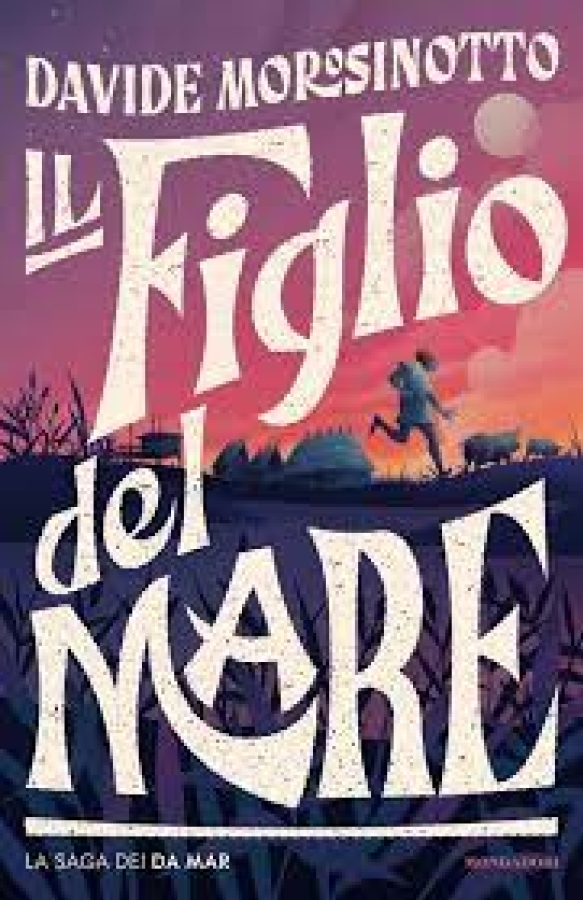
The Son of the Sea
Let us imagine that in a world—our own—imprisoned in a crystallized social structure, an extraordinary event occurs, upending established arrangements and enabling the destitute to climb the social ladder. Perhaps a revolution is possible only in the wake of a war or a natural disaster. With a tenuous narrative, this novel introduces the theme of change, setting it in an era far removed from our own: 452 AD, when the Huns invaded Italy. We find ourselves in Atesis, modern-day Este, a town then lapped by the Adige River, which shifted its course in 589 following a catastrophic flood. It is a sluggish town, dominated by a powerful Roman family and local notables, the so-called *curiales*. Pietro is a strapping, red-haired lad who works as a swineherd; a hulking fourteen-year-old, timid, withdrawn, illiterate, born of a single night of passion between his mother and a barbarian "who came from the sea, from the lands that lie beyond the great water." Having foolishly humored the curiosity of Giustina, the master's pretty, restless daughter, Pietro earns himself a sound thrashing—just punishment for daring to speak to the girl: a swineherd you are and a swineherd you shall remain; better to consort with the buxom Galla, a commoner like yourself! Everything changes with the arrival of the Huns, received with dread as ferocious, invincible warriors: > they appeared very tall and robust, with compact physiques (...), their steeds had foam frothing at their mouths and eyes full of madness . In reality, toward Pietro and Giustina, who find themselves held captive together, they do not behave as abominably as one might expect: they spare their lives and allow them to return home, where Pietro will fight valiantly in the epic, futile battle to save Atesis. The town is sacked, the countryside is overrun by barbarians and bandits, food and shelter are gone; there is nothing left to do but flee and seek refuge in the lagoons, where the Huns dare not venture for fear of pestilence. They set out on a perilous journey, alone, brutalized by fear and starvation: two teenage boys, Pietro and Tito; a girl accustomed to the comforts and protections of an affluent household, Giustina; and an old black mare. There is little point in following them across the plains and canals leading to the Venetian lagoons: the narrative is trite; it foreshadows *The Adventures of Tom Sawyer* without possessing any of its pace or suspense, gradually devolving into a cloying tale, rife with implausibilities, and thoroughly detached from its historical and natural setting. "There is no journey longer than the one that brings you home," the author declares in the Acknowledgments. After numerous novels set around the globe, Morosinotto turns his attention to his native soil, embarking on a saga that presumably intends to trace the fortunes of Pietro and Giustina—and their heirs?—in the founding of the future, magnificent Venice. Well, he might have applied greater care, rather than relying on timeless adolescent clichés (are we so certain that teenagers in 500 AD were just like our own?) and striving instead to cultivate an atmosphere rooted in the marshy wetlands of the lagoons. One must grudgingly concede that war serves as an effective device for pacing: the defense of Atesis, with its skirmishes and plot twists, engages the reader, evoking an *Iliad* in miniature. The prose flows lightly and smoothly, free of rough edges: an agreeable read, yet one that contributes to the sense of hurried superficiality permeating the novel. I would highlight a stylistic idiosyncrasy: across nearly four hundred pages, the punctuation consists solely of periods and commas; there is only a single colon, and not a single semicolon. A display of virtuosity à la Cesare Pavese, a nod to the journalistic style so in vogue, or pandering to an adolescent readership presumed unaccustomed to articulate syntax? Why not read it? It is trite and dull.

Red Leaves
For William Faulkner, the short story is akin to poetry, "almost every word must be the right one"; and indeed, the narrative is dense, hermetic, rich in symbolism, and difficult to interpret. As in *Red Leaves*, the very choice of title raises numerous questions: what does it signify? For some commentators, the writer intended to refer to the cycle of the seasons, thereby emphasizing that what suffocates and destroys the Negro people is a natural destiny. The red leaves are said to express an existential, cosmic condition, as in Giuseppe Ungaretti’s poem addressed to the soldiers of the First World War: "Like leaves on trees in autumn." A great Indian chief has died; as tribal tradition dictates, those who served him in life (the dog, the horse, and his Negro slave) must follow him into the grave. Two Indians head to the slave quarters to retrieve the man. What disgusts them is the stench of the bodies, a revolting smell. The Negroes > seemed to be suspended as upon something remote, inscrutable. (...) They were like the roots of a great uptorn tree, the earth momentarily sheared away from the contorted, thick, fusty maze of its outraged and despairing life. From what the two men say, we learn that slavery is a burden, the fruit of the pure Indian people’s contamination by the white man. Born of a mixed marriage between an Indian and a white woman, the deceased himself had been to Europe and returned with several objects whose utility he did not understand; among them, a pair of red slippers; whenever his son tries to put them on, he falls into an unconscious state. What does this mean? Perhaps because > this world (...) is being ruined by white men. We got along fine for years and years, before the white men whooped us into using negroes. In the old days the old men sat in the shade and ate parched corn and venison slowly over the fire, and smoked and talked about honor and big things; and now what do we do? Contamination does not break the absurd ritual of death, as if to say that white, technological, and advanced society reinforces ancestral customs rather than evolving them toward civilized forms. It is mere corruption in an immobile society; it is not progress. Faulkner’s reflection does not concern only the American South, which, at least from what we know, seems trapped in nostalgia for the past; consider certain phenomena that strike us as inexplicable—femicide, infibulation, brutal exploitation—so widespread in our advanced Europe, despite proclaimed laws and values. Only individual acts of Resistance can overcome corruption and generate new visions and moral rules. Paradoxically, this is what the victim in our story does. The Negro, destined to follow his master into the grave, flees into the forest and, when captured, fights for life until the very end: he amputates an arm to survive the bite of a venomous snake; he accepts water on the brink of death. > It’s just that I didn't want to die, he said. Then he said again, it’s just that I didn’t want to die, in a quiet tone, of slow, faint wonderment, as if it were something which, until the words had formed themselves, he had not known, or not known the depth and measure of his desire . The death endured, without resignation yet with equanimity, bears witness to a moral strength absent in the story’s other characters, corrupted by white society while trapped in ancestral rituals. > The Negro was still about to step, his knee raised and bent, his head up as if he were looking into the teeth of a millrace. The pupils of his eyes were wild and cold, like a horse’s . Ralph Ellison, the first great African American writer, said that Faulkner > has actually explored the nature of man. (...) Faulkner, more than most men, was aware of human strength as well as man's weakness. He knew that understanding and overcoming fear was a large part of a writer's reason for being. Faulkner’s narrative is imbued with a strong ethical tension, a desperate quest for human goodness, for that which is deepest in the human being. He pursues this aim within his world, the American South, where everything in reality seems static and violent; yet what he narrates concerns us all; and quoting Ungaretti once again, one could say: "I seek an innocent country." At the center of his writing is the word, not the plot or the characters; and this is precisely its limitation, at least in the short stories: it is difficult to understand, it must be read too many times to grasp its manifold meanings, it demands too much imagination to interpret. Why not read it? It is difficult to interpret and, in fact, boring.

The Fortress of Solitude
The novel is set in the “Negro” neighborhoods of New York. The narrative style proceeds “in little hops,” making for heavy reading. It is difficult to pass judgment because I cannot muster the concentration needed to follow an apparently nonexistent plot and difficult writing, even translated into Italian.
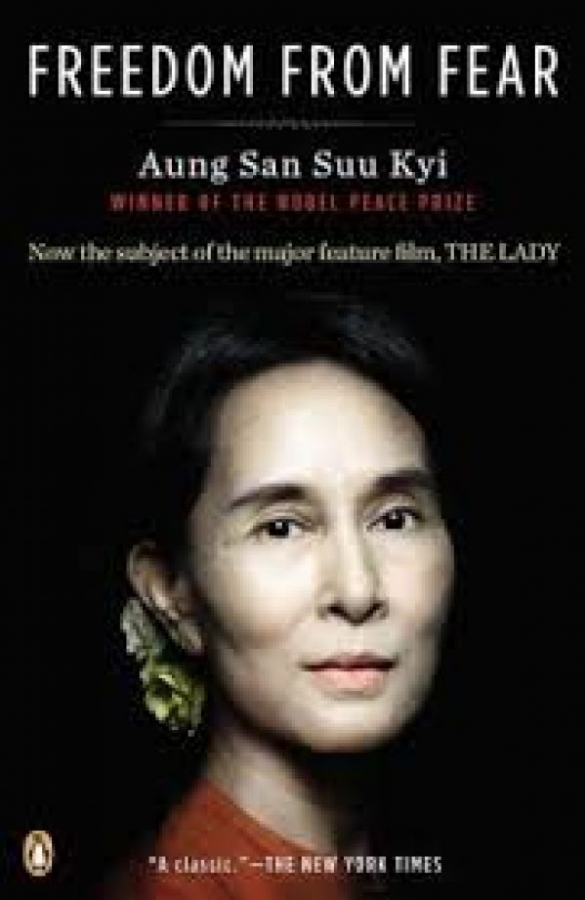
Freedom from Fear and other writings
San Suu was born in 1945, two years before the assassination of her father, founder of independent Burma and national hero. This biographical detail is essential to understanding this collection of essays, speeches, letters, and interviews, published between 1984 and 1994. Aims and prose vary, circumstances change, yet San Suu’s concern always shines through: to understand her father’s legacy, > to communicate what she has understood and to apply it to the problems of her own country . The essay that lends its title to the collection (*Freedom from Fear*) must not mislead: San Suu is not a moral philosopher, a sort of modern holy figure; she is, first and foremost, a political persona, characterized by a strong and prevailing ethical dimension. When the Burmese dissident calls for liberation from fear and corruption, she intends to assert > the firm conviction in the sanctity of ethical principles combined with a historical vision: despite setbacks, the human condition is placed on an ultimate path of spiritual and material progress . In a recent speech at the International Women’s Forum, San Suu defined politics as > the means to change society, and the change must be effective, not symbolic. And how effective it is depends on how correctly we evaluate the needs of the people and the country (quoted in *La Stampa*, 9 December 2014). That this is a long-pondered reflection emerges from a key essay included in the collection (*Quest for Democracy*). In it she affirms that > the true measure of the justice of a system is the amount of protection it guarantees to the weakest. Where there is no justice there cannot be a secure peace . We are speaking, therefore, of social justice, certainly not of abstract concepts belonging to the realm of philosophy and religion. To properly interpret San Suu’s thought, one must read the insightful analysis the author provides of intellectual life in Burma and India during colonialism. It is impossible to summarize such a complex essay: suffice it to say, in short, that the comparison with India allows San Suu to advance a severe critique of Burmese culture, of Buddhism itself, a “monolithic religion (...) with inflexible barriers”; to identify the sources of the regime’s consensus not so much in repression as in ethnic differences and chauvinism against Chinese and Indian communities; and to clarify how her inspirations are Gandhi and, above all, Nehru, her true spiritual father: a great politician, therefore, is her touchstone. If one does not stop at the vacuous, banal words of *Freedom from Fear* (but why does it lend its title to the collection?), one realizes that San Suu has no intention of locking herself within the spiritualist and Buddhist persona that the West would like to assign to her; she wants to be judged by what she manages to achieve for her country. To those urging her to leave Burma, > I replied that I would do nothing from abroad, and that if I wished to commit myself to a political movement, I would have to do so from within the country . Having read the entire collection, one asks oneself: has San Suu truly reckoned with her father? The answer is no. The daughter, San Suu, continues to idealize the father figure, without asking herself why the dictatorship originated in an army forged by her father: a man educated in monasteries, yet trained militarily and politically by the Japanese. As often happens, filial love compromises the lucidity and detachment that are, in any case, necessary in a political figure. Why not read it? It is dull, perhaps pointless. fragmentary, repetitive, and prolix.

Fire on Naples
The subject of the novel is Naples: “a corpse in an advanced state of decomposition.” Diego Ventre is a brilliant and refined lawyer, but in reality a Camorrista. He learns from a volcanologist that an eruption will destroy a large part of the city. Diego sees in this catastrophe the opportunity to renew Naples, to halt its decline, but he also realizes that enormous profits can be made. He keeps the news secret and begins a series of speculative operations. Meanwhile, he falls in love with Luce, the daughter of a prominent aristocratic family. A courtship begins, through which Diego can display all his classical learning and refined tastes. This does not prevent him from continuing his criminal activities, spinning business schemes, corrupting, and threatening. Naples is destroyed by the fury of nature; Diego and Luce marry, but on their very wedding day Luce discovers that she has married a violent mafioso. She flees, is captured by Diego’s enemy, and raped multiple times as an act of defilement; yet at the very moment of the rape Diego arrives, kills his rival, and points his gun at the young woman’s chest. Does he want to kill her according to a mafia code that cannot tolerate one’s woman having belonged to another man, or is it merely a protective gesture? We will never know, for at that very moment Diego is killed by his brother. The author draws upon an idea from Curzio Malaparte in *The Skin* (the eruption of Vesuvius as the destruction and creation of a new Naples), but this motif remains merely in the background. In truth, the entire novel unfolds around Diego—a villain, yet one ultimately admired, and an instrument for an aestheticizing indulgence in the beauty and ugliness of Naples. The weakness of the plot, the shallow character analysis, the perpetual invocations of an unreal city made solely of monuments, the protagonist’s pedantic and inconclusive soliloquies: these are all factors that reduce the narrative to a sequence of images, of sketches. As the author wrote regarding Naples, > it is a novel without a story, a novel without chapters. The words seem assembled at random, without a true before and without the hope of an after . Why not read it? It is pointless.