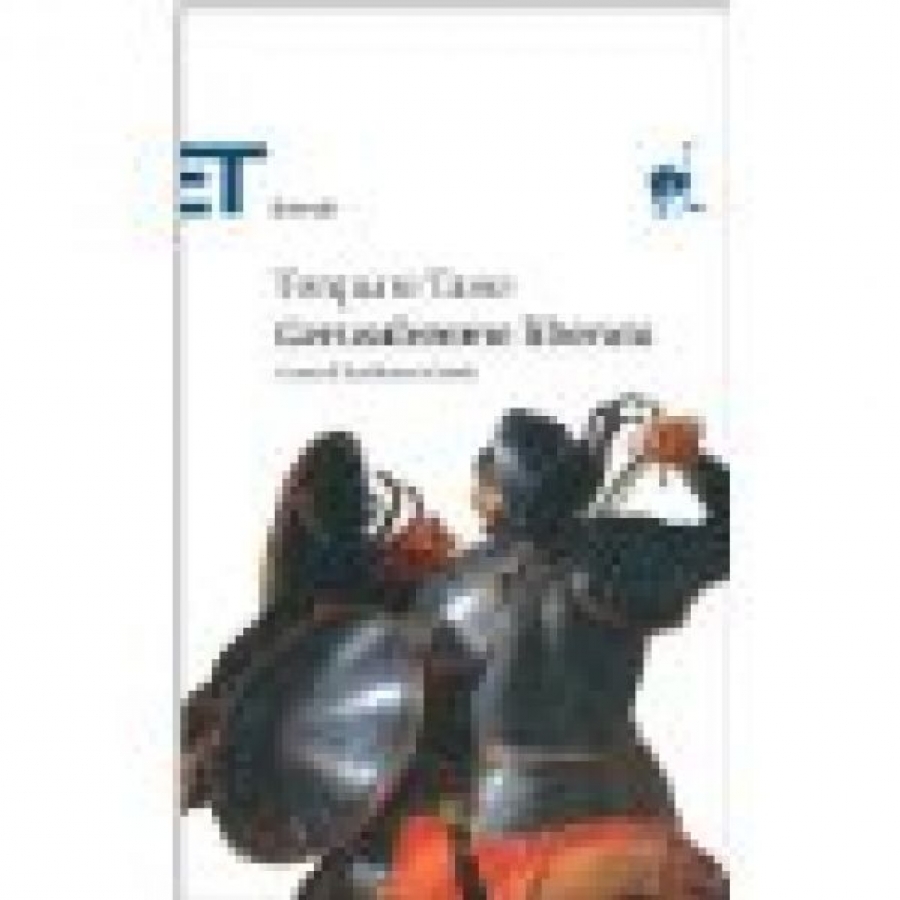
Jerusalem Delivered
*Gerusalemme Liberata* recounts the climax of the First Crusade, when Godfrey of Bouillon conquered Jerusalem in 1099. It can be interpreted as an epic poem (a sort of Christian *Iliad*), but in truth its interpretive keys are far more intricate than those of Homer's work. First and foremost, the poem is the narrative of a purification, both collective and individual: > thus singing, the devout host unfolds and spreads in wide circles, directing its slow procession toward Olivet ( Canto XI, verse 10). This holy advance collides, in bloody combat, with the Saracens and with the forces of evil: a struggle between supernatural powers of the underworld and the heavens. The clashes between armies and knights form one of the poem's central threads, allowing Tasso to display a consummate mastery and knowledge of the art of war and dueling, imbued with a taste for the macabre that anticipates modern adventure cinema: > and between neck and nape he strikes the blow; severed the sinews and slit the throat, the spinning head fell down and stained its face with foul dust before the trunk could fall; the trunk remains (a wretched monster) seated in the saddle, but freed of the rein, wheeling and kicking wildly, the steed shakes it off . ( Canto IX, verse 70). Yet what a contrast between dreams of military glory and the harsh, cruel reality! In memorable verses, Tasso sings of the absurdity of war. At the battle's end > there is no silence, nor any distinct cry, but a hoarse and muffled sound is heard: shudders of fury, murmurs of rage, groans of those who languish and those who breathe their last. The weapons, once so joyous to behold, now made a grim and mournful show; the iron had lost its gleam, the gold its rays, and no beauty remained in their once-fair hues . ( Canto XX, verses 51 and 52). Alongside the epic component lies the elegiac and lyric dimension, made up of extended landscape and sentimental interludes. It is the most luminous facet of the poem, pivoting upon woman—a figure who, for Tasso, is complex, richly nuanced, a mystery to be unveiled. Erminia, a delicate Saracen maiden in love with Tancredi, a Christian knight, longs to become a warrior to remain near her hero: > ah, why did Nature and Heaven not make my limbs and breast as strong, that I too might exchange skirt and veil for cuirass and helmet ( Canto VI, verse 83). Yet Erminia realizes that war belongs to men, and that she can only be a gentle wife: > unhappy Erminia flees, and her swift steed gallops across the earth ( Canto VI, verse 111). And Armida, the true protagonist of the poem, is a sorceress, an enchantress, and a conqueror of men; yet when she beholds her Rinaldo—himself a Christian knight—her hatred turns to love: > but when she fixed her gaze upon him and saw how placidly he breathed.... from an enemy, she became a lover . ( Canto XIV, verses 66 and 67). It is precisely the portrayal of the poem's women and their star-crossed love for Christian knights that reveals the complexity of Tasso's universe. He aspires to be the poet of the Counter-Reformation, of steadfast faith unclouded by doubt; yet one senses how deeply the poet loves the feminine realm, probing its torments and sentiments, just as he harbors a predilection for the vanquished and the infidels. In contrast to the rigid, impersonal Christian knights (Goffredo, Tancredi, and Rinaldo), stand complex characters endowed with profound humanity: the tender Erminia, the ill-fated Armida, the valiant Saladin, and the fierce Argante. These are living figures, fraught with doubt, affection, and memory. This is Tasso's spiritual world, mirroring his own anguish: > I shall live amidst my torments and my cares, my rightful Furies, frantic and wandering; I shall dread the dark, solitary shadows that bring my first transgression before me, and of the sun that unveiled my misfortunes, I shall abhor and loathe the sight. I shall fear myself; and ever fleeing from myself, shall have myself forever near .( Canto XII, verse 77). Here is the modern, pre-Romantic, and existential Tasso, with his passion for nocturnal scenes: > meanwhile night rises, and beneath its wings the sky shrouded the boundless plains; and sleep, the soul's repose, oblivion of woes, with flattering touch lulled cares and senses into rest yet there is no peace, “for the cruel fury appears before him in dreadful phantoms, striking him with terror” ( Canto VIII, verses 57 and 59). Why read it? It is a long poem, at times tedious, written in demanding verse that is dense and convoluted. Yet when Tasso breaks free from religion, from faith, from what must be said, and gives rein to his inspiration, a musical and profound lyricism captivates the reader.
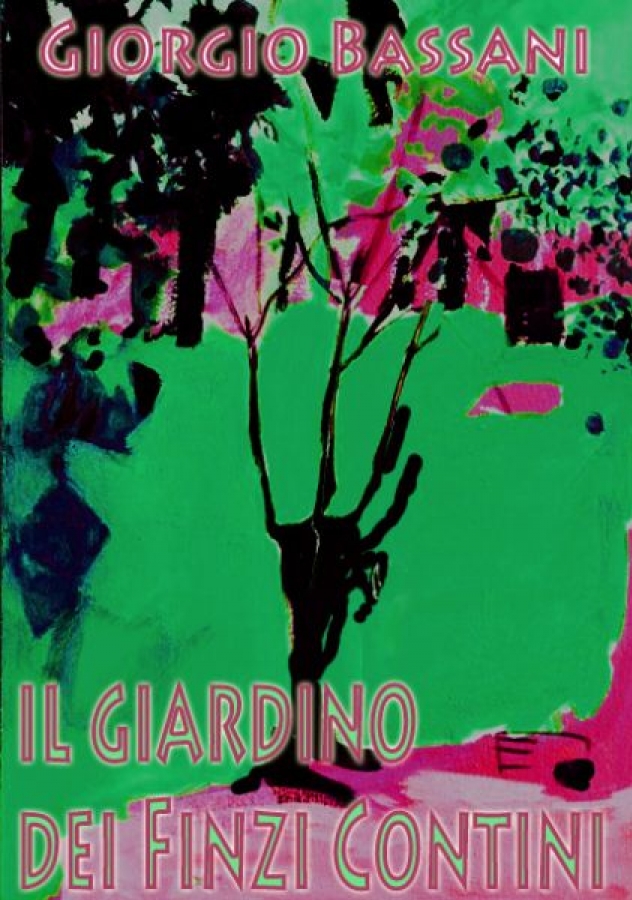
The Garden of the Finzi-Continis
The narrative recounts the love story between the author and Micòl within the milieu of a prominent Jewish family of Ferrara: the Finzi-Continis. Two fundamental themes emerge: nostalgia for a serene, peaceful Ferrara and, above all, an intimate tale tied to personal relationships that unfolds as if suspended over an abyss: the protagonists attempt to live as though nothing were happening, but in truth the racial laws, marginalization, war, and deportation, as well as illness, loom over and increasingly engulf their lives. It is reductive to read the novel as the story of Ferrara or a tale of unrequited love; it is the story of the Jews, but also of anyone who, in the face of danger and the dissolution of a world, «pretended not to see, let things slide...». The style is characterized by a pronounced musicality, as well as a richness of adjectives and narrative threads, which nonetheless does not come at the expense of incisiveness and concision. The characters are not «excavated» but remain on the surface, almost indecipherable and contradictory in their sentiments and behavior.
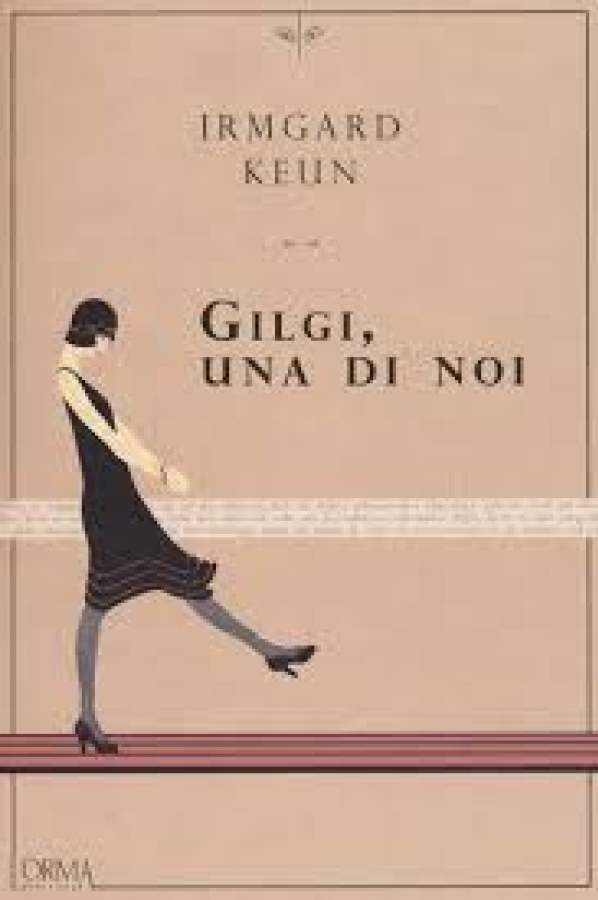
Gilgi, una di noi
Who knows whether Alba de Cèspedes had read this novel before writing *Nessuno torna indietro* and *Dalla parte di lei*, published respectively in 1938 and 1948, just a few years after the 1934 Italian release of Irmgard Keun’s novel, heavily censored to excise its most transgressive passages (see the reviews of de Cèspedes’s books on this site). Even allowing for a completely different style (elegant and baroque in the case of the Italian-Cuban writer; cinematic and remarkably modern in that of the German author), there are numerous affinities. The young boarding-school girls of *Nessuno torna indietro* seek their own path beyond the stereotypes of the “pretty wife and mistress,” just as Gilgi forcefully asserts her independence from Martin, the man she loves—fatuous and manipulative. > All tenderness vanishes from Gilgi’s face, her voice hard and clear: I settle my own affairs myself, (...) I will not tolerate anyone feeling responsible for me, it is the greatest insult one could pay me, I... Even greater similarities seem to emerge with *Dalla parte di lei*. Like Gilgi, abandoned by her birth mother, Alessandra is haunted by her mother’s suicide, which upends her life and drives her to seek a man with whom she can find total harmony. And if Alessandra kills her husband when she realizes she cannot be loved completely (“Francesco,” I cried out in despair, “help me, Francesco”), so Gilgi leaves Martin when she recognizes the vast gulf between the external world into which he has dragged her (living day-to-day in superficial lightheartedness) and her inner world as a young woman determined to remain a cog in the whole. Confronted with the destitution that drove a family to suicide, Gilgi understands that > lightheartedness has become an illusion, (...) that one cannot hide within the collective, that one is alone. This is what must be learned: one must learn to be a person, one must learn that a single laugh costs a thousand tears, must know that an hour of happiness must be paid for with a thousand hours of pain... And so it is impossible to continue living with a man to whom > everything else becomes utterly, deeply indifferent. One must leave, reclaim one's own life. > She belongs to the universal structure, she is not made to stay outside... now she believes once again, deeply, in the duty of young, healthy hands... Set in 1930s Germany, Gilgi’s story carried clear political and scandalous undertones, which prompted the Nazis to burn the book and the Fascists to censor substantial portions of it. Through contemporary eyes, Gilgi appears as a typical, conscientious office clerk, a sort of Carla from Elio Pagliarani’s eponymous poem. The charming Miss Gilgi loves an orderly life: she wakes up early in the morning, takes a cold shower to invigorate herself, does gymnastics, hurries to the office (she is a model employee), then studies foreign languages. > The fact that my demands (Gilgi tells a friend) are never beyond my reach makes me free... Shattering this industrious life arrives Martin, a carefree, selfish globetrotter. > Gilgi’s imagination had always been a well-behaved child. (...) Now the well-behaved child is straying a little too far; Martin tells his tales, and Gilgi sees oceans, deserts, landscapes—what she sees is not reality. Love overwhelms her and seems to consume her entirely. After an occasionally wry depiction of Gilgi’s life, such as the small ploys to ward off her boss’s advances, the narrative dwells at length on Gilgi’s infatuation, an incessant oscillation, a pendulum swinging between the bourgeois values with which the girl is steeped and the transgressive existence that awaits her with Martin. The prospect of an unwanted child, the encounter with an old friend who has lost his job and been reduced to penury by children that came unbidden, Martin’s glaring superficiality—attentive only to himself and heedless of what is happening in a Germany ravaged by poverty—are all factors that drive her toward a fateful choice in a feverish, dreamlike delirium: first she contemplates suicide, then she flees to Berlin, opening herself to a new life. The novel's virtue lies in its writing, which one might describe as cinematic: the dialogues evoke a film script where the actors must be given room, the descriptions are replete with vivid imagery that imprints itself on the reader’s imagination, and even Gilgi’s long deliriums, while at times discursive, remain visionary and profoundly striking. Consider Gilgi’s encounter with her biological mother, from whom she intends to ask for money. In Gilgi’s eyes, the rediscovered mother is merely a “white patch.” > There is no sound in the room, only a heavy, silent gloom and a small white patch: the face of the woman from the magazine. (...) They are all dead... I am completely alone, alone on the planet... And what of the image of her departure for Berlin, when Gilgi sees, or imagines seeing, > a small orange rolled down from the platform, lying amid the smooth, straight, ingenious tracks, awkwardly simple and inadequate: an oneiric conclusion to a stylistically singular novel. Why read it? The prose is captivating, though at times the narrative becomes redundant.
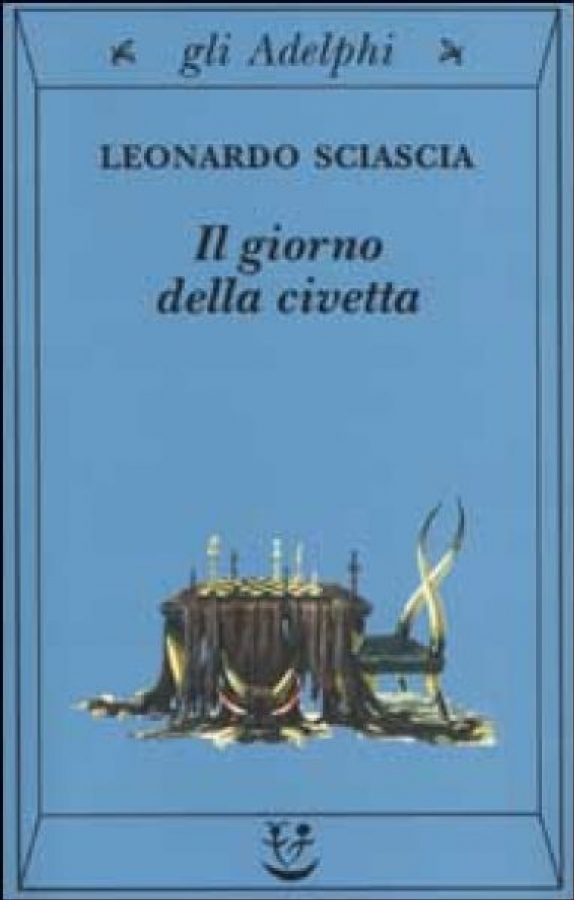
The Day of the Owl
The setting is once again Sicily, and the subject is mafia murder. A Carabinieri lieutenant from Parma, stationed on the island, finds himself investigating the murder of a small building contractor, soon followed by the killings of a peasant—a pruner by trade—who had recognized the assassin, and of a police informant who had named the instigators. Dismissing the crime-of-passion angle (the pruner’s wife had a lover), the lieutenant skillfully manages to extract a confession from the hitman and the man who commissioned him, tracing the trail back to a powerful mafia figure and risking the exposure of connivance with the political sphere. A member of parliament and a government minister may be implicated, both intervening repeatedly to halt the investigation. In the end, it is the mafia that will provide the three suspects with «illustrious alibis». While on leave in Parma, the lieutenant learns that the killer and the instigators have been acquitted, and that the crime-of-passion lead has been reopened. After dinner with friends, the lieutenant «felt like a convalescent: intensely sensitive, tender, hungry». «To hell with Sicily, to hell with everything»....He walked back home around midnight, crossing the entire city on foot....but before reaching home he knew, with lucid certainty, that he loved Sicily and that he would return. «I’ll break my head against it,» he said aloud. With subtle irony, the author constructs a plot suspended between the detective story—fraught with suspense at times—and the political novel, focusing on the ambiguity of power (magnificent, in this respect, are the exchanges between the member of parliament and other institutional figures whom the reader is deliberately not allowed to identify) and the perhaps natural collusion among the various tiers into which power itself is structured. Precisely because power is the fundamental theme, one of the book’s most famous scenes appears genuinely out of place: the passage in which the mafia boss expounds his vision of society to the lieutenant (men, half-men, pigmies, arse-takers, and *quaquaraquà*), introducing folkloric elements and a trite sociology that diminish the intellectual weight of a work that is not merely about Sicily and the mafia, but seizes upon the mafia crime as an opportunity to reflect on power as an obscure, invulnerable force. It is for this reason that the novel achieves universality, transcending its historical and social context. The style is brisk and brilliant, driven by a narrative momentum that suffers rare lapses in tension (most notably in the aforementioned soliloquies of the mafia boss). The syntactic structure and language are lean yet incisive, entrusting their expressive force to narrative cadence, the careful deployment of adjectives, and the seamless transition between clauses. Sciascia remains an essential reference point for the Italian language.
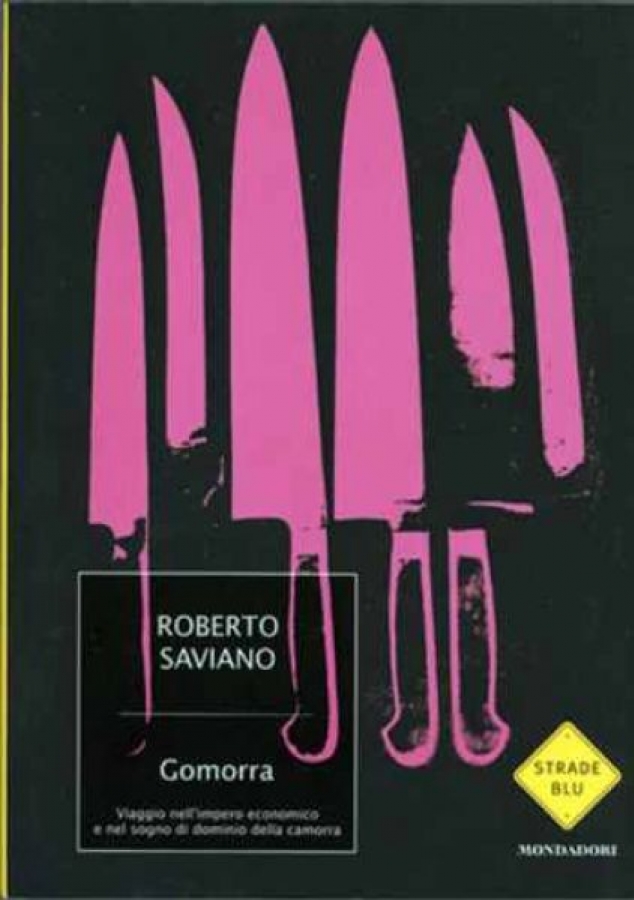
Gomorrah
*Gomorrah* is a book about the Camorra—that is, about what is known as the "System." Yet in reality, it does not merely recount criminal affairs; it investigates the deep entanglement between economy and crime, and the awakening of a consciousness toward a corrupt world against which one must rebel, first and foremost through information and denunciation. The book opens and concludes with this nexus between economics and criminality. The apparel industry, waste collection and disposal, and the building trade are all "legitimate" sectors in which major corporate groups exploit the Camorra to turn a profit and circumvent market regulations and the law. A large portion of the book is then devoted to the unprecedented, ruthless violence of the gangs and Camorra families: an unbridled war that strikes enemies and innocents alike. Now and then, isolated voices courageously emerge: a priest, a young schoolteacher, a magistrate, and so forth. The book can be read as a journey of mounting awareness regarding the state of abandonment in which Campania has been left—a condition of which all its inhabitants seem to be victims, from ordinary citizens to the criminal foot soldiers, up to the bosses themselves, whose fate appears sealed: either to be murdered or to end up behind bars, condemned to life imprisonment. Yet why does all this happen? Why has this region been turned into the cesspool for all the country’s toxic waste with the acquiescence of local elites? To these questions, Saviano seems to offer a definitive answer: > a looted wealth, painstakingly seized by someone and dragged into their own hole . This sentence encapsulates Neapolitan society, yet it holds a broader truth that concerns the entire country. The total absence of any sense of community, save for that of the clan; the cultural dependence on stereotypes (Camorra bosses imitate cinema, not the other way around); and the myth of violence are all cultural premises of a society that readily allows itself to be subjugated by dominant economic interests. In this sense, the Camorra bosses are destined to pay the price for those pulling the strings in the shadows: > the bosses who decide not to repent live off a metaphysical, almost imaginary power but > bosses always pay, they cannot not pay. They kill, they command military squads, they are the first link in the extraction of illegal capital, and this will always render their crimes identifiable, never diaphanous like the economic crimes of their white-collar counterparts . Against this state of affairs, Saviano, and a rare few others, rebel. Standing before Pasolini’s grave, the author feels he is "less alone." > And there I began to mutter my rage, fists clenched so tight that my nails dug into the flesh of my palms. I began to articulate my *I know*. The *I know* of my time... I know where the pages of economics textbooks vanish, mutating their fractals into matter, things, iron, time, and contracts. I know . And thus rises the cry of revolt: > let us not permit, men, that our lands become places of the Camorra, that they become one great Gomorrah to be destroyed . Yet can such a cry find an answer in an Italy as hidebound and stagnant as that of today?
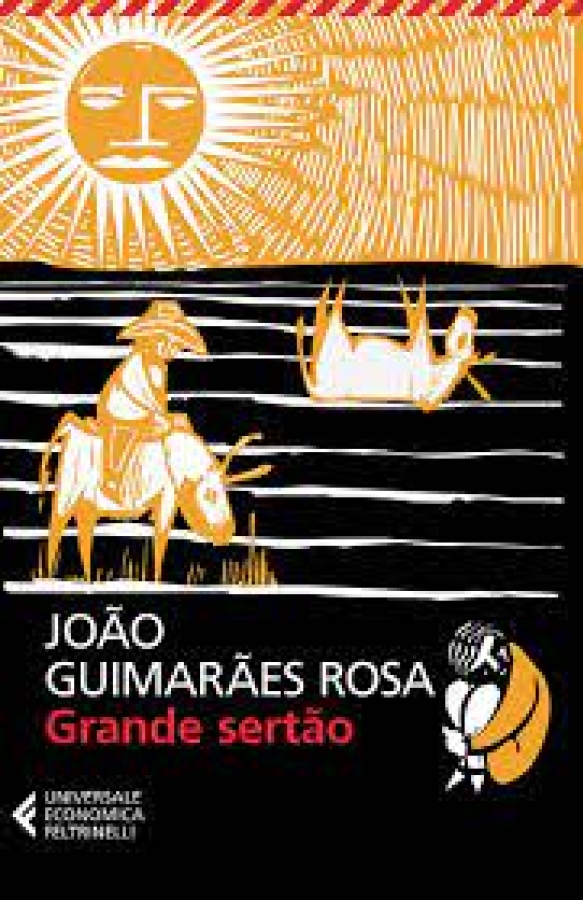
Grande Sertão
The Sertão is a vast region in northeastern Brazil: an expanse of low plateaus characterized by brief, intense rains that give rise to alternating periods of drought and flood, ruining crops and bringing famine to an impoverished population historically exploited by large landowners. At the end of the nineteenth century, widespread banditry developed, blending rebellion, brigandage, and confused social demands. In this setting, where "the criminal lives as he pleases," Guimarães Rosa composed an epic poem, a kind of *Iliad*, with its heroes and its battles (see the review of the *Iliad* on this site). Furthermore, the author recounted an unhappy and enchanting love story, a seemingly impossible, extraordinary passion reminiscent of that for the Pisana in Ippolito Nievo's *Confessions of an Italian* (see review on this site). Riobaldo is the son of a wealthy landowner; he could live in comfort and marry a wealthy, beautiful woman of his own social class, yet he chose instead to go fight alongside the rebels: > the Sertão produced me, then swallowed me, then spat me out from the heat of its mouth . Among the rebels, he met a splendid, delicate youth with whom he fell in love. > I felt the need to place my fingers, light, very light, upon those tender eyes of his. (...) My treasure, if only it were broad daylight, and I could see the color of your eyes...; so I said, lost in oblivion, as if I were only thinking aloud, almost reciting a line of verse. Diadorim stepped back, frightened. (...) And he laughed wickedly. We are not in ancient Greece, where homosexual relations were customary and Achilles could love Patroclus; here, in the Sertão, Riobaldo and Diadorim can only be friends, and Riobaldo’s advances a mere "mocking jest." Diadorim is the son of the most prominent gang leader, who is murdered by a cruel, bloodthirsty rival, "the man without a face"—perhaps the Devil himself. The vendetta begins. Several bands under Riobaldo’s command pursue their enemies in ceaseless clashes amidst great rivers, swamps, and scrublands, magnificent wild beasts, impoverished peasants, and wealthy landowners—stealing, raping women, looting, and dying of disease and in battle. The Great Sertão profoundly transforms Riobaldo: from a reflective, insecure youth he becomes a ruthless leader, shrewd and resolute. With his feminine sensitivity, Diadorim gently reproaches him: "what is changing within you is the task of the soul, not the duty of command." Did Riobaldo make a pact with the Devil? To be sure, he sought a pact on a stormy night, but the Devil never appeared. At last, we arrive at the final, decisive battle. Diadorim slays "the man without a face," avenging his father, but dies fighting. And when the pious women wash the corpse, as was the custom in the *Iliad*, they discover that Diadorim is a girl! > She was, such that she thus disenchanted herself, in so terrible an enchantment. (...) I howled. (...) Diadorim was a woman, she was a woman as the sun does not kindle the water of the river Urucuia, as I sobbed out my despair . The novel is not merely a love story. There are at least two other narrative strands. First and foremost, Guimarães Rosa tells of the vanished world of the "jagunços" and their natural and social environment: hardened men whose fate is sealed from birth and who know they will be defeated, yet continue to live in the Great Sertão, singing their songs: > life is a most perilous lot/in the duty of loyalty:/every night a river downstream, /every day is darkness... Another theme is the metaphysical one: does the Devil exist, and where is God? If by the end of the novel we cannot find an answer to the first question, we nevertheless understand quite clearly that God, if He exists, is like the Great Sertão—pervasive yet exceedingly distant, indifferent to the plight of human beings. As the translator notes, Guimarães Rosa’s narrative and lyrical world > blends regional terminology, structures, and inflections with the boldest innovations and the distinctiveness of the natural and human world from which it springs. Much is perhaps lost in translation, yet the magical sense of the narrative remains, sweeping the reader into a dreamlike and fascinating tale. Riobaldo, at the end of his life, narrates his Sertão to an unidentified person, addressed only as Vossignoria"; in this way Guimarães Rosa gives momentum to the novel, alternating brief colloquial phrases with detailed, intense descriptions, melding reality and imagination. It is a pity that Feltrinelli ruined this masterpiece by using a tiny typeface that is exhausting to read: perhaps to save paper and ink! Why read it? Arduous, but magnificent.
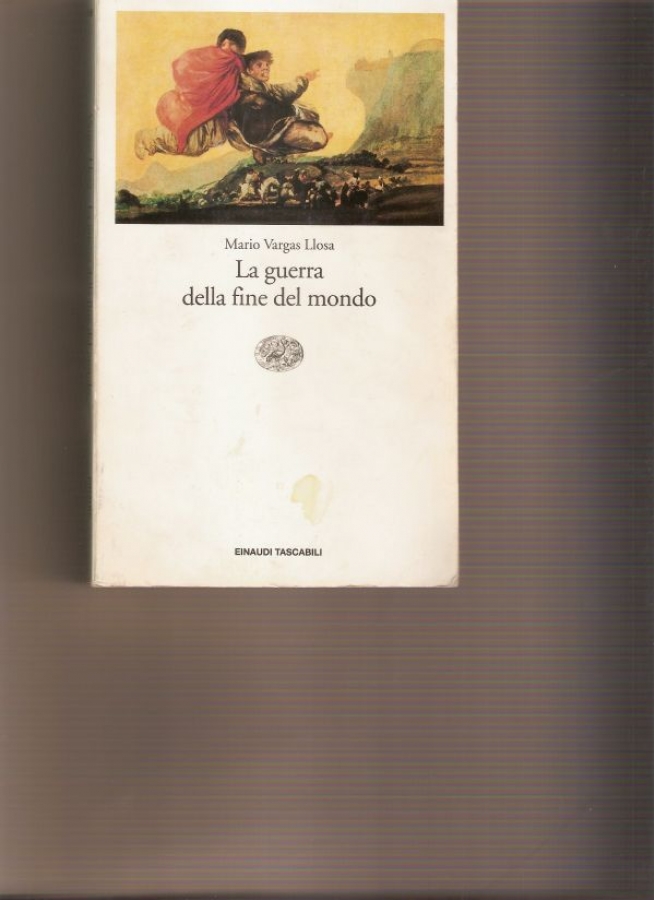
The War of the End of the World
> How was it possible that there, at the end of the world.... something different ordered things, men, time, death, something that it would be unjust to call madness and too broad to call faith and superstition . Such are the reflections of one of the protagonists of an incredible, and in some respects indecipherable, book. Vargas Llosa recounts an actual event that took place in Brazil in 1889, during the transition from empire to republic. A multitude of the disinherited had gathered around a holy man and, in a kind of messianic and religious fervor, had founded a utopian place, free from exploitation. The government of the young republic dispatched a mighty army against them, which, after a bloody battle, carried out a chilling and ruthless massacre. The episode had been recounted many times before, yet Vargas Llosa crafts a complex narrative from it, weaving social and political themes with spiritual and psychological ones. The novel can be divided into three parts. In the first, the author relates the background to the uprising: a strange figure wanders through the *sertão*, followed by a handful of disciples, to rebuild abandoned churches and thus bring a religious sign to a people forsaken by everyone, even their own priests. Then, an ever-growing crowd gathers around him, as the holy man manages to convert the most disparate figures: gang leaders, bloodthirsty killers, merchants, fallen women, hunchbacks, and the wretched. All are drawn by a quest for redemption and peace. In the second part, the utopian enclave of Canudos is created out of nothing; its renown draws yet more people, but it also attracts the attention of monarchist landowners, who hope to exploit the revolt for anti-republican ends, and the interest of socialists and revolutionaries, who interpret through European lenses events that defy the frameworks of Marxist and anarchist ideologies. The first expeditions sent to quell the uprising fail miserably: Canudos's survival is a threat, not because the poor intend to stage a revolution, but because it bears witness to a utopian society. A distinctly Brazilian alternative to exploitation exists, and this is unacceptable to monarchists and republicans alike: the two political factions join forces, and a massive army is dispatched. And here begins the third part, the most extraordinary in the entire book. With exceptional narrative skill, Vargas Llosa describes the siege of Canudos across two hundred pages: a continuous alternation of martial descriptions with the personal chronicles of the various characters. There are four central figures whose stories unify a narrative that would otherwise have been fragmentary. First, a trio composed of a dwarf, a peasant woman, and a journalist who is virtually blind because he has lost his glasses. His blurred eyes take in the terrible scenes through an out-of-focus perspective, lending an air of unreality to the entire narrative (an exceptional literary device). Far from the battlefield, in the aftermath of events, there unfolds a dialogue between this same journalist and one of the monarchist leaders, a baron whose wife was driven mad by the sight of her home torched by the rebels. Reason, the great organizer of the world, has dissolved in the face of the horrific events of Canudos: the rules no longer make sense; the world is turned upside down. > Love, pleasure, thought the baron, bewildered. It seemed to him a sacrilege that those beautiful, forgotten words should appear on the lips of that ridiculous creature, huddled like a heron in the armchair. Was it not comical, grotesque that a mongrel bitch from the sertão should make a man who was, despite everything, cultivated, speak of love and pleasure? But in the world, truth and happiness may be found in the most improbable things, such as in a bond of love and affection between a journalist, a peasant woman, and a dwarf, or in the lesbian love of the baron's wife for her maid, in which the baron himself might have taken part had he realized earlier that it would have pleased his wife. And so it might be that the baron could see that > the people in the boats were not fishing but throwing flowers into the sea, scattering petals, corollas, bouquets upon the water, and crossing themselves, and, though he could not hear it, his chest pounded hard, he was certain that those people were also praying and perhaps singing . It is extraordinarily difficult to give a single interpretation to the book. It can certainly be read in many ways: an indictment of a ruling class ruthless in defending its own interests, a critique of a left wing often vainglorious and far from understanding the specific reality, a cruel depiction of the violence of war as well as the ignorance of the masses. I believe, rather, that the unifying thread is confusion—a crowding of voices and images, a firework display that lasts only a few minutes but illuminates the sky in points of light, without any discernible meaning. Why read it? The narrative style is splendid and sustains a book that is undoubtedly long and fragmentary.