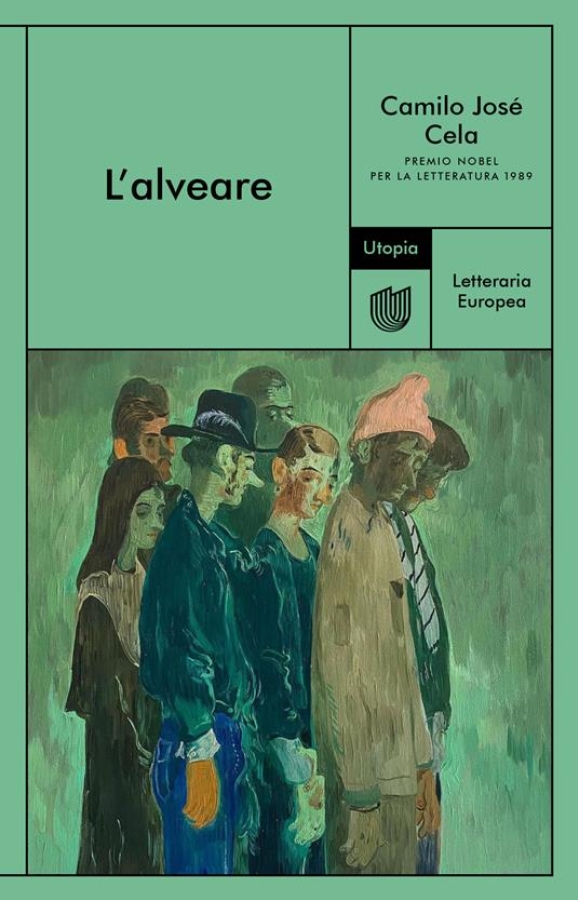
The Hive
The novel is set in Madrid during World War II: it is a period of deep economic crisis, marked by widespread squalor and a sense of "hopeless waiting"—the expectation of generic change paired with resigned pessimism. Dona Visi is happy because her daughter has found a fiancé, > someone studying for a position as a notary , her husband > tosses and turns between the sheets, > Fine, hold off on ringing the church bells. (...) Let's wait and see how it turns out , and her husband knows full well, having run into his daughter prostituting herself. Madrid is a city where everyone > walks aimlessly, with hands in empty pockets -- pockets that, at times, are not even warm -- with empty heads, empty eyes, and in their hearts, without anyone being able to explain it, a deep, implacable void. (...) Night falls (...) over the city's strange heart. Thousands of men sleep wrapped around their women, without thinking of the harsh, cruel day that perhaps lies in wait for them, like a wildcat, in just a few hours. Hundreds upon hundreds of students lapse into solitary vice. And a few dozen girls wait -- what are they waiting for, my God? Why do you deceive them so? -- their minds full of golden dreams.... If *The Family of Pascual Duarte* > (see the review on this site) revolves around a character dominated by a bloodthirsty disposition, by an irresistible fate, here we have a series of episodes, anecdotes, and figures in a disordered succession that makes it difficult to trace a unifying thread. On the other hand, what is the point of delving into the story of Elvira, already a weary prostitute, or that of Celestino, who talks to himself, or of understanding better who > the neighborhood poet really is, (who) has red cheekbones and sometimes, when the mood strikes, faints in the Café and has to be carried to the restroom. They are numerous figures, physical and thus contextualized, yet also allegorical of a human condition; and it is futile to dwell on them, so similar is their fate. If two reference points are really to be found, they can be identified in Dona Rosa and Martín. The former > comes and goes between the tables of the Café, bumping into customers with her enormous backside , at the center of a kaleidoscope of the defeated and the resigned, > with their elbows on the old, crusty marble of the tables, (...) once funerary slabs (a magnificent image of a world where everything has crumbled). And she, the formidable tavern-keeper, > pats her belly (...) Move along, move along.... Everyone in their place. (...) The hairs of her mustache twitched defiantly, solemnly, like the antennae of a cricket in love and full of pride. Martín is a young intellectual who survives on a few newspaper articles, on meals provided by his sister—who sets something aside for him without her husband's knowledge—and on the generosity of a brothel madam, who allows him to sleep in a warm bed beside a young prostitute. > He feels the young woman's hair on his face, feels her naked body beneath the sheets, feels her breath which, at times, is slightly raspy, almost imperceptibly so , and he recites a melancholy poem to her, dreams of being hired by the Social Security Institute, of visiting his mother's grave, and does not even realize that the Francoist police are searching for him. > Martín, out of a vague premonition, does not want to hurry..... It is true that we are in 1940s Spain, but isn't this hopeless waiting" perhaps the very sentiment pervading us right now, in the face of announcements of dramatic turning points (peace in Ukraine, the end of the genocide in Gaza), only to find ourselves repeatedly trapped in the most brutal paralysis? Are we not like the characters of this hive, a metaphor for our own condition? We would not feel so close to Cela's narrative had the author not relied on a dry, essential, and intense style, so distant from the convolutions of contemporary Spanish writers such as Cercas, Marías, and Aramburu (see the numerous reviews of their novels on this site). Cela's prose, steeped in raw magical realism, recalls Grazia Deledda's *Canne al Vento* (see the review on this site). The novel's limitation lies precisely in the dispersal of its many anecdotes, in the disorientation of the narrative—elements that make it difficult to navigate the reading and assign it an overarching meaning. One must simply surrender to it, without searching for a cohesive plot. Why read it? Splendid prose, a metaphor for our current condition
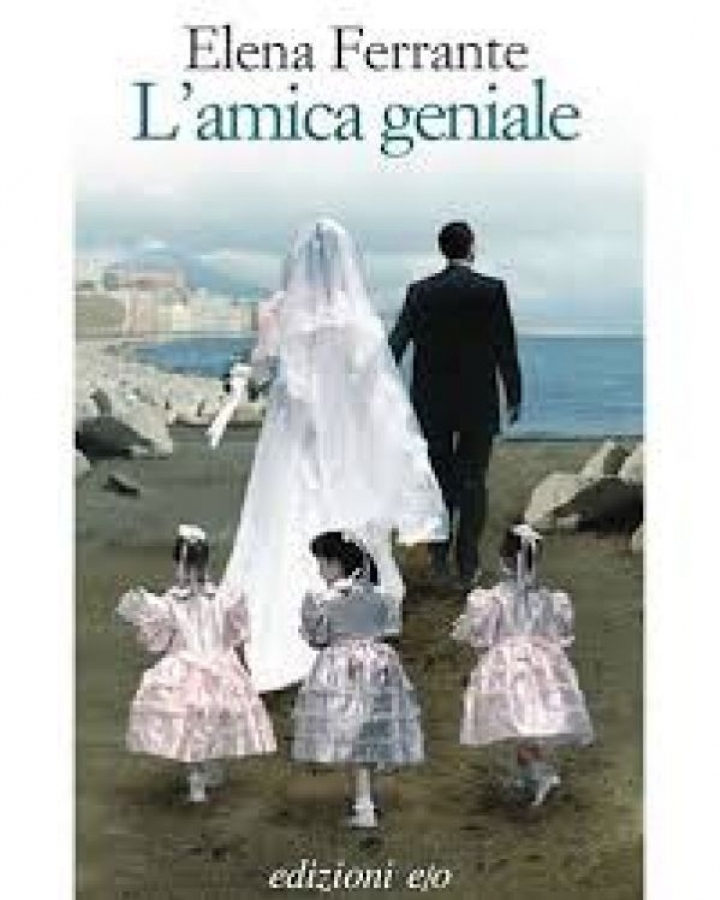
My Brilliant Friend
For much of the novel, the brilliant friend seems to be Lila; she is intelligent, capable of mastering any subject (even Latin) without attending school; she is brave, creative, enterprising; with adolescence, she also blossoms into a stunning young woman. Elena, the first-person narrator and co-protagonist alongside Lila, has been enthralled by her since elementary school, yearning to resemble her, both in body and mind. > I became fixated on Lila, who had very thin, agile legs, and was always moving them, kicking even when she sat next to the teacher (...) I decided that I had to model myself on that girl, never lose sight of her, even if she got annoyed and pushed me away. (...) I trained myself to accept Lila's superiority in everything with good grace, and even her bullying . Through Elena's words, we follow—with a touch of envy—the childhood and adolescence of the two friends and their many peers in a working-class neighborhood of Naples: violent, cruel, yet vital and authentic. Is the novel, then, the narrative of a friendship between Lila and Elena, and with it, of a social milieu? Toward the end of the book, we realize the theme is something else entirely: the author speaks of detachment from one's origins as a consequence of education, of opening up to new cultural and linguistic horizons. When Lila, still an adolescent, marries the neighborhood's wealthy grocer, securing a position in the eyes of the local community, the two friends share a clarifying conversation—for themselves, and for the reader as well. Elena is excelling in high school and declares, with “a nervous little laugh,” that she will abandon her studies once she earns her diploma. Lila replies, curt and resolute: > you're my brilliant friend, you have to be the best of them all, boys and girls (...) you must study always . In that moment, Elena realizes how they had ended up “in two different worlds,” despite living in the same neighborhood, despite having shared the same childhood. Elena had drawn from Lila the drive to study, but schooling had become her own personal wealth. > I had grown up with those boys and girls (our peers in the neighborhood), I considered their behavior normal, their violent language was my own. With them, I couldn't use anything I learned every day; I had to restrain myself, somehow demean myself. (...) Yet that very celebration (her friend's wedding) confirmed that Lila—the only person I still felt was indispensable despite our diverging lives—no longer belonged to us, and with her gone, any mediation between me and those young people (...) had run dry. The story of Lila and Elena’s friendship provides the occasion for a rare reflection. In common sentiment, schooling is always seen as performing a positive role, of emancipation and spiritual uplift. It undoubtedly is, one hopes, yet too often we overlook how education alienates us from our world of origin, causing us to lose our anthropological roots and squandering values and outlooks that are not always entirely negative. What will remain of Naples in a society that demands complete homogenization? Moreover, change is difficult and tormented for the person undergoing it. Elena, in fact, does not feel superior to her friend or to her peers; quite the opposite, she experiences this detachment with surprise and anguish, struggling to attain an awareness that she has long denied to herself. Her romantic entanglements reflect this very inner conflict: she is in love with Nino, another brilliant high school student, yet she gets engaged to Antonio, a decent young man, but alas, so ignorant. Why, above all, hadn't I stopped to say to Nino stay, come to the reception (...) let's talk among ourselves, let's dig ourselves a den to keep us out of this way Pasquale drives, out of his vulgarity, out of the violent tones of Carmela and Enzo, and even—yes, even—of Antonio? " The theme of detachment is not tackled through a faux-narrative approach that is in truth sociological and prescriptive. The author develops a multifaceted cast of characters, each delineated with effectiveness and psychological depth. Likewise, the neighborhood is described with vibrancy and emotional investment, while never concealing its insular, stagnant, and violent nature. Judgments are not handed down from the heights of an assumed social and cultural superiority, nor does the prose adopt justifying or populist tones. The literary merits—the characters, Lila in particular, the setting, and the plain, elegant prose—make one forgiving of the narrative’s weaknesses: a slow, at times repetitive pace, and a plot left hanging, perhaps to herald future volumes. Yet serialized novels ought to conclude with an atmosphere of suspense, rather than merely an ellipsis. Why read it? Lila’s figure is fascinating, the writing refined and elegant.
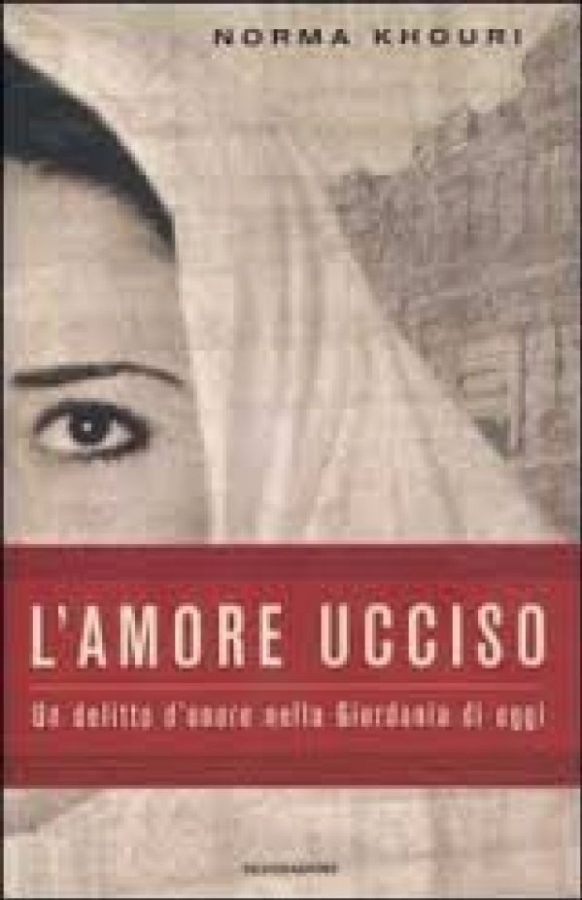
Murdered Love
Imagine something akin to Anna Premoli’s novel (*Ti prego lasciati odiare*): a love story, delicate, mildly ironic, woven from brisk dialogue and youthful musings. It could be a tender fairy tale, were it not set in Jordan—which, for most women, is > an oppressive prison, its atmosphere rendered all the more fraught by the risk of dying at the hands of one’s own relatives. Jordan is my home. I love its rugged beauty, its sweeping history. Yet, perhaps, I may never return there again . There can be no happy ending to an impossible love story in a society where > a woman who breaks any of the rules she is expected to respect is not afforded the luxury of forgiveness . As readers, we foresee the novel’s tragic conclusion from the very beginning. This breeds a mounting anxiety, which prevents us from fully losing ourselves in and savoring the beautiful friendship between Norma and Delia. Though belonging to different faiths, they grew up together sharing the same dreams of freedom and emancipation from an age-old female condition. > Our parents insinuated into daily life the idea that men were superior to women. We were not enslaved with whip and chains, but rather persuaded by centuries-old words and teachings to place ourselves in that condition of our own free will . While their mothers believed in "the Arab way of life," Norma and Dalia conform to the oppressive customs of tradition out of fear. Yet > fear can be overcome.... and so, sooner or later, things will have to change . To carve out their own space of freedom, the two young women devise a business venture: hairdressing, a typically feminine occupation that poses no threat to tradition, a sort of holding pattern awaiting the arranged marriage to which they are inexorably destined. Once left in the shop by whichever brother is "on duty," tasked with chaperoning them, Norma and Delia feel free to talk, to share confidences, to read women’s magazines, to dream. This haven in an "insidious sea of religious rules" is upended by the arrival of a young man, who forces them "to behave as we should not have." On the other hand, > were we to rely on subterfuge and deceit to get what we wanted, and let a suburban beauty salon, a hotbed of gossip, define the boundaries of our lives—boundaries that could have been so much broader? Could we risk our necks for a love story? . The two girls have no doubts, even knowing that Delia, a Muslim, can never marry the young man, because he is Catholic. The rules of Jordanian society prohibit marriages between people of different faiths. They know the risks they run. By seeing a young man without her father’s permission, the girl dishonors her family, and her relatives are permitted to punish her with death. Yet we are not faced with just another tale of star-crossed lovers forbidden to love. Norma and Delia reject their inexorable destiny. > Although it had all amounted to little more than some pastries and a coffee, the taste of that ordinary freedom was too delicious to surrender. We had traveled only a few kilometers, yet we had entered another world . As the narrative draws closer to its tragic denouement—Delia’s murder at her father’s hands—the writing style shifts, imperceptibly at first. The increasingly reckless encounters between Delia and the young man are still recounted with apparent lightness, which nevertheless fails to mask the girls' fear and anguish. Then, all at once, the narrative becomes dense and dramatic. With the death of her friend, Norma grows up in an instant. She realizes that her ties to Jordan and its traditions have died with Delia. Yet, as she flees her homeland, she grasps, as never before, her mother’s profound sorrow, the barrier > she had erected to protect her soul from the harshness of life... the surviving remnants of that unique, independent person . Refusing to be trapped by pity for her mother, even while feeling closer to her than ever, makes Norma free as a person, even before being free as a woman. The novel can be read from many perspectives: a sociological and anthropological portrait of Jordan, a country that conceals a cruel, pervasive tribal tradition beneath a veneer of modernity; an impassioned indictment of the widespread acceptance of honor killings and, more broadly, of the condition of women in Arab countries; the chronicle of a sweet friendship, of a shattered bond; a *Bildungsroman*, a painful path toward adulthood. When Norma heeds her mother’s prudent advice—to apologize to Delia’s father, the very man who killed her friend—the girl cynically embraces the lie, recognizing that only through subterfuge and deception can a woman survive. Does she risk deluding herself, as her mother did, "glimpsing ghosts of lost opportunities in her heart," or does she open herself to a new life, truly free and autonomous? Is fleeing Jordan enough to be recognized as a person? Why read it? A novel that is ironic and light at first, then, in its final pages, intense and dramatic. A book that prompts deep reflection on the female condition.
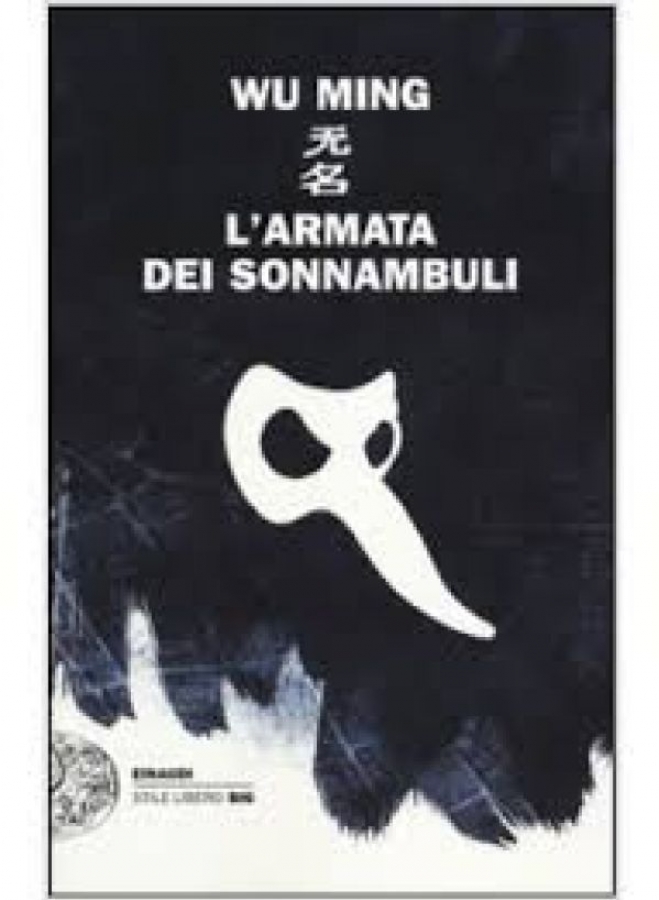
The Army of Sleepwalkers
The context is the French Revolution. > Revolution is like those decks of playing cards where kings, queens, and jacks are split down the middle, one right side up and the other upside down, head up and head down; you turn and spin the card, but not a damn thing changes, the king standing upright is forever tied to the inverted one, as if sneering mockingly at him, as if whispering from below: I am you headed for ruin! Enjoy it while you can, because the world turns upside down . In this whirl the people—call them the masses, class consciousness, or the «flea-ridden mob»—are the ones who believe in a new world, where they envision themselves as protagonists only to find themselves used by power, like a collective sleepwalker. The revolution, in short, is a «Grand Parody». To recount it, the authors trace four narrative threads, initially distinct and ultimately brought together into one. The first consists of the story of Marie, a woman of the > famished and shit-smeared people, yet standing tall, bloodthirsty, an enormous dragon of fremendous beauty . In this way, the authors are able to speak of the sans-culottes and, at the same time, of the role played by women in the French Revolution: a role often overlooked, yet vital to that great upheaval and to the history of female emancipation. It was the first time women’s rights were clearly articulated. To give voice to the people and their protagonists, the authors invent a language, displaying creativity and great literary mastery. The writing is a blend of Bolognese dialectal forms and syntactic and linguistic structures that evoke the style of Beppe Fenoglio. It is without doubt the most captivating and least predictable part of the novel. The second narrative strand follows the fortunes of an Italian *commedia dellʼarte* actor: Leo, who realizes that during the revolution, the real theater is reality itself. > How would it have been possible to return to reciting an old script within the confines of a hall, when theater had become history beneath the sky of France? . And indeed, Leo becomes «both actor and spectator at once», transforming into Scaramouche, an avenger and fighter for freedom. The third thread deals with animal magnetism, a scientific theory and practice widespread in the eighteenth century. It posits that there is a universal fluid coursing through all living beings. Harnessing it would allow one to cure illnesses and ailments, working for the good. Yet can magnetism be used to pursue evil? To subjugate other men, turning them into automatons, a sort of «army of sleepwalkers»? This is what the novel’s third protagonist, Dr. DʼAmblanc, discovers. Like all scientists, he «seeks not justice, but the confirmation of a hypothesis», and this leads him to sacrifice the life of a boy under his care, merely to verify whether magnetism could be employed for sinister ends. Finally, there is the section most deeply steeped in philosophical and psychoanalytic references: the asylum, the upside-down world par excellence. > The ward of the insane was a parody of a city district... everything that happens in here is a parody of the world out there... in short order, passing from mouth to mouth, news transmuted into wild rumors, as the alienated enriched them with their anxieties and bent them to the tortuousness of their indecipherable codes... studying the delirium of those who live openly in the Grand Parody can help us understand those who, seemingly saner, sink into it without being aware of it . In the development of its four narrative lines, the novel proceeds slowly and tortuously. It is demanding yet stimulating, rich in compelling scenes and food for thought. At a certain point, the narrative accelerates, turning into adventure, plot twists, and sudden shifts in direction. It becomes an easier read, but grows predictable, assimilating into the many modern novels that mix suspense with the paranormal. It falls to the reader to discover the unexpected conclusion. We can only say that power is overcome by humanity at its most fragile: a woman by now resigned to squalor and alcoholism. Yet the people advance; will they ultimately emerge victorious? It is a major historical novel, well documented, capable of recounting an epochal episode of our history in an engaging manner. The idea of telling the French Revolution from multiple perspectives is not merely an effective literary device. It makes it possible to address universal and contemporary themes, such as: the question of how far the people are a mob and how far a conscious force for transformation; the relations between men and women which, even in a time of great upheaval, are swiftly reined back into the former’s dominance over the latter; science as progress for the good of humanity and as an instrument of oppression; madness as the laying bare of the paradoxes of normalcy; political and social struggle transformed into performance, into theater. The novel’s limitation lies in its characters: the realm of feelings and interpersonal relationships is lacking, with the result that the protagonists turn out to be stereotypes, emblematic figures of a philosophy of history rather than living, autonomous characters. The creativity, which shines through above all in the prose, is placed at the service of an intellectualist approach. Why read it? A superb historical novel, a reflection on the contemporary world, captivating prose. It reads very well.

The Attack
> How to accept remaining blind in order to be happy, how to turn one's back on oneself without facing one's own negation?... non does not restore grace to a rose by transplanting it into a pot, one denatures it; one believes one is embellishing the living room, yet in truth one does nothing but disfigure one's own garden . Amin, an Arab Israeli, is a brilliant surgeon, happily integrated into Tel Aviv's polite society. After a devastating bombing of a restaurant, in which numerous civilians die, among them many children, Amin discovers that the suicide bomber is his wife, Sihem, the woman who > cradled my tenderest years, adorned my plans with glittering garlands, filled my soul with gentle presences. I no longer find anything of her in me, nor even in my memories . How is it possible that his wife is a homicidal fanatic? For a few pages, the novel seems to take an intimate turn: the secrets concealed within marital relationships. Then, the narrative reclaims a more existential and social direction. Amin wants to know who persuaded his wife, certain that Sihem was brainwashed by someone. He journeys to the Occupied Territories, into the midst of the war between Palestine and Israel, which he had desperately sought to escape. As a terrorist tells him, > the good doctor lives beside a war, he just doesn't want to hear about it. He thinks his wife shouldn't worry about it either.... Well, the good doctor is wrong . Amin's dreams shatter against the ruthless realization that his wife acted of her own accord, because > she must have harboured hatred within herself all along, even before knowing me..... she carried inside her a wound so foul and atrocious that she was ashamed to confide it to me; the only way to be rid of it was to destroy herself along with it . Yet perhaps, far more rationally, the truth lies in what Sihem writes in her farewell letter: > what use is happiness when it is not shared. No child is safe without a homeland . The journey into the Occupied Territories is also, for Amin, a return to childhood, to his people. The narrative does not tell us whether Amin too becomes aware of his people's tragedy; we only know that he dies—accidentally or deliberately?—in a slaughter perpetrated by an Israeli drone to eliminate a religious leader. With great narrative skill, the novel opens and closes with the slaughter in which the protagonist meets his death. According to some critics, Amin's death, inexplicable within the plot of the story, serves as a metaphor for an endless conflict and the destruction of a people: the Palestinians. It is an overly simplistic interpretation for a complex novel, one that refuses to take a side, neither against nor in favour of the two warring peoples. This assessment is confirmed by the positive portrayal of certain Israeli characters, such as Amin's tender female friend, and the alternation of colloquial language with poetic and, for long stretches, sermonizing prose. The narrative pace is tight, the dialogue dense and effective, the Israeli milieu and its characters convincingly depicted. What jars, instead, are the political soliloquies, such as those of the religious leader and the terrorist chief, which ring false and conventional. The Palestinian setting likewise feels artificial. It is evident that the author feels far more at ease in an urban, Western-style environment. Why read it? It is a gripping read.
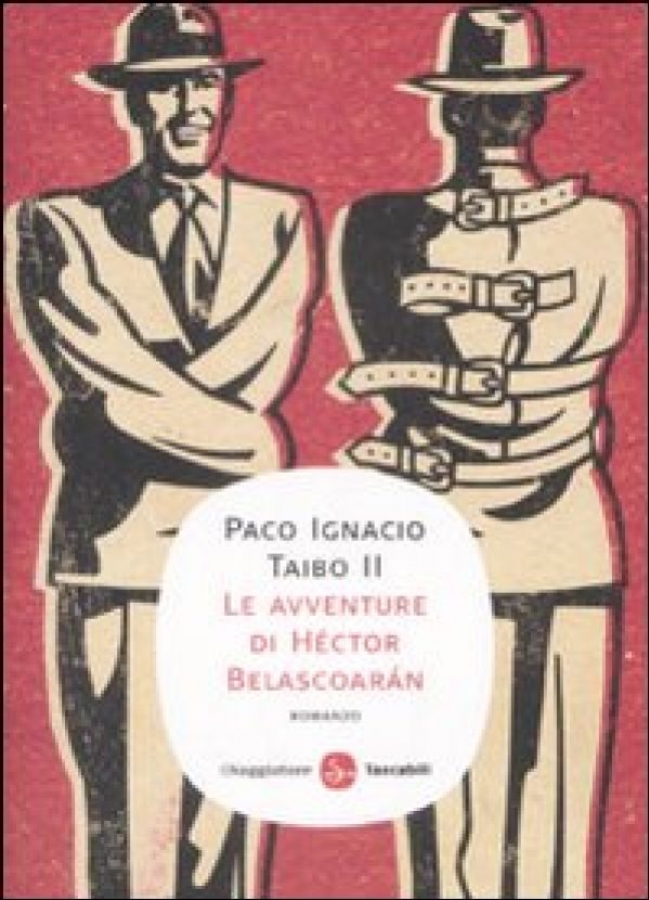
The Adventures of Héctor Belascoarán
The book collects three novels featuring Héctor Belascoarán as their protagonist. The first novel, *Days of Combat* (1986), recounts the protagonist’s life transformation: from a married engineer and corporate executive to a detective searching for clients and, on his own initiative, hunting down a serial strangler. In reality, the hunt for the strangler is a way to find himself, to escape a life that had sunk > slowly into the oblivion of an accelerated race, a car race in which he competed without even knowing it, a marathon of assholes running the prescribed forty-two kilometers along roads that weren't even recently paved . It is ostensibly a "noir" novel, but in truth an introspective one—in some ways a journey of liberation from a bourgeois, respectable existence that had grown far too constricting. And in the background, the true subject of the novels already emerges: Mexico, and Mexico City in particular—a violent city that "feeds on carrion." In the second novel, *The Ghost of Zapata* (1992), both the writer and the protagonist have hit their stride. The narrative pace has quickened, the prose has become taut and lean, and Héctor is now a detective taking on an unjust society where everyone, starting with the police, is corrupt and violent. The protagonist is dragged against his will into three cases: searching for Emiliano Zapata, who is rumored to still be alive; investigating the murder of a high-ranking corporate executive in the midst of a bitter union dispute; and preventing a teenage girl from committing suicide. And Héctor carries out these tasks > with the desire to believe anything, eager to see Zapata, who by now must have been ninety-seven, burst galloping onto the ring road atop a white horse, amid a hail of bullets . In the third novel, *Some Clouds* (1992), Héctor is resting on a Caribbean island when he spots his sister and realizes that > changes were coming and he was tired, listless, disheveled, unkempt, craving beers, boleros, and the sound of the ebb and flow of the waves. He wanted his solitary palm tree, the sunsets, and the occasional round, good-natured cloud in the sky . His sense of justice proves stronger than his indolence, and he finds himself entangled in a story of syndicates, crime, and corrupt cops against whom he must fight like a lone warrior. The reference point is undoubtedly Raymond Chandler, even if Héctor lacks Marlowe’s cynicism. Above all, he plays the solitary, righteous detective unassumingly, almost by accident. > "Listen, old Paco," Héctor said, stubbing out his last Delicado in the tin ashtray, "I'm not really such a great detective. The only certain thing is that, not knowing how to write stories, I butt into other people's. Me alone, against the system—give me a break! I've been working on my aim for five years, and with a .38 I couldn't hit an elephant at ten meters. I'm crippled, when it rains I limp, yesterday I found my first gray hairs, and I'm lonelier than a stray dog. I get pissed off just like you do, it eats away at me thinking about what this nation has come to. I'm as Mexican as anyone else . What do you say to that now? I'm a detective because I like people." Why read it? The first novel is heavy going, but the other two are a pleasure to read. And above all, one appreciates the protagonist’s civic passion—free of rhetoric, just like that of any Mexican.