
The thin man
*The Thin Man* (generally translated into Italian as *l’uomo ombra*) is a wealthy inventor who disappeared a few days ago, just as his secretary is murdered. These two events set in motion the classic detective story: a famous former detective (Nick, the first-person narrator) is in New York with his wife, Nora, and finds himself reluctantly drawn in by the inventor's family (his ex-wife and two children, a spoiled girl and an eccentric young man) and the missing man's lawyer. One cannot recount the plot of a mystery novel, nor its ending, of course. The story unfolds, light and shrewd, around Nick and Nora—the latter seemingly a minor character, but in reality an exceptional foil: willfully detached, ironic, and patient. Her view is that a detective should be able to find anything, even a piece of duck in an overcrowded plate of food. Then there are the inventor’s relatives: greedy, selfish, indifferent to the fate of the missing husband and father; “Aren’t they perhaps the first of a new breed of monsters?” Nora wonders. The detective story and its characters also serve as a pretext for a portrait of 1930s America, battered by the stock market crash that is not yet perceived as the profound societal upheaval it would eventually become: people continue to drink heavily, frequent nightclubs, and believe that the money can just keep circulating. The strength of Hammett’s novel is undoubtedly its narrative style. It is crafted from tight dialogue and concise sentences, all relying on a masterful use of verbs—often phrasal—characteristic of colloquial speech, though they never slide into slang. One gets the impression that Nick is in a rush, that the action moves too fast to afford lingering over descriptions and in-depth character exploration. Or is it boredom that pervades the protagonist, driving him to race through life? Why read it? It is a great classic of the detective genre, but it is also an incisive depiction of a society in crisis—one in which, however, people still manage not to be sloppy.
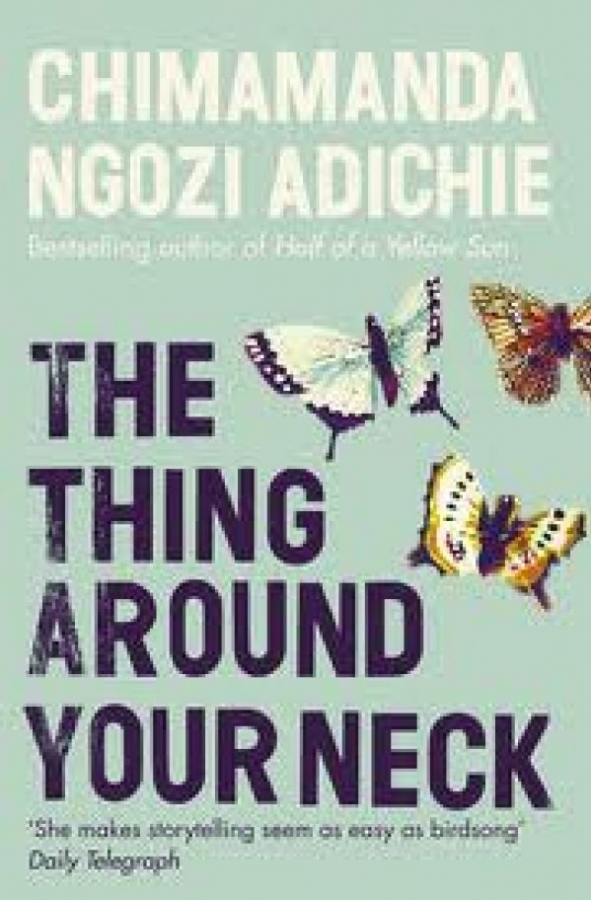
The Thing Around Your Neck
The book is a collection of short stories that center on the solitude of women. In the title story, the protagonist has left Nigeria to live in the United States with an uncle who attempts to molest her. The young woman flees her relatives’ home, and her American dream is shattered in an underpaid job as a waitress. She would like to write to her parents, but > there was nothing to write about... Nobody knew where you were, because you told no one. Sometimes you felt invisible..... At night, something wrapped around your neck, something that almost choked you before you fell asleep . A woman’s freedom is possible only in solitude, as only then is her destiny not determined by a man—be he husband, father, or brother. In *Tomorrow Is Too Far* (a story reminiscent of Morrison’s *Beloved*), the narrative skillfully unfolds through an alternation between present and past. The protagonist, now an adult, lives in the United States. She returns after many years to Nigeria, where, as a child, she had pushed her brother to climb a tree and then screamed that there was a venomous snake that might bite him. The boy, terrified, fell to his death. This episode will condemn the girl to remorse and exclusion, yet it was the only way, cruel and reckless, to rebel against the privileges tradition bestowed upon males: > you knew that something had to happen to Nonso (the brother) so that you could survive . Solitude also stems from fleeing a violent, yet beloved country: Nigeria. *The American Embassy* is the narrative, poised between journalistic chronicle and psychological suspension, of a long wait on “a palpitating pavement” before the American Embassy to secure an exit visa. The protagonist, with her grief “somewhere between the eyes,” seeks to leave Nigeria because the Nigerian police killed her son, still a young child. When she finds herself before the American official, the woman realizes that she cannot abandon her country, where her child is buried: she “wanted to return to their ancestral home,” to the flowers of her land, to dishes cooked with palm oil, and so “she turned slowly and walked toward the exit.” The uprooting between the bond to one’s native land and expatriation to the United States is present throughout all the stories; it does not, however, depend on a woman’s free choice, but on the will of husband and family. The primary virtue of the stories lies in their narrative structure and writing. The author makes masterly use of the second-person singular (the “you”) to keep the narration suspended between autobiography and the impersonal form. The result is a sense of inevitability, as though events could not possibly be otherwise, as though no alternative resolutions were possible, since the facts unfold beyond the will and agency of the protagonists. Life is what it is, and there are no alternatives. The prose is elegant, simple, and measured, never indulging in neologisms or national and local idioms. Indeed, with subtle malice, the writer often underscores the differing uses of vocabulary, contrasting the typically British terms the female protagonists would prefer to use (all belonging to the educated Nigerian elite) with American vernacular—as if estrangement, flight, and solitude were reflected even in the abandonment of customary forms of English. The limitation of the book lies precisely in the narrative structure of the stories, which the author fails to resolve, leaving them perpetually unfinished and suspended. What emerges is a fragmentation that makes it difficult to draw together the narrative thread and its meanings. Why read it? It is an enjoyable and interesting read.
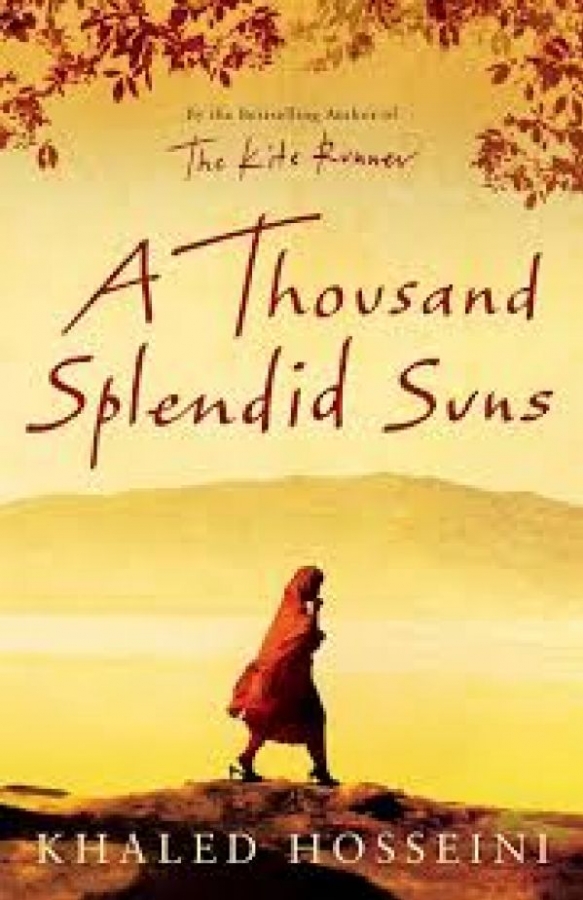
A thousand splendid suns
Female friendship lies at the core of this novel. The author chronicles the condition of women in Afghanistan across an extensive span of time, from the 1960s to the present day—from the monarchy to the invasion by Western forces, spanning the “Soviet” period, the civil war, and the Taliban regime. He portrays the harsh reality of women's lives through the trajectories of two female figures: Mariam and Laila. Mariam is fifteen years old in 1974 when her father gives her in marriage to a much older man: Rasheed. The marriage is intended to remedy a scandalous situation. Mariam is an illegitimate child and thus, following her mother's suicide, cannot be taken into her father's household. For the young girl, this marks the end of a relatively happy adolescence, nourished by the myth of her father and the dream of being recognized as a daughter in her own right, of no longer being a bastard. Yet, though betrayed by her father—a weakling and a coward—Mariam bravely confronts her new life in the metropolis of Kabul. Yet Rasheed proves to be a despotic and violent man, particularly after Mariam fails to bear him a son, miscarrying the baby girl she was carrying instead. The monarchy is supplanted by the communist regime, and the status of women improves, at least in official rhetoric and for a narrow stratum of the population. Yet for Mariam, nothing changes: she lives cloistered at home, subjected to her husband’s brutal dominion. The narrative then turns to the adolescence of Laila: a lively, restless, educated girl, in love since childhood with a playmate: Tariq. War among tribal factions fosters a mounting climate of violence, killings, abductions, and rapes, driving many families—including Tariq's—to flee to Pakistan. A bomb destroys Laila's house, killing her parents. The girl is rescued and taken in by Rasheed and Mariam. In truth, the man aims to marry her and succeeds, partly through deception (with the false news of Tariq's death) and partly because Laila is pregnant with Tariq's child and sees marriage as a solution for herself and, above all, for her unborn baby. At first, Mariam treats Laila with hostility, viewing her as an interloper who has usurped her role as sole wife; yet Rasheed’s sheer cruelty, the birth of two children, and the harshness of life under the Taliban regime gradually forge a growing solidarity between the two women that blossoms into a profound friendship. It is a distinctly feminine bond, arising from the care of the children and the resolve to resist—with steadfastness and stubborn determination—the unprecedented violence inflicted upon them by Rasheed. And it is Mariam herself—the meek, submissive Mariam—who strikes down her husband with an axe as he attempts to murder Laila. Mariam thereby enables Laila’s escape while condemning herself to death at the hands of the Taliban: an ultimate sacrifice for the future happiness of her friend and her children. The finest sections of the novel are those devoted to depicting the childhood and adolescence of Mariam and Laila: the representation of the rural world—Mariam's—contrasted with the Kabul setting where Laila grew up; the innocence and dreams of the two girls, so disparate yet so akin, typical of youth; their affection for their fathers—mythologized for Mariam, tangible for Laila; the emotional detachment of the mothers, and the deeply rooted bond between Laila and Tariq, unquestionably the redeeming facet of an otherwise grim and somber novel. When the narrative moves on to depict the vicissitudes of the two marriages, however, one senses an air of abstraction and contrivance. The author relies in vain on the literary device of alternating perspectives between the two women: both personalities remain relegated to the background, flattened by scenes of violence and Afghan life that are themselves repetitive and precisely as we in the West imagine them to be. In particular, the friendship between the two women is never explored in depth; instead, it surfaces superficially, its underlying motivations and contradictions left unexamined. Mariam’s extreme decision to kill her husband and liberate Laila feels abrupt, devoid of any perceptible maturation, with the result that Mariam herself is reduced to a secondary figure compared to Laila, when in fact she bears all the hallmarks of a heroine of Greek tragedy. Why not read it? It is overly long and at times redundant.
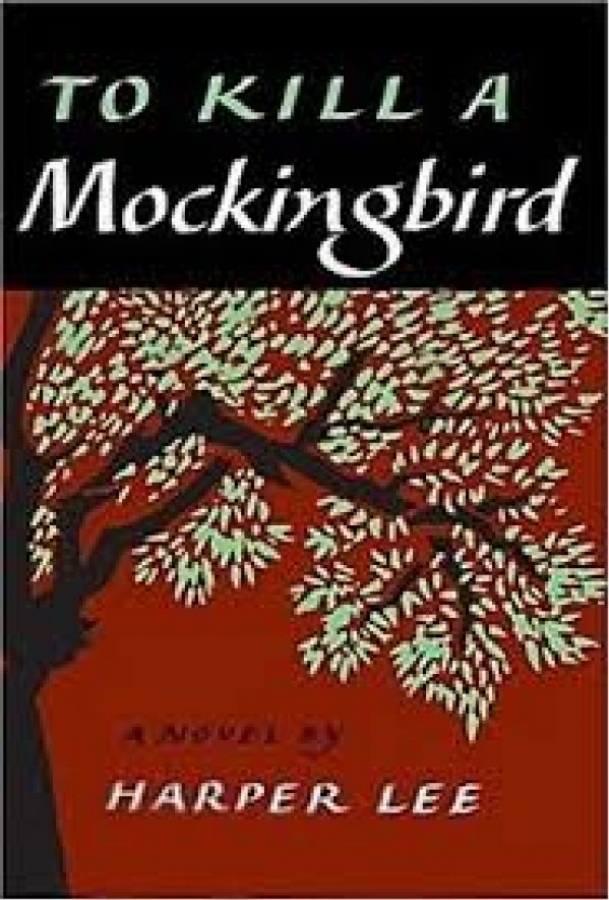
To Kill a Mockingbird (Il buio oltre la siepe)
> As I made my way home, I thought that Jem and I would grow up, but there was not much else left for us to learn, except algebra . With this verdict Scout, the novel’s young narrator, sums up the events of the book. But what has the little girl really learned? Maycomb is a southern town in the United States: > a tired old town. (...) In rainy weather the streets turned to red slop; grass grew on the sidewalks, the courthouse sagged in the square. (...) There was indeed a caste system in Maycomb, but to my mind it worked this way: the older citizens, the present generation of families who had lived side by side for years and years, were utterly predictable to one another: they took for granted attitudes, character traits, even gestures, since they had recurred in every generation and set in time. Scout is a lively, independent, restless little girl. Her "hero > is Jem, her older brother; her moral touchstone is her father. Atticus, addressed by his first name by his children, is an esteemed lawyer and the town’s representative in the state legislature; a widower, he raises his children to respect others and the community, but above all according to authentic values of justice and freedom. They’re certainly entitled to think that, and they’re entitled to full respect for their opinions, but before I can live with other folks I’ve got to live with myself. The one thing that doesn’t abide by majority rule is a person’s conscience > . Scout and Jem spend the long, hot summers constantly exploring the yard next door. In particular, they are drawn to a house where a person lives in hiding, shrouded in mystery. Who is he? Is he a monstrous and dangerous being? Why does he never step outside? The children attempt in some way to uncover this dark secret. And once again, as in so many episodes of the novel, Atticus’s serene wisdom emerges: everyone has the right to live as they see fit; what Mr. Radley (the shadowy figure) does might seem strange to us, but what he does isn't strange to him. “And besides, is it right,” Atticus asks, “to put his life's history on display so that it's at the mercy of neighborhood gossip > ? Atticus treats his children as equals, offering them advice but also accepting theirs: what would I do, Scout wonders, if Atticus didn't feel the need for my presence, help, and advice > ? The story could continue along the lines and rhythms of a childhood tale, when an incident of typically racist nature bursts in. A Black man is accused of having raped and beaten a white girl; Atticus is the court-appointed defense attorney, an assignment he accepts even though he knows it will pit him against the community. If I didn't, (he tells his daughter), I couldn't hold up my head in town, I couldn't represent this county in the legislature, and above all, I couldn't even tell you or Jem not to do something again > . What unfolds in the courtroom confirms Atticus’s great stature, both as a lawyer and as a man. His closing argument is the very epitome of what democracy is. Thomas Jefferson once said that all men are created equal. (...) We know (...) that some people are smarter than others, some have more opportunity because they are born with it, some men make more money than others...(...) But there is one thing in this country in which all men are created equal.(...) That institution is the court system > . Justice is an ideal; justice nevertheless exists because under the law all men are equal. Atticus deludes himself: the young Black man, though clearly innocent, is convicted simply for being Black; he is then killed during an escape attempt from prison. It is a double defeat: the judicial system is not impartial, and the young man did not believe in the justice of the law. The white girl's father decides to seek revenge because during the trial his honor > had supposedly been tarnished by Atticus; everyone understood that he was the one who beat his daughter. On Halloween night, Scout and Jem are attacked by the man. Jem tries to save his sister, and in the scuffle the attacker stabs and kills himself (or is he killed by the boy?). Jem, unconscious and injured, is brought to safety by none other than Mr. Radley, the monster next door. The story could have a happy ending, were it not that Atticus is convinced his son killed the man and wants the sheriff to proceed against Jem. If this thing's hushed up it'll be a simple denial of the way I’ve tried to raise Jem. Sometimes I think I’m a total failure as a parent, but I’m all they’ve got. (...) If I lived with that, I couldn't look him in the eye, and the day I can't do that I’ll know I’ve lost him. I don’t want to lose him and Scout, because they’re all I’ve got. > The sheriff refuses to press charges, standing on his authority, concluding disconcertingly: let the dead bury the dead > , that is, let justice be done, with the death of the one who was the cause of the conviction and killing of an innocent man. A Black man. And so what has Scout learned? She has learned that Justice does not exist, that there is no impartial judicial system; what is right and what is wrong, good and evil, are established by the community in which one lives: it decides, according to ancestral and deep-seated values, when to intervene, when to condemn an innocent man so as not to call into question the distinctions between classes and races, and when, instead, to conceal guilt behind a wall of silence, because prosecuting it would undermine the premises of coexistence and mutual respect. An enigmatic sentence concludes the novel. Atticus turns to his daughter and asks her if she too is convinced that the man killed himself. Scout reassures him by saying: well: it would be like killing a mockingbird, wouldn't it? > My interpretation is as follows: the mockingbird is innocence, which still believes in Justice; pretending to believe that the man killed himself is like acknowledging that capital-J Justice does not exist—family ties and community values alone firmly prevail. Scout is ready to become a young lady. After all, if Aunty could be a lady at a time like this, so could I." Scout has conformed; she has emerged from childhood. Alongside the grand ethical theme, that of Justice, the novel offers a splendid depiction of Southern society, its environment, and its social mechanisms: a narration through the eyes of a little girl, with the bewildered gaze of childhood. Enriching this fresco is the prose: it draws on the vocabulary and syntactic constructions typical of Southern speech, thereby lending freshness to the narrative and stripping it of any potential heaviness that might have arisen from its moralistic underpinnings. Reading it in the original language is obviously not easy, not least because an ordinary dictionary does little to aid in understanding the colloquial words and idioms. The lengthy digressions on town life are interesting, yet they slow down the narrative pace, which is not always gripping. Why read it? One cannot help falling in love with Atticus and his children.

To the Lighthouse
A plotless narrative, focused on the poetic representation (albeit in prose) of the characters’ perceptions. The latter do not take on a «life of their own», but rather fulfill a symbolic function of social roles and/or psychological attitudes. While reminiscent of Proust, the narrative takes on an elegiac form that makes it, on the whole, tedious. The individual passages, on the other hand, exhibit an almost musical rhythm (which takes precedence over the content?), even though the sentence structure is highly complex and in certain cases convoluted.
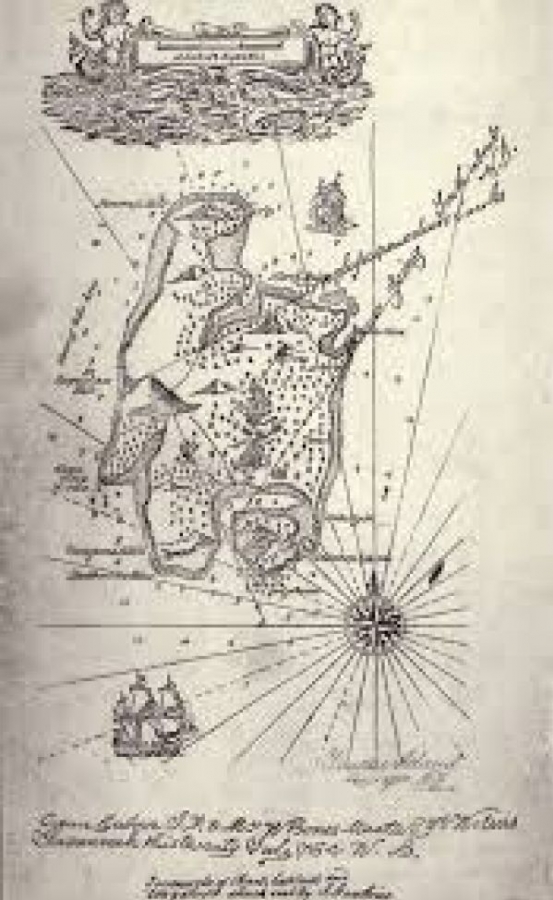
Treasure Island
In the introduction, Stevenson addresses a “hesitating purchaser”, inviting him to buy the book, > if sailor tales (told) to sailor tunes, storm, adventure, heat and cold, if schooners, islands, and maroons, and buccaneers and buried gold, and all the old romance, retold exactly in the ancient way, can please the wiser youngsters of today, as they pleased me when I was a boy . These words, whose charm in the English language is difficult to express in Italian, encapsulate the essence of a masterpiece: a great adventure novel that also aims to be instructive for the young, drawn in by “entertaining hours” of reading. Entertainment and morality, fantasy and education, exotic voyages and bourgeois solidity converge admirably, achieving a literary feat never equalled by other writers. The balance would be perfect were it not for the meddling hand of the pirate Silver, the personification of the dark glamour of evil. The author imagines that the protagonist, a boy named Jim, is asked to recount, “keeping nothing back but the bearings of the island”, the events that led to the discovery of the treasure. And Jim does so from the very beginning, from the moment a brooding sea-dog, who went by the name of the captain, arrived at his father’s inn. A man of few words, when drunk he would tell dreadful tales of hangings, great storms, treachery, and sailors cast overboard as punishment (“walking the plank”, literally walking on a plank). Yet above all, what terrified young Jim were the verses the man loved to sing under his breath: > fifteen men on the dead man's chest, yo-ho-ho, and a bottle of rum! , a refrain that agitated the captain just as he was terrified by the thought that a seafaring man with “one leg” might turn up at the inn. Jim is still a child; his nights are haunted by nightmares born of the terrifying tales, the mysterious song, and the ominous one-legged man. Though terrified, he was forced to summon all his courage to save himself and his mother from a band of pirates attempting to steal the treasure map from the captain. On a stormy night, abandoned by the frightened neighbours, alongside the lifeless body of the captain, Jim displayed the qualities that would stay with him throughout the novel: audacity, intelligence, and presence of mind. Not only did he bring his mother to safety, but he also managed to secure possession of the map. The boy then recounts the expedition to Treasure Island. The carelessness of Jim’s friends—the village doctor and a country squire—results in a crew that is largely untrustworthy, made up of shady characters or weak personalities easily swayed by the prospect of easy riches: the fatal lure of evil. Worse still, Long John Silver is hired as ship’s cook—a man who, as fate would have it, has only one leg. Jim suspects he might be the very figure feared by the captain, but > I thought I knew what a buccaneer was like—a figure very different, in my eyes, from this clean and pleasant gentleman.... very tall and strong, with a face as big as a ham ( a face as big as ham > ), plain and pale, but intelligent and smiling... under his left shoulder he carried a crutch, which he managed with wonderful dexterity, hopping about upon it like a bird . From the outset, an ambiguous bond forms between Jim and Silver. The wordplay, the flattery, the professions of friendship, the anecdotes of ships and sailors—accompanied by knowledgeable and seasoned explanations—win over the boy, captivated by the harbour, the sea, and the maritime world. Be that as it may, Jim is shrewder than the heedless adults. En route to the island, he discovers Silver’s plot and reveals it to his friends, saving their lives. Then, boldly, he ventures inland and stumbles upon a man abandoned for years in this wild wilderness, far from civilization: a character who will prove pivotal in overcoming the pirates. Even more daringly, Jim sets out alone in a frail coracle to recapture the ship, which is poorly guarded by the pirates. The scenes of this exploit, which will forge the boy’s character forever, are among the finest in the novel. The stormy sea, the rocky coast teeming with giant shellfish, the depiction of the fierce buccaneers attempting—and failing—to kill Jim: all these elements evoke a hostile world while serving to highlight the boy’s steadfastness. The true peril for Jim is fear, which he continuously overcomes, growing steadily stronger and more mature. Yet the final ordeal he must face to achieve full adulthood is the most daunting. Taken prisoner by Silver—who nevertheless saves his life—Jim witnesses the pirate’s double game: on the one hand pledging loyalty to Jim’s friends (those who embody order and justice), while on the other ready to deceive and betray, just as he betrayed his fellow buccaneers whom he dragged into mutiny. The boy is fully aware that Silver is a cunning and insidious liar, yet he cannot help feeling a stir of affection for the cook. > Certainly he took no pains to hide his thoughts; and certainly I read them like print.... in the immediate nearness of the gold, all else had been forgotten... and I could not doubt that he hoped to discover where the treasure was, find it, and aboard the ship, under cover of night, cut the throat of every honest person... but my heart was sore for him, wicked as he was, to think on the horrid perils that surrounded him, and the shameful noose that awaited him . In the end, however, Silver saves himself, even making off with a small stash of the treasure. Jim and his friends are only too glad to be rid of him and to return, safe and wealthy, to civilization. > To my inexpressible joy, the highest mountains of Treasure Island dissolved into the blue curves of the sea . Alongside the theme of adventure, Stevenson’s tale is many other things: a *Bildungsroman* of the journey into adulthood; a “swan song” of maritime England, which, now secure in its empire, looks with distaste upon the perils of the sea that nonetheless granted it power and wealth; nostalgia for a tranquil world, identified with bourgeois, urban society; and the indulgence of a great writer trying his hand at a canting, somewhat archaic English. There is no doubt, however, that Stevenson returns to a theme dear to him: the fascination of evil. The virtuous gentlemen set off in search of a treasure that was the fruit of theft, plunder, and violence. Silver is villainous, yet he saves himself and ends up rich as well, while his comrades are killed or marooned on the island to die of privation; and this perhaps because the cook assumes the guise of the “clean and pleasant gentleman”, the educated man—after all, he could belong to the very same caste as the doctor and the squire. What lesson, then, does young Jim draw on his path to adulthood? The language, the vocabulary, and the syntax are an essential component of the book’s appeal, making it challenging to read in English and demanding to render effectively in translation. *Treasure Island* belongs to that category of great, somewhat timeless books that nevertheless risk slipping into oblivion, rather like our own Gadda. And yet it is the writing itself that makes it an “inexhaustible treasure” of discovery, suited to readers of all ages. Why read it? Read it, read it, read it—read it unceasingly.
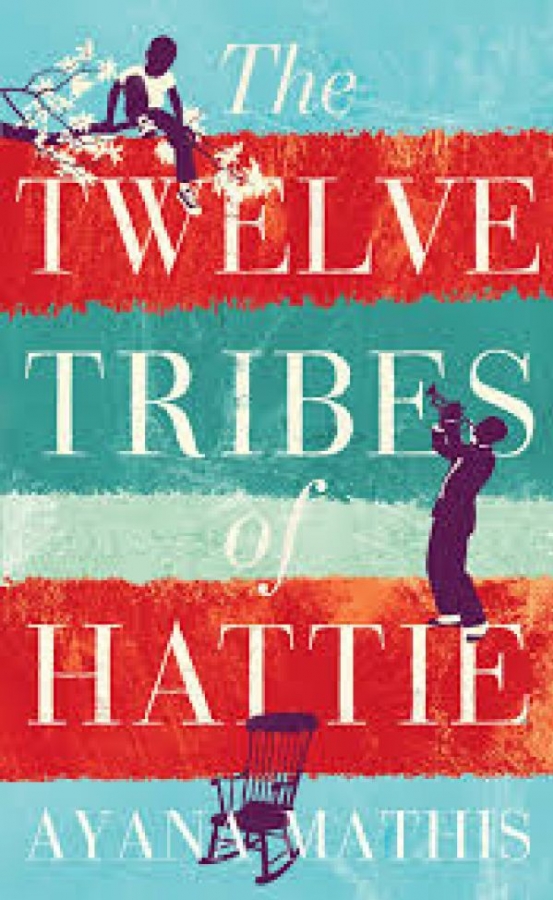
The Twelve Tribes of Hattie
> Fate had brought Hattie out of Georgia to bear eleven children and keep them alive in the North, but she herself was only a child, profoundly inadequate to the task she had been given . She is a Black woman; she left a land of segregation only to find herself in a degraded, impoverished, solitary, and marginalized urban periphery, yet she is determined not to return to the South and to raise her children against all odds, beyond her own strength, beyond her very capacity to love. The story begins in 1928, when sixteen-year-old Hattie has just given birth to twins. The cold, malnutrition, and the lack of medical care and medicine lead to the infants' deaths. > Oh, their skin was so soft! She felt their death like a mutilation in her own body : a wound that leaves her like > a lake of ice, thin and smooth, beneath which nothing could be seen or known or > a long January afternoon, the trees are always bare and there is not a single flower . Had Hattie been capable of loving more, of worrying less about keeping her children alive, would their lives have been better? The novel revolves around this question, and the author explores it with great skill by recounting episodes from the lives of the eleven children over a span of fifty years, up to 1980. After the dramatic episode of the twins' death, the narrative continues: Floyd, the eldest son, discovers his homosexuality; Six, another son, severely burned as a boy, finds his calling as a preacher in a Protestant church, but reveals himself to be a false and hypocritical man. The narrative then returns to Hattie to tell us about the only daughter born out of wedlock, the fruit of a brief and unhappy love affair, and about Ella, whom Hattie decides to give away to a sister in order to offer her a better future than that of her siblings. In the subsequent chapters, Alice's existential void takes center stage: she has married well and lives in an affluent home, but is condemned to a fragile survival due to her separation from Billups, the brother to whom she is deeply attached. Franklin, another son, has been abandoned by his wife and in some way courts death in Vietnam. With the final episodes, narrative tension mounts. Another daughter, Bell, has severed ties with Hattie ever since the latter discovered she had slept with an old lover of hers; yet Bell did so because as a child she had seen her mother with that man and she was so > beautiful and happy that an afternoon full of light was pale by comparison (...) whereas Hattie had always been stern and angry with Bell > . Only in the hospital bed, where Bell is admitted with tuberculosis, do mother and daughter find each other again, but even in this circumstance, Hattie had that same stern expression, in which Bell saw tenderness, Hattie's tenderness, which was always harsh > . Finally, we witness the madness of the youngest daughter, Cassie. Hattie and her husband, now elderly and frail, are forced to have her committed to a psychiatric hospital. As they take her away, Hattie sees in the rearview mirror her granddaughter, Cassie's daughter, running after the car, calling out and trying to stop them. She knew Cassie would not have wanted to be seen by her daughter at her worst. This was Hattie's kindness. With sorrow she parted daughter from granddaughter." The lives of Hattie's children are all in pieces, shattered because they never received that maternal love they so desperately needed. On the other hand, the amount of love a parent can give is finite; in Hattie's case, her social circumstances were far too wretched to leave her with any energy to devote to her children, beyond what was spent keeping them alive and preventing them from dying as the twins did. Too much suffering can only be endured by steeling oneself, by becoming hard and strong! The novel carries a powerful social dimension, yet it assumes a universal significance that transcends the specific plight of African Americans. The author addresses parent-child relationships, the difficulty parents face in understanding that material well-being is not enough, that there is something more that must be given: attention and affection. The failing of Hattie's tribe—and of children in general—is the inability to appreciate parental devotion, the tenderness and love that parents so often cannot or do not know how to express. The book is exceptionally well-written, with a gripping narrative pace and remarkably well-drawn characters. In her fateful misery, Hattie is a figure out of Greek tragedy, an African American Medea, harsh yet protective, difficult to forget. The author acknowledges her debt to Toni Morrison, yet Mathis's style is more straightforward than that of the great African American writer, just as her characters are more firmly anchored in their specific social condition. The novel displays a lucid narrative realism, a rich yet non-idiomatic vocabulary, and a classical, almost textbook syntax. Why read it? Dramatic, deeply compelling..