Finished reading on: July 19, 2010
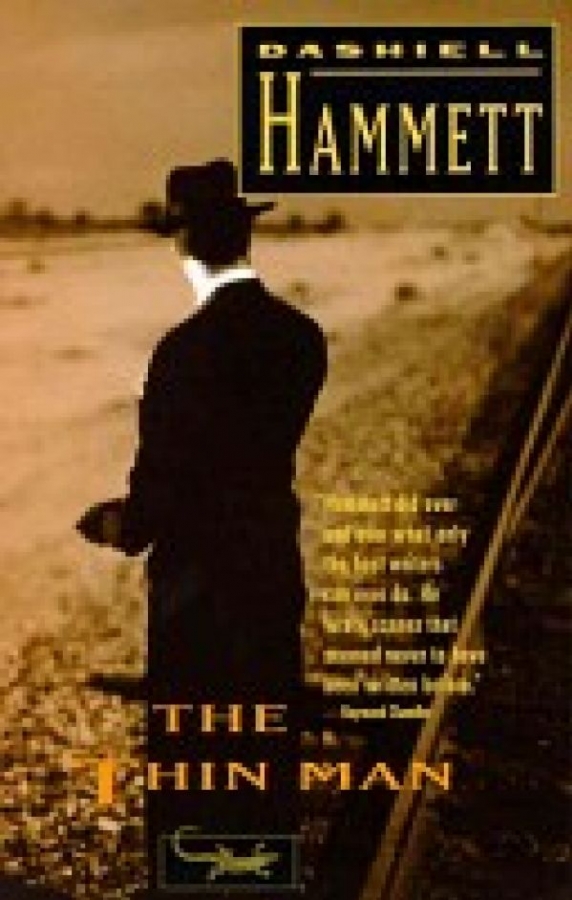
The thin man
AI Translation Notice: This review was translated from the original Italian using artificial intelligence. Book quotes and excerpts are translated interpretations and will not match the author's original English phrasing or official published translations.
The Thin Man (generally translated into Italian as l’uomo ombra) is a wealthy inventor who disappeared a few days ago, just as his secretary is murdered.
These two events set in motion the classic detective story: a famous former detective (Nick, the first-person narrator) is in New York with his wife, Nora, and finds himself reluctantly drawn in by the inventor's family (his ex-wife and two children, a spoiled girl and an eccentric young man) and the missing man's lawyer.
One cannot recount the plot of a mystery novel, nor its ending, of course.
The story unfolds, light and shrewd, around Nick and Nora—the latter seemingly a minor character, but in reality an exceptional foil: willfully detached, ironic, and patient.
Her view is that a detective should be able to find anything, even a piece of duck in an overcrowded plate of food.
Then there are the inventor’s relatives: greedy, selfish, indifferent to the fate of the missing husband and father; “Aren’t they perhaps the first of a new breed of monsters?” Nora wonders.
The detective story and its characters also serve as a pretext for a portrait of 1930s America, battered by the stock market crash that is not yet perceived as the profound societal upheaval it would eventually become: people continue to drink heavily, frequent nightclubs, and believe that the money can just keep circulating.
The strength of Hammett’s novel is undoubtedly its narrative style.
It is crafted from tight dialogue and concise sentences, all relying on a masterful use of verbs—often phrasal—characteristic of colloquial speech, though they never slide into slang.
One gets the impression that Nick is in a rush, that the action moves too fast to afford lingering over descriptions and in-depth character exploration.
Or is it boredom that pervades the protagonist, driving him to race through life?
Why read it? It is a great classic of the detective genre, but it is also an incisive depiction of a society in crisis—one in which, however, people still manage not to be sloppy.