
Mansfield Park
A ten-year-old girl, a poor relation, is taken in by her uncle, Sir Thomas Bertram, a wealthy landowner and an influential member of parliament and the community. From the very beginning, the rules must be made clear: > without depressing her spirits too far, to make her remember that she is not a Miss Bertram ; and Fanny Price lives up to expectations: small for her age, without any particular beauty, exceedingly timid, bashful, and retiring, > the consciousness of being a poor relation grew hand in hand with the conviction that for a creature as insignificant as herself it was only right not to be happy . In a conversation with her cousin Edmund, with whom she strikes a chord from early adolescence, Fanny states: > I can never be important to anyone; what should prevent it? (asks her perplexed cousin), everything, my situation, my lack of judgment, my plainness . Yet it is precisely this loneliness, this feeling of being an outsider, of always having to be mindful of decorum and social norms, that helps forge a strong, independent personality, steeped in steadfast ethical values. None of this causes her to lose her "bearings" when the entire family allows itself to be swept away by the allure of the theater; taking advantage of the absence of Sir Thomas, away for an extended period on business in the West Indies, they decide to stage a then-famous play, *Loverʼs Vows* (*Lovers' Vows*). It is a period of "general madness," as Edmund will later call it, in which everyone steps outside the rigid social roles to which they must adhere, to assume the guise of the various characters in a play considered licentious at the time for its plot and dramatis personae. The only one who obstinately refuses to take part is Fanny; this allows her to observe the behavior of the others, and in particular that of Edward Crawford, a brilliant young man who shamelessly courts Fanny’s elder cousin, despite her already being engaged. Upon Sir Thomas's return, everything appears to return to normal, with Fanny more highly regarded by her uncle for the virtuous demeanor she maintained throughout the "general madness." We arrive at a turning point. Up to this moment, Fanny appears as a somewhat prudish girl, still waters, even slightly opportunistic and subservient; her true personality will emerge fully when she must confront a grave danger for someone so independent: a man seeks to decide her fate. Edward intends to "conquer" Fanny; accustomed to being pursued by women, he has found one who keeps him at a distance, and all of this intrigues him. It may be a whim, yet the man appears to have serious intentions: he is generous, affable, and through his connections he has arranged for Fanny’s brother to be made a naval lieutenant; he is an eligible match who would provide wealth and security to the impoverished girl. Yet she, now eighteen, cannot accept him. > She was feeling, thinking, trembling, about everything; agitated, happy, miserable, infinitely grateful, enormously angry. (...) No, no, no, she cried, hiding her face, all this makes no sense, (...) I will not, I cannot bear it. I must not listen to such things. No, no, do not think of me. But you are not thinking of me. I know well that all this is nothing . If she manages to withstand Edward's assault with ease, it is far more difficult to defy her uncle. Sir Thomas, bolstered by his authority, attempts to persuade Fanny; astounded and indeed angered by her lack of gratitude and respect, he runs up against the girl's categorical refusal. > With eyes intently fixed on one of the windows, she listened to her uncle in the greatest perturbation and dismay . And to her uncle’s bewildered question regarding the reasons for her refusal, Fanny's answer is simple yet revolutionary for the era: > I cannot love him, Sir, well enough to marry him. (...) Have you any reason, child, to think ill of Crawford’s character? (asks the uncle kindly). No, sir, (...) and she would have liked to add, but I have of his principles, and her heart failed her to tell the father of Crawford’s misconduct toward her cousin. Fanny’s troubles are not over. First she must face Edmund, and he too attempts to convince her; then she is sent for several months to stay with her parents—a ploy by Sir Thomas to show her the wretched social conditions in which she might live in the future, should her uncle's support be withdrawn; it would be wise of her to accept Edward's offer, a marriage to a wealthy young man. The matter resolves itself: the play was not merely an interlude of "general madness"—it unleashed the forces lurking beneath the rigid surface of bourgeois life. Sir Thomas’s family falls apart; specifically, the cousin abandons her husband and elopes with Edward. For Fanny, the story has a happy ending: she returns triumphantly to Mansfield and marries her cousin Edmund. Approaching the novel from Fanny’s point of view is perhaps an obvious and reductive perspective, given the numerous characters, the underlying social issues, and in particular the role of the theater within the narrative, its demonic and liberating function: a theme that has drawn the attention of most critics, to the extent of claiming that it would be impossible to read the book without being familiar with *Loverʼs Vows*. Beyond the historical context, the question remains remarkably relevant today: how profoundly can an eighteen-year-old’s experience be shaken? Fanny’s tribulations undoubtedly strengthened her, bestowing upon her the character that allowed her to govern her own destiny; but is all this just? Ought the girl not to have been protected, granted the opportunity to grow up peacefully? These are the questions that keep the novel relevant today. The novel is very long and does not always sustain its narrative pace; the prose is typical of Jane Austen, intricate and complex. To be appreciated, the book must be read with care and patience, seeking its value in the details, in the unexpected and ever-incisive insights into character psychology, in the spirit of independence that animates the entire work, and in the sharp, unerring judgments on humanity and society. Why read it? It is somewhat long, but well worth reading, with patience and care.

Matterhorn
The novel is set in Vietnam and recounts the dramatic ordeal of a company of the American military, forced first to garrison an outpost in the middle of the jungle, then to abandon it when deemed useless by military command, and finally to retake it in a bloody battle. Matterhorn is a mountain, a circumscribed territory, a microcosm that allows the author (a highly decorated former Marine) to narrate the absurdity of war and the perverse mechanisms that sustain it. And he does so from the perspective of the soldiers, all very young. In war, a soldier is nothing but > the ash of a cruel game... nothing more than a collection of empty events that will end up as a faded photograph above his parents' mantelpiece. They too will die, and relatives who do not know whose photograph it was will throw it away . In war > the people one loves will die to give meaning and life to what was always thought to be senseless words, a language of death . The novel is structured in three parts, which can also be interpreted as a kind of military life path of a young man, still a student: from his initiation as an officer to his forging in the epic struggle against the enemy, down to existential despair and the loss of the only bond that holds value in war: friendship. Mellas is a nineteen-year-old officer who, as dictated by an absurd military tradition, is sent to the front despite his inexperience. Mellas must make decisive choices for his own survival and that of the soldiers entrusted to him. They move through a hostile environment, amid fog, jungle, aggressive insects, and ferocious beasts. The enemy is invisible, and one often fires without knowing whether anyone is truly there or if a target has been hit. Yet the young officer is never alone, for the commanders—comfortably safe, drinking and smoking—hound him over the radio, demanding his position, the enemy body count (often fabricated to pacify them), and the reasons why he does not act with greater resolve. > Already weary from lack of sleep, Mellas was now fighting the physical exhaustion of hacking a path through almost impenetrable brush, climbing muddy slopes to gain a ridgeline, to search for a path, a trail. He was drenched in both sweat and rain. Strain, Weight, Flies, Cuts. Vegetation. He no longer cared where they were or why.... (still) three hundred and ninety-nine days and then stand up and walk away . Yet Mellas, too, is seized by ambition, by the desire to advance his career. He volunteers to go on patrol with a few soldiers. Deep within the dense tropical forest, they finally encounter a Viet Cong fighter, who is mortally wounded. He is a young man, just like him and his comrades. Terrified, he begs for help, but Mellas knows that the only real mercy would be to kill him rather than leave him as prey for the tigers. He cannot bring himself to do it and returns to the outpost in tears. He cannot accept that this is what war is, and > in doing so he opened himself up to the pain of seeing thrown away the bonds tying those slain enemies to those who loved them: mothers, sisters, friends, and wives. Command has decided that the company must abandon the outpost and reach another location as quickly as possible, still deep in the jungle. And the Marines are forced into an exhausting march, dragging behind them the wounded and even the corpses of fallen soldiers—one mauled by a tiger, another killed by a strain of malaria found only in that specific region of Vietnam. Because they failed to reach this new outpost—every bit as useless as the last—within the allotted time, the company is designated as an emergency reserve for the front’s most precarious sectors. Mellas wants to protest such an unjust decision, but his friend Hawke reminds him that one must play politics—not for one's own sake, since they are merely reserve officers after all, but because command, out of spite, might withhold the helicopters needed to resupply companies at the front and evacuate the wounded and the dead. The helicopter is a weapon of blackmail! In the novel's second part, Mellas's company is sent to retake Matterhorn, now occupied by the enemy. Military command does not know how many Vietnamese there are, but it does not matter. A heroic feat must be performed to cast the regiment’s senior officers in a favorable light and advance their careers. The company finds itself embroiled in a horrific battle. It is an epic narrative, a kind of *Iliad*, complete with its heroes and martial episodes. What drives the American soldiers is certainly no ideal (why are we here? the soldiers ask themselves; does Vietnam have gold, oil, or some other raw material?). What moves them to extraordinary acts of valor is brotherhood and rage: saving their comrades, recovering the wounded or at least the dead; fighting with the conviction that their true enemies are the very men who led them into this butchery. And then there is the taste of killing for killing's sake. Tension and fear forge a bond between enemies, who are as if bound together in a web of violence and death. In the third part of the story, Mellas is wounded in combat and consequently sent to convalesce. Yet upon his return, he discovers that during the lull, the company has been gripped by the racial strife between whites and blacks that plagues American society—a conflict that had temporarily vanished during combat operations. The solidarity and friendship forged in combat merely suspend social and racial rivalries. War is not a moment of genuine change; it only habituates one to violence. Indeed, his friend Hawke is killed in an attack orchestrated by a faction affiliated with the Black brothers. Nothing truly changes; they are merely shadows, > moving through this landscape of mountains and valleys, changing the character of things as shadows move but leaving nothing changed when they leave. Only the shadows themselves can change . War triggers an individual transformation, not a collective one. It is undeniably a war book, one in which the epic element prevails. Yet it would be reductive to view this novel merely as an account of the Vietnam conflict, a sort of prose poem, a modern *Iliad*. It is not merely that. It is an indictment of war. Narrating it from such a circumscribed space—Matterhorn and its surrounding territory—already allows the reader to enter the mundane yet tragic reality of individual men's experience, shedding the overarching, particularizing frame of the Vietnam conflict. It speaks of war—of any war. Then there is the figure of Mellas, undoubtedly autobiographical. The young man refuses to accept the inexorable laws of military life and war. Yet he rejects them not out of nostalgia for civilian life, which for him, as for the others, is already considered forfeit. He refuses to accept the futility of the decisions, the gratuitous suffering inflicted upon the soldiers, and the killing of enemies—unknown to him, yet fellow human beings with lives back home, young men who also had a future. It is the chronicle of the tragedy of all wars. The book is very long, meticulously detailed, and at times slips into reportage. By the end, one grows somewhat weary of so much slaughter. Yet this is perhaps the author's very intent: to sicken us with war. Why read it? It is a magnificent war book.
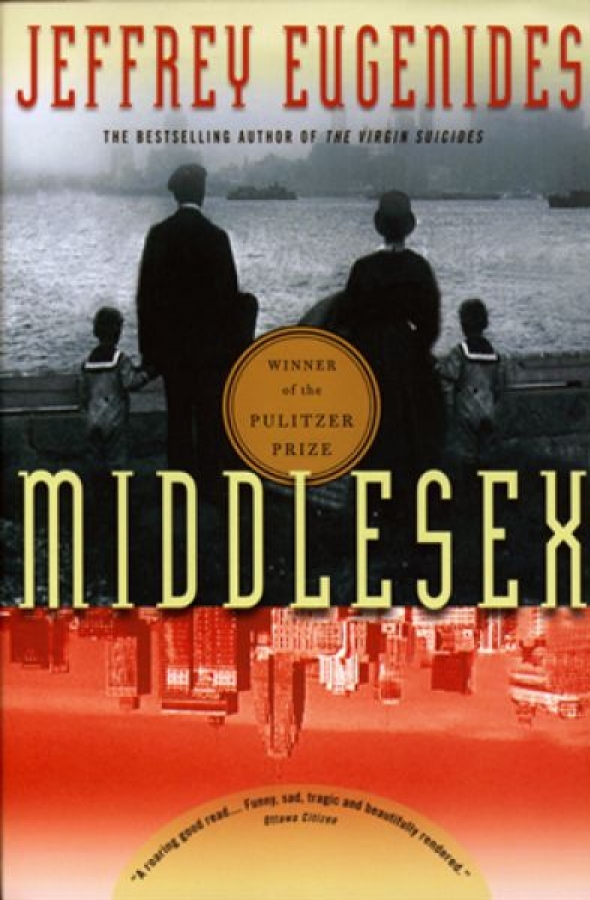
Middlesex
The book recounts the story of Callie Stephanides, born with female characteristics that evolve into distinctly masculine traits with the onset of adolescence. Sexual ambiguity, stemming from a genetic trait, determines the life of the protagonist, who is unable to accept himself—a male with underdeveloped sexual organs—until the very end of the novel, which chronicles several generations of his family. The novel can be divided into three parts: the saga of the grandparents, who fled to America from a Greece besieged by the Turks; the parents' story, followed by Callie’s childhood as a girl and young woman; and finally, the discovery of this sexual ambiguity—in truth, long suspected by the protagonist—leading to the decision to live as a male and the flight from the parental home. The best part of the novel is undoubtedly the first, as the narrative subsequently loses its evocative power and momentum, becoming increasingly tedious and predictable. The novel revolves around two fundamental themes: the ambiguity of individual identity, for we can embody multiple individuals and cultures all at once; and genetic inheritance, in the sense that we are what the evolution—biological included—of our family has somehow determined. Environment, life’s vicissitudes, and the people one encounters are all crucial factors, but what leaves the deepest mark is our history, for which we bear neither responsibility nor blame. In a historical period where every affliction is traced back to behavior, the book offers instead a return to a comprehensive view of the individual’s inherent traits. From this perspective, the novel proves superficial when called upon to describe the protagonist’s turning point, wherein he decides to reject the doctor’s attempt to force his nature toward the feminine and instead embrace a new life as a male. What impels him in this direction? How can he so effortlessly abandon a world of feelings and behaviors that had governed his childhood? Is cutting one’s hair enough? The novel fails to address any of this, and the family saga seems to prevail as the underlying narrative focus, overshadowing the protagonist’s experiences and inner life. Perhaps this is why the pursuit of a cultural identity (the Greek heritage blending with the American) appears far more pronounced than the sexual and individual one, which ultimately feels like little more than an expedient device to render the novel more alluring.

Midnight's Children
Can "a person's life be the mirror of a country"? To this question Rushdie responds not with a historical-biographical novel (the classic story of a family intertwined with that of a nation), but with a fantastical, imaginative, and astonishing tale. The protagonist is born in Bombay at midnight on August 15, 1947, the day of India's independence, but also of Pakistan's separation: the so-called "partition." And through this coincidence he has been mysteriously "tied to history" both literally and metaphorically, both actively and passively. Duality is the guiding thread of the narrative, of the protagonist's life as well as of the vast Indian subcontinent, characterized precisely by interdependence and diversity at once. The author imagines that the protagonist, Saleem Sinai, narrates his family's story and his own up to 1984, when Indira Gandhi was assassinated. Saleem's grandparents are Muslims originating from Kashmir, the "mother" of Indian Islam. His grandfather, a Westernized doctor, had been called to treat his future wife, permitted to examine only parts of her body, which remained covered out of modesty. He had therefore fallen in love "in pieces." It is a primary metaphor that recurs frequently throughout the narrative: that of fragmentation. Just as the > ghost of that perforated sheet condemned me to see my own life, its meanings and its structures, in fragments as well , the detachment of Pakistan weighed like a curse upon the new nation, leading to an endless conflict with India. Saleem's grandparents have a daughter who, after her marriage, moved with her husband to Bombay in India, where Saleem was born. At the moment of birth, the midwife swaps the couple's real child with Saleem, who thus usurps his place as a well-to-do child, while the other is destined for poverty. Does independence, then, bear the mark of betrayal? On the day of Saleem's birth, a thousand children were born in India. All possess extraordinary powers, and Saleem has the incredible faculty of communicating telepathically with them all: that is, he manages to forge in his mind an interdependence among distant children with entirely different languages and customs. The mystery of this great country is metaphorically fulfilled—constituted, at the moment of independence, by over five hundred states and a religion, Hinduism, made up of thousands of local deities. How can a country so vast and so fragmented hold together? In 1966 Nehru died, ushering in the era of Indira Gandhi, who introduced authoritarian rule culminating in the phase of the so-called Emergency, when she instituted an outright dictatorship. Saleem's family moves to Pakistan, where they hope to be safer from discrimination and violence against Muslims. Here, strangely, Saleem loses his telepathic powers (has Indira destroyed the unity of the country?). He enlists in the Pakistani army and goes to fight in Bangladesh against the Indian army. Having deserted the army, by then in total disarray, and after hiding in the jungle (a metaphor for the abyss into which India had fallen?), he flees to India, where he marries, lives in a village of acrobats and musicians, and takes up political activity, notably alongside a snake charmer. He seems, perhaps, to have found his path, when Indira Gandhi's crackdown erupts and Saleem discovers that he is one of the few surviving children born on August 15, 1947, > because it is the privilege and the curse of midnight's children to be both masters and victims of their times, to have no private life of their own and to be sucked into the cauldron of the multitudes, and to be unable to live and die in peace . Alongside the bond between personal life and national history, the novel also confronts more intimate themes: Saleem's ugliness (afflicted by an enormous nose), his incestuous love for his half-sister, and the nostalgia for childhood, which, nevertheless, "disappears, or rather, is killed." And the pride of childhood is precisely one of the most intriguing and universal themes of the book: the ability to hide and to travel in one's mind, through one's own imagination, creates a unity that does not exist in reality: > Wonderful irony; the Widow (Indira Gandhi), by bringing us here to separate us, has in fact brought us together! Children, something is being born here, in this dark time of our captivity; let the Widows do their worst; unity is invincibility! Children: we have won ! As happens all too often with Rushdie, the pursuit of baroque, wondrous prose overpowers the narrative, which seems to become—especially in the final part of the book—merely an occasion for "special effects." Already lengthy in its own right, difficult to follow—owing also to its references to Indian history—as one advances through the reading, one becomes completely lost in a deluge of words, neologisms, and complex, rhetorical syntactic structures. One must allow oneself to be carried away by the prose, yet at times it is a struggle to read on. Why read it? The core premise is truly remarkable, just as it remains a remarkably timely book for us Italians: the duality between interdependence and diversity, between unity and fragmentation, constitutes a defining trait of every Italian. Having managed to depict this in imaginative terms represents the fundamental merit of the book. As Paolo Bertinetti wrote in the daily newspaper *La Stampa* on August 12, 2017, the novel's greatest merit, > besides a very fine sense of humour and a pyrotechnic gift for linguistic invention, lies in dismantling the criteria of verisimilitude by placing reality and dream, realistic narrative and mythic invention on the same plane .
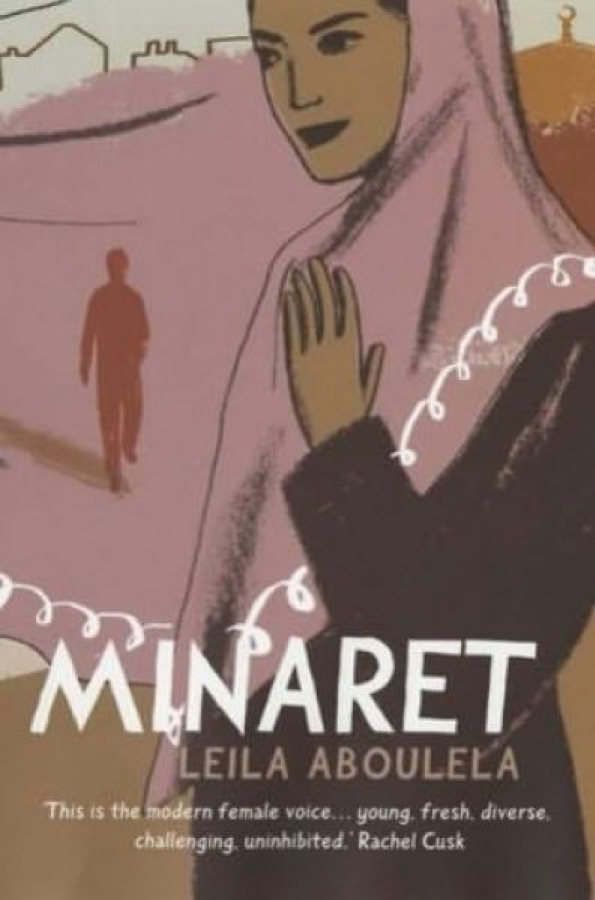
Minaret
Najwa is a Sudanese young woman, the daughter of a wealthy and influential family. Following a coup d'état in which her father is imprisoned and sentenced to death, Najwa moves to England with her mother and brother. Here, her life changes radically: her mother dies, her brother is convicted of drug use, and she is forced to work as a maid for wealthy London families, mostly of Arab descent. She crosses paths again with a Sudanese friend with whom she had had a flirtation in her youth, one she had ended because of his accusations regarding her father's corruption. It is a fraught and contradictory relationship: the young man often proves selfish, self-centered, possessive, yet at the same time fragile, while continuing to voice criticism of Najwa's father. In the wake of her mother's death, Najwa is drawn to the mosque community and begins to pay closer attention to Islam, which evolves into a profound faith as her relationship with her partner unravels. Moreover, faith also offers a way to reclaim her roots—no longer national, but religious. Years pass, and Najwa goes to work for a wealthy Egyptian family, where she begins a relationship with a young student, who is likewise steeped in religious ideas. Yet by now the social divide is insurmountable, and their relationship ends the moment it is discovered. The book operates on two levels. The first, and more superficial, is tied to the Muslim milieu. The quest for roots through religion is an ever-present theme, though one left largely unexplored, both in terms of analyzing the underlying motivations for the protagonist's ideological evolution (from a largely indifferent background to deep religiosity) and in the depiction of the mosque community. The second, far more substantial level concerns Najwa's personal plight: her loneliness, her attachment to her family, her yearning to recapture—if only vicariously—the tranquil world of her childhood, and ultimately her ill-fated encounters with men. Najwa's fragility and her desires are ultimately transcended through the very serenity granted by her rediscovered faith. This enables her to take the most painful and difficult step: giving the young student's mother the "key" to persuade him to leave Najwa. > She does not know, she does not know that he has his own frustrations and ideas of the world. She does not know that he is not an extension of her. I tell her. And by telling her I lose him. I give the key into her hands . In this way, Najwa forfeits the hope of a romantic and family life of her own, resigning herself to a vicarious existence, like a nun or an elderly aunt. The novel thus chronicles Najwa's inner evolution from the carefree days of adolescence through life's disillusionments to a restored inner balance—one fostered by faith, but above all by a growing awareness of solitude as a deliberate choice. It is beautifully written in a lucid style, devoid of rhetoric yet felicitously expressive. It is somewhat reminiscent of Nadine Gordimer, albeit less dense and complex.
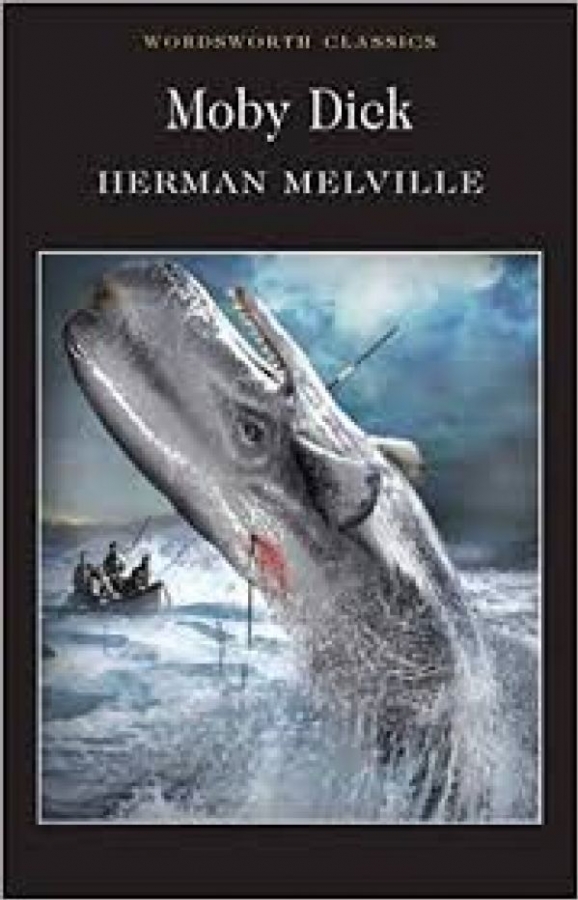
Moby-Dick
> Oh, the rare old Whale, mid storm and gale, In his ocean home will be, A giant in might, where might is right, And King of the boundless sea . This anthem closes a vast preamble in which Melville, like "a mere painstaking burrower and grub-worm of a poor devil of a Sub-Sub," compiles an extensive catalogue of citations on the Whale, spanning from the Bible to world literature. Self-taught and an insatiable reader, Melville seeks to forestall the accusation of being a mere chronicler of seafaring life. We must not fall into this trap. *Moby Dick* is the greatest sea novel ever written; and it is so because Melville truly lived the experiences he recounts. > I, Ishmael, was one of that crew. (...) With greedy ears I learned the history of that murderous monster against whom I and all the others had taken our oaths of violence and revenge . What misleads the reader is the pervasive, intense religious atmosphere; yet it could not be otherwise. For Melville, as for most of his contemporaries, the Bible permeates every facet of life: hence the metaphors, the reflections, and indeed the anxieties that define the novel. The narrative may be divided into four parts. In the first, the narrator and protagonist is Ishmael: still a youth, he resolves to ship aboard a whaler out of a vague yearning for adventure and knowledge. In the mid-nineteenth century, Nantucket stood as one of the premier American ports for fleets engaged in the sperm whale fishery; with a narrative style suspended between Charles Dickens and Edgar Allan Poe, Melville crafts a portrait of it that is simultaneously realistic and hauntingly evocative. One is captivated by the figure of Queequeg, a cannibal with whom Ishmael forges a profound friendship. The pivotal moment is the sermon devoted to the biblical episode of the prophet Jonah, swallowed by the whale by the will of God and saved by God alone. It is no myth; it is the truth, thundered to the faithful (sailors and the widows of men lost at sea), that they may know that salvation proceeds solely from faith, from the literal, devout reading of Scripture. He who flouts the words of the Lord is doomed to self-annihilation and damnation. > The world’s a ship on its passage out, and not a voyage complete; and the pulpit is its prow . At last, the vessel sets sail on a long voyage. > We found ourselves almost defenseless upon the hostile ocean. (...) Consider the subtleness of the sea; how its most dread creatures glide under water, unapparent for the most part, and treacherously hidden beneath the loveliest tints of azure. (...) Consider, once more, the universal cannibalism of the sea; all whose creatures prey upon each other, carrying on eternal war since the world began . (...) As this appalling ocean surrounds the verdant land, so in the soul of man there lies one insular Tahiti, full of peace and joy, but encompassed by all the horrors of the half-known life. God keep thee! Push not off from that isle, thou canst never return. > The second part introduces the novel's dramatis personae: the mates and the harpooneers, delineated in chapters bearing evocative titles: Knights and Squires > . It is an effective depiction, for what revolves around Captain Ahab, the monomaniac "protagonist," is essentially a feudal system. He looked like a man cut away from the stake. (...) His whole high, broad form, seemed made of solid bronze, and shaped in an unalterable mould, like Cellini’s cast Perseus > . Yet it is not his physical semblance that marks Ahab’s defining trait; it is his soul, shut up in the caved trunk of his body, there fed upon the sullen paws of its gloom > . A scene of mesmerizing power concludes this gallery of characters and constitutes a watershed for the entire narrative. Ahab reveals to the crew that the voyage's true quarry is the white whale: Moby Dick. Amid a crescendo of collective frenzy, only the first mate, the pious Starbuck, dissents, knowing as he does that it was Moby Dick who reaped Ahab’s leg. Vengeance on a dumb brute, that simply smote thee from blindest instinct! Madness! To be enraged with a dumb thing, Captain Ahab, seems blasphemous > . The pious Starbuck is right, the more so because what Ahab seeks is not mere vengeance; the captain repudiates his own destiny, even in defiance of God's will. They think me mad; I am demoniac, I am madness maddened!(...) The prophecy was that I should be dismembered; and—Aye! I lost this leg. I now prophesy that I will dismember my dismemberer. Now, then, be the prophet and the fulfiller one. > The third part chronicles the circumnavigation of the globe's oceans and the pursuit, slaughter, and flensing of the whales. It constitutes a monumental treatise on marine zoology, authored by a scientist enchanted by, if not enamored of, these great cetaceans. Only intermittently does the plot resurface, now narrated in the third person, so that it may cease to be the mere impressions of a boy and become the chronicle of a detached observer. Certain scenes remain indelibly etched in the imagination: the sharks ravenous for blood while the whale is flensed; the valiant Queequeg plunging underwater amidst the sharks to rescue a fallen shipmate who, like the prophet Jonah, has tumbled into the dark cavity of the whale’s cavernous head; and like a divine obstetrician, he, the cannibal, delivers his friend into new life, pulling him forth from the cranial vault. And what can be said of the enthralling Chapter 87, entitled The Grand Armada > , in which the whaleboats pursue a vast pod of cetaceans, complete with nursing dams and their calves? Equally arresting are the gams with other vessels, they too years into their voyages, aboard which one frequently encounters fanaticism and collective lunacy. After all, there is no folly of the beasts of the earth which is not infinitely outdone by the madness of men. (...) For, lurid-like, as the slaughtered monster slues you deeper and deeper into the panics of the herd, our whole panoply of reason falls from us; we live only in a delirious gasp > . At last, one arrives at the final section, an authentic tour de force. The White Whale is finally sighted: the desperate chase commences. A gentle joyousness—a mighty mildness of repose in swiftness, invested the gliding whale. (...) From each soft side, (...) from each bright side, the whale shed charm upon the sea > . With that very elegance, yet within a terrifying vortex, Moby Dick hurls himself upon the whaleboats, and upon Ahab in particular. Oh, Ahab, cried (the pious) Starbuck, it is not too late (...) to desist. See! Moby Dick seeks thee not. It is thou, thou, that madly seekest him > . What hast thou done, Ahab? How couldst thou contend with the great Leviathan? How couldst thou set thyself against the will of God, rather than surrendering to Him as did the prophet? Without ever losing sight of Melville’s principal design (to illuminate the whaling industry, so little understood and appreciated), *Moby Dick* lends itself to diverse interpretative lenses, and herein lies its modernity. One fruitful avenue of inquiry is to examine the novel through the prism of how humanity has depicted animals across literature and art. A fine study by Gianni Valente ( *Dall’arca di Noè a Moby Dick* > , Edizioni Blu 2004) provides compelling avenues of reflection for assessing the work. Ever since the Bible, our relationship with the animal kingdom has been fraught with ambivalence: symbols of vice and virtue > . We are all familiar with the sinister attributes of the biblical serpent, yet in numerous other passages of the Old Testament, animals bear a redemptive image: as the hart panteth after the water brooks, so panteth my soul after thee, O God > (Psalm 42:1). Animals serve as the expression of a wondrous, vital force; thus are they chronicled by Marco Polo, celebrated in *Orlando Furioso*, and delineated in the travelogues and cartography that accompanied the Age of Discovery. Animals are likewise the object of scientific, artistic, and moral inquiry (witness Leonardo da Vinci). Indeed, all these facets (emblems of vice and virtue, wondrous vitality, empirical science, and morality) converge within *Moby Dick*. The White Whale is an extraordinary monster, the supreme beast of Creation, an emblem of enduring fortitude and eternal solitude, a cruel and terrifying presence propelled by demonic fury. Simultaneously, the great sperm whale is anatomized, dissected with fastidious precision, the subject of dispassionate scrutiny. Viewed through the perspective of our relationship with the animal realm, *Moby Dick* is an unfinished project; it demonstrates the difficulty of establishing a harmonious footing toward our fellow creatures and toward nature as a whole. We project onto the animal our own rational constructs alongside our deepest phobias; we fail to apprehend it as an other > , endowed with an autonomous essence. It is an arduous text, and in many stretches, outright tedious. Its architecture is intricate, marked by an incessant shifting of narrative voice (Ishmael, the third-person narrator, the scientist > , Melville the declamatory orator, Ahab as Melville’s tormented conscience), and by an incessant layering of disparate registers—clinical, evocative, allegorical, and picaresque. The dense fabric of quotations, whose provenances are often vexingly difficult to trace, hardly eases comprehension. The prose is, naturally, laden with the nautical lexicon of the whaling fishery; yet this is not what renders the reading so demanding. Rather, it is the syntax—frequently tortuous and punctuated in a manner that arrests the cadence of thought. It must also be said that one has to let oneself go": surrender the impulse to decipher every nuance, abandon oneself to the evocative resonance of the phrasing, and pursue the musicality of its stride. Finally, the scientific and anatomical digressions regarding the whale are so frequent and protracted as to render the reading genuinely cumbersome; a word of advice: just as one did in one's youth with *War and Peace* and *Anna Karenina*, skip the pages outright, without the slightest pang of guilt. Why read it? It is magnificent; do not labor to absorb every word—heed your own instinct.
Morning in Jenin (every morning in Jenin)
"I wonder: is there, in the listener, / a place where my voice may rest? / A harpoon, / tiny and concealed, / to hold memory fast before it scatters." (from Francesca Mannocchi, “The Harpoon of Memory,” from the collection *Crescere, La Guerra*, 2026). Is it possible to anchor ourselves to something within, so as not to forget "the particles of blood-soaked dust and the sickly-sweet smell of decay exhaled by unravelling lives and desertified soils"? Is it right to "live within the serene depths of the sea, where cries and weapons cannot be heard, and the stench of death does not reach"? Amal, the protagonist, lives between these two sides of consciousness: a dilemma not of her choosing, yet one that ensnares her entire life. She was born into a happy family, in a Palestine glowing with olive trees and vibrant hues: an ancient society that weathered the various empires that dominated it, forever anchoring itself to the land, its genealogies, and its sweet, centuries-old narratives. "Amal with the long vowel means hopes, dreams, (...) we place all our hopes in you." So her father told her when Amal was still a child, but he added: "we come from the land, we give our love and toil for it, and it feeds us in return. When we die, we return to the land. In a sense, it owns us. Palestine owns us and we belong to it." Amal's life is punctuated by the tragic milestones of post-WWII Palestinian history: the Nakba (the catastrophe) of 1948, with the forced exodus of 700,000 Palestinians and the Jenin refugee camp, where up to 50,000 people were interned, and where Amal’s family was forced to live in the narrative; the Sabra and Shatila massacre of 1982, when several thousand Palestinians were slaughtered by Lebanese Phalangists under the compliant gaze of the Israelis, and where Amal lost her husband and her brother's family; the Second Intifada in 2002, when Israeli troops assaulted Jenin, massacring hundreds of civilians, and where Amal met her death. After the Nakba, Amal had the opportunity to go to the United States on a scholarship, resigning herself to being called "'Amy', Amal without the hope, (...) a word drained of all meaning. A woman hollowed out of her past." In her heart dwell the profound sentiments of longing and abandonment: longing for "the sun that embraced everything it touched while the sumptuous aroma of lamb and cumin dispelled anguish, (...) the air filled with joyous sounds from people drunk on the fruit of trees that had survived across centuries, piercing the fog of exile"; abandonment, through the estrangement from her brother Yousef and her childhood friend Huba, the inability to understand why her mother had never embraced her as other mothers did, and the yearning to see her missing father once more: "I closed my eyes and kept them that way for as long as I could, opening them only as much as was necessary to banish the images from my mind." Amal returns to Palestine, reunites with her brother, and reclaims the familiar sights, sounds, and colors of her people. She falls in love with Majid, marries him, and becomes pregnant. Everything is suffused with Love and a serene anticipation. This is mere months before the 1982 massacre, preceded by the Israeli army's siege of Beirut. As an American citizen, Amal can return to the United States, while her husband remains behind in Lebanon to lend his medical skills to hospitals in critical need; and it is there that Majid meets his death. Amal, once again "Amy," gives birth to a daughter. The Palestinian tragedy recedes once more into memory, yet it seeps deep into Amal's heart, barring her from bestowing Love upon her child. "God forgive me, the more she grew, the more I feared being close to her, touching her. I was afraid of passing on to her my icy hardness, that my touch might have hardened her, that it would be the wrong complement to her soft, unconditional tenderness. So, I fulfilled the duties of motherhood, containing the ardor of my love behind the cold walls of fear and long hours of work." Only a feminine sensibility could grasp the sheer depth of pain inflicted upon a refugee's heart by the loss of what is gone: one's homeland, one's culture, and one's loved ones. It is no coincidence that the author titles the final section *Nihaya* and *Bidaya*, with the seemingly contradictory subtitle "an end and a beginning." In Arabic, *Nihaya* means "end," and Amal knows that in returning to Jenin in 2002 she is going to meet her death, for this is her destiny, foretold by her father. *Bidaya* in Arabic means "the beginning of a story." During the Israeli siege of Jenin, "I kept my daughter sheltered in a dream entirely my own, falling in love with her as though I had just given birth to her anew. We spoke for nine days, dismantling the unspoken words of a lifetime. As death rained from the sky and bullets struck the outer walls of the house, Sara and I laid bare the grief and bitterness each of us held so dear, finding our shared sorrow for Majid despite, or perhaps because of, the terror we felt." And so, as the poet sang: "if in the twilight of memory we / should meet once more, / we shall speak together again / and you shall sing / to me a deeper song. / And if our hands should meet / in another dream, we / shall build another tower in the sky." The writer has struck a difficult balance between Grand History and the "small" stories of the human beings who are simultaneously its protagonists and its victims. We traverse the tragic fate of the Palestinian people, horrified and at once embarrassed as Europeans. The author does not shrink when forced to delve into the horrors of persecution; she does so almost like a historian, albeit an engaged one, and when she fears losing composure, she relies on the pen of a great journalist like Robert Fisk, who penned monumental reportage in his *Pity the Nation* (*The Martyrdom of a Nation*). Beside the dramatic events of "Grand History" lies the world of emotion: on one hand, that which is universal and eternal (such as the bond between mother and daughter); on the other, how such emotions are shattered by events unfolding beyond the pale of fundamental human relationships. Horror induces indifference in those who can keep their distance; for those trapped within it, however, grief leads to emotional desiccation, to a feeling of incapacity to bestow Love, to the dread of passing on one's own barrenness—the necessary armor—to someone untainted by it. And yet, one cannot withhold the truth from those one loves, for sparing the beloved means betraying them. In the relationship between Amal and Sara, one senses the author's own fraught experience, confronted with the dilemma of whether to shelter her daughter or make her part of her people's destiny. Within such an intense narrative, the father's friendship with an Israeli and Amal's reunion with her brother—abducted as a young boy and adopted by a Jewish family—feel redundant. Did the author wish to grant humanity to the "enemy"? Eighty years of war have inflicted suffering upon the Israeli people as well: one need only think of David Grossman's *To the End of the Land* (see the review on this site), but let each people bear the duty of mourning their own fate. The prose reflects the balance of the narrative. Shifting deftly from passages of intense lyricism to analyses of remarkable psychological depth, the language is rich in cadence, interweaving the musicality of Arabic with the resonance of English. The lexicon is played like a piano keyboard, with a harmonious and evocative command of words, particularly verbs—words consistently woven into elegant, fluid grammatical structures. It would be fascinating to know the linguistic gestation of this novel, especially considering the author's scientific background and how she came to write this book spurred by a surge of indignation—a cry that lends vigor to the entire narrative. If one truly feels something within, one can become a great writer without being one by profession. It is a welcome sign of hope, and a lesson for many Western—and Italian—authors! Why read it? It is a masterpiece, a stinging slap in the face to our timid and hypocritical selves.
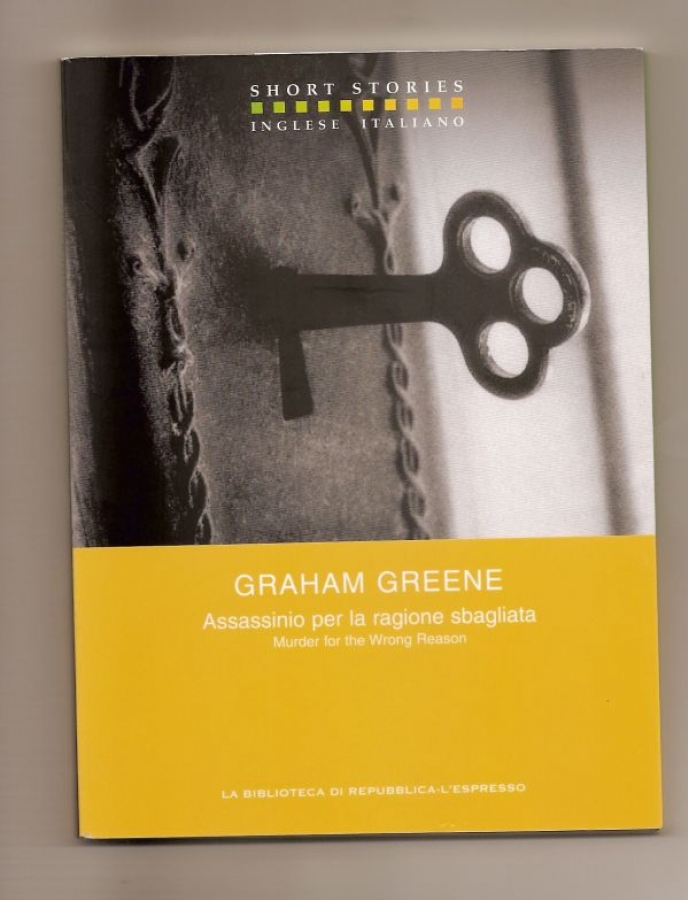
Murder for the wrong reason
This is a short story, divided into three chapters. In the first, the corpse is discovered and, as in classic detective fiction, the inspector arrives with his assistant. The author seems to take pleasure in reconstructing the dynamics, well-tested by crime literature, between the seasoned superior and the young officer. From the outset, however, certain peculiarities emerge. The inspector claims to have arrived too late to save the victim (did he know then that he was about to be killed?), who deserved, according to the inspector, to be murdered, being a blackmailer who had numerous affairs with women. Solving the case is difficult, he then adds, “as there are five hundred men, and other women, with a motive.” It must be said that the reader is left disoriented by the first chapter, sensing something unusual yet not quite able to grasp the direction of the story. The second chapter opens receptive to any development. The inspector visits the alleged killer’s house (and, tellingly, goes alone, without his assistant), and here the narrative turns into a continuous oscillation between past and present. The inspector addresses the suspect, who does not reply, reminding him of bygone events: the man had once been in love with a woman who ultimately chose the victim over him because he was wealthy and powerful. The story now abandons the order and rationality of a detective tale, increasingly becoming a sequence of images from the inspector’s mind. The memory of his life resurfaces: > a succession of images drifted through his mind, of days and nights of great passion, tenderness, and continuous peace. He forgot the days during which he had watched the slow disintegration of his own personality and corruption; he even forgot that he was Detective Inspector Mason of Scotland Yard . Yet the bond between past and present is like a mirror in which one is reflected, and through which one can view the present from the past and vice versa. At this point, the mystery grips the reader, and, as in all detective novels, the solution is simple: the inspector is the murderer. One realizes that the second chapter has conveyed the inspector’s thoughts, and that the entire sequence lasted only a few minutes. The third chapter details the mechanics of the crime as well as the evidence that pins down the murderer. A brief yet fascinating story, albeit a challenging read. First of all, the theme of reality’s ambiguity emerges, which only in death finds a consistency beyond imagination: “after all, everything was reduced to a biological fact.” Secondly, the story is a display of virtuosity, both in terms of narrative structure—capable of generating disorientation and suspense in the reader—and in its writing technique. The author readily resorts to idioms and vocabulary belonging to colloquial speech, which does not always make the text immediately accessible: this contributes to the mysterious allure of the story. Why read it? To appreciate the author’s narrative technique.