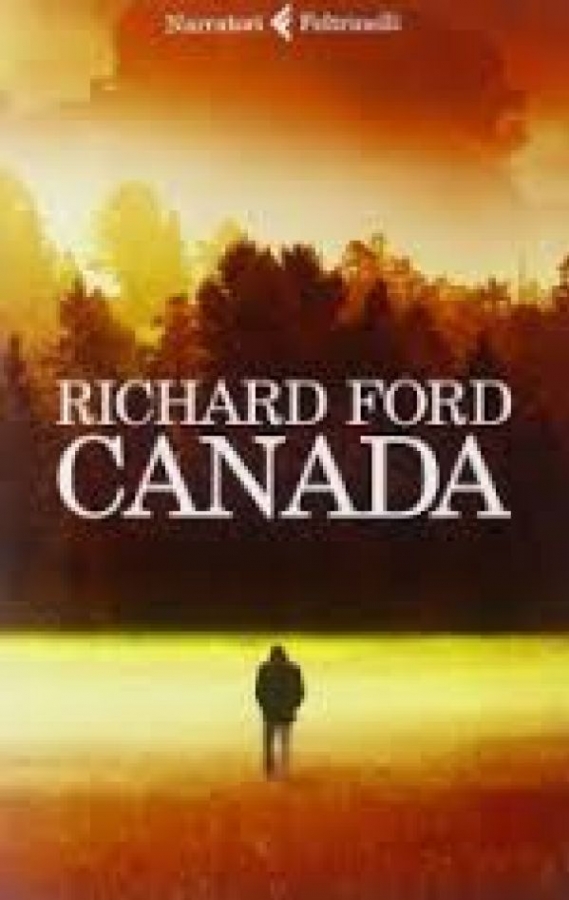
Canada
A teacher at the end of his career, married without children, with a wife who is an accountant by trade, decides to recount two pivotal events from his adolescence. Had he been—who knows?—an astronaut, a Silicon Valley adventurer, or simply a sensitive, and therefore fragile, person, he might have given us a tale less prosaic and intellectualized, yet rich in emotion and feeling; instead, the sprawling novel sets out to demonstrate how > the best thing to do in life, to survive, is to bear losses well. (...) the world changing around us does not care how I feel . The novel is divided into two parts. In the first, the setting is a small Montana town: an ordinary family, husband and wife, fifteen-year-old twins, a girl and a boy (our narrator-teacher). The father is strapping, amusing, the classic charmer: a former army officer who, after leaving the armed forces, chased far-fetched schemes, ending up in petty dealings skirting the edge of the law; the mother is slight, shy, introverted, and a dreamer. > The strange union of their ill-matched physical traits is always in my mind as one of the reasons for their tragic end: they were without question simply wrong for each other and should never have married . To the children, home seems normal, until the parents commit an incredible and unpredictable act: a bank robbery, following which they are arrested and sentenced to many years in prison. Why did they do it? What drove them to commit such an absurd act? Never mind the father, superficial and incurably optimistic, but why the mother, so sensible and on the verge of separating from her husband? > She might have felt not despair or terror or greater alienation (which would have been normal). But freedom. From all the forces that oppressed her. She might have concluded that this uncontrolled sensation came directly from the very qualities that isolated her. (...) This might have made her feel better than she had in a long time. The mother is undoubtedly the most interesting character in the novel, and it would have been worthwhile to investigate her further to grasp the full measure of her reckless act, which will lead her to suicide. Yet > my parents began to recede in my vision, as when you are sick and fever shrinks the world and stretches distances. My parents grew smaller and smaller until I was alone in the dimly lit kitchen, and they were on the verge of vanishing, almost disappearing . And indeed, in the novel's second part, the setting and circumstances are far removed from the still-adolescent world of the first. To escape the clutches of the authorities, a friend of the mother takes the boy to Canada, to a small town where her brother Arthur runs a hotel. Here, the narrative takes on an artificial cast, typical of a contrived armchair literary construct. The boy comes of age in short order (a coming-of-age novel?) and is drawn to the figure of Arthur: a cultured yet violent failed revolutionary who seems intent on assuming the role of mentor to the protagonist—a sort of *Great Gatsby*, a mysterious superhero, a failed and nonetheless arrogant intellectual. The friendship between Arthur and the boy ends abruptly when the youth becomes entangled in a murder. Arthur kills two people, and the boy is used, unbeknownst to him, to create a diversion and deceive the victims. And it is then that the protagonist realizes that the only possibility is to maintain life in a generally acceptable state, regardless of the borders crossed: like a puzzle, like a symphony, like > the game of chess, in which the individual competitors are part of a long, single enterprise that pursues a condition not of adversity or conflict, or defeat or even victory, but of an equilibrium underlying it all . It is a cynical and pessimistic conclusion, according to which, in order to survive—to avoid being overwhelmed and destroyed—one must not get involved; that is to say, one must not truly live. It is a dreadful novel, not merely due to its disproportionate length, but above all because it lacks tension, pace, and genuine psychological depth; the characters are stereotypes, mere pretexts for philosophical reflections that are, moreover, frequently impenetrable. The premise upon which the first part rests held real promise: an incomprehensible event upends everyone’s lives; parents can commit acts that alter their children’s lives, radically and for the worse. How often have we seen this happen! Yet the development of the idea disappoints through its absence of emotion, of real suffering. The second part is a series of clichés, of characters and settings that evoke literature rather than real life. What is Canada to the narrator-protagonist? An escape, an unreal country, the setting for his coming-of-age? We will never know, for the pointless digressions are far too numerous. Why not read it? It is long, prolix, tedious, and contrived.

Career Move
This is a short story in which two parallel narratives unfold. In the first, an aspiring screenwriter, forced to sell insurance for a living, desperately pursues a script reader to whom he has submitted his work. In the second, a poet, now famous and wealthy, is forced to endure futile meetings with publishing house staff and submit to demands for revisions to his poems. Regardless of the initial premise, the publishing world remains stupid, superficial, and arrogant, and the outcomes can be unpredictable: the aspiring screenwriter manages to have his work accepted in its entirety, whereas the renowned poet is forced to suffer alterations. The story might well have been interesting, but the style is so disjointed—riddled with constant narrative leaps and a spasmodic reliance on colloquialisms and neologisms—as to render the text arduous to read and, effectively, incomprehensible.
The Casual Vacancy
A successful author decides to abandon her genre to venture into other narrative territory. As often happens, this attempt turns out to be a resounding failure. Critics, however, have judged it very favorably: in the magazine *Internazionale*, the novel was awarded top marks, five stars. Did I fail to understand the book’s merits, or are publishing houses’ profit expectations dictating critical judgment? The core premise of the story is intriguing. We are in a small English town, perceived by its inhabitants as a «safe haven», where the respectable bourgeoisie believes it can live comfortably and peacefully, insulated from the problems of the modern world. A pity that, in the recent past, a major landowner sold a parcel of land upon which a council estate was built, whose social problems now negatively impact the town’s presumed well-being. Furthermore, an addiction treatment center is run on municipal property, with all the attendant disruptions that ensue. Well, the sudden death of a councillor—a man of deep social conscience and thus in favor of keeping the center—presents an opportunity to shift the majority on the town council, shut down the center, and transfer the council estate to the neighboring town, which might in turn be keen to alter its own political balance. A race ensues to claim the seat left vacant on the local council. One would have expected a narrative with a strong socio-political edge, replete with intrigue and potential plot twists. This is not the case. The story plods wearily along through the accounts of the various families involved: marital relations, parent-child dynamics, the school environment, and so forth. In the first part of the novel, the reader gets lost among the characters, all of whom seem to carry the same weight in the narrative structure. Later, the book becomes less tedious and more sharply delineated, as certain characters—mostly the «children»—post defamatory emails on the council’s website, not out of political motives, but to vent grudges and a desire for rebellion. It would have been an interesting idea, but this, too, peters out into nothing. Ultimately, the reader is left with a novelized version of *Desperate Housewives*, which wraps up—because every novel must come to an end—in a maudlin fashion, just enough to coax out a few cheap tears. The author writes very well, in prose that is at once elegant and modern. Even if one accepts the novel's psychological approach to social issues, it is baffling how generically such complex themes are handled, such as intergenerational relationships and youth in severely disadvantaged families. The weakest point is the narrative structure. First of all, the plot is scattered, fragmented, and devoid of action. How is it possible that such an experienced author was unable to give unity and momentum to the narrative? Secondly, the writer fails to establish a hierarchy of characters—key figures around whom the story can turn and through whom deeper psychological, existential, and social explorations might be developed. All the characters remain on the same footing, staying superficial and losing the reader across multiple narrative threads. Why not read it? It is tedious, banal, and pointlessly long.
Cat on a Hot Tin Roof (La gatta sul tetto che scotta)
The underlying theme is mendacity; the author develops this subject within the context of the family—the very social sphere that, more than any other, ought to foster mutual trust. For years, the members of this family have acted in apparent harmony; when, however, it is revealed that Big Daddy, the family patriarch and “authoritarian master-father,” is suffering from cancer, the impending death overwhelms the protagonists: does truth emerge from this sort of catharsis, or a new lie? As Tennessee Williams explains in the “Notes for the Designer,” the setting is the bed-sitting-room of a great plantation house in the Mississippi Delta; two bachelors, the former owners of the plantation, once lived in this room, and therefore > the room must evoke some ghosts; it is gently and poetically haunted by a relationship that must have involved a tenderness which was not common . It is the appropriate setting for a play > that deals with the deepest extremities of human emotion, and needs that softness as a background . The theatrical work unfolds in three acts. The protagonists of the first act are Brick, a former football player now turned alcoholic, and his wife, Margaret. The man refuses to have any relations with his wife after she betrayed him with his best friend—who died, perhaps by suicide, in the wake of the adultery. The loss of the only person who truly mattered to Brick has driven him to seek solace in alcohol. While Brick pursues the victimhood of “the charm of the defeated,” Margaret refuses to surrender: she is keenly aware that the family is about to fall apart, and she does not want her husband to forfeit his social and economic standing to his brother. Brick, deeply beloved by his parents, faces severe disadvantages regarding any inheritance: he is an alcoholic and, moreover, has not yet fathered any children, whereas his brother has six. In her long conversation with her husband—in truth a soliloquy—Margaret wonders what the victory of “a cat on a hot tin roof” might be: “Just staying on it, I guess, as long as she can...” but then adds that silence does not work, > locking the door and shutting oneself in a burning house in the hope of forgetting that the house is on fire . In the second act, we witness the confrontation between Big Daddy and Brick, between father and son. Here again, it is largely a soliloquy: Big Daddy does most of the talking, and we learn that this man—outwardly strong, resolute, and domineering—is consumed by disgust. > For all these goddam lies and liars that I’ve had to live with, and all this goddam hypocrisy I’ve lived with for all these forty years ; such is his disgust that at times he thinks it far better to have > a goddam blank (...) than all this crap that nature fills it with . Faced with this desperate confession, Brick replies that the conversation is > like all the others we’ve ever had together in our lives! It’s senseless, senseless, it’s, it’s painful (...) you don’t have a goddam thing to say to me! Brick’s passivity suddenly turns into fury when his father voices the suspicion that there was something more intimate than mere friendship between Brick and his friend; and then Brick, cowardly like all the weak, reveals to his father the truth that had hitherto been concealed from him: he has cancer and is dying. With Big Daddy’s desperate cry (“All liars, all liars... lying, dying, liars!”) the second act comes to an end. In the third act, the sons and daughters-in-law inform Big Daddy’s wife, who is also unaware, of her husband’s true condition; Brick’s brother attempts to persuade their mother to place all the estate in a trust, effectively cutting Brick out of the inheritance. Brick remains as detached as ever, while Margaret fights desperately, to the point of telling a blatant lie: she declares she is pregnant and can therefore give Big Daddy a grandchild. There are two versions of the third act. In the original draft, the author imagines the story concluding with Margaret’s declaration of love to Brick, to which he replies with elusive cruelty: “Wouldn’t it be funny if that was true!” In the second draft—the one staged, at the director’s behest—the author has Brick support his wife’s lie and accept Margaret’s unconditional love: “I admire you, Maggie” (says Brick), to which the woman replies: > what you need is someone to take care of you, gently, with love (...) and I can! I’m determined to do it, and nothing is more determined than a cat on a hot tin roof. Has death finally dispelled the veil of mendacity? In the first version, Tennessee Williams answers in the negative: not even the “black thing” that comes “uninvited” frees us from hypocrisy and mutual distrust; human relationships are burdened by an existential condition of emptiness, clogged with too many lies—we are doomed not to communicate. Certainly, this pessimistic vision cannot be dispelled by the conclusion proposed by the director, far too cloying and banal to ring true. Tennessee Williams offers an observation particularly useful for understanding the play: > some mystery should be left in the revelation of character in a play, just as a great deal of mystery is always left in the revelation of character in life, even in one’s own character to himself . And thus we must look at how the characters evolve throughout the story, bearing in mind that “the actors must be allowed freedom on the stage.” It is thus clear how Brick remains locked within his own world; Margaret’s personality, by contrast, emerges with increasing strength, as though she refuses to remain merely the wife of a broken man, standing ready instead to take the reins of the family. Death reveals the true character of the human being. The play is nearly flawless, which accounts for its great success. While the third act, in its final version, is bustling and populated by a large cast, the first two acts suffer from a certain static quality, barely mitigated by offstage background noises and the fleeting appearances of minor characters. On the page, the two acts come across as wordy and redundant; to be sure, that assessment might change under the light of theatrical performance. Why read it? It is a great theatrical work, and the figures of Brick and Margaret possess tremendous fascination; to truly appreciate it, one must experience it in the theatre.
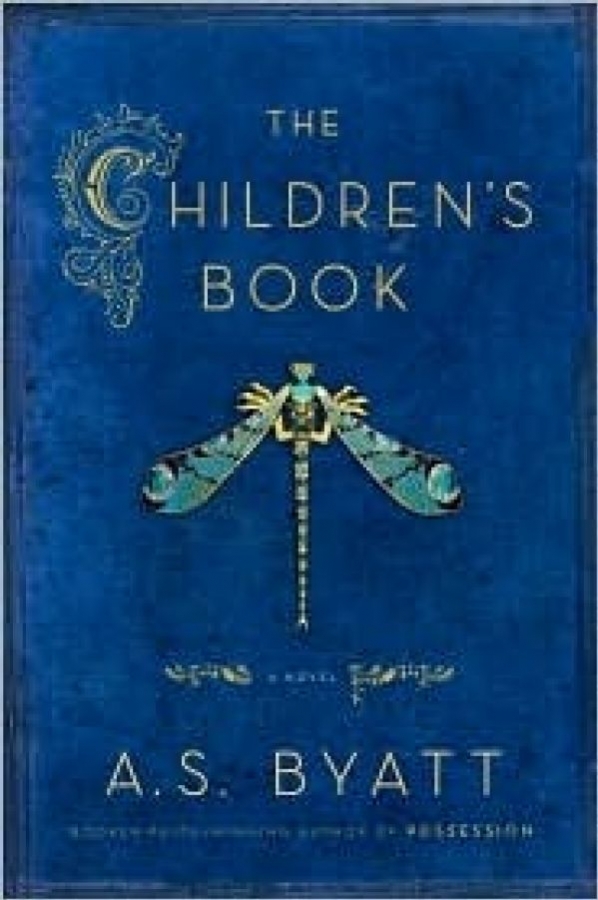
The children's book
The novel is set in England between the late nineteenth and early twentieth centuries. It is the triumphant era of the bourgeoisie, which would come to a tragic end with the First World War. Technological and artistic innovation—including in the decorative arts and crafts—individual freedom and equality, the role of women and feminism, socialist and anarchist ideas: these are the defining hallmarks of this historical period, providing the backdrop to a profoundly contemporary theme: that of betrayed childhood. At the end of the nineteenth century, > children were different from children before and after. They were neither dolls nor miniature adults. They were not hidden away in nurseries, but were present at family dinners, where their developing characters were taken seriously and rationally discussed, during meals and on long country walks. And yet, at the same time, children in this world had their own separate, largely independent lives, as children. Parents found it hard to do in practice what they believed in theory that they should do, which was to love all the children equally . One should not, however, expect a conventional historical and social novel; it is in fact an intricate narrative in which different planes of storytelling, internal and external, intersect through the fairy tales written by one of the mothers of these large bourgeois families: Olive. Her seven children (who, as will emerge, are not all born of the same mother and father) are each the subject of a story. Yet here lies the first betrayal: the stories are not truly for them, but for the reading public, as Olive confesses at one point: > I don’t really like making up imaginary children. I get frightfully bored with their little quarrels and their innocence. But the readers have an insatiable desire for these clever little people having comical adventures . On the parents' part, there is no genuine attention paid to the children: their utopian ideas about education, about their children’s free will, about an affectionate and stimulating environment in which to bring up the young, are mere words masking a real indifference. And the children grow up regardless of their parents, gradually discovering the lies of their fathers and mothers, their subterfuges, and in some cases even their violence. They adapt by keeping the truth concealed, by not disturbing the prevailing hypocrisy, and by guarding family secrets. Each reacts differently: one takes refuge in the woods, cutting himself off from everyone; another skillfully conceals his true political beliefs; another vents his rage upon his father’s cherished possessions; another remains suspended, waiting, letting life simply roll by. There are also those who flee their parents’ ideological vagueness by pursuing concrete professions, such as medicine or stockbroking. The First World War brings a tragic end to many of the young protagonists' lives and leaves the survivors profoundly altered. Yet the war is merely the epilogue to a tragedy that had already found voice in Olive’s fantastical, almost psychoanalytic tales, all centered on underworld realms, as if foreshadowing life in the trenches. It happens sometimes that writers, even accomplished ones, measure themselves against narratives that vastly exceed their strength and skill. Such is the case with this book, which not only takes on too many themes (children and adults, the interrelated histories of several families, works of art and the emergence of modern museums, feminism, and many others besides) and too many characters, but above all proves redundant due to a rich, overwrought, and baroque prose. Too many words, too many topics, but little capacity to convey tension or foster readerly engagement. The narrative plot, much like the characters, feels contrived, monotonous, and in many instances predictable. Why not read it? It is prolix, and the labor of getting to the very end goes unrewarded by moments of high expressive power.
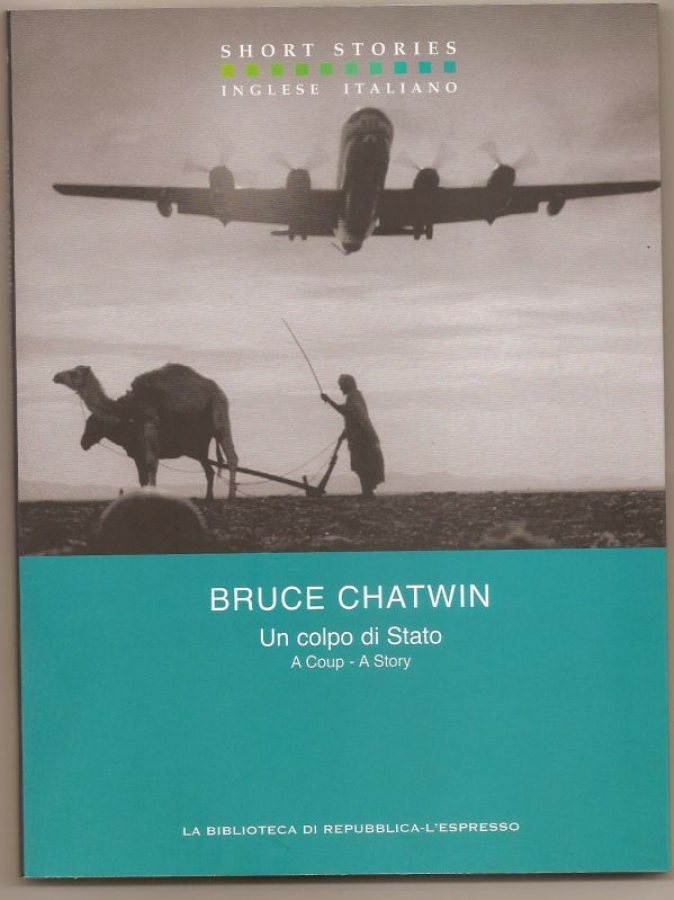
A coup d'état
This is a short story, set in Benin, describing several episodes of a coup d'état. The author finds himself in the African country and is captured, along with a Frenchman, by military forces whose allegiance—whether to the regular army or the putschists—remains unclear. Throughout the narrated events, a general confusion prevails regarding the origins of the coup, the roles played by the military forces, and the very figures encountered. A sense of frustration predominates in the author: he is interrogated, held in captivity without food or drink, struck, and then released with profuse apologies for the misunderstanding. It seems an unreal affair, as if fabricated, and precisely for this reason emblematic of a collective madness. It is Africa unraveling, and the author is its stunned, incredulous spectator. Why not read it? It is a story too slight to prove interesting and engaging.
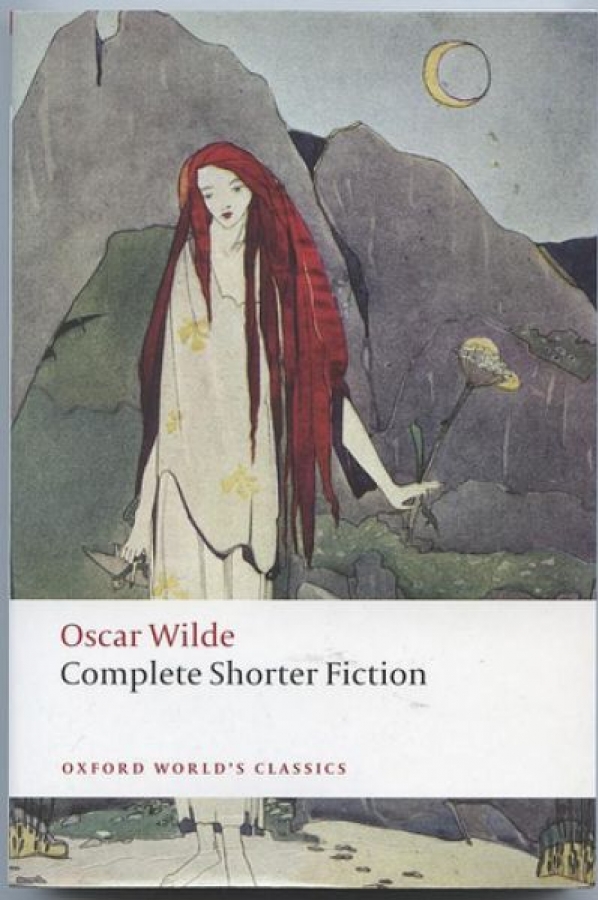
Complete Shorter Fiction
The book brings together Oscar Wilde’s major short stories, in which the style is above all remarkable, particularly the sentence structure. The phrasing is not overly elaborate, favouring short sentences, but the juxtaposition of words (simple and close to everyday language) succeeds in lending poetic, and in certain cases elegiac, qualities to the writing. The result is a splendid English that recovers the essential nature of words through conversational rhythm. The content of the stories is generally fantastical and in many cases paradoxical: it draws upon the world of nature and the supernatural, which provide the setting and often supply the protagonists. On a first reading, a broadly moralistic approach seems to predominate, accompanied by a pursuit of the improbable and a nostalgia for the “goodness” of nature in contrast to human selfishness and pettiness. In reality, what emerges is a pervasive melancholy, almost a search for something lost (a remembrance of things past?), and a celebration of beauty. All the protagonists (people, animals, natural environments) are characterized by sublime physical traits and remarkable intellectual attributes: ugliness does not exist. Aesthetics thus prevails over ethics: a sort of exaltation of aestheticism. In this way, the theme of melancholy is also clarified: it is a nostalgia for lost beauty. Of particular interest is the story *The Portrait of Mr W. H.*, in which the author puts forward several hypotheses concerning the addressee of some of Shakespeare’s sonnets. To appreciate it fully, one would need a deeper familiarity with Shakespeare’s poetry and drama, but it is evident that here, too, one of the central themes is the love of beauty, which emerges from the protagonist’s conviction that the person described in the sonnets was a young actor who played the female roles in the tragedies. Shakespeare did not seek to flatter an eminent figure, but was writing solely out of love for someone who worked alongside him (undoubtedly less “highborn”) and with whom he shared a kindred sensibility.
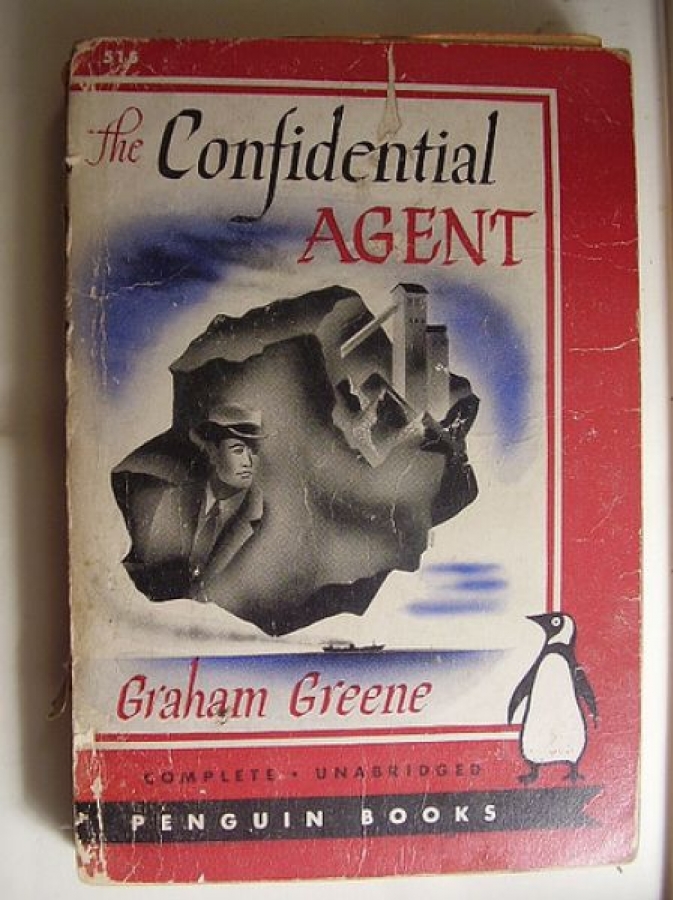
The Confidential Agent
The novel is set in England, where a secret agent must negotiate the purchase of coal for his country at war. The book is dull, perhaps because it is not so different from Greene’s other adventure novels, and in any case it lacks the irony and narrative pace of *Our Man in Havana*.
Cosmopolis
Eric Packer is a brilliant young financier who loses and makes millions of dollars in a matter of seconds, speculating on currencies and the stock market. The novel chronicles a single day in which Eric travels across the city in his limousine, alternating between fleeting sexual encounters, hurried breakfasts, traffic jams caused by violent protests and the funeral of a music idol, a doctor's examination, and the constant monitoring of the yen's performance—a currency against which he is losing millions of dollars. If at first the narrative seems surreal and ironic in its aim to depict the absurd life of a young man of finance, at a certain point in the novel one realizes it is heading toward tragedy. In reality, Eric's own life, well shielded by bodyguards and his limousine, is threatened by a wave of attacks—some far-off—targeting figures in the financial world. As the day unfolds, the barriers—both psychological and physical—that separate the young millionaire from the violent world surrounding him begin to fall. Eric moves toward death (he will be killed), yet he almost seems to crave and seek it out to escape a life that might become burdensome and unbearable if he can no longer relish the thrill born from the pursuit of money. > He understood what he was missing, the predatory impulse, the sense of great excitement that guided him through his days, the pure and intense need to live . The novel's premise is undeniably brilliant and unfolds on multiple levels: the protagonist’s existential crisis (he wakes up longing to go to the barber like an ordinary man), the depiction of a chaotic and absurd city, the hurried human interactions typical of the business and information age, and ultimately death as an inescapable denouement. The plot as a whole, replete with baffling episodes and characters, along with an exceptionally demanding linguistic structure in terms of both vocabulary and syntax, conspires to make the reading experience cryptic and ponderous. The book is fittingly dedicated to Paul Auster, as the intellectual imprint of this author—a hallmark of many New York writers—predominates.