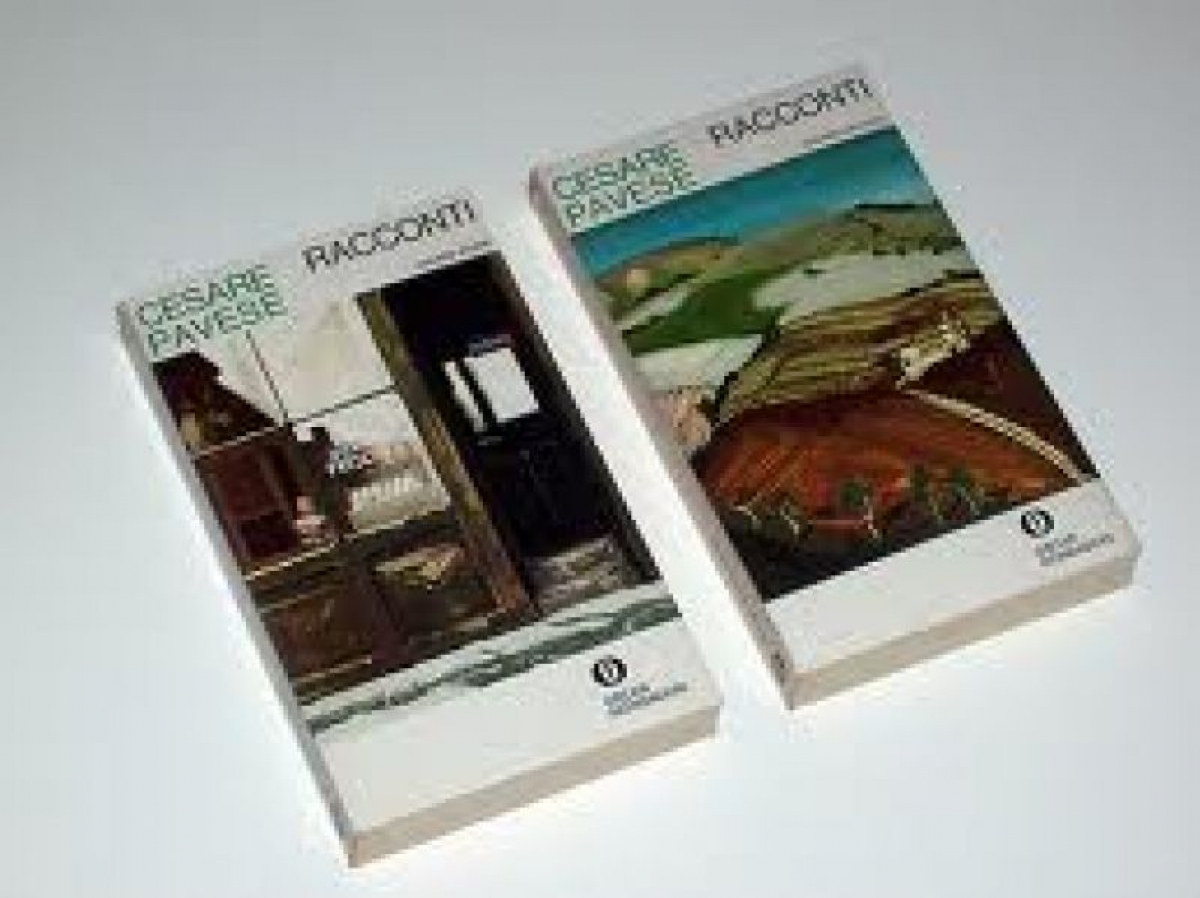
Short Stories
This volume brings together Cesare Pavese’s short stories written between 1936 and 1946. Many of them had already been published, principally in the collection *Fiera dʼAgosto*, while others are unpublished, at times left unfinished. These are the years of the author’s imprisonment and internal exile, of the partisan war, and of the early postwar period. The earliest stories possess the structure of miniature novels, displaying an attention to character and context that is no longer found in the postwar narratives, which become briefer, more meditative, and increasingly introspective. Already in "Terra dʼesilio", which opens the collection, the protagonist—"cast by strange turns of work to the very end of Italy"—reveals one of the stories' guiding threads: a sense of estrangement and yearning anticipation born of the contemplation of nature, of the sea, and of the hills. > Down there lay the sea. A remote, faded sea, which even today hovers deliriously behind all my melancholy. There all land came to an end upon barren, low-lying shores, a hazy immensity.... I would have wished for sheer void beyond that inhuman cliff . The style is spare, yet already symbolic. As one moves through the stories, it is possible to trace the evolution of the author's prose and expressive universe, culminating in the collection’s masterpiece: "Villa in collina". The protagonist has been invited to a reception at the villa he used to frequent as a boy. The narrative revolves around his unrequited love for Ginia—fatuous, enchanting, and treacherous all at once, yet never truly guilty. The story’s incipit is masterful. > I was walking back up the hill road, and the old backdrops of greenery and low stone walls, as they emerged around each bend, seemed false to me. I had lived away from them for so long, barely thinking of them in fleeting, distracted moments, that their actual presence now affected me merely as a symbol of the past. Yet the evening breeze and the scent of that earth were no symbols. Here I bodily recovered the atmosphere of my youth, for these things I had never forgotten; rather, in distant countrysides or along city avenues, I had often caught that scent in the air, savoring other times anew . The return to the world of youth, once so rich with expectations, proves to be a disillusionment, for Ginia now moves within a web of relationships wholly alien to him. Nothing remains for him but to walk away > without memories, barely answering in conversation, yearning for the moment I would be alone . Memory, nostalgia, and the pursuit of solitude become, in the subsequent stories, a "sweet captivity" (as Montale phrases it in *Riviere*), within which the author remains ensnared in increasingly existential terms. A stunning short story, "Il campo di granturco", provides the author with an occasion for self-reflection, since often "certain remote dialogues congeal and materialize over time into natural figures." One day he must have encountered this cornfield, though he could not recall it, but > every time I had dared to take a step inside that yellow forest, the field must have welcomed me with its crackling, sun-drenched voice.... in that crackling there was a deadly silence, characteristic of an enclosed, deserted place, which unfolded in the distant sky a promise of unknown, arduous life, seductive as the hills . Yet if in this story there still remains a sense of a future, in one of the last despair alone takes over. In "Risveglio", the protagonist does not answer his friend’s question about what he will do the following day. He merely turns around and walks away, abandoned to himself. > Nothing could now abolish the wretched reality of my existence... I resolved then to await the day out in the streets.... since the entire city was deserted, and the creaking of a distant cart belonged not to the city, but to the countryside . As many critics have observed, the characters in these stories are "the defeated," whose defeat nevertheless does not prevent them from preserving a mythical, boundless conception of life itself. This resides in the landscape of the hills and in the longed-for anticipation of the sea, while the social context and the various characters recede ever further into the background, mere supporting players in the only dialogue that truly matters: that between the author and nature. Pavese’s stylistic mastery lies in moving toward a lyrical and figurative dimension, all while maintaining a lean, seemingly realist prose. Why read it? Not all the stories are, of course, of the same caliber, but those highlighted here are reason enough to devote time to the reading.
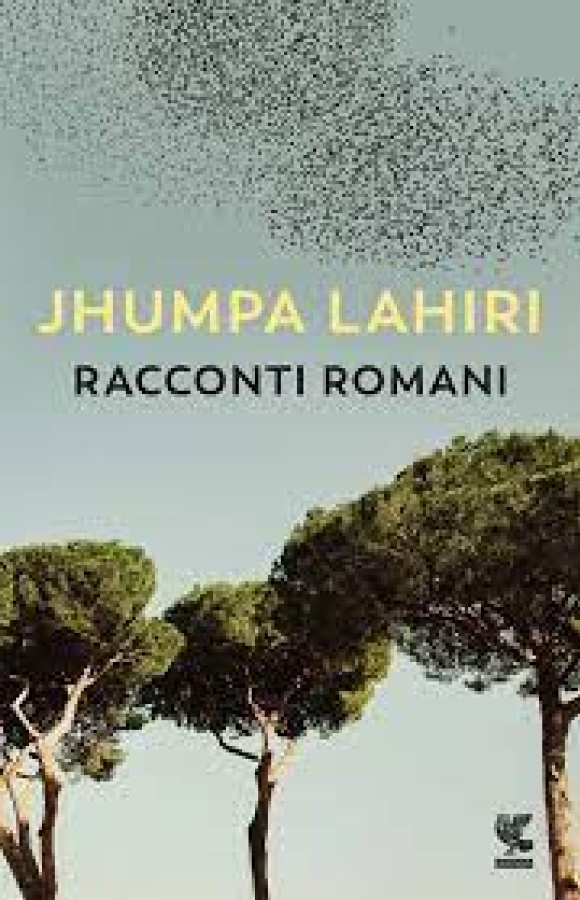
Roman Tales
In the short story *Casa Luminosa*, a young migrant family has arrived in Rome, believing they have found a home where they can live in peace; but the neighbors, incited by the "crow-women," insult and threaten the harmless married couple. The wife returns to her native country while the husband stays in Italy. He goes into a bar and watches a gentleman quietly sipping a chinotto. > I must say I was somewhat amazed, and perhaps also a bit envious of someone who felt so at home in that place, who couldn't care less about boundaries, who wasn't afraid of being a nuisance. Watching him, I had realized how much I had felt, my entire life, either an intruder or merely passing through. The theme of the wanderer who no longer has a place of his own is the common thread running through this collection of short stories, which, rather than Moravia's prose—echoed in the title—evokes that of Mario Soldati (see the reviews of this author's novels on this site, particularly *L'attore*) and the claustrophobic atmosphere of Dino Buzzati's *Sessanta racconti* (likewise reviewed on this site). The intruder is not merely the migrant; it is all of us, isolated and scattered across a Rome poised "between inferno and paradise." The protagonists of the splendid story *La scalinata* (a pivotal juncture of the collection) are all the adrift souls of our society. "The mother" climbs the steps in the early morning > and takes her cell phone out of her bag to snap yet another photo of the view. She immediately sends it to her son, (...) he lives with his grandparents on another continent, in a humid city full of crows and palm trees and dust. "The widow" > who walks down the steps in the late morning, is afraid of the shattered glass and struggles to place her feet. (...) She also feels assaulted by everything they write with spray cans on the walls lining the steps. "The expatriate" > who, at lunchtime, walks briskly across the steps, will undergo surgery the next day. (...) She would have preferred to return to her hometown, (...) but it would be too difficult to organize. "The girl," > who walks down the steps at two in the afternoon, is surrounded by many other girls. (...) Only, unlike the others, this girl doesn't wear miniskirts that look like soft lampshades. (...) Every day, for two or three minutes, (...) without their knowing, she merges into the collective organism, into the arms, the smooth, bare legs, the loose hair, and temporarily imagines being one of them. The "two brothers," who sit on the steps toward sunset having a beer, discover that their father is moving in with a friend and nothing remains of their childhood but a nostalgic memory. "The screenwriter," who lives in a building right beside the steps and wanders through Pasolini's wondrous Rome only in summer (while his wife is at the seaside), ends up mugged on the steps. How does the author, who divides her life between America and Italy, position herself in relation to these exiles and to a Rome that is dazzling yet repulsive, where everyone feels like a foreigner? Like Manto, the "crude virgin" sung by Dante in Canto XX of the *Inferno*, the writer is condemned to "fecer malie con erbe e con imago" (line 123 of the Canto), not to prophesy the future, but to remain imprisoned in remembrance, like Dante's soothsayers walking with their heads turned backward. In the final story, *Dante Alighieri* (a title evocative of her love for our language), the narrator's "I" steps into the open. As the plane descends toward Fiumicino, the author surveys her life as if from above, returning in her mind to the naive, desperate little letter from her first love, who wrote "Dante Alighieri" on the envelope, perhaps to suggest she was his Beatrice. Why, the author wonders, do memories resurface precisely when > the skin has grown thin? And why in Rome of all places, > by now full of broken, mistaken, scarred, discarded, departed things, and yet I cannot bring myself to sever the threads? Jhumpa Lahiri is a great Anglo-Bengali writer (on this site one can read *The Nickname*); she has edited an interesting and wide-ranging anthology of Italian short stories, spanning from Verga to Tabucchi (see the review of *Racconti italiani* on this site). It is precisely from the choice of stories and authors, often unmentioned in school anthologies, that the author's attention to "outsiders" and to "reverie" emerges. It is a trait also found in *Racconti romani*, which collects and rearranges many pieces previously published in magazines. At first, Lahiri's writing is timid and at times hesitant, but it grows increasingly confident, with complex syntax and rich adjectival phrasing: a style undeniably born of a close reading of our classics, particularly Dante. Moreover, even in English, Lahiri is not a sparse, minimalist author; rather, she loves elegance and the meticulous pursuit of words—perhaps this, too, is why she fell in love with our language. Why read it? Intense and enjoyable.
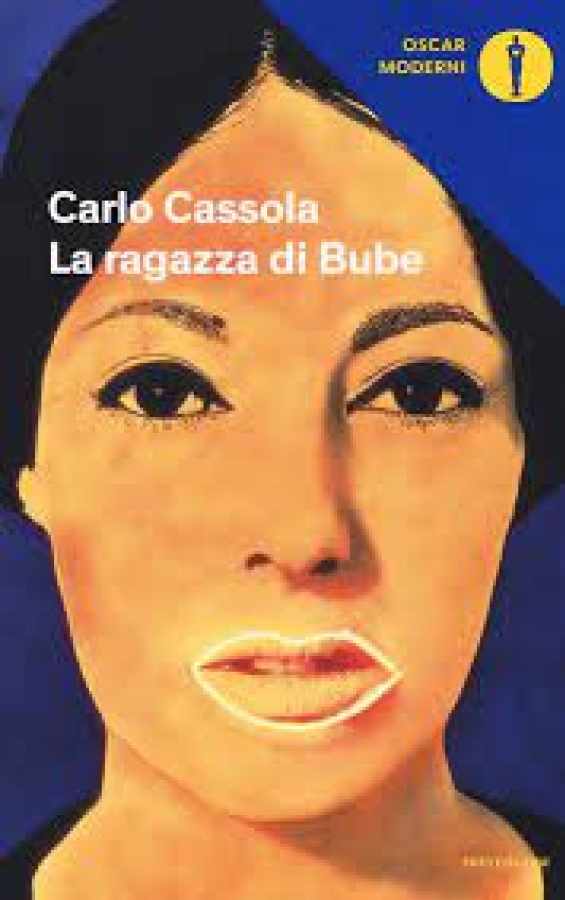
Bebo's Girl
In a celebrated ballata, Guido Cavalcanti sings of the pains of love: “this (is) a desperate and fierce torment,/which consumes and aches and burns and embitters”. Love does not bring happiness, especially if > I can find none of whom to beg for pity,/thanks to that lord/who turns the fortune of grief . This state of mind is depicted with melancholic sweetness by Cassola, and he does so from the point of view of an adolescent girl in an impoverished working-class family in a small Tuscan town newly liberated from the Nazi-Fascists in 1944. The setting is not what matters; it is far more worthwhile to delve into an adolescent girl’s discovery of love, recounted with a surprisingly feminine sensibility. Mara is the daughter of a “shiftless” bricklayer and an affectionate mother, shattered by the death of her son Sante, killed by the Nazi-Fascists. And it is none other than Bube, a partisan and friend of her brother, who upends Mara's life while she is still at the threshold of her first courtships. The young man has come to visit Mara’s father, a figure in the local Communist party. The girl is drawn to the reticent Bube, who possesses the aura of a grown man, yet remains shy and awkward. Mara > was used to daydreaming, and having long conversations with herself. (...) Bube: she didn’t like that name very much. (...) > I’ll call him... Bruno, Bruno is a handsome name, and besides, it suits him, because he really is dark . And when he gives her a pair of high heels, she feels more beautiful, and is thrilled to be alone with her fiancé. > Then Mara said to him: > how wonderful it would be to dance, you and I! Everyone would say what a lovely couple! (...) They kissed. (...) He kissed her several times: each time pressing his lips harder against hers, (...) had he wanted to take her, he could have, because she was as if devoid of strength. (...) No Bubino, no; not now, no; that’s enough now«. It could be the usual languid courtship story when »the fortune of grief breaks in > . Bube, urged on by his comrades, kills a maresciallo and his son. He hides in a country farmhouse, taking Mara with him; from there, he is forced to seek refuge in France to escape the Italian police. Mara goes into domestic service with a family in the city. The memory of Bube fades in her mind, but she feels like a changed person. > The petty vanities of the past, the bickering with her cousin, the gossiping with her friends, made her smile with commiseration when she thought back on them. (...) She would look at her reflection in shop windows: but no longer out of vanity, to confirm that she had a well-proportioned body and a pretty face. The figure that appeared for a moment on the pane of glass was a tragic, sorrowful image. It is as if the bond with Bube, with that reckless and nervous young man, dragged her toward an inevitable destiny. Even her relationship with Stefano, a thoughtful and educated factory worker, is not enough to prompt Mara to break with Bube—a rupture her parents urge her to make. The boy has been arrested and is in prison awaiting trial. Mara goes to visit him in prison, and is told that she must go in alone. > No, not alone... I give up > , Mara was about to say, but suddenly she felt an extraordinary strength sweep through her entirely; she raised her head proudly, and said: All right, I’ll go alone > . (...) She could not have given it a name, but she knew that it was irresistible: that it shattered every fear, every hesitation; that it made her calm and self-assured and indifferent to anything other than the fulfillment of her duty... (...) That was it, that was how it was: she was Bube’s girl. Pasolini seems to have been referring to Cassola when in his poem *In morte del realismo* > he said that > to that ingratitude (Cassola’s), more than to the wound (Tomasi di Lampedusa’s dagger)/realism bowed its head, surrendered. In its day, Cassola’s novel stirred controversy across the cultural sphere and drew fierce criticism from Neorealist poetics; it was accused of being a mawkish tale dealing with banal events and ordinary characters. In truth, the novel speaks of small feelings that grow stubbornly strong when confronted with the vast and painful trials of life. A young girl longing for a simple and joyous love, in the face of unfolding events—recognizing Bube’s culpability as well as his boyish innocence—Mara reveals herself as a courageous and resolute woman, fully conscious of the weight of the role she has assumed. Mara is a discreet hero > , fighting for an ideal of fidelity unto sacrifice. Cassola’s writing has been defined as clear and communicative”, capable of alternating tight dialogue with refined yet simple, readily accessible psychological insights. The plot is structured along conventional novelistic lines, without any lapse in pacing. Beneath the fine Italian prose, one senses a sentence flow that is fluid yet too facile, a lexical poverty (lacking regional idioms and vernacular Tuscan expressions), and a flattening of the language that betrays a certain literary childishness. Whether all this was deliberate or not matters little: the novel would exert a major influence on Italian fiction of the second half of the twentieth century and would be adopted as a reader in the newly reformed compulsory education system. Even today, it remains a novel that adolescents could profitably read. Why read it? Stylistically pleasing; the figure of Mara is beautifully drawn.
Reasonable Doubts
Defense attorney Guerrieri has just been left by his girlfriend when he is asked to represent on appeal a man named Paolicelli, who has already been convicted at first instance of international drug trafficking. From the name, Guerrieri recalls that he is a former fascist thug who took part in beating him during his student days. For this reason, he hesitates to take the case, but meeting the defendant’s stunning wife and an inkling of the man's innocence prompt him to mount his defense. Thus begins the search for evidence to prove that the traffickers used Paolicelli’s car without his knowledge to transport the drugs. Meanwhile, Guerrieri enters into a relationship with Paolicelli’s wife, finding himself in an ambiguous predicament: on the one hand, he has every interest in seeing Paolicelli’s conviction upheld so as to continue the affair and avenge the old beating; on the other, professional duty and a growing awareness of his client’s innocence compel him to commit ever more rigorously to gathering exculpatory evidence. The narrative thus arrives at the appeal trial, where Guerrieri displays his full skill in cross-examining the real culprits and demonstrating to the judges that there is reasonable doubt regarding Paolicelli’s guilt. Yet this success leaves Guerrieri once again alone. The novel unfolds through a continuous alternation between the detective plot and Guerrieri’s personal tribulations, accompanied by bitter reflections on the existential poverty of a life spent shuttling between courtrooms, books, and romantic relationships that never culminate in building a family. The finest part of the book lies in the trial scenes, where the background of the author—a magistrate by profession—plainly shines through. The absence of surprises and the somewhat ritualistic references to the protagonist’s existential and romantic troubles do little to sustain the narrative’s vigor, which ultimately turns predictable. Guerrieri’s moral dilemma (whether to let Paolicelli be convicted or defend him so as to prove his innocence) is treated superficially, without ever bringing the protagonist’s inner conflict into sharp relief. Why read it? It is enjoyable, very well written, and the pages devoted to the courtroom proceedings are of genuine interest.