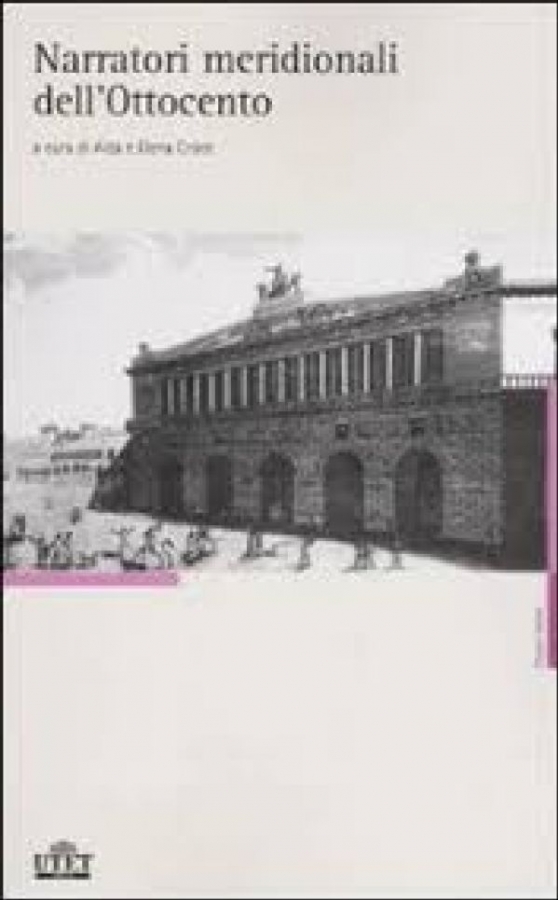
Nineteenth-Century Southern Fiction Writers
As the editors, Alda and Elena Croce, have noted, Southern Italian literature is strongly influenced by the great French authors, such as Zola, Flaubert, and Maupassant: heedful, therefore, of social conditions, yet marked by a peculiar accent—a blend of ironic, fairy-tale fabulation and melodramatic tones. The survey is limited to 10 writers, some of them well known, such as Capuana, Serao, and De Roberto; how representative it is remains unclear, but within it one can single out two singular pieces. Salvatore Di Giacomo is a prolific Neapolitan writer, journalist, poet, and scholar. He favors tragic spectacles, mixtures of ferocity and goodness; his characters are harlots, *camorristi*, and beggars; his settings are filthy, picturesque alleyways. The short story *La Taglia* offers an effective portrait of a dramatic and forgotten chapter of our history: the great brigandage between 1860 and 1870. We find ourselves in a "disconsolate little village" over which weighed "a silence of death": today the sacking of the mayor's house, yesterday a severed ear to extort a ransom, then a herdsman roasted over firewood like a ram; a horror to which the soldiers react, > without the stir of a trial, without lawyers or courts. Down there, behind the little church, they shot them on the dirt ground . Mariangela is seized by labor pains, surrounded only by her children because her husband has gone off to capture a ruthless bandit on whose head a bounty has been placed; it is a poor wretch's desperate bid to escape destitution. > The toddler had crawled up to the doorstep. (...) The other, the red-haired one, grabbed him from behind and pulled him onto his chest. The naked infant shrieked, growing restless, with his little hands trying to fend him off.(..) The July sun burst inside with a blaze that scorched the flesh and took away one's breath;(...) the broody hen pecked among the scattered grains, (...) a little dog braced its paws on the rim of the pitcher and stretched its dirty snout into it, (...) outside, a heavy silence... The woman is in labor; the eldest boy, the red-haired one, runs off terrified to look for his father. As he makes his way into the brush, he finds a lizard, which he slips into his pocket. He calls desperately for his father, then catches sight of him: > the murdered man's face was barely visible, (...) flies swarmed all over him, (...) a hand stuck out, all bruised and bloody, open. (...) Tata! Tata!, called the little boy, Tata, mama is crying and wants you!... Oi, tata! He grew restless. He lay flat on his belly on the low wall, brought out the lizard, tied a string to the bloody stump of its tail and made it walk, jerking it back with sudden tugs, yelling after it: Ah, Ah!... Isce!... > Vittorio Imbriani, also a Neapolitan, was a university professor, patriot, and combatant, but also an imaginative writer attentive to popular literature. Bearing witness to this is the tale *Le tre Maruzze* > , a true rarity, having been published in an edition of only twenty-eight copies in 1875. In Neapolitan maruzza > means snail; in the story, these little creatures are the guardians of three precious gardens: a rose garden, a wondrous field of maize, and an orange grove. Don Peppino, a young peasant, rescues three filthy beasts (the grass snake, the lizard, and the sewer rat), in truth three fairies, who, as Parini sings, make lovers blissful and in the blink of an eye mingle earth and sea at their whim > . And indeed the good man becomes the King’s gardener, held in high esteem because Don Peppino is sincere and faithful. One day, the Queen and the other Royal Highnesses, piqued and envious at hearing repeatedly that Don Peppino was the only one who never lied, proposed a wager to the King: to tempt the gardener by every means, and if Peppino were to blurt out > a lie, the King’s head would fall; otherwise, those of the Royal Highnesses. Don Peppino resists the princes' overtures, but when the Queen offers herself in exchange for a rose, as Girolamo Fontanella sings, the mawkish versifier, > upon the happy lover she falls and joins breast to breast, mouth to mouth, and heart to heart . And what is to be done now? Telling a lie means incurring the Sovereign's wrath; telling the truth will mean the King loses his head. What weighs most heavily on Don Peppino is the grief of the three fairies (now in the form of a spade, hoe, and shovel), because the man could not resist and “tomorrow will tell the little lie.” But to the Sovereign’s question: “How fare my little snails?” Don Peppino replies: > Mouth of Truth no Lie shall tell, your wife came asking for them; she offered what I might ask, and three she obtained. As price for the first, I kissed her; (...) Spade, hoe, and shovel, that know all, as I have told you shall bear witness to the truth . What moral is to be drawn from this fairy tale? While the powerful amuse themselves with pointless games and foolish wagers, the poor man acts wisely, even if he too has allowed himself to be deceived. Could it be true? "...Cuccurucù...". I have chosen only two stories, because the others add little to literature or even to the narrative of our *Mezzogiorno*. Journalism, the fantastic, and melodrama mingle together, giving us a languid and pessimistic vision of the South. The only story of great power is Federico De Roberto’s (*La Paura*), set in a World War I trench and dealing with foretold death; several soldiers must advance to an outpost, fully aware that they will surely die. It is death, > crouching, watchful, poised to spring and seize; if one must go out to meet it, staring into its eyes, the eyes grow dim, the legs give way, the veins run dry, every fiber trembles, all of life ebbs away. It is a tragic and intensely timely page; yet we are in 1927, a world away from the weary and repetitive tales of the late nineteenth century. Why not read it? Nothing evocative or stimulating.
Born Twice
The book, autobiographical in nature, recounts the relationship between the writer and his disabled son. The chief merit of the narrative, structured into self-contained chapters and thus devoid of an overarching plot, lies in its spare style, which eschews easy sentimentality and false solidarity. The disabled boy functions almost as a mirror to the author, the embodiment of a personal history fraught with friction—evident, for instance, in his relations with his wife and with the school, the writer’s own workplace. In reality, it is a tedious book, at times reduced to aphorisms and assertions that are ends in themselves, detached from any narrative framework. Even the portrait of the son falls flat, devoid of nuance and consequently bent on projecting a positive view, despite the grave misfortune.
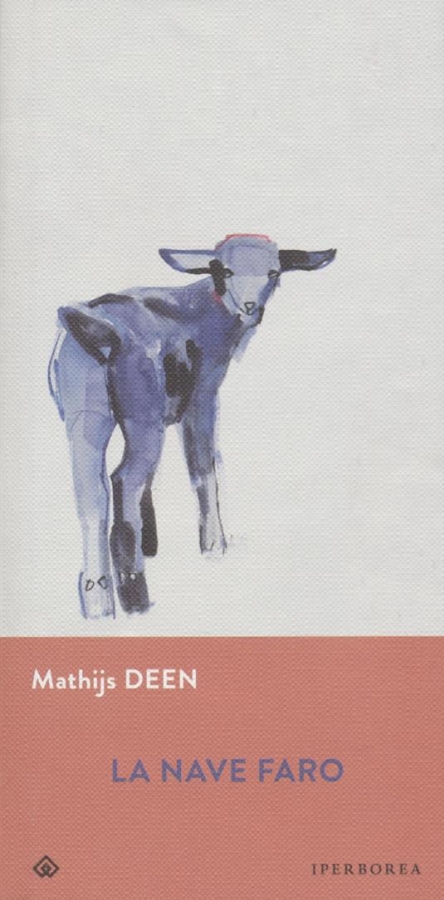
The Lightship
> A lightship has no propeller, no engine; on the bridge there is no helm: it can do nothing but sway, somewhat forlorn, an animal tugging in vain at a chain On this ship that will never sail and will never see distant lands, the crew members vanish > into the dark labyrinth where all the days of their working lives were digested into an almost inextricable mass of memories . Into this sort of prison, into a fragile balance of lives and memories, bursts a young goat. The cook brings it aboard, intending to slaughter it to make a savory dish. > Such an animal on a ship (the peasant woman shouted at him), watch out, because it'll want to escape. (...) A goat always wants to get away , but on this ship we are all prisoners, says the cook. It is only natural to wonder why the cook wanted to bring the young goat on board; its meat is certainly exquisite, but culinary motives are irrelevant; in the man’s childhood lies an image that resurfaces ceaselessly. While still a child, a household servant induced him to slit a chicken's throat. > Blood spurted from the neck, the chicken flapped its wings violently. (...) he ran inside looking for his mother. (...) He put his thumb in his mouth and rested his head against her chest. The finger had the sweet taste of the chicken's blood. (...) He closed his eyes . The cook does not have much butchering experience, let alone with goats, but no matter: in his subconscious, he seeks to repeat the childhood ritual through which he conquered fear and reclaimed his mother. The cook does not realize that he is not the only one subject to the dark fascination of the young goat. Days of dense fog set in, which > deadened the wind, dissipated sounds, petrified the motion of the waves, encircled the lightship. (...) Now it was a defenseless animal, chained, surrounded, (...) invisible to passing vessels . The danger of a collision is palpable, the tension among the crew is at its peak; there is nothing to do but wait, peering into the gloom of the fog. To anyone who has not been hardened by years of waiting and is unable to repress fear, the young goat—a frisking, restless creature—might seem like the devil, who has brought disorder to a life as regimented as that of the lightship. There is a sailor who > sometimes heard things that weren't there and struggled to shake off the thoughts that plagued him . His duty on board is to take readings for the Meteorological Service, but the meticulous, detailed records have become "a shadow bookkeeping of his anxiety and unease." He convinces himself that the young goat is the root of the evils afflicting the crew, of that dark fog enveloping the vessel: a condition that prevents him from filling in his daily log. He decides to put the goat to death in a ritual to exorcise the evil. But if the animal is the devil, how can a mere sailor be expected to save the small community? Whether due to the author's limited grasp of maritime life or the translator's difficulty in rendering nautical terminology into Italian, the lightship remains in the background of the narrative; it can only be brought to light as a metaphor for evil and the fragility of the human soul. At a certain point, the cook contracts malaria and plunges into a fever-induced suspension of consciousness. A respite for memory at last, says the author! What is this obsession with memories, never real but always imagined? Would it not be better to dissolve into the void of the present, without past or future? Saint Augustine maintained that nothing exists except the present, since the past is memory in the present and the future is merely today's anticipation of what is to come. Giving the tale a philosophical reading, one might conclude that the young goat is the lockpick used to drag the past into the present—everything dark within the human soul that originates in memory. The writing is stark: short sentences with frequent full stops resulting in a fragmented narrative, sketched and somehow suspended characters, a simple, even banal plot. It reads like a cold, journalistic report of an affair that is not meant to have an explanation, unless one settles for a few psychological traits, which are, moreover, underdeveloped. The allure of the maritime world is entirely absent, both in language and situations, save for the descriptions of the dark, terrifying fog. Why not read it? It is fragile from a narrative standpoint, useless when it comes to content.
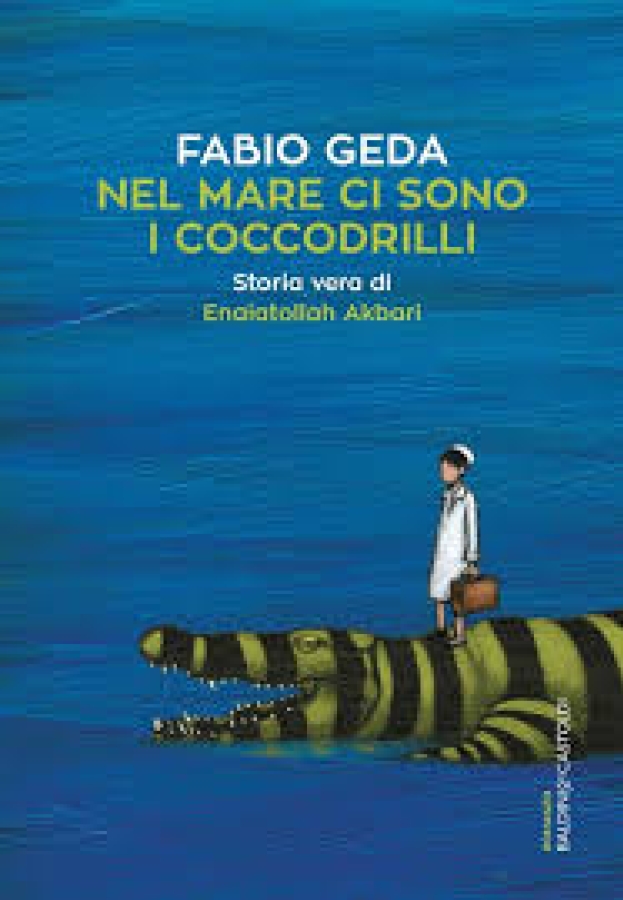
In the Sea There Are Crocodiles
The novel bears the subtitle *The True Story of Enaiatollah Akbari*. It is, in fact, Akbari who recounts his journey from Afghanistan to Italy to Geda. Whether this is a literary device or an actual interview matters little; the journalistic reportage format lends the requisite credibility to the boy's tribulations, to his dream of freedom and peace. Akbari lives in northern Afghanistan, near the border with Pakistan: he belongs to a Shia ethnic minority persecuted by the Taliban. Still a child, he is forced to witness the execution by firing squad of his schoolteacher, who stubbornly insisted on keeping the school open. To escape Taliban repression, Akbari's mother takes him to Kandahar and entrusts him to an acquaintance who gets him across to Quetta, Pakistan. In this city, Akbari must find a way to survive, taking on even foul jobs such as unclogging sewers, submerged in waste. Quetta serves as a sort of crucible of formation, where Akbari learns to navigate adversity, picks up new trades—such as petty street theft—and meets other boys with whom to play soccer and dream of a better future. He has heard of > a lot of kids going to Iran. (...) I would hear these voices in the air, as if broadcast from a loudspeaker in place of the muezzin’s prayer; I sensed them in the flight of birds, and I believed them, because I was little, and when you are little what can you know of the world? Listening and believing were one and the same. I believed everything they told me. And above all, when one is still a child, one believes friendship gives such strength that any hardship can be overcome. Unfortunately, one later discovers that *in the sea there are crocodiles*. Akbari will realize this upon traveling to Iran and then to Turkey, always thinking he has found the right place to live. While the pages devoted to Quetta are still imbued with a sense of adventure—the places, people, and events portrayed as if in a dream of reality from which one might escape by returning home—later, in Iran, Turkey, and Greece, everything turns raw and vicious, and Akbari himself becomes harder, disillusioned, and ready to save himself even by abandoning his friends. Consider the sea crossing by dinghy to reach the Greek coast, when, amid the waves, they lost a friend:. > we kept rowing and shouting Liaqat's name. And rowing. And shouting. (...) Nothing. The darkness had swallowed Liaqat. At that point—I don’t really know how it happened: it must have been the exhaustion, it must have been the despair, it must have been that we felt too small, yes, infinitely too small not to succumb to it all—at that point, it just happened that we fell asleep. Now alone, Akbari manages to reach Italy, a wonderful, still welcoming Italy, where an unaccompanied minor received care and foster placement—and that was only fifteen years ago! In *Anime scalze* (see the review on this site), Geda writes that > life is a billiard ball: every collision makes it change direction; and if you are strong and lucky enough, you can go anywhere. Beyond the account of the journey—in which the most compelling aspect is Iran's role as a hinge and immigration country—Akbari's story is a coming-of-age novel that transcends its specific events. One reaches adulthood by facing and overcoming hardships, by learning from circumstance, not without a certain measure of opportunism and pragmatism. It is the happy ending that trivializes the narrative, imparting a cloying tone and thereby compromising the sheer drama of child migration. The novel maps out migrant itineraries, yet everything comes across as too easy, devoid of suffering other than the physical. Separation from family, parting from friends left to their fate, the abandonment of one's roots—all appear effortless, easy to overcome. Why not read it? In the end, it is banal.

Knot in the gut
The plot of the novel is surreal. Paul, a small-time crook, falls in love with an unusual girl, Jeanne, who introduces him to the high-stakes world of armed robbery, only to betray him with another man. Following the betrayal, Paul begins living in a hallucinatory state, constantly dreaming of a little man with a mustache. During a bank heist, he believes he sees this figure in one of the clerks and, to free himself from the nightmare, kills him. A police pursuit ensues, during which Paul begins a "descent" into the underworld: both physically and spiritually. Paul loses control of his life and lapses into a paranoid state. In this condition, he murders a woman who had taken him into her home and shielded him from the police. The book chronicles the decline of an individual and his transition from a precarious equilibrium to a neurotic and self-destructive condition. In this sense, it stands as the representation of a broader situation, one that could happen to anyone; yet the author develops it in a paradoxical and inexplicable manner, leaving the reader bewildered and disappointed by the superficiality of the narrative.

I had understood nothing
An unsuccessful, penniless lawyer takes part, almost as an onlooker and without realizing it, in a series of events—both romantic and professional—that deeply embroil him. He continues his relationship with his ex-wife; becomes the object of love for a brilliant and beautiful female lawyer; learns, without reacting, that his son falls into «bad company» and is inclined toward homosexuality; becomes the defense counsel for a notorious Camorra criminal; secures a series of courtroom victories, unexpected for him, as a point of contact for the Camorra; and ultimately discovers that he had failed to understand he was merely an instrument in the hands of the judiciary to ensnare his client. The narrator is the lawyer himself, whose surname, Malinconico, aptly encapsulates his personality: an underlying sadness, accompanied nonetheless by a keen self-irony and a philosophy of life that allows him to accept the world as it is. In a conversation with his mistress, the latter reproaches him for not knowing why he does things: > which is absolutely true, even if I don’t find anything strange about it. Since I lack the courage to say so, however, and at the same time have no original ideas at the moment, I fish among the most recent information. No, it’s that I don’t see myself while I’m doing them. How’s that? That I only understand things once I’ve done them . For the author, life is a tumbling sequence of events upon which one cannot intervene, and everyone moves as though being captured by a camera, behaving in a false, inauthentic manner. The Camorra itself is a reality to be accepted for what it is, and of which certain aspects of its code of conduct can even be appreciated: what would be desirable is «a sustainable Camorra». The novel is best appreciated for the author’s digressions—often felicitous and incisive—on contemporary life. As the author himself puts it: > the fact is that I am an incoherent narrator. I am far too interested in the incidental chatter that takes you somewhere else. When I tell a story, I’m like someone searching for a bill in the receipt drawer. First I grope around a bit, just to get a feel for the organic material, then I fish at random, hoping to hit the mark . Yet the plot is flimsy, devoid of any genuine narrative momentum, reliant as it is more on sketches—invariably incomplete—than on any minimally cohesive storytelling structure. The pervasive fragmentation, the narcissistic vacuity of the situations, and the implausibility of both behaviors and settings (for instance, the premises where the lawyer maintains his office, or the curious benevolence shown toward him by the Camorra) are not sufficiently redeemed by the style, undeniably elegant and nimble, nor by the ironic lightness of the prose. In the end, the novel proves tedious, insubstantial, and grating in its excessively superficial and resigned treatment of the Camorra. It is a novel that mirrors our Italy: resigned, withdrawn into the private sphere of friendships and family, ready to seize opportunities just as they come along.
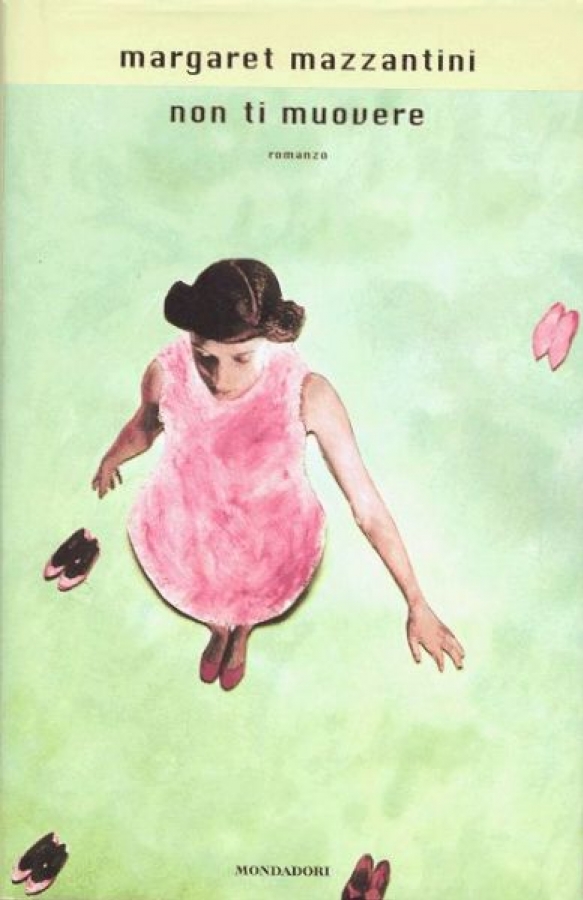
Don't Move
The book’s plot appears intriguing: prompted by his daughter’s accident, the protagonist recounts (to whom?) his extramarital affair with a woman. She is someone entirely outside his social milieu, not beautiful, yet a woman with whom he has fallen in love for reasons he himself cannot fathom. Yet the struggle to abandon his own world and the birth of his daughter ultimately lead the protagonist to desert this woman, who is expecting a child. Feeling betrayed, the woman undergoes a clandestine abortion and dies. The central thread rests on the transition from an attraction that is fundamentally sensual and transgressive to a deeper affection (yet is it sincere?) that manifests only in a desperate attempt to save her. Indeed, at the outset the protagonist wonders whether “the body can love what the mind despises,” yet fails to arrive at an answer: this failure lies at the very root of the tragedy. Thus, while the premise is compelling, it is undermined by a verbose, inessential style and an overt striving for effect; furthermore, several episodes prove overlong, redundant, and tedious.