Finished reading on: August 06, 2024
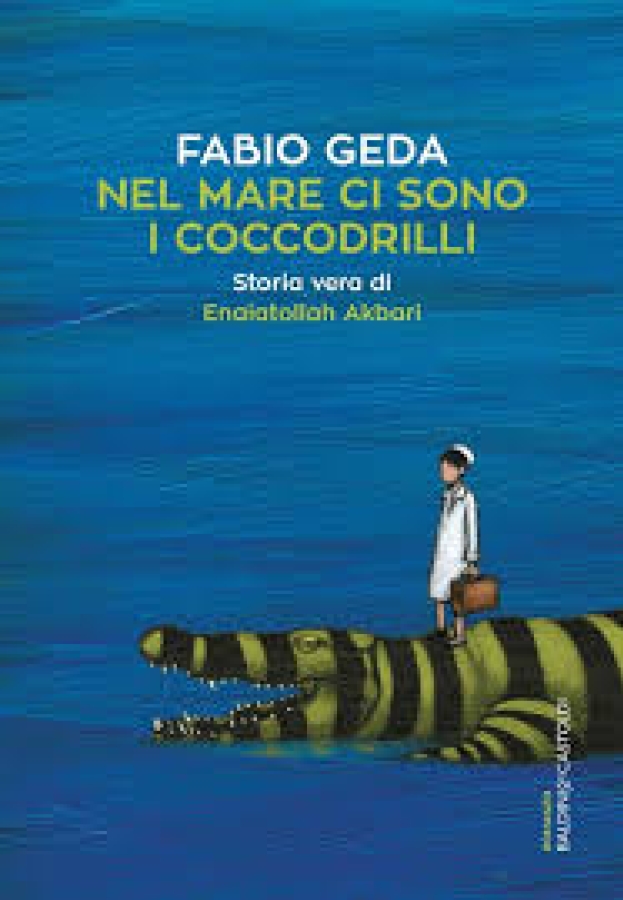
In the Sea There Are Crocodiles
Title of the original version reviewed: «Nel mare ci sono i coccodrilli»
AI Translation Notice: This review was translated from the original Italian using artificial intelligence. Book quotes and excerpts are translated interpretations and will not match the author's original English phrasing or official published translations.
The novel bears the subtitle The True Story of Enaiatollah Akbari. It is, in fact, Akbari who recounts his journey from Afghanistan to Italy to Geda. Whether this is a literary device or an actual interview matters little; the journalistic reportage format lends the requisite credibility to the boy's tribulations, to his dream of freedom and peace. Akbari lives in northern Afghanistan, near the border with Pakistan: he belongs to a Shia ethnic minority persecuted by the Taliban. Still a child, he is forced to witness the execution by firing squad of his schoolteacher, who stubbornly insisted on keeping the school open. To escape Taliban repression, Akbari's mother takes him to Kandahar and entrusts him to an acquaintance who gets him across to Quetta, Pakistan. In this city, Akbari must find a way to survive, taking on even foul jobs such as unclogging sewers, submerged in waste. Quetta serves as a sort of crucible of formation, where Akbari learns to navigate adversity, picks up new trades—such as petty street theft—and meets other boys with whom to play soccer and dream of a better future. He has heard of
a lot of kids going to Iran. (...) I would hear these voices in the air, as if broadcast from a loudspeaker in place of the muezzin’s prayer; I sensed them in the flight of birds, and I believed them, because I was little, and when you are little what can you know of the world? Listening and believing were one and the same. I believed everything they told me. And above all, when one is still a child, one believes friendship gives such strength that any hardship can be overcome. Unfortunately, one later discovers that in the sea there are crocodiles. Akbari will realize this upon traveling to Iran and then to Turkey, always thinking he has found the right place to live. While the pages devoted to Quetta are still imbued with a sense of adventure—the places, people, and events portrayed as if in a dream of reality from which one might escape by returning home—later, in Iran, Turkey, and Greece, everything turns raw and vicious, and Akbari himself becomes harder, disillusioned, and ready to save himself even by abandoning his friends. Consider the sea crossing by dinghy to reach the Greek coast, when, amid the waves, they lost a friend:.
we kept rowing and shouting Liaqat's name. And rowing. And shouting. (...) Nothing. The darkness had swallowed Liaqat. At that point—I don’t really know how it happened: it must have been the exhaustion, it must have been the despair, it must have been that we felt too small, yes, infinitely too small not to succumb to it all—at that point, it just happened that we fell asleep. Now alone, Akbari manages to reach Italy, a wonderful, still welcoming Italy, where an unaccompanied minor received care and foster placement—and that was only fifteen years ago!
In Anime scalze (see the review on this site), Geda writes that
life is a billiard ball: every collision makes it change direction; and if you are strong and lucky enough, you can go anywhere. Beyond the account of the journey—in which the most compelling aspect is Iran's role as a hinge and immigration country—Akbari's story is a coming-of-age novel that transcends its specific events. One reaches adulthood by facing and overcoming hardships, by learning from circumstance, not without a certain measure of opportunism and pragmatism. It is the happy ending that trivializes the narrative, imparting a cloying tone and thereby compromising the sheer drama of child migration. The novel maps out migrant itineraries, yet everything comes across as too easy, devoid of suffering other than the physical. Separation from family, parting from friends left to their fate, the abandonment of one's roots—all appear effortless, easy to overcome.
Why not read it? In the end, it is banal.