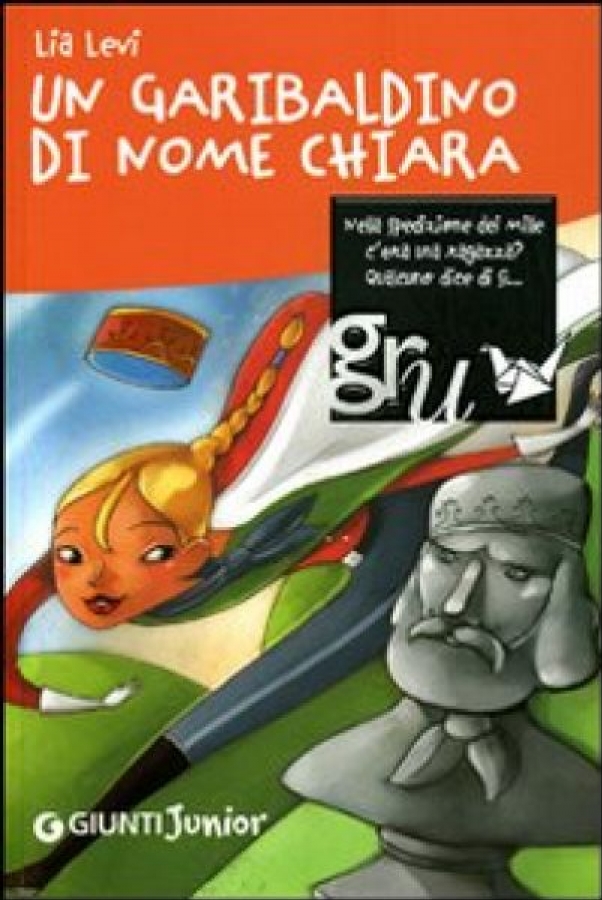
A Garibaldian Named Chiara
The year is 1860. Chiara is the daughter of a well-known patriot, a friend of Garibaldi. Disguised as a boy, the girl manages to join the Expedition of the Thousand and thus meets Simone, with whom—predictably—she falls in love. The story is pleasant, but handled far too superficially, both from the standpoint of Chiara’s personal affairs (her desire that her father not marry a Turinese lady, her yearning for adventure, the blossoming of her love for Simone) and with regard to the historical context. The latter emerges in a fragmentary fashion, without illustrating the environmental conditions and political premises of the expedition.
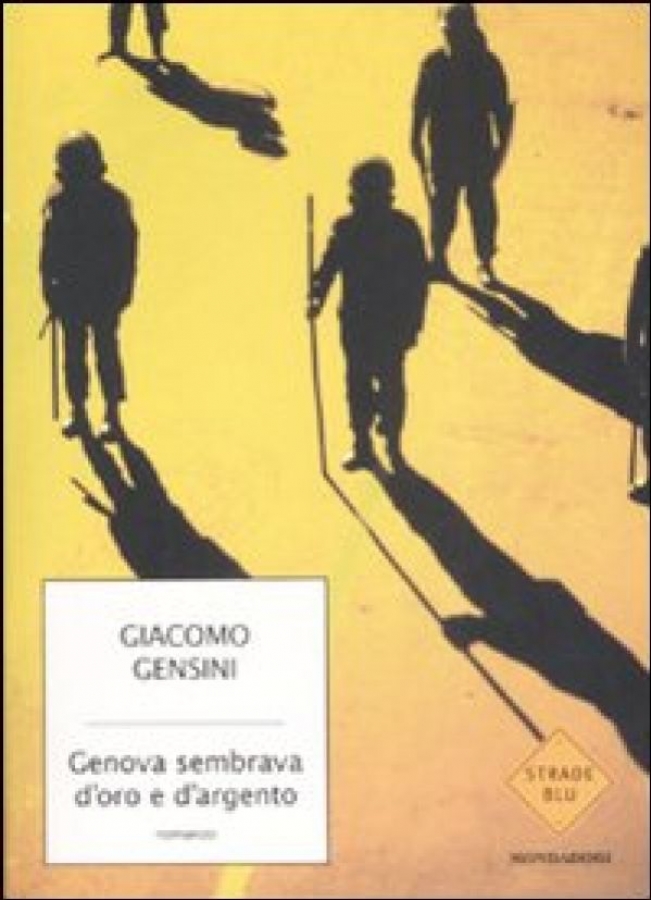
Genoa seemed made of gold and silver
The book is not about Genoa, despite its title. The city is merely a setting, devoid of imagery and depth, in which to recount the life of a police officer. The protagonist is a young man without hope, who believes that life is > merely a scheme of the system, one of many, but men do not control it, not even those gathered at Palazzo Ducale. The system is a headless machine, an autonomous machine . What matters is the group, belonging through courageous and violent actions. This young officer’s entire life is a succession of drills, off-duty leaves, overtime, and interventions against hooligans and protesters. He is assigned to a special squad trained for the G8 summit in Genoa. The drills, grueling and geared toward counter-insurgency tactics, reinforce esprit de corps. In Genoa, the young man’s convictions are put to the test, not so much by what happens, but by his love for a girl who might just convince him that destiny is in our hands, that it is not true that «human beings are what they are». Then everything spirals out of control: the officer takes part in the raid on Via Diaz and discovers that the mysterious girl, met in Genoa, is there among the beaten, bleeding youths. Once again, it was destiny that decided: > I was fucked, I always had been, I cried because Sara was right, I had had my chance to choose, I cried for myself, because I understood that now it really was over . The novel’s overarching theme is cynicism as the consequence of a hopeless life. The story, however, unfolds monotonous and slow, devoid of narrative pace and without the author managing to grant psychological depth to the characters, starting with the protagonist. The greatest disappointment comes from Genoa, which is simply not there (has the author ever set foot in the streets where the G8 clashes took place?), with the result that the whole affair feels cold and artificial. Why not read it? It is boring and pointless.
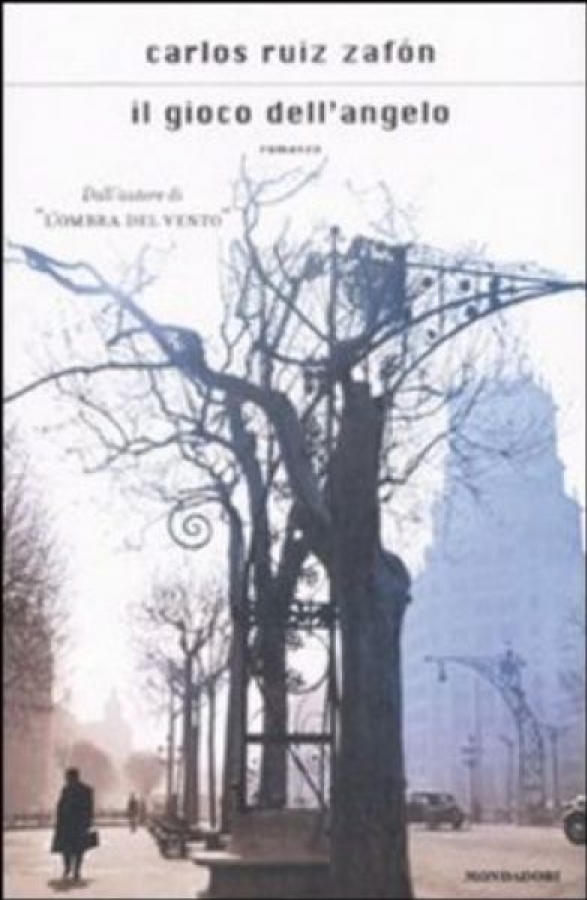
The Angel's Game
David Martin is a young journalist, who begins writing serialized stories for his newspaper. These stories meet with considerable success, and he is consequently put on salary by a publisher to write a series of novels belonging to a cycle entitled *The City of the Damned*. With the money he earns, he rents a mysterious house, abandoned for many years and previously owned by a strange character, Diego Malasca. Meanwhile, several plotlines intertwine: David is in love with Cristina, who convinces him to secretly write a book for a wealthy friend who wishes to become a famous author. He is contacted by a French publisher—who will later turn out to be the devil, or the personification of evil—who persuades him, for a handsome fee, to devise a new religion. At the request of a bookseller friend, he hires a young girl (Isabella) as his assistant, who aspires to become a writer. David, while continuing to write the commissioned book, launches an investigation to discover who the French publisher is and why he wants to formulate a new religion. At this point, a series of gruesome murders ensues, and David becomes embroiled in surreal and implausible events, all steeped, however, in mystery. In vain does Isabella try to bring him back to reality; David desperately pursues the mystery, and with it, his ill-fated love for Cristina. Everyone close to him, friend and foe alike, dies in a horrific and mysterious manner: Cristina, for example, having lost her mind, drowns in a frozen lake before the eyes of her friend. After a succession of grim events and terrible deaths, David manages to flee to a distant foreign land, only to meet the devil one day, many years later, who entrusts to him Cristina as a child, thereby opening up the prospect of a future. The scene faithfully mirrors a photograph David had found many years earlier, depicting the devil walking hand in hand with Cristina as a young girl. Mystery reigns unchallenged. What is the meaning of this book? There are, undoubtedly, numerous interpretative hypotheses: the construction of a religion of death that is nevertheless overcome by love, an unhappy love story, a "noir > inexplicable, a labyrinth of ideas and situations whose guiding thread remains elusive. I like to think that the common motif is the book itself. Books are the true protagonists of the novel, and with them, fantasy and imagination. At the beginning of the novel, when the author speaks of his childhood, David recalls that where my friends saw traces of ink on incomprehensible pages, I saw light, streets, people. Words and the mystery of their occult science fascinated me, and they seemed a key with which to unlock an infinite world > . At another point in the novel, Samperi, his bookseller friend, predicts that David will become a new Edgar Poe. And this writer indeed seems to be the guiding inspiration of the novel. Are the events narrated real, or the product of imagination and fantasy? Is it not always the *Cities of the Damned* dominating the scene? Could David have invented everything in a fit of delirium within the cursed house, or might he himself be the perpetrator of so many crimes? From this perspective, the character of Isabella gains meaning, embodying reality, concreteness, and pedantry in a situation where unchecked fantasy has run rampant. As the devil remarks, Everything is story, narrative, a sequence of events and characters that convey an emotional content". A complex book that nevertheless proves verbose and constantly in search of sensational effect, failing, however, to generate either genuine suspense or real action. Events unfold predictably, and in certain instances the overt borrowing of literary imagery is glaringly evident. In my view, the novel lacks life; it is formal and merely literary.
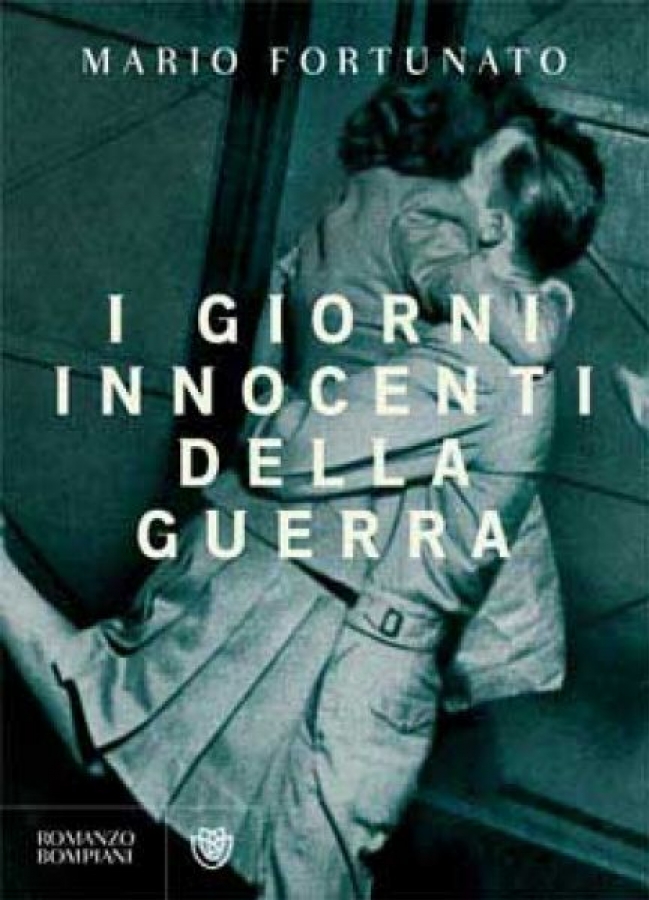
The innocent days of the war
During the Second World War, a series of personal storylines unfold across a small provincial town near Rome and in the great city of London. Stefano, a legal enthusiast employed at the courthouse, marries Nina as his second wife—a restless young woman who accepts a much older husband to please her family, but is in truth in love with Sergio. At the same time, Ally is an English pilot, homosexual, who is bound by a deep friendship to Edna, an eccentric English girl. Stefano and Sergio take part in the partisan resistance, to which Nina also makes a significant contribution as a courier. The young woman carries on a clandestine affair with Sergio, unbeknownst to Stefano, who is moreover having a liaison with a prostitute. The situation comes to a head when Ally’s plane crashes and he is hidden by Sergio: the two young men are caught showing affection to one another by Nina and Stefano, who realizes from the young woman's reaction that Sergio was her lover. Stefano returns home and sets it on fire, killing himself in the blaze. Nina realizes, too late, that she loves Stefano, while Edna comes to understand her deep bond with Ally, despite his homosexuality. The war is merely a backdrop that clarifies interpersonal relationships, which nonetheless remain grounded in the complexity and ambiguity of human emotions. As the author states: > life is nothing other than a great confusion. A disorder and a turmoil of things and feelings, which ultimately, however, is all that binds us to others and makes us love them .
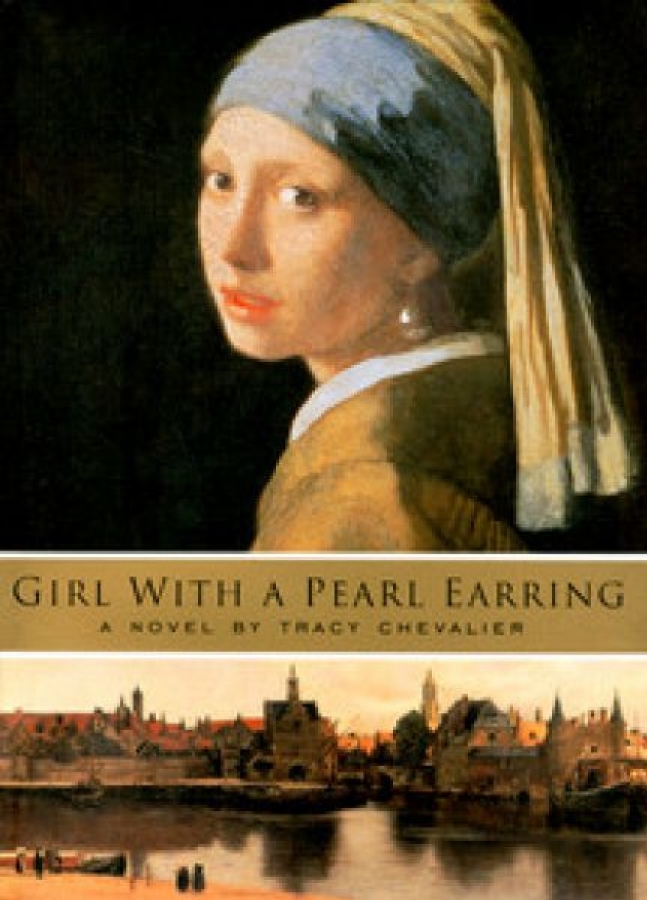
Girl with a Pearl Earring
The book is set in seventeenth-century Holland and recounts the story of a young maid who becomes, first, a painter's assistant and then the subject of a portrait. Layered together are the young woman’s intimate personal story (her family, her working environment, her betrothal, and the blandishments of a wealthy merchant), the depiction of the milieu, and the execution of a portrait, complete with the interplay of light and shadow and the construction of colors. Another theme is the painter’s obsession, which subordinates everything (even the girl’s honor) to the demands of his art. It was a major commercial success, but in all honesty it strikes me as a modest book: one finds neither an incisive analysis of the characters’ emotions, nor a compelling depiction of the setting (which lingers in the background without truly defining the work), nor does the creation of the artwork take center stage, along with the transition from religious painting to portraiture, in which real figures emerge. The style possesses the merit of being very simple and clear, but the narrative pacing unfolds monotonously, devoid of tension.
Justice
The novel recounts a paradoxical story. A cantonal councillor murders a friend in a restaurant before a crowd of witnesses. Once in prison, he hires an attorney (the author of the manuscript) to identify a different killer. The attorney gathers a body of information that leads to the cantonal councillor’s acquittal before the court of assizes. Convinced he was merely a pawn of the councillor (who is, in truth, the real murderer), the attorney attempts to kill him, but misses his mark. The novel concludes many years later, when the writer (Dürrenmatt himself) comes to learn the underlying motives of the murder and the actual sequence of events that led to the crime. The dominant theme of the novel is the incomprehensibility of reality and its potential inversion into absurd situations, devoid of logic and of any social or historical meaning. As the author writes, > is the story that became real only in my imagination and that now, written down, recedes from me, perhaps more absurd than the history of the world, less solid than the ground upon which we build our cities? . This philosophical theme is translated into a relentless narrative pace which, moving from a traditional structure (reminiscent of a nineteenth-century novel), evolves into a succession of characters and events that overlap and intertwine across different temporal planes. The style likewise turns convulsive, composed of short, truncated sentences so as to manifest the author’s agitation and the absurdity or inherent lack of logic in the events and situations described. It is, however, a novel entirely folded in upon itself: there is effectively no plot to generate a shred of suspense or compel the reader onward; the characters seem devoid of genuine depth and individual character, almost marionettes in the hands of fate; the descriptions of settings are repetitive. It is, in fact, a tedious, intellectualistic novel that fails to give artistic form to the philosophical theme at its foundation. Confirmation of this lies in the fact that its most engaging and readable sections are precisely those that assume the character of an essay.
The Glass Palace
It is an insignificant book. It is set in Burma after 1886, when Britain transformed this vast kingdom into a province of British India, exiling its last sovereign. *The Glass Palace*, the novel’s title, is a metaphor for a world overtaken by imperialism and capitalism—forces to which one must adapt on pain of extinction or, at best, oblivion. The protagonist, Rajkumar, is a young boy, > a ragged Indian... with a sort of watchful determination.. there was no simplicity in his face, no innocence: his eyes were full of practicality, curiosity, appetite. He was as he was meant to be . Tradition, cultural roots, and ideal values can find no home when everything is upended and one must survive, and if possible, grow rich. Yet even in Rajkumar, already an adult when still a boy, there is room for bonds of affection and loyalty that are not > related to himself and his immediate needs, which was almost incomprehensible . It is precisely during the looting of the royal palace that the protagonist meets Dolly, the twelve-year-old handmaiden to the little princesses, daughters of the defeated and humiliated monarchs. A love is ignited that will never leave Rajkumar. The story unfolds along parallel tracks, allowing us to follow the protagonist’s social ascent alongside the life of the royal family, isolated and closely watched by the British. Amid the ruin of the ruling dynasty, Dolly matures into a reserved woman, seemingly timid, yet self-assured, cultivated, and independent. She marries Rajkumar, who has in the meantime become a wealthy businessman, young yet already portly. Yet does she do so for love, or simply because she wishes to escape a sort of gilded cloister? I cannot answer the question of whether the marriage of Rajkumar and Dolly is the fruit of true love, or merely the desire of both to trade the old for the new, tradition for the culture of dominant British imperialism. When I realized that after hours of tedious reading I was still only at 40% of the novel, I put the book aside, defeated by the flimsiness of the plot, the shallowness of the characters, and the pedestrian quality of the writing. Reading Ghosh’s book makes one want to reread Kipling’s *Kim*: a sinister bard of British imperialism, to be sure, but a writer of an entirely different caliber! Why not read it? It is tedious, pointless, banal.

The Glassmaker (the master glassmaker)
In this novel, Tracy Chevalier, author of the bestseller *Girl with a Pearl Earring* (see the review on this site), measures herself against Venice, the “City of Water,” and one of its immortal treasures: Murano, the “Glass Island.” In the preface, Chevalier wonders > whether the artisans of the City of Water and the Glass Island seem to age more slowly than those in the outside world. (...) Painters, writers, carvers, knitters, weavers, and—why not?—glassmakers: creators often live in a suspended state that psychologists call flow, where hours pass without them noticing. An admiration for art led the author to devise a narrative that purports to trace Murano's history across the centuries, from a primal state of perfection and isolation to present-day reality, steeped in consumerism and craftsmanship alike. It is a grand historical fresco that prompts Chevalier to resort to a bold device: the story of Orsola and her family recurs through the centuries, with the same characters, passions, and vicissitudes, in an ever-shifting context. We begin in 1486, in a Venice still powerful and wealthy, moving to the early eighteenth century, when the decline of the Serenissima has become undeniable, and then on to the handover to Austria in 1797, when Venice lost its independence, up to the First World War and years closer to our own. A bold device, I said, because Orsola does not age at the pace of History, but much more slowly; and while this may symbolize Venice’s immobility, this literary expedient renders the narrative implausible. It is better, therefore, not to follow the author across the entire novel, but to linger on the first part, “Goblets, Beads, and Dolphins”: set in 1486, it encapsulates the essence of the book. Orsola is a girl, later a young woman, born into a family of Murano glassmakers. She yearns ardently to learn the craft. > Orsola’s life revolved around an endless pile of laundry, tending the vegetable garden, and cleaning chores, but whenever she could, she found ways to slip into the workshop under the pretext of delivering messages or bringing biscuits to the workmen. (...) Then she would have lingered to watch them fashioning vases or tumblers and decorating goblets. Secretly, she visits a rival family, seeking out a woman who is a renowned artisan and merchant. This woman teaches her how to make glass beads and advises her to work on them in the kitchen, away from the workshop. It seems like a minor subterfuge, but these beads will ultimately save the family financially upon the sudden death of Orsola’s father, taking with him much of the workshop’s masterly skill. Chevalier is adept at painting the setting and familial dynamics, explaining glassmaking techniques, and depicting the Venetian merchants who enrich themselves off the isolation to which Murano was condemned by the Republic’s regulations. The incompetence of the eldest brother, who has assumed the role of head of the family and fails to grasp the importance of commercial ties, forces Orsola to venture into Venice—to discover the “City of Water” with its canals and gondoliers, taverns and brothels, the magnificence of its palazzi, and its disreputable quarters. > It seemed as though every gondolier on the canal was cheerfully hurling insults, almost singing: > Buzaròn, Mona!, Magnamerda!, Visdecasso!, Cover your ears, Giacomo shouted, and she laughed at the vulgarities Together with the city and its merchants, Orsola also meets the handsome fisherman, with whom she falls in love, breaking once again the rigid rules of Muranese society, which dictated marrying within the same families to preserve the secrets of the trade and the island's isolation. Maliciously, perhaps, the handsome fisherman > gets hired as an apprentice in the workshop, learns the art of glassmaking, and then flees abroad, taking with him the closely guarded knowledge and skills. Was it love, then, that ended a monopoly ensuring wealth and prestige to Murano and Venice? We may well believe it; yet the fact remains that Orsola is left waiting for a longed-for love, whose sole token will be a glass dolphin > , sent to her across the centuries. We must admit that Chevalier is no Ken Follett, if we wish to frame her within the realm of historical thrillers: she lacks the ability to pace the narrative, to create surprises and plot twists (on this site, one can read reviews of Ken Follett’s *A Place Called Freedom* and *World Without End*). As with the English author, the characters lack psychological depth: for instance, the figure of Orsola, a tenacious yet unhappy heroine (what is this woman's mystery?), is not analyzed in her human and sociological dimensions. Yet how could she be, when the author traverses centuries as though a fifteenth-century artisan shared the exact same inner life as a woman of the eighteenth or twentieth century! Chevalier possesses an elegant style of writing, an enjoyable English with linear, limpid syntax; an extensive yet accessible vocabulary makes for effortless reading without diminishing its quality. Her attention to the Venetian vernacular, the precise environmental descriptions (such as the actual routes between the island and the city), and the explanations of glassmaking techniques and commercial mechanics all demonstrate how deeply the author immersed herself in the history, and above all in the “City of Water” itself. Ravaged by tourism and the abandonment of its inhabitants, Venice still retains an incredible allure, captivating and commanding love, even as we strive to destroy it. Why not read it? In the end, it is prolix and implausible.

American Gothic
The novel is set in New York and chronicles the life of Bruna, an Italian political science professor who relocated to the United States to follow her husband Tom, an Italian-American physician. The mother of two children, Minerva and Mario, she falls in love with one of her African-American students, Yunus, who will later go on to fight for ISIS and die in the defense of Mosul. This alone would offer plenty of themes, yet the author piles on far more: the decline of America, racial and social rifts, the integration of diverse cultures, terrorism, and Islamophobia. In the notes at the end of the book, Farinelli attempts to provide a unifying interpretive thread, locating it in identity and its multifaceted aspects: religious, political, class-based, sexual orientation, and generational conflict. > I believe that beyond national borders and the ethnic, cultural, and religious differences that define and often divide us, we are first and foremost citizens of the world, and I hope that one day we will also be citizens of the same cosmopolitan democracy . Bravo, Professor! But where is Bruna? In spite of everything, the novel is not a political treatise; it is the tale of the protagonist's life. So let us start with Bruna. The narrative opens at the end: Bruna has just learned that her student lover is an ISIS fighter; it is the day of Trump's victory; to put little Mario to sleep, Bruna has recited an episode from the Quran, the moment Yunus was cast into the belly of the whale and saved by God because he was a righteous man. Why does God not save every man, as the Black American slaves once sang? She ought to answer her son, but > the words choke in her throat. (...) With her fist, she keeps clutching the scrap of black silk as if trying to crush that darkness. Mario then takes her face in his hands and softly strokes her cheeks, right where tears have begun to fall, carving pale rivulets through the heavy makeup...(...) I lied to everyone . Her life is in shambles; convinced she could make it on her own, she clashed with Tom's Italian-American family, fighting their prejudices and their meddling—she could have been more conciliatory and submissive; she tried to make Tom into a strong, self-reliant man, refusing to accept his nature as an eternal child; she lacked ambition and a competitive edge, abandoning her academic career; and then Yunus arrived and left; she could have told him she was pregnant, but > silence had swallowed all words, perhaps because nothing they might have wished to say had the power to change the course of their lives. (...) We can smooth the surface, soften the roughness, fill in a few cracks, but change—no, not even for love . And yet, there is an anchor in this desolate resignation. Minerva > slips her cold hands under her mother's nightgown. She rests them on her warm belly, as if to feel. (...) Don't worry about anything, I'll help you . And the fragile Mario, who had become Maria, > had embraced her and then laid her head on her lap, her face pressed against her womb . Dear cosmopolitan professor, in the end it is our very own Italian familism that saves us! The novel is a missed opportunity. The great theme of love remains in the background. We catch a glimpse of how difficult it is to love when so many idealisms engulf us and we remain suspended, unfulfilled, incapable of bringing clarity to the relationships with the people in our lives. Swept away by events and sudden shifts, Bruna could have delved into the reasons behind her presumed failures, perhaps discovering that she had gained a deeper understanding of herself, of what she was and what she had wished to be. Driven by lofty political aims, the author failed to explore what truly mattered in the story, what would have made it compelling. And so Bruna's life slips away like pebbles down a slope; as the poet wrote, > nothing changed within your life / the years that slip so easily into shade / when a single torch suffices in the dusk / and the descent is almost an ascent . (Marino Moretti, “La Madonna del Sassoferrato” from *Poesie Scritte col lapis*, 1919). The narrative is further compromised by the writing and style. The prose unfolds hesitantly; initially marked by short sentences and heavy punctuation, it later grows more expansive, yet remains stubbornly banal, lackluster, and pedestrian. The narrative pace is sluggish, burdened with lengthy ideological lectures and the frequent repetition of a handful of actions, hardly enough to inject dynamism and suspense into the novel. The characterization is flimsy: the characters undergo no evolution over the course of the book; everything feels predictable, thoroughly worn out. Why not read it? Prolix and pointless.