Finished reading on: August 02, 2020
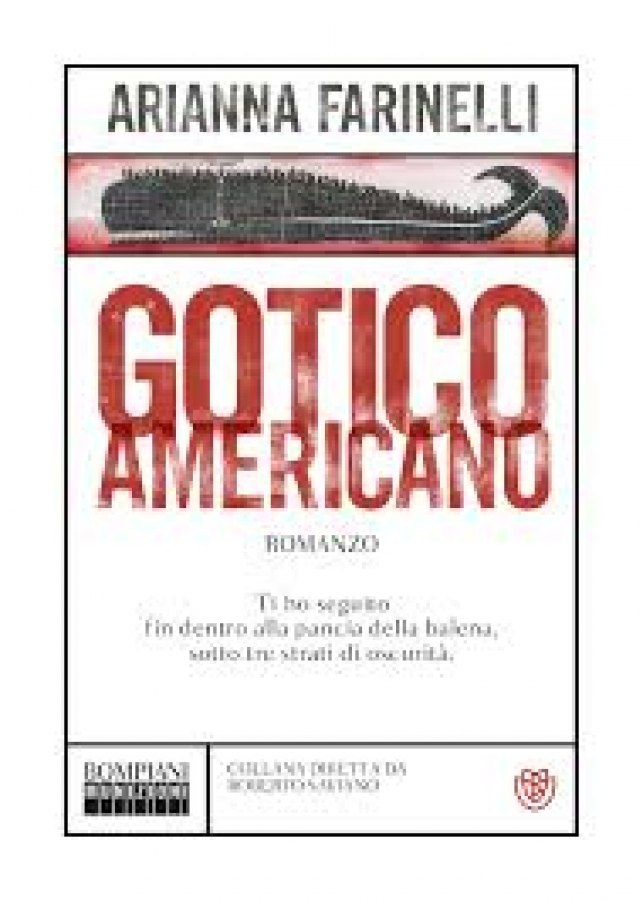
American Gothic
Title of the original version reviewed: «Gotico Americano»
AI Translation Notice: This review was translated from the original Italian using artificial intelligence. Book quotes and excerpts are translated interpretations and will not match the author's original English phrasing or official published translations.
The novel is set in New York and chronicles the life of Bruna, an Italian political science professor who relocated to the United States to follow her husband Tom, an Italian-American physician. The mother of two children, Minerva and Mario, she falls in love with one of her African-American students, Yunus, who will later go on to fight for ISIS and die in the defense of Mosul. This alone would offer plenty of themes, yet the author piles on far more: the decline of America, racial and social rifts, the integration of diverse cultures, terrorism, and Islamophobia. In the notes at the end of the book, Farinelli attempts to provide a unifying interpretive thread, locating it in identity and its multifaceted aspects: religious, political, class-based, sexual orientation, and generational conflict.
I believe that beyond national borders and the ethnic, cultural, and religious differences that define and often divide us, we are first and foremost citizens of the world, and I hope that one day we will also be citizens of the same cosmopolitan democracy
. Bravo, Professor! But where is Bruna? In spite of everything, the novel is not a political treatise; it is the tale of the protagonist's life. So let us start with Bruna. The narrative opens at the end: Bruna has just learned that her student lover is an ISIS fighter; it is the day of Trump's victory; to put little Mario to sleep, Bruna has recited an episode from the Quran, the moment Yunus was cast into the belly of the whale and saved by God because he was a righteous man. Why does God not save every man, as the Black American slaves once sang? She ought to answer her son, but
the words choke in her throat. (...) With her fist, she keeps clutching the scrap of black silk as if trying to crush that darkness. Mario then takes her face in his hands and softly strokes her cheeks, right where tears have begun to fall, carving pale rivulets through the heavy makeup...(...) I lied to everyone
. Her life is in shambles; convinced she could make it on her own, she clashed with Tom's Italian-American family, fighting their prejudices and their meddling—she could have been more conciliatory and submissive; she tried to make Tom into a strong, self-reliant man, refusing to accept his nature as an eternal child; she lacked ambition and a competitive edge, abandoning her academic career; and then Yunus arrived and left; she could have told him she was pregnant, but
silence had swallowed all words, perhaps because nothing they might have wished to say had the power to change the course of their lives. (...) We can smooth the surface, soften the roughness, fill in a few cracks, but change—no, not even for love
. And yet, there is an anchor in this desolate resignation. Minerva
slips her cold hands under her mother's nightgown. She rests them on her warm belly, as if to feel. (...) Don't worry about anything, I'll help you
. And the fragile Mario, who had become Maria,
had embraced her and then laid her head on her lap, her face pressed against her womb
. Dear cosmopolitan professor, in the end it is our very own Italian familism that saves us!
The novel is a missed opportunity. The great theme of love remains in the background. We catch a glimpse of how difficult it is to love when so many idealisms engulf us and we remain suspended, unfulfilled, incapable of bringing clarity to the relationships with the people in our lives. Swept away by events and sudden shifts, Bruna could have delved into the reasons behind her presumed failures, perhaps discovering that she had gained a deeper understanding of herself, of what she was and what she had wished to be. Driven by lofty political aims, the author failed to explore what truly mattered in the story, what would have made it compelling. And so Bruna's life slips away like pebbles down a slope; as the poet wrote,
nothing changed within your life / the years that slip so easily into shade / when a single torch suffices in the dusk / and the descent is almost an ascent
. (Marino Moretti, “La Madonna del Sassoferrato” from Poesie Scritte col lapis, 1919).
The narrative is further compromised by the writing and style. The prose unfolds hesitantly; initially marked by short sentences and heavy punctuation, it later grows more expansive, yet remains stubbornly banal, lackluster, and pedestrian. The narrative pace is sluggish, burdened with lengthy ideological lectures and the frequent repetition of a handful of actions, hardly enough to inject dynamism and suspense into the novel. The characterization is flimsy: the characters undergo no evolution over the course of the book; everything feels predictable, thoroughly worn out.
Why not read it? Prolix and pointless.