Amitav Ghosh
Books by this author (1)
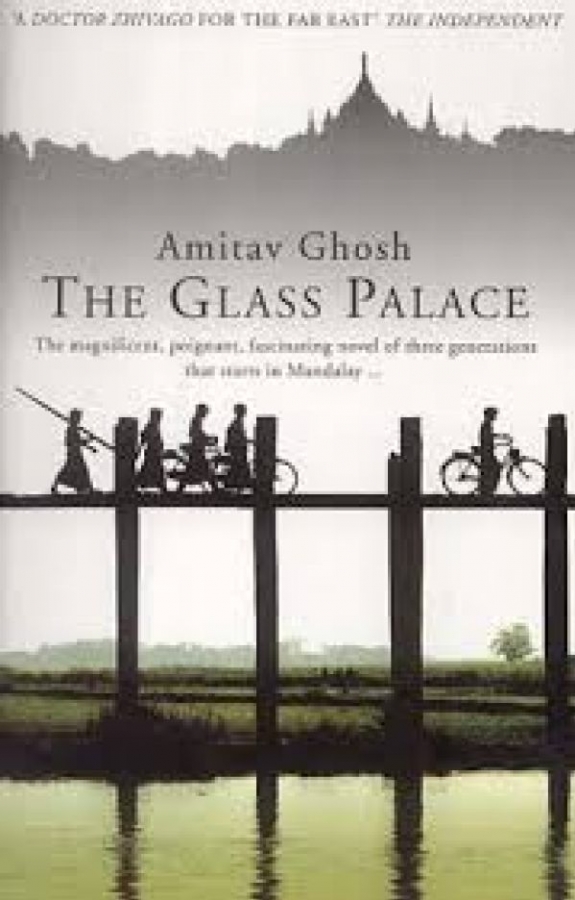
The Glass Palace
It is an insignificant book. It is set in Burma after 1886, when Britain transformed this vast kingdom into a province of British India, exiling its last sovereign. *The Glass Palace*, the novel’s title, is a metaphor for a world overtaken by imperialism and capitalism—forces to which one must adapt on pain of extinction or, at best, oblivion. The protagonist, Rajkumar, is a young boy, > a ragged Indian... with a sort of watchful determination.. there was no simplicity in his face, no innocence: his eyes were full of practicality, curiosity, appetite. He was as he was meant to be . Tradition, cultural roots, and ideal values can find no home when everything is upended and one must survive, and if possible, grow rich. Yet even in Rajkumar, already an adult when still a boy, there is room for bonds of affection and loyalty that are not > related to himself and his immediate needs, which was almost incomprehensible . It is precisely during the looting of the royal palace that the protagonist meets Dolly, the twelve-year-old handmaiden to the little princesses, daughters of the defeated and humiliated monarchs. A love is ignited that will never leave Rajkumar. The story unfolds along parallel tracks, allowing us to follow the protagonist’s social ascent alongside the life of the royal family, isolated and closely watched by the British. Amid the ruin of the ruling dynasty, Dolly matures into a reserved woman, seemingly timid, yet self-assured, cultivated, and independent. She marries Rajkumar, who has in the meantime become a wealthy businessman, young yet already portly. Yet does she do so for love, or simply because she wishes to escape a sort of gilded cloister? I cannot answer the question of whether the marriage of Rajkumar and Dolly is the fruit of true love, or merely the desire of both to trade the old for the new, tradition for the culture of dominant British imperialism. When I realized that after hours of tedious reading I was still only at 40% of the novel, I put the book aside, defeated by the flimsiness of the plot, the shallowness of the characters, and the pedestrian quality of the writing. Reading Ghosh’s book makes one want to reread Kipling’s *Kim*: a sinister bard of British imperialism, to be sure, but a writer of an entirely different caliber! Why not read it? It is tedious, pointless, banal.