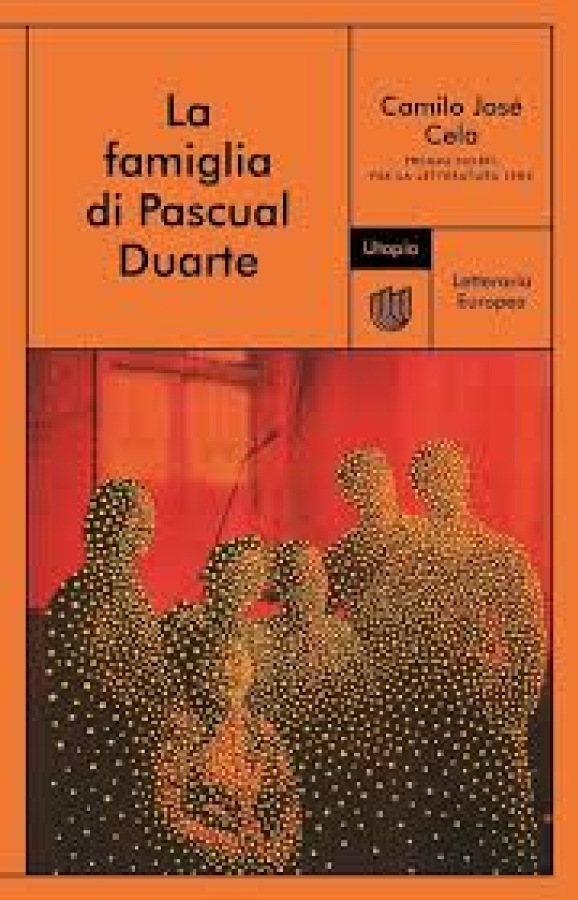
The Family of Pascual Duarte
Cela's long tale is a pervasive novel, fearsome and pitiful at the same time; one might wish to see it as a fresco of an ancestral peasant society dominated by violence, or consider it "a clear vision of man's vulnerability," as stated in the motivation for the Nobel Prize awarded to the Spanish writer in 1989. In reality, Pascual Duarte is not a victim; he is, quite simply, a murderer: > blood seems to be the relish to the bread of your life , Lola, his first wife, tells him, confessing that she has a lover. To be sure, in the long letter written in prison prior to his execution, Pascual attempts to demonstrate how he was dragged along by destiny; in the long, rambling account of how he came to murder three people (his sister's lover, his mother, and Don González, > distinguished patrician to whom he mischievously dedicates this confession of sorts), sentences recur such as: I tried to postpone > the collision that was bound to happen nonetheless, fatal as diseases and fires, as sunsets and death, because nothing could prevent it. or: > had my condition as a man allowed me to forgive, I would have forgiven, but the world is made as it is made and wanting to go against the current is not possible. After being released from prison, where he was serving the sentence for his first crime, Pascual goes so far as to accuse the leniency of the law of having dragged him > toward a worse evil. Better it would have been to stay in prison! Mad impostor or fragile soul, shaped by an unhappy childhood, by the agony > of not being able to escape evil while within us rots this charnel house of hopes stillborn.... If we take as true what Pascual tells us, we must lean toward his innocence, not before the law, but before Divine Justice: a brutal father, > tall and massive as a boulder , a mother, > tall and thin, (...) skittish and violent ; both devoid of any moral principle and of any restraint on their instincts; and then, a simpleton brother and a sister who soon abandons the home to become a prostitute; and what of Lola, who insults him, telling him he was no man, he was just like his simpleton brother. There are the dead children, one due to a restless mare and the other to the freezing wind of Castile. Pascual harbors within himself a hatred that relentlessly erupts into a bloodthirsty fury; a monster from which it is useless to escape. > I began to run; and the shadow ran too. I stopped; and the shadow stopped as well. I raised my eyes to the firmament: there was not a single cloud across its entire arc. The shadow continued to accompany me, step by step, all the way home...(...) I would have liked to put the earth between my shadow and myself, between my name and myself, between my blood and myself, this self from which, were one to strip away the shadow and the memory, the name and the blood, so little would remain.... In the Hindu conception, every individual has their own "karma," a kind of supra-temporality of being that upon death does not follow the fate of the body but passes from one life form to another in the eternal cycle of rebirths. Pascual's karma is a bloodthirsty inclination; this is the shadow that pursues him. Pushing the interpretation, one might say that underlying the narrative lies a metaphysical vision, a timeless pessimism regarding humanity. If we bring this condition into the present, if we think of the genocide in Gaza, the massacres in Ukraine, the countless conflicts across the world, Pascual's story does not remain confined to his personal tragic plight, but constitutes a kind of apocalyptic prophecy for all of humankind. As Sebastiano Vassalli writes in *3012: The Year of the Prophet* (see the review on this site), men > began slitting each other's throats with such enthusiasm that no natural or supernatural force could have stopped them. (...) Amen . Built around a clever literary device—a kind of rambling confession rediscovered by a mere transcriber—the novel possesses a seemingly disorganized plot, owing to the flow of overlapping memories and the lengthy interruptions in writing by the imprisoned Pascual; in truth, the narrative is handled exceedingly well, suffering, perhaps, from a lack of plot twists, if one excludes the dramatic murder of his mother. I do not know whether it is deliberate or an oversight: nowhere is the assassination of Don González recounted. The writing is effective, alternating tight dialogues with expansive, evocative descriptions of the settings and deep insights into the protagonist-narrator's state of mind. The other characters are supporting players. Why read it? It is a punch to the gut.
Sons and Fathers
The book comprises three novels spanning the entirety of the 1990s: *Luce del nord* from 1991, *Colpa di nessuno* from 1995, and *L’amico d’infanzia* from 1999, finished only a few months before the author’s death. All three novels revolve around a male protagonist, set against the backdrop of the Roman petite bourgeoisie and a Rome undergoing profound transformation. In *Luce del nord*, Angelo has long lived in New York, far from his family, his brother, and his mother. One day, he receives a letter from his brother, Ferruccio, who tells him of a strange dream: he is gravely wounded, and Angelo urges him to run away, to flee, as though he had faced grave danger. A few days after the dream, he learns that his brother has died. He thus decides to return to Rome, but pretends to be a friend of Angelo's, Cesare. The novel unfolds around this deception, which allows Angelo to infiltrate his brother’s life and grasp all its squalor, amid financial hardships, professional disappointments, and marital betrayals. Indeed, he becomes the lover of Ferruccio's wife, who despises Angelo yet learns to love Cesare. Angelo also reconnects with his father and grows attached to his brother’s son. The story seems to move toward a happy ending, when Angelo decides once more to flee and return to the United States, where, to gain acceptance, he begins inventing other stories anew. It is a novel of perpetual flight, wherein America represents a dream of freedom and individualism. In *Colpa di nessuno*, perhaps the most socially conscious novel of the three, the point of departure is the protagonist's need—a squalid door-to-door insurance salesman—to pick up the threads of his life: > it is time to take down the streamers, gather the paper ribbons and carnival masks, and throw everything into the basket of past celebrations . Paolo, the protagonist, meets Laura in the United States, and once she becomes pregnant, they marry and return together to Italy. To make a living, Paolo takes a job as a salesman for Italo, his father-in-law. He thus enters his wife’s family, comprised of his mother-in-law Ida, a greedy and dismal woman; Laura’s sister, Silvana; and her husband, Daniele, a violent, right-wing man. Paolo leads a squalid existence in which his marriage progressively falls apart, to the point where, one day, he discovers that his wife is cheating on him. The embrace of fatuous, crude, and vulgar values brings about Paolo's steady decline, which is repeatedly underscored by his father, a man of another generation. There is no real conflict between son and father, as the title given to this collection of novels might suggest; political, social, and intergenerational conflicts have vanished, replaced by resignation and individualism. In reality, all the characters suffer, in one way or another, from the crisis of Italian society in the 1990s, and it is precisely this theme of the decay of relationships and values that appears to define the novel. An old man he meets urges him to always remain alone. > Already now, friendship and solidarity are called complicity and omertà. Never trust anyone, never give in. It is no longer time to be together. You must never have to say we; that would already be a sign of yielding And then the author inserts an intensely evocative autobiographical note > When I was little, I believed the world was a kind of carousel made solely to amuse me. But now what dragon’s mouth have I wandered into, what sort of figures are these before me that no longer amuse me, two-bit little monsters, capable of everything and of nothing? . A crime—the murder of Italo, of which everyone believes Paolo to be guilty—becomes the cathartic element that opens the protagonist's eyes. Paolo realizes the sterility and squalor of his life, of this acquired family that drags greed and violence in its wake, as well as the malice of his wife, Laura. The novel concludes with a cry of despair and hatred. > When I think of the future, Laura, I imagine it as a vast, crowded square, where people scream and laugh. There will be men and women from all corners of the world, in clothes bought in New York, Rome, Sarajevo, Jerusalem, and Mogadishu. People of all races and origins, crossing paths and contaminating each other with history. Each with the other's story, infected with the world. Only the two of us will not be there, Laura. We, with our tangled feelings, were unable to give anything to the present, so let alone to the future. We are two specks of spit from the past that somehow ended up here. But our son, yes, he will be there. I hope he crosses the entire square, and that a roar laden with hatred accompanies him always and never leaves him, that he feeds and grows on all their malice. I will leave him to corrode them with their own teeth . *L’amico d’infanzia* is the most intense and profound novel of the three, almost premonitory of approaching death. Fausto's story is narrated by his journalist friend. It is the story of a failure. The two had been friends since childhood in a neighborhood on the outskirts of Rome and later drifted apart: Fausto began scraping a living through odd jobs, eventually ending up as a real estate salesman for a company that buys public housing on the cheap to flip it at higher prices, evicting the tenants. It is a squalid job that Fausto accepted to scrape together money so that his son, who lives far away with his mother in Milan, could study abroad. The story takes a tragic turn when Fausto, in a fit of rage, bludgeons his boss to death after being denied a loan. What follows is Fausto’s descent into hell: he lives as a vagrant, hunted by the police, yet precisely at the height of his despair he finds solidarity and help among the destitute. In the end, in a moment of lucid madness, he blows up the real estate company’s offices and is fatally wounded. Fausto's story overwhelms his friend as well, leaving him drained of energy. The narrator-friend acknowledges that “there was not the wretchedness of a single seed in the great tornado that shattered our lives,” leaving behind only vast misery and extreme existential pain. The novel ends with a profound reflection on life and death. Confronted with Fausto's death, the narrator remains bewildered by the thought > that in reality we like and hate one another solely based on the contingency of a moment and closes the novel with this stanza: “but we were born to be here / and for a while we managed / and it is this that our dry / mouths now want to sing.” Reviews emphasize above all the social hallmarks of the three novels: the 1990s, the urban and cultural decay of Italy. In truth, it seems to me that the three novels (and especially the last one) revolve around existential despair and the search, often disillusioned, for hope. The very setting of the final novel, the decay of the Roman periphery, drifts gradually toward a surreal context where everything is possible, even the most incredible occurrences: an elephant strolling through the streets of Rome, a hooded crow colonizing the city to forage, a child learning to play soccer in an empty stadium, a new life represented by the child expected by Elena, the great love of Fausto's life, the solidarity of the victim's own wife, the school principal who has become a hermit on the outskirts of Rome—all of these demonstrate that within the underbelly of urban life there still exist positive energies capable of transforming such a degraded reality.

For whom the bell tolls
The novel is set in Spain during the Civil War and unfolds over the course of a few days. Jordan, an American, is dispatched behind enemy lines to blow up a bridge in support of an offensive by the Republican army. To carry out this mission, he makes contact with a band of guerrillas, among whom he meets Maria, with whom he falls in love. The group is led by Pablo, who clashes with Jordan, and Pilar, a fiercely strong and energetic woman. Despite internal friction, the group accomplishes the mission and Jordan destroys the bridge, but is killed during the escape. The novel’s true theme seems to be the futility of war, its inherent cruelty, manifested on both sides of the front. Powerfully tragic are the pages describing the capture of a town by Pablo’s band and the slaughter of the Fascists: one by one, they emerge from the church where they have been imprisoned and are forced to pass between the ranks of villagers and partisans, only to be hurled into a ravine. At first the crowd hesitates, but soon hatred and bloodshed take over. The same cruelty is pursued by the Fascists in the murder of a group of partisans who are decapitated. The anticipation of the final assault, the presence within the partisan group of a boy still very young who, shortly before dying, defends the integrity of a Communist party leader whose son has taken refuge in Russia, and the tragic impossibility of Jordan’s band to intervene and help represent magnificent moments in the novel that, more than any others, convey the cruelty of war. Yet war is not only cruel, it is also futile; moreover, it is senseless, and it always ends in death: > whether one is afraid or not, death is difficult to accept: there is no sweetness in its acceptance . The characters are caught in a machine whose futility and absurdity they grasp, yet from which they cannot break free. The destruction of the bridge is utterly pointless, as Franco’s army is aware of the Republican attack and possesses superior air power, thus making it highly probable that they will repel the offensive. Jordan tries to warn the Republican army commander, but bureaucracy, mistrust, and infighting prevent the message from arriving in time. And Jordan knows that «he will still have to destroy the bridge». Except for Pablo, who is a murderer, all the other characters are conscious of this cruelty: from old Anselmo, who does not want to kill yet finds himself forced to do so, to Jordan, who reads the letters of a slain soldier, making it starkly evident that he was a young man, with his own loved ones, likewise swept up in a senseless civil war. War overwhelms personal feelings as well. One must not dwell on loved ones or newly found love; the absurdity lies in Jordan, at the point of death and having had to leave Maria behind, deeming himself fortunate to have lived his final days with Maria’s love. Hemingway’s style is highly articulated, more effective in its descriptions than in its dialogue, which at times proves repetitive and tedious.
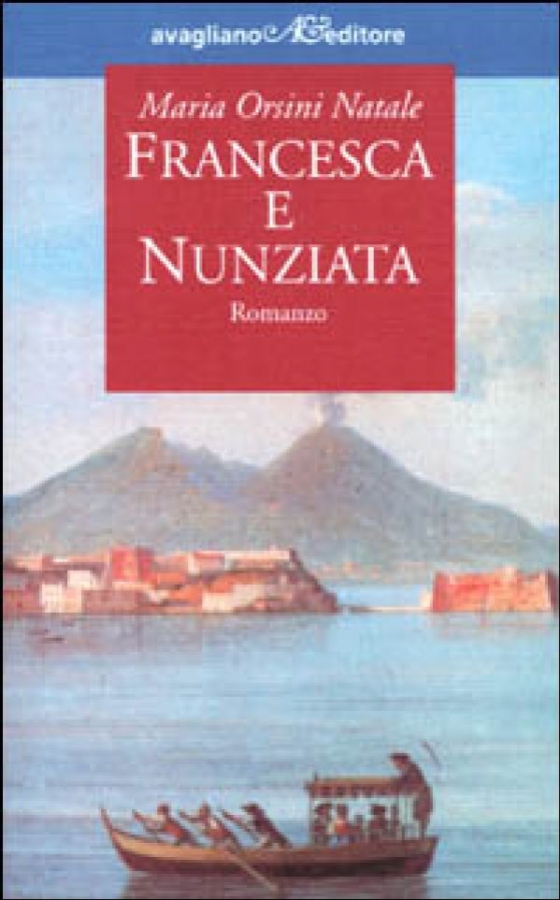
Francesca and Nunziata
Francesca and Nunziata are two women upon whom chance bestowed a shared object of love: pasta making. The novel chronicles the story of a family of Neapolitan pasta makers and their evolution from simple craftsmen into industrialists. The story begins shortly before the Expedition of the Thousand and the fall of the Bourbons. Francesca’s grandfather produces the finest pasta in Naples, enlisting his numerous offspring in the work. This is the most evocative part of the narrative, owing also to the use of Neapolitan in the dialogue. Exquisite are the scenes of the *fusillare* at work and their reception of the machine destined to replace their labor: > “Girls, girls, get your bundles ready, get your bundles ready!” Disdainful, the *fusillare* ostentatiously feigned ignorance of the intricate workings of that cumbersome contraption, but the women of the household paused beside it with delight, and the little girls gathered around it in celebration And the grandfather would sing, “Gold and diamonds has the Sultan, but I hold your braids in these hands of mine.” That was the time when > the great ranks of his family, accustomed to sacrifice, industrious and spirited, had always drawn serene happiness from every small thing, but that was the time of their fullest joy . The narrative resumes much later with Francesca, by now a major entrepreneur, a wealthy and powerful woman. As an act of thanksgiving for the recovery of one of her daughters, Francesca adopts Nunziata, a poor orphan girl. Nunziata is the only one among Francesca’s numerous children to work in the pasta factory, thus acquiring the art of pasta making from early childhood. > She hasn’t grown much, Francesca thought, she has stayed small, but she has ironclad health, and besides, she is a worker, she is just like me . Yet Nunziata is a spirited, sensual young woman: she is left pregnant by her adoptive brother, the handsome and cultured Federico. Francesca decides to marry her off to cover up the scandal, and as she bids her farewell, asks what gift she desires: > a *ruotolo* of gold, a diamond parure... And Nunziata had summoned her courage and raised her eyes to answer her. For a moment their gazes met: I want two presses for making macaroni > . In the third part of the novel, Nunziata has become a successful entrepreneur, while Francesca has suffered a series of financial misfortunes that have brought her to ruin. Nunziata’s days, in their rhythm of sunshine and anxieties, sorrows and songs, bore the distinct mark of tireless industriousness, of sacrifice without neglect, just like Francesca’s. Yet in their unfolding they were cheerier and more fortunate, and in their slow unwinding more fulfilled. It brightened her life and helped her endure: *tressette* > . Nunziata is an independent, unconventional woman, sustained by an atavistic desire to live, even off life’s smallest things. Her lovers, alongside her deep bond with Federico’s family—now fallen into destitution—place her in stark conflict with her children. Nunziata’s personal decline, opposed and isolated, is emblematic of the end of a civilization: Naples disappears, submerged beneath a blight that would dry up the working lifeblood of a proud, skilled craftsmanship and erase the vital importance of experience and expertise. The book is a grand fresco that can be read from many vantage points: a hymn to a Southern vitality too often forgotten, the history of Naples and its squandered opportunities, the evolution of an industry from manual labor to mechanization, the role of families and of women. Such a complex narrative rests not so much on its characters and plot as on a lush, captivating style, all while remaining firmly anchored in the storytelling. Beyond the first part—the most authentic and exhilarating—there are some truly magnificent pages, such as the description of the luncheon offered by Francesca. Red and yellow, arranged in quiet rows, gently withered by the fire, muted in the tone of their colors, the stuffed peppers retained glistening oils within their weakened veins, within the wrinkles of their wilting flesh, and slackened, limp and almost sensual, their splits offering a glimpse into the secret of the filling and the eyes of the black olives.” And then the final touch: “The two men of faith went off to eat them in the seclusion of the pine grove... and so in the dark, only the stone eyes of a malevolent Hercules, noseless and handless, knew the carnality of the meal.” Why read it? It is a hymn to Naples, to industry, to women, and to the Italian language.
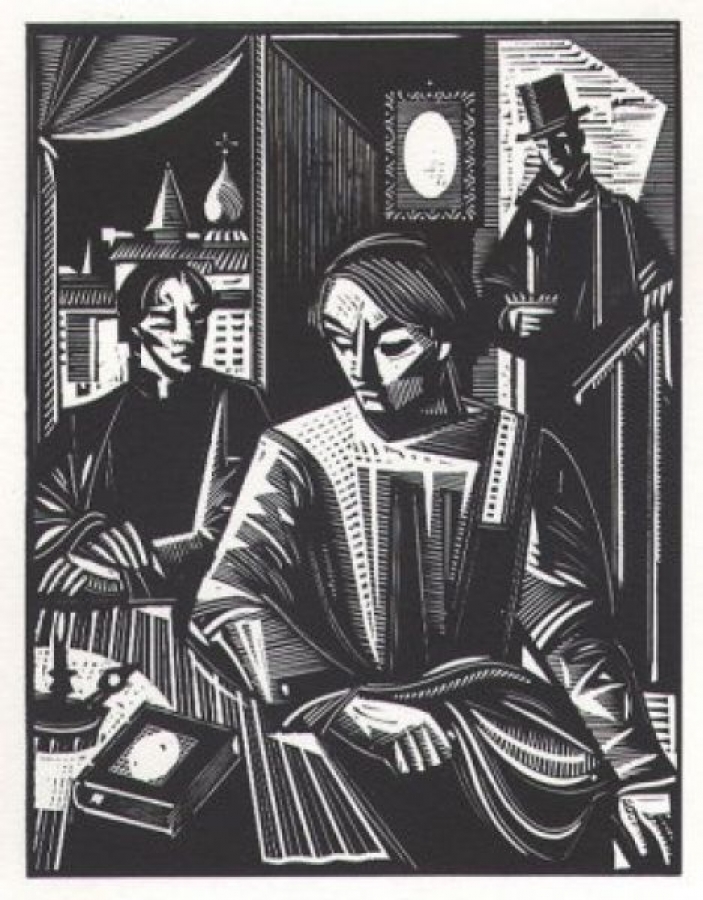
The Brothers Karamazov
The novel is set in a Russian provincial town and deals with the events surrounding the Karamazov family and the complex relationships between the father and his sons. The narrative can be divided into three fundamental parts. In the first part, the profiles of the main characters are outlined through a succession of dramatic events, in which the sons' feelings toward their father are revealed (contempt and hatred, but also the awareness of being "cut from the same cloth"), and thereby the complex, contradictory temperaments of the protagonists: Dmitri, impulsive and "animalistic," yet also swept away by passion and love; Ivan, cynical and reflective, yet also anguished by a profound sense of guilt and despair (over the suffering of humanity and the consciousness of being like his father); Alyosha, good and gentle, yet in a sense a bystander to the dramatic events and himself gripped by a sensuality inherited from his father; and finally the old Karamazov's illegitimate son, Smerdyakov, who embodies all the pain, the sense of injustice, and the hatred also present in the brothers, but in an "animalistic" and therefore unrestrained dimension. The first part of the novel, the richest in themes and resonances, depicts the philosophical and religious world of the narrative, in the extensive treatment of Father Zosima (his worldview, his death, and the disillusionment over the rapid decomposition of his corpse), and then in the dialogue between Ivan and Alyosha (the chapters *Rebellion* and *The Grand Inquisitor*). In the second part, the events leading to the murder of old Karamazov and the arrest of Dmitri are depicted. These are the most fragile chapters of the book, centered primarily on the figure of Dmitri and on two female characters: Katerina Ivanovna (Dmitri's fiancée, who nevertheless loves Ivan) and Grushenka, the woman who provides the ostensible motive for the crime (Dmitri loves Grushenka, who is in turn coveted by old Karamazov). The second part concludes with the mutual acknowledgment of love between Dmitri and Grushenka. The third part describes the trial, with the closing arguments of the prosecutor and the defense counsel. Yet the true focus of this part lies in the encounter between Ivan and Smerdyakov, and in the latter’s accusation against Ivan: Smerdyakov murdered old Karamazov because he felt sanctioned by Ivan’s departure. In truth, Ivan is the real instigator of the crime. This revelation gives rise to Ivan's descent into madness and, in a sense, to Katerina's decision to present in court a letter from Dmitri foreshadowing the murder, which will form the basis of the conviction. Critics typically speak of two levels on which the characters should be "read": the empirical and the metaphysical. In truth, one should also distinguish between the metaphysical-religious level and the metaphysical-philosophical one. From the "empirical" point of view, the rhythm of the narrative rests essentially on dialogue between the characters and is embodied in the theme of the contradiction between rationality and irrationality: the characters appear driven by two conflicting forces, yet are continually brought back to a "destiny" grounded in the intrinsic nature (in their genetic code, as one might say today) of the individual. This is the plight of the Karamazov brothers: they hate and despise their father, or take pity on him (in Alyosha's case), but in every instance they are forged from the very same nature, to which they are irremediably bound. This ineluctability of their nature is clear to Ivan (and lies at the root of his madness); it is conspicuous in Dmitri and Smerdyakov, yet it also surfaces in Alyosha, for instance in his dealings with young Kolya. As Ivan says in a conversation with Alyosha: > why lie to oneself, when all men live like this and perhaps cannot live otherwise? Are you asking me this on account of what I said just now, that one reptile will inevitably devour the other? Allow me then, in that case, to ask you a question: do you believe me capable, like Dmitri, of shedding Aesop's blood—that is, of killing him? . The second level is the religious one, which is deeply intertwined with the theme of suffering and its compatibility with the existence of God. As Ivan says to Alyosha in the chapter *Rebellion*: > if all must suffer in order to purchase eternal harmony with suffering, what have children to do with it?... I do not want harmony; I do not want it out of love for humanity... It is not that I do not accept God, Alyosha: I simply, most respectfully, return Him the ticket. If the sufferings of children have gone to replenish the sum of suffering needed to pay for the truth, I declare right now that no truth is worth such a price . There is no certainty in faith; Alyosha himself doubts the very moment he witnesses the decomposition of Father Zosima’s body, and, above all, God cannot be justified if such suffering exists in the world. The third level is the philosophical one, bound to the rise of modern man. It is in the chapter of *The Grand Inquisitor* that the conflict is articulated between Christ's sacrifice to grant men freedom of judgment and the desire of the Church (and thus of any Institution) to keep men in a state of tutelage. Thus speaks the Grand Inquisitor: > what fault is it of the weak soul if it lacks the strength to receive such terrible gifts?... And if there is a mystery, we too had the right to preach mystery and teach men that it is not the free choice of their hearts that matters, nor even love, but mystery, to which they must bow blindly, even against their conscience. And so we have done. We have corrected Thy work and founded it upon miracle, mystery, and authority . The link between the three levels (empirical, religious, and philosophical) is forged by Ivan's assertion that everything is possible for man: this articulates a concept of the "man without limits" that lies at the root of all the novel's events, its philosophical framework, and the contradictions present within the characters and the spirit that animates the book.