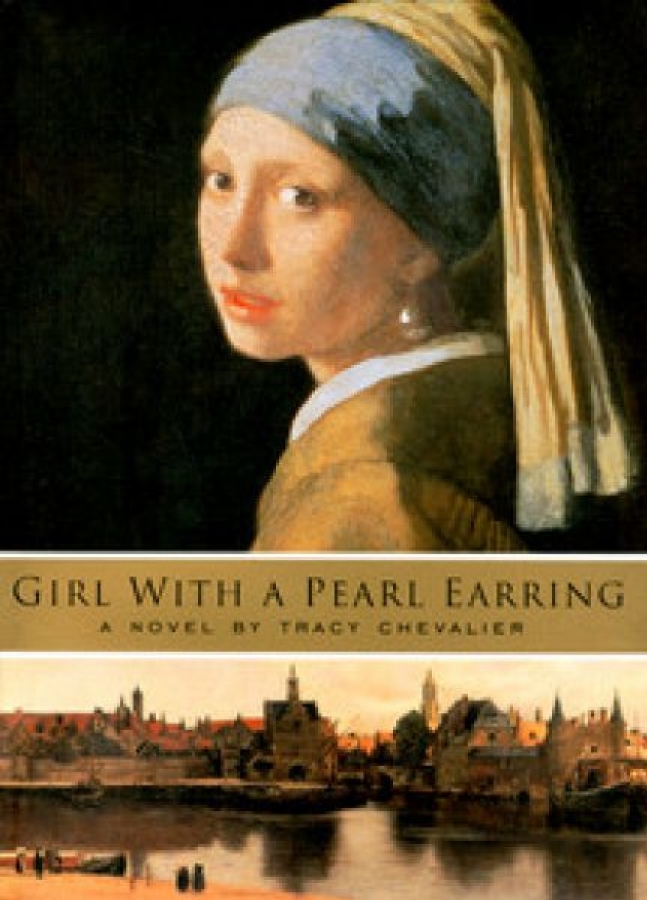
Girl with a Pearl Earring
The book is set in seventeenth-century Holland and recounts the story of a young maid who becomes, first, a painter's assistant and then the subject of a portrait. Layered together are the young woman’s intimate personal story (her family, her working environment, her betrothal, and the blandishments of a wealthy merchant), the depiction of the milieu, and the execution of a portrait, complete with the interplay of light and shadow and the construction of colors. Another theme is the painter’s obsession, which subordinates everything (even the girl’s honor) to the demands of his art. It was a major commercial success, but in all honesty it strikes me as a modest book: one finds neither an incisive analysis of the characters’ emotions, nor a compelling depiction of the setting (which lingers in the background without truly defining the work), nor does the creation of the artwork take center stage, along with the transition from religious painting to portraiture, in which real figures emerge. The style possesses the merit of being very simple and clear, but the narrative pacing unfolds monotonously, devoid of tension.

The given day
We are in Boston in 1919, at the close of the First World War. The novel's protagonists are Danny, a police officer from a traditional white family whose patriarch is a high-ranking official in the police department, and Luther, a Black man who could have been a formidable baseball player, but, because he is Black, must resign himself to menial jobs. This is, therefore, a deeply stratified American society, one in which the relations between social classes and different ethnic groups are clearly demarcated. Both protagonists feel ill at ease within this rigid social framework. Danny lives in the Italian neighborhood and is drawn to the social and ideological upheavals that characterize the years immediately following the end of the Second World War. At first, it is mere curiosity, but he soon finds himself increasingly involved. He is sent to infiltrate anarchist and Bolshevik groups as an informant, only to discover that they are simply demanding a more just society.. Meanwhile, he attends meetings of police officers demanding fairer wages and less grueling working conditions. He soon becomes their leader. Luther, in turn, is forced to flee his hometown—leaving behind a wife and child—after killing some criminals. He arrives in Boston and finds work with Danny’s father’s family: he is blackmailed by a corrupt cop who attempts to implicate him in fabricating evidence to frame the Black community for subversive activities. As this brief synopsis shows, the plot is remarkably intricate and packed with twists and turns, in the vein of the best American thrillers. It culminates dramatically with the Boston Police Strike of 1919, which leaves the city at the mercy of criminals, petty thugs, and subversives for two days. Danny emerges defeated: as the leader of the striking officers, he is accused of inciting his colleagues to abandon their posts (in reality, it was political machinations that left the city abandoned). At the beginning of the novel, Danny believes that this world belongs to men like his father (hierarchical, authoritarian, convinced that everyone must know their place), but he comes to realize that this is neither a genuine nor a just world. > - I'll tell you, Luther, it’s been a terrible year-. Luther thought back on his own year and it made him laugh, really laugh.- What-, Danny said, Luther gave him his hand:- you and me together- What do you think you do, Danny replied, when everything you have done in your life turns out to be a damn lie? Build a new life. I guess Luther replied. The most compelling aspect of the book is that a social issue—such as the great Boston Police Strike of 1919 and the birth of the American labor movement—is framed within the conventions of a thriller, making the narrative gripping and fast-paced. Like all American thrillers, it ultimately proves verbose, redundant, and even muddled. Many of its narrative threads get lost in the sheer mountain of pages, and the colloquial, distinctly American style fails to sustain the momentum, being far better suited to delivering plot twists than to exploring character and circumstance in depth. Everything is left far too unresolved. Why read it? The historical context is intriguing for us Europeans, who are unfamiliar with American history.
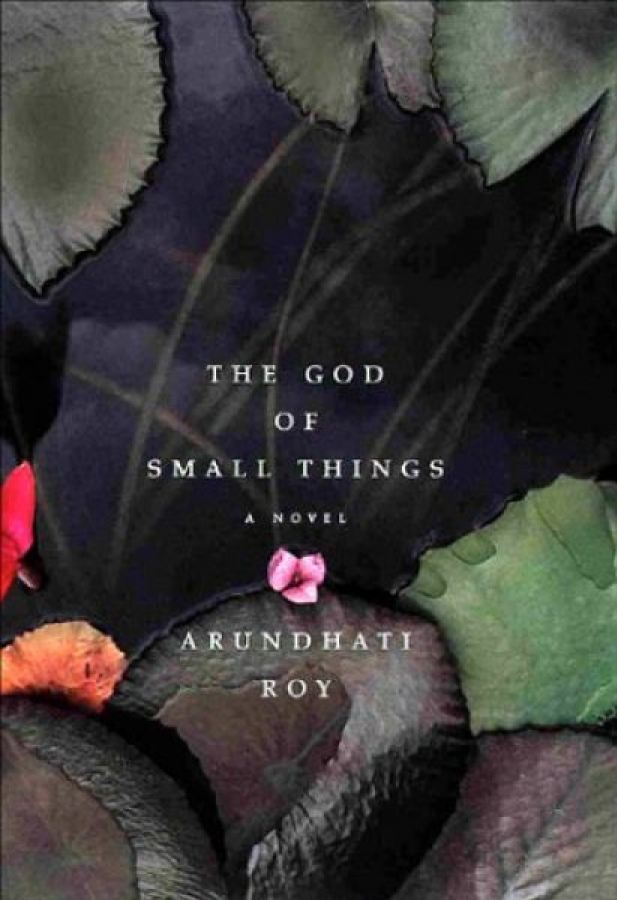
The God of Small Things
The narrative unfolds around an Indian family of the Greek-Syrian faith and takes place in a dimension that is, in some sense, timeless. The point of departure—and also of arrival—is the death of a young girl, Sophie Mol, who arrives in India with her mother to meet her father and drowns in the river during a boat trip with her cousins, the twins Rahel and Estha. This episode forms the watershed between an atmosphere of serenity and the devastation of the family, most notably the separation of the two twins. The almost symbiotic bond between Rahel and Estha is one of the book’s central themes, though more apparent than real. Indeed, none of the characters are analyzed or explored in depth; rather, they remain on the surface, at times in an exaggerated, almost caricatural form. The true protagonists of the book are “the things,” the environment surrounding the characters, in particular the river. The final chapter of the book is titled *The Cost of Living*: the anguish and precariousness that can be endured only through an attachment to small things: > Even later, on the thirteen nights that followed this one, instinctively they stuck to the Small Things. The Big Things ever lurked inside. They knew that there was nowhere for them to go. They had nothing. No future. So they stuck to the small things . The river, the flora, the insects, the birds, a boat, an abandoned house are the small things to cling to, shifting in shape and color according to one’s mood. In this sense, the small things do not reflect the human soul, its feelings and sensations; rather, they take on a life of their own in a dimension alien to Western culture, born as they are of despair. > He was exasperated because he didn't know what that look meant. He put it down to some sort of indifference, some sort of despair. He didn't know that in some places, like the country that Rahel came from, various kinds of despair competed for primacy. And that personal despair could never be desperate enough. That something happened when personal turmoil dropped by at the roadside shrine of the vast, violent, circling, driving, ridiculous, insane, unfeasible, public turmoil of a nation. That Big God howled like a hot wind, and demanded obeisance. Then Small God (cozy and contained, private and limited) came away cauterized, laughing numbly at his own temerity. Inured by the confirmation of his own inconsequence, he grew resilient and truly indifferent . The style and narrative rhythm oscillate between two extreme poles: a slow and at times muddled progression, with a lush prose occasionally reminiscent of Rushdie (without ever reaching that author’s almost D’Annunzian baroque); and sudden accelerations with a more concise sentence structure (especially in dialogue), as though conveying the author’s haste to make up for the time spent in the preceding pages. Is this style deliberate? It is difficult to say, but it undoubtedly leaves an impression of fragmentation and dispersion that weighs the book down and renders it less accessible, at least on a first reading. Undoubtedly splendid, however, are the descriptions of nature, especially for their attentiveness to its living elements: the insects and the birds.
The Golden Notebook
It is the mid-1950s in England. Anna is a writer living off the royalties of her successful novel, set in Africa during the Second World War. Divorced after a brief, loveless marriage, she is the mother of a young daughter and a friend to Molly, who is likewise divorced from an immensely wealthy man and the mother of a twenty-year-old son. "Free women," independent, shouldering the burden of raising their children, yet destined for loneliness and relationships with men incapable of meeting women's needs: > women's emotions are still geared to a kind of society that no longer exists. My deep emotions, the truest ones, are about my relationships with men. One man. But I don't live that kind of life, and I know few women who do. I ought to be like a man, care more for work than for people; I ought to put my work before everything, and take men as they come, or find an ordinary but well-off man for financial support, but I won't do it, I can't be like that . Anna can no longer write and turns to a psychoanalyst, who advises her to keep a diary. *The Golden Notebook* consists of four notebooks: the black one, concerning Anna the writer; the red, for politics (Anna is a member of the British Communist Party); the yellow, for stories outside of real experience; and the blue, which attempts to be a genuine diary. A spiral unfolds in which reality blurs with imagination, a sort of descent into the depths of consciousness. It all unfolds unexpectedly, because > the things that are important in life advance furtively, by surprise; one doesn't expect them, they take no shape in the mind. They are recognized when they appear, that is how it is . The book becomes a sort of box which, when opened, > instead of beautiful things, there is a mass of fragments and pieces. Not a whole thing, broken into fragments, but little pieces from everywhere, from all over the world.... seeing the mass of horrible fragments was so painful that I could not look, and I closed the box . But what is so terrible within consciousness? The dissolution of human bonds, the pain that inexorably marks relationships between individuals, the chaos of a world hurtling toward destruction, and hence loneliness within chaos, from which the only possible remedy seems to be the aridification of emotion—erecting a defense against the destruction of human relationships, against their reduction purely to the forces "of property, money, and power." Anna’s is an existential and cosmic suffering that cannot but lead to madness. Yet at the end of the journey, Anna realizes that salvation is anchored in the deepest bonds: those of affection and care. At the climax of a deeply fraught passage, a simple sentence offers the alternative to death: "I can hear Janet (Anna’s daughter) coming up the stairs." It is a highly complex novel, philosophically as well, open to many readings: the exhaustion of hope for the future, of the grand ideologies; the culmination of a political and literary trajectory asserting female independence—one that began with Jane Austen's heroines and ends in Anna's profound solitude, where, in a passage unquestionably shocking for the era in which the book was written, she declares that she prefers masturbation to sex with men incapable of love; the theme of psychoanalysis and thus the discovery of one's unconscious; literature as imagination, but also as a search for self, as memory and nostalgia. What makes the book timely is its reflection on the repercussions of a world in destruction upon individual consciousness, the author’s ability to grasp how the absence of a broader hope has a devastating impact on human relationships themselves: one cannot be saved by retreating into the domestic sphere, nor, however, can one rely on outworn ideologies. The narrative is sustained by an elegant prose style, pleasurable to read. The multi-layered structure of the tale would have required a tremendous ability to maintain a compact narrative architecture, which instead fragmented and dissolved. That very intellectual richness, while often offering compelling food for thought, does not favor the frugality and concision of the narrative. Why not read it? A few pages hold up well, but the overall reading proves ponderous and prolix.
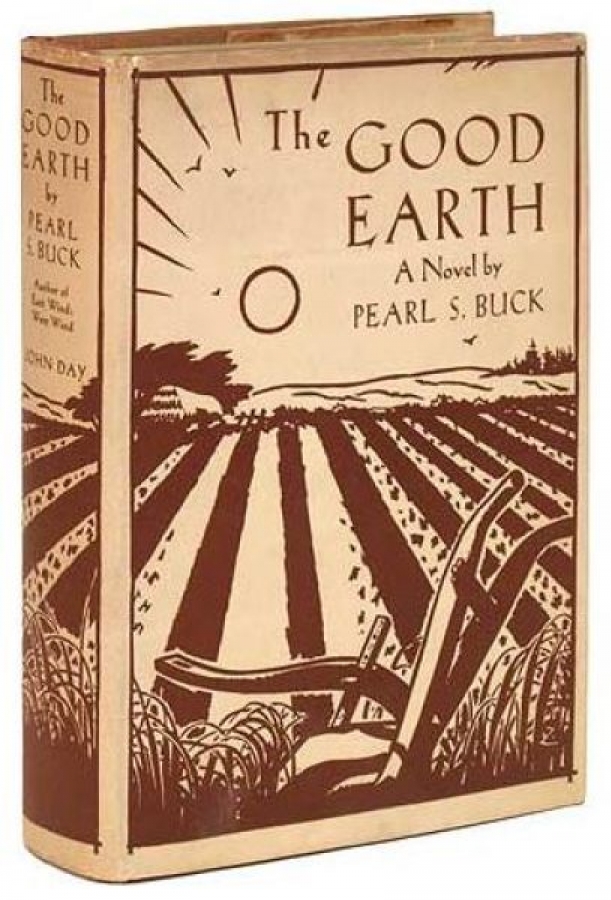
The Good Earth
The book is the saga of a Chinese peasant family who, from a state of abject poverty, becomes exceedingly wealthy following the discovery of a hoard of jewels, all of which are invested in the purchase of land. The protagonist is Wang Lung, an impoverished peasant who marries the maidservant of a great and powerful family. The bride, O-lan, is a plain, taciturn woman, yet tenacious and a tireless worker. She proves to be the peasant's true fortune, as much for her capacity for labor as for her wisdom and common sense. Forced to abandon their land following a severe famine, the couple moves to the city, where they lead a life of bitter hardship. During an uprising, O-lan, drawing on her experience as a servant, uncovers a hidden cache of jewels and gives them to her husband, keeping only two pearls for herself. Thus begins the fortune of Wang Lung, who betrays his wife by taking a new bride and relegating the woman to a subordinate status. O-lan’s illness and subsequent death bring home to her husband her profound importance, leaving him to feel her absence deeply. The book closes somberly with the sons’ decision to sell the land, bringing to an end a family cycle that had made the earth its steadfast anchor. The true subject of the book is the land, and consequently the quintessential peasant yearning to possess as much of it as possible. Another central figure is O-lan, who embodies the traditional role of women, along with their familial and social function. And it is precisely the examination of this character—who never mounts any genuine rebellion against her husband—that exposes the author’s conservative outlook, revealing her inability to offer a realistic, unvarnished reading of the female condition in Chinese society, or to chart a path toward emancipation that could nonetheless have been identified, even if at the cost of some strain on historical reality. Likewise, the other characters, both male and female, operate entirely within established social conventions, with the sole exception of one son who chooses the path of revolution over the quiet life of a landowner. There is no aspiration toward change, and everything is reduced to a complacently sentimental fatalism. The most compelling pages of the book are the opening ones (Wang Lung going to claim his bride-to-be from the powerful household) and the depiction of urban life, with the contrast between city and countryside, the impact of early social revolutions, and the presence of foreigners. Thereafter, the narrative turns maudlin, submerged in an often cloying pietism. While the opening seems driven by an ambition to provide a portrait—however raw and realistic—of rural Chinese life (with faint echoes of Zola’s *Earth*), this subsequently dissolves into an apologetic approach that relegates the Chinese setting to mere backdrop. The pacing of the book remains consistently effective, making for a swift and effortless read; the language is rich at the outset, drawing on the lexicon proper to peasant existence, only to thin out into an increasingly impersonal and detached English. The prose thus accentuates the drift toward a narrative that grows steadily less incisive and alive.
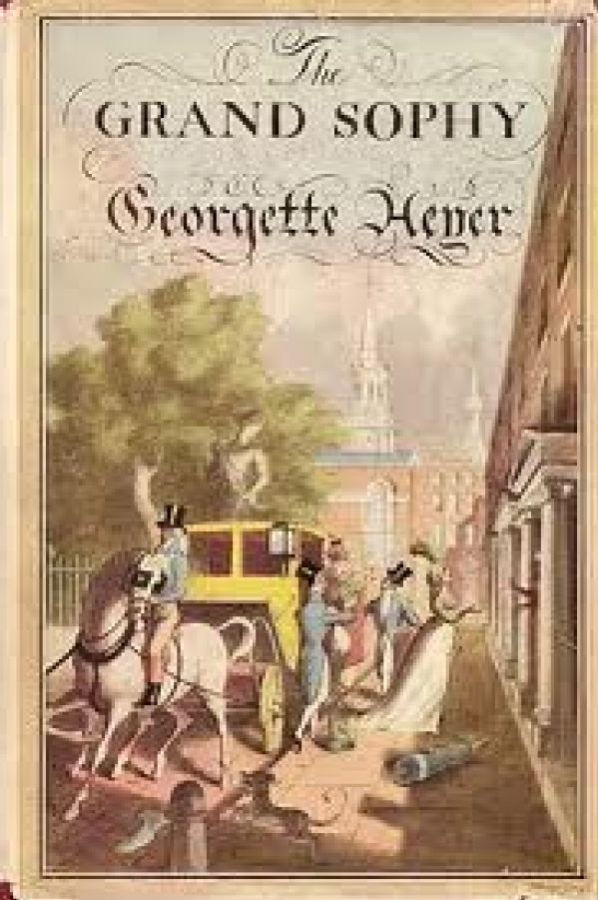
The Grand Sophy
Georgette Heyer was one of the most popular twentieth-century English writers. *The Grand Sophy*, recently translated into Italian, chronicles the intrusion of an independent, daring, and willful young woman into a traditional family of the English upper nobility at the beginning of the nineteenth century. The novel opens with Sir Horace’s unexpected request to his sister, the mild-mannered Lady Ombersley, to host his seventeen-year-old daughter, Sophy, for several months. The reader is immediately introduced to the cast of characters and to the circumstances from which the narrative unfolds: the two eldest children, the authoritarian and short-tempered Charles and the “so typically English” Cecilia, a female figure straight out of Jane Austen; the family’s financial ruin following Lord Ombersley’s gambling debts; and the providential inheritance bequeathed to Charles, which has cast him in the role of head of the family, fostering an atmosphere of subservience and reverent dread among his brothers and numerous sisters. Then there are the impending marriages. Charles has engaged himself to Miss Wraxton, unquestionably of high breeding and moral standing, yet detested by the Ombersleys for her patent intention to impose order on a household management she considers far too lax and permissive. Cecilia has accepted Lord Charlbury’s suit, yet has become infatuated with a handsome, penniless young poet. Lady Ombersley’s anxieties are thus manifold; she initially attempts to resist her brother’s insistent pleas, but ultimately agrees to take Sophy in, expecting a timid adolescent eager to be welcomed into the warmth of a home, having been orphaned of her mother as a young child and raised by a father, Sir Horace, who was perpetually on the road. She is consequently left stunned and somewhat alarmed when, accompanied by a mountain of luggage, a greyhound, a small monkey, and a splendid black horse, there appears an imposing girl—not pretty, but > built on generous lines, tall, with a fine bosom, an intensely lively countenance, and a wealth of rich brown hair under one of the most dashing hats her cousins (the numerous young Ombersleys) had ever seen . Her appearance reveals the girl’s character: impatient of rules, stubborn, capricious, and generous all at once, but above all > Sophy could not see anyone in trouble without instantly wishing to discover the cause, and, if possible, to set it right . This attitude cannot fail to bring her into conflict with Charles, by now accustomed to commanding. The girl causes a scandal (driving unchaperoned through London in a racing carriage!), flouts his directives, and openly challenges his betrothed, a sanctimonious busybody. Above all, however, Sophy schemes to make people happy, brushing aside the dictates and conventions of polite society. Yet, as so often happens, strong personalities relish encountering minds capable of defying them, and gradually Charles falls in love with Sophy. Could it be that the girl had been maneuvering from the very outset to conquer her sullen and difficult cousin? The plot is the novel’s greatest strength: unexpected twists, brisk dialogue, and Sophy’s subtle machinations coming to fruition in the teeth of adversity, malicious gossip, and the opposition of Miss Wraxton—virtually the only character who makes a pitiful attempt to thwart her. One senses that quintessential self-critical complacency of English culture, which views itself as rigid and conventional in contrast to Continental culture, imagined conversely as nonconformist and free. It is a trope reflected in the overly schematic portrait of Sophy—monotonously self-consistent, far too assured and mature for her years—and in the profiling of the other characters, so formal and predictable. Cecilia and Charles are the exceptions. The former asserts her complete independence—unprompted, in this instance, by her exuberant cousin—the moment she declares that she does not love Charlbury, but intends to marry the dreamy, handsome poet. Yet it will ultimately be Sophy who plays precisely upon the girl’s ingrained English values—her regard for propriety and respectability—to lead her back to desiring her original betrothed. Charles, on the other hand, represents the synthesis. While it is true that he is mindful of society’s rules and conventions, there resides within him that Elizabethan vigor that underpinned the British Empire. He is, after all, the hero, and one is left to wonder whether it will be he who changes Sophy, molding her into the noblewoman her rank naturally calls her to be. The scene in which Charles and Sophy declare their love is so thoroughly dominated by him that it raises the apprehension that Sophy’s future may simply be to yield to the conformism that surrounds her. Why read it? The plot is full of twists—somewhat predictable, perhaps, but thoroughly entertaining.
The Great Gatsby
As I set out to read this novel, my mind raced at once to another great book: *Reading Lolita in Tehran* by Azar Nafisi. The author imagines *The Great Gatsby* being put on trial; it stands accused of being the emblematic expression of bourgeois society, of a vacuous and amoral world in which all that matters is self-fulfillment. Over the course of the imaginary trial, one comes to understand that the true theme of Fitzgerald’s novel is entirely different: it speaks of the failure of a dream. Nafisi writes: > dreams.... they are perfect, ideal, complete in themselves. How can you impose them on a constantly changing, imperfect, and incomplete reality? (...) Gatsby wanted to fulfill a dream by retracing the past, and in the end he discovered that the past was dead, the present a disgrace, and there was no future. Was this not similar to our revolution, which had imposed itself in the name of our collective past and destroyed our lives in the name of a dream? These are considerations that would lead us far afield; it is better to turn to the narrative itself. In the rampant New York society of the 1920s, a young man mysteriously appears: seemingly wealthy, he lives in a splendid mansion where he hosts magnificent, crowded receptions; his conversation and his manners are exquisite and formal, so much so that he is thought to have studied at Oxford. Who is he? Where does he come from? What is the source of so much wealth? The most disparate, fantastical rumors spread about him, all imbued with a suspicious fascination with his past. Only the young Nick, the narrator of the great Gatsby’s story, grows fond of the man, because > it was an extraordinary gift for hope, a readiness for love, such as I had never found in any other person and likely never will . One arrives at an acquaintance with Gatsby leisurely, during a party that, in the sum of its constituent elements (narrative pace, dialogue, situations, characters), recalls the volume *The Guermantes Way* from Proust’s masterpiece, *In Search of Lost Time*; but when we suddenly meet Gatsby, the prevailing mediocrity vanishes in an instant. > He smiled understandingly. (...) It was one of those rare smiles that possess a quality of eternal reassurance. (...) It faced, or seemed to face, the whole eternal world for an instant, and then concentrated on you with an irresistible benevolence toward you. It understood you as you wished to be understood, believed in you as you would have liked to believe in yourself. Could the true theme of the novel not be a great friendship—that between Nick and Gatsby? Slowly the story unfolds. Gatsby once had a love affair with Daisy; he left her to fight in the Great War, and also because he was poor and knew he could not aspire to a wealthy young woman. He returned after five years, determined to find his old love again; he is convinced he can win her back, not least because he now has the money to do so. > No amount of fire or ice can challenge what a man has kept hidden in the mysteries of his own heart . Nick’s words, filtered through affection and imagination, lead us to the encounter between Gatsby and Daisy. > He knew that when he kissed this girl, and forever bound his unswerving visions to Daisy’s perishable breath, his soul would never again waver like the mind of God. So he waited, (...) then kissed her. At the touch of his lips she blossomed for him like a flower and the union was complete. (...) I was reminded of something, an elusive rhythm, a fragment of whispers heard somewhere long ago. For a moment a phrase tried to take shape and my lips parted like a mute’s, as though there were no more breath in them than a startled wisp of air. But they made no sound, and what I had almost remembered was incommunicable forever . Such romantic love cannot have a happy ending! Daisy is a shallow young woman; after viewing Gatsby’s vast wardrobe, she begins to weep bitterly: > they are such magnificent shirts, (...) I’ve never seen such beautiful ones before . Gatsby must pay > a high price for living too long with a single dream . He is killed in his garden: > a new world, material without being real, where poor ghosts, breathing dreams like air, drifted aimlessly about... like those white, fantastic figures gliding toward him through formless trees . To understand the great Gatsby, one must begin with the narrator. In his “more vulnerable years,” the young Nick received this advice from his father: > whenever you feel like criticizing anyone, remember that not everyone has had the advantages that you’ve had . Nick interpreted this guidance as a reason to avoid passing judgment, to be merely a spectator; yet he is, in fact, an impassioned young man in search of an ideal; and thus the great Gatsby is the personification of the dream of a young man, reserved by nature, visionary in heart. Through the great Gatsby, he elevates himself above mediocrity, committing himself to the very end in a bond with someone and something. The great Gatsby is a myth, he is the future, he is what we long to be. If the great Gatsby is the product of Nick’s imagination, it is only fitting that the narrative should not be a mere chronicle, but rather rest upon an evanescent, unreal, evocative prose. The plot is mundane, the dialogues are elegant yet often predictable, the characters are stereotypes, serving solely to throw Gatsby into relief. Why, then, such fascination? What captivates us in reading, what leads us into the mysteries of our own hearts and allows us to dream, is the narrative style, the words, the architecture of the sentences: a literary masterpiece. Why read it? Splendid!