Finished reading on: January 06, 2011
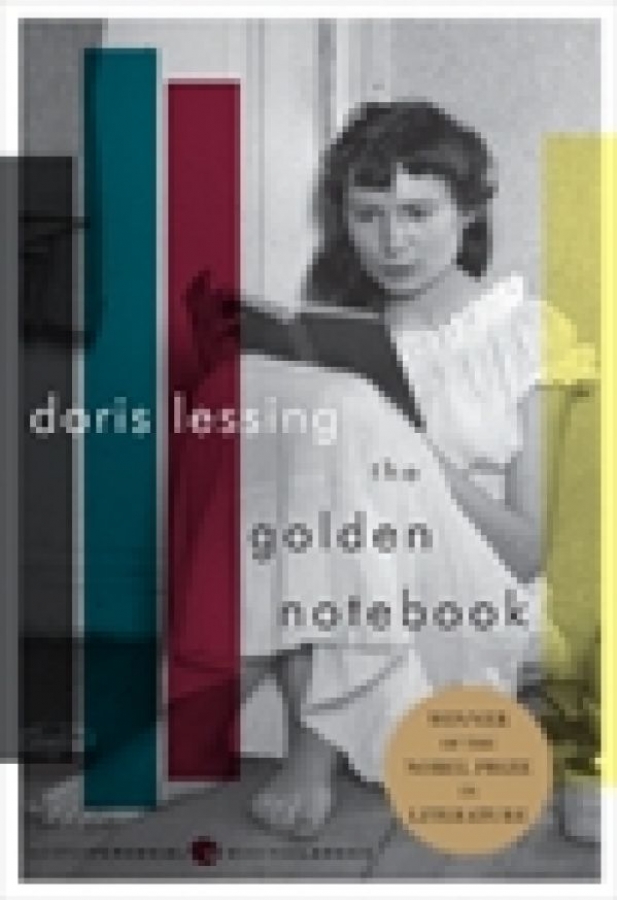
The Golden Notebook
AI Translation Notice: This review was translated from the original Italian using artificial intelligence. Book quotes and excerpts are translated interpretations and will not match the author's original English phrasing or official published translations.
It is the mid-1950s in England.
Anna is a writer living off the royalties of her successful novel, set in Africa during the Second World War.
Divorced after a brief, loveless marriage, she is the mother of a young daughter and a friend to Molly, who is likewise divorced from an immensely wealthy man and the mother of a twenty-year-old son.
"Free women," independent, shouldering the burden of raising their children, yet destined for loneliness and relationships with men incapable of meeting women's needs:
women's emotions are still geared to a kind of society that no longer exists.
My deep emotions, the truest ones, are about my relationships with men.
One man.
But I don't live that kind of life, and I know few women who do.
I ought to be like a man, care more for work than for people; I ought to put my work before everything, and take men as they come, or find an ordinary but well-off man for financial support, but I won't do it, I can't be like that
.
Anna can no longer write and turns to a psychoanalyst, who advises her to keep a diary.
The Golden Notebook consists of four notebooks: the black one, concerning Anna the writer; the red, for politics (Anna is a member of the British Communist Party); the yellow, for stories outside of real experience; and the blue, which attempts to be a genuine diary.
A spiral unfolds in which reality blurs with imagination, a sort of descent into the depths of consciousness.
It all unfolds unexpectedly, because
the things that are important in life advance furtively, by surprise; one doesn't expect them, they take no shape in the mind.
They are recognized when they appear, that is how it is
.
The book becomes a sort of box which, when opened,
instead of beautiful things, there is a mass of fragments and pieces.
Not a whole thing, broken into fragments, but little pieces from everywhere, from all over the world....
seeing the mass of horrible fragments was so painful that I could not look, and I closed the box
.
But what is so terrible within consciousness? The dissolution of human bonds, the pain that inexorably marks relationships between individuals, the chaos of a world hurtling toward destruction, and hence loneliness within chaos, from which the only possible remedy seems to be the aridification of emotion—erecting a defense against the destruction of human relationships, against their reduction purely to the forces "of property, money, and power."
Anna’s is an existential and cosmic suffering that cannot but lead to madness.
Yet at the end of the journey, Anna realizes that salvation is anchored in the deepest bonds: those of affection and care.
At the climax of a deeply fraught passage, a simple sentence offers the alternative to death: "I can hear Janet (Anna’s daughter) coming up the stairs."
It is a highly complex novel, philosophically as well, open to many readings: the exhaustion of hope for the future, of the grand ideologies; the culmination of a political and literary trajectory asserting female independence—one that began with Jane Austen's heroines and ends in Anna's profound solitude, where, in a passage unquestionably shocking for the era in which the book was written, she declares that she prefers masturbation to sex with men incapable of love; the theme of psychoanalysis and thus the discovery of one's unconscious; literature as imagination, but also as a search for self, as memory and nostalgia.
What makes the book timely is its reflection on the repercussions of a world in destruction upon individual consciousness, the author’s ability to grasp how the absence of a broader hope has a devastating impact on human relationships themselves: one cannot be saved by retreating into the domestic sphere, nor, however, can one rely on outworn ideologies.
The narrative is sustained by an elegant prose style, pleasurable to read.
The multi-layered structure of the tale would have required a tremendous ability to maintain a compact narrative architecture, which instead fragmented and dissolved.
That very intellectual richness, while often offering compelling food for thought, does not favor the frugality and concision of the narrative.
Why not read it? A few pages hold up well, but the overall reading proves ponderous and prolix.