
Bel-Ami
The novel is largely set in Paris during the 1880s, the period of the Third Republic following the fall of Napoleon III’s Empire. France, governed by an unscrupulous and corrupt political class, is embarking on its colonial adventure with the conquest of North Africa. Georges Duroy is a young man > tall, well-built, fair, with a reddish-tinged chestnut blondness, upturned moustaches that seemed to foam upon his lips... he looked remarkably like the worst rogue of popular romance . He is a young man from the provinces who has arrived in Paris without any precise aim, save for the allure of > places where _filles publiques_ swarmed, their dance halls, their cafés, their streets; he loved to follow them, speak to them, use familiar address, breathe in their violent perfumes . In short, he is a good-looking fellow, shallow and conceited, who will rightly come to be nicknamed Bel-Ami. Penniless, he can do little more than drift with the crowd until he happens upon a former comrade from his military service, Forestier, who has become the political editor of the newspaper _La Vie française_, owned by Monsieur Walter, an ambitious social climber who entwines business and politics, weaponising the press for his own, often illicit, ends. His friend secures him a post at the newspaper, and thus, despite himself, the young man launches into a journalistic career. Maupassant depicts with subtle irony this nascent world of the press, already by that time a compliant instrument in games of power. Duroy’s swift indoctrination enlightens the young man as to the true nature of journalism. One day, he is dispatched alongside a more seasoned colleague to interview several ambassadors. The two stop at a café; after all, there is no need to gather actual news—it suffices to construct it from secondhand information, even inventing it if necessary, and to cobble together with minimal effort an article containing precisely what the master desires. Are we speaking of nineteenth-century France or of contemporary Italy? Moving in Forestier’s social circle allows the young man to meet two women who will prove pivotal to his Parisian fortunes: Clotilde, "a little brunette, of the sort one calls pretty dark-haired women," and Madeleine, Forestier’s wife. The former shares Duroy’s tastes: she loves pleasure, is unpretentious, and takes life as it comes. She soon becomes Duroy’s ideal mistress, the only woman in whose presence he feels truly at ease and for whom he feels genuine sexual attraction, perhaps because Clotilde is somewhat of a _fille publique_. Madeleine is a modern, independent woman who relishes meddling in political and financial intrigues. As a woman, she cannot expect to play a leading role in the public sphere; she operates instead from behind the scenes through her men—her husband (a mediocre sort), her powerful lover, and Duroy himself, who allows himself to be steered, even as he chafes at her intellectual superiority. For Bel-Ami is vain and frivolous, yet the acute awareness of his own intellectual and moral inferiority breeds in him a vengeful resentment toward the very people from whom he receives aid—often crucial aid—for his career. Upon Forestier’s death, Duroy marries Madeleine; their relationship resembles a business partnership far more than a conjugal bond. Bel-Ami knows full well that Madeleine has several lovers (all men of prominence and power), but he cares little, not least because he too reaps tangible benefits from his wife’s connections: confidential intelligence, money, and honours. Yet he consistently harbours a certain bitterness and disdain toward Madeleine, who endures it patiently, perhaps out of genuine affection for the young man. Out of pure caprice and vanity, Duroy also seduces Madame Walter, the wife of the newspaper’s proprietor; she proves, however, to be a tiresome mistress, having fallen genuinely in love with him and being plagued by guilt over betraying her religious and moral values. How curious—a sincere person in a world of artifice! Life suspended between Clotilde’s eroticism and Madeleine’s intellect might have carried on placidly enough—setting aside the tedium of his liaison with Madame Walter—were it not for Duroy’s decision to marry the newspaper proprietor’s young daughter (and thus Madame Walter’s child). He must rid himself of his wife, and so he arranges for Madeleine to be caught in flagrant adultery, thereby securing a divorce. He then succeeds in marrying the young and wealthy Walter girl, once again through deceit: he persuades the girl (not yet eighteen) to elope with him, creating the necessary pretext for a shotgun wedding. Has Duroy achieved his ends: power, wealth, success? In reality, Bel-Ami’s exploits—the betrayals, the ignominious acts, the abused affections—do not stem from the pursuit of grand ambitions: the young man seeks merely the gratification of his vanity. On the day of his lavish wedding, Duroy > walked slowly down the high steps between two rows of spectators. Yet he saw no one: his thoughts drifted back to the past, and before his eyes, dazzled by the blinding sun, hovered the image of Madame de Marelle (Clotilde), rearranging before the mirror the curls upon her temples, which were always dishevelled when she rose from bed The book may be regarded as a realist novel, insofar as it portrays, with a touch both light and brutal, Parisian high society, power struggles, the role of the press, the enchantment of the boulevards, and even emergent artistic currents. It is a period of monumental upheaval, cultural as well, yet an atmosphere of vacuity pervades the narrative. The social milieu, much like certain existential themes (death, for instance), serves merely as a backdrop to Duroy’s transformation into Bel-Ami, and thence into the wealthy son-in-law of a powerful bourgeois grandee. The young man slips down a moral slope, occasionally feeling revulsion at his own deeds, only to shrug off these fleeting qualms. He is embarrassed when Clotilde suggests he meet her husband—with whom the young man will subsequently become fast friends. When Madeleine inherits a substantial sum from a lover, the young man initially refuses with righteous indignation, as accepting would lay bare his wife’s liaison with the man; yet he soon convinces himself—and seeks to convince Madeleine—that if he pockets half the estate, appearances are preserved, and all is well. It has been called the novel of money, of the press, of politics and careerism; in truth, it is the book of vacuity. And it is noteworthy, whether intentional or not, that it falls to two women (the female sex being a mere instrument for Bel-Ami) to tear through this veneer of bourgeois morality. It falls to Clotilde to fling the truth in his face: > you deceive everyone, you exploit everyone, you take money and pleasure from everyone, and you expect me to treat you like an honest man? Yet what truly enrages him is his mistress’s accusation that he bedded the proprietor’s wealthy daughter before marriage—a girl he had, in fact, respected (out of vanity? or a genuine sense of honour?). "He could endure anything, but this falsehood drove him to distraction." The question remains, then, whether Bel-Ami is entirely incapable of decent feeling, or whether he is fundamentally swept along by circumstance. It falls next to Madeleine to prove that a path through life can be forged beyond the mere chase of petty gratifications. Unlike Bel-Ami, Madeleine possesses a project of her own: to act as a mentor to men, thereby redressing the subjugation of women in nineteenth-century bourgeois society. The greatest virtue of the book lies in the writing of _Bel-Ami_. Maupassant conjures a muted, realistic atmosphere across his settings, admirably capturing the spirit of nineteenth-century Parisian society. His descriptions often seem rendered in pastel, reminiscent of Degas’s portraits. His description, for instance, of the hotel room where Madeleine is caught with her lover succeeds, in just a few strokes, in evoking that sense of the vulgar and the drab one expects from an adulterous rendezvous (within nineteenth-century bourgeois culture): > it was an ordinary hotel room with standard furnishings, where hung that hateful, stale smell peculiar to hotel bedrooms—a smell that emanated from the curtains, the brasses, the walls, the chairs; the smell of all those who had slept or lived, for a day or six months, in this public lodging, leaving behind a trace of their scent, that human scent which, blending with those that had gone before, formed over time a confused, sweet, and intolerable stench, identical in all such places . Why read it? It is a remarkably modern work in its milieu and its characters. The prose is both pleasurable and refined.

Cécile is Dead
This is likely not one of Simenon’s finest novels. The plot is exceedingly simple: the niece, who served as a maid, kills her sick aunt when the latter refuses to give her money for her brother. Rummaging through the drawers, she discovers old papers proving that the aunt, together with her lover, had murdered her husband fifteen years earlier. The aunt’s former lover, who remains her business partner and lives in an adjoining flat, in turn murders Cécile to prevent her from revealing the contents of the documents she uncovered. From the standpoint of the detective genre, the events of the novel feel predictable, and the pacing certainly fails to grip the reader. The atmosphere (the figure of Maigret, the petty-bourgeois life) is sketched in a hurried, almost superficial manner. The fundamental virtue of the novel lies in its style. Even if the French language is not simple (owing to the richness of its vocabulary), it becomes readily intelligible through the sequence of clauses and words, which, even phonetically, help convey the traits of the characters, Maigret’s demeanor, and the salient aspects of the setting. What is to be appreciated is not so much the novel as a whole, but rather certain glimpses, such as the following: > Il arrivait a Maigret de hausser les épaules quand on s’émerveillait devant lui de la résignation des humbles, des malades …..sans horizon…. ; il savait par expérience que la bete humaine s’accomode de n’importe quel nid, du moment qu’elle peut le remplir de sa chaleur, de son odeur, de ses habitudes .
The Tenant
Elie Nagéar is a young cosmopolitan who grew up and lived for a long time across many countries, particularly in Turkey. On his journey to Europe, he meets Sylvie, with whom he has a relationship. The young woman works in a nightclub, and in no time the two squander what little money they possess. Seized by desperation during a train journey from Brussels to Paris, Elie robs and kills a wealthy patron of the nightclub. To hide him, Sylvie sends him to her mother, who runs a boarding house. The life of the landlady, of Antoinette, her other daughter, and of the lodgers revolves around the kitchen, where relationships intertwine and where Elie soon becomes the center of attention with the incredible stories of his life and the countries he has lived in: > like the prelude to an orchestra, one could hear the clatter of forks, plates, and glasses rising and intensifying; whenever a voice was heard, it was Elie’s... He was not lying, yet he felt as if he were. He searched his memory for something more to tell, something comforting and flowing like a Neapolitan song . Thus a surreal atmosphere is created, disrupting the house’s mediocre and monotonous existence. All the inhabitants of the boarding house are so fascinated by the new lodger that, once it becomes known that he is the killer, far from reporting him, they actually help hide him in the hope that he might escape. Even when Elie, by then captured and sentenced, is boarded alongside the other deportees onto the ship that will carry him to forced labor, the landlady will be there on the pier to see him off, filled with nostalgia for a young man who, for a brief time, brought novelty to her mediocre bourgeois life. The milieu is the Belgian petite bourgeoisie. The story unfolds slowly, attentive to the details of life in a boarding house, where the tenants can barely make ends meet and where, paradoxically, all concern is devoted to propriety, to upholding a good name: the landlady’s husband is a conductor for the Belgian railways!! Why, then, does everyone let themselves be captivated by the new lodger’s stories? Why do they not turn him in? Perhaps because, Simenon seems to tell us, we all feel constrained by the flatness of everyday life. Why not read it? It reads very well owing to its concise and effective style. Yet the narrative pace is too slow to make for an enthralling read.
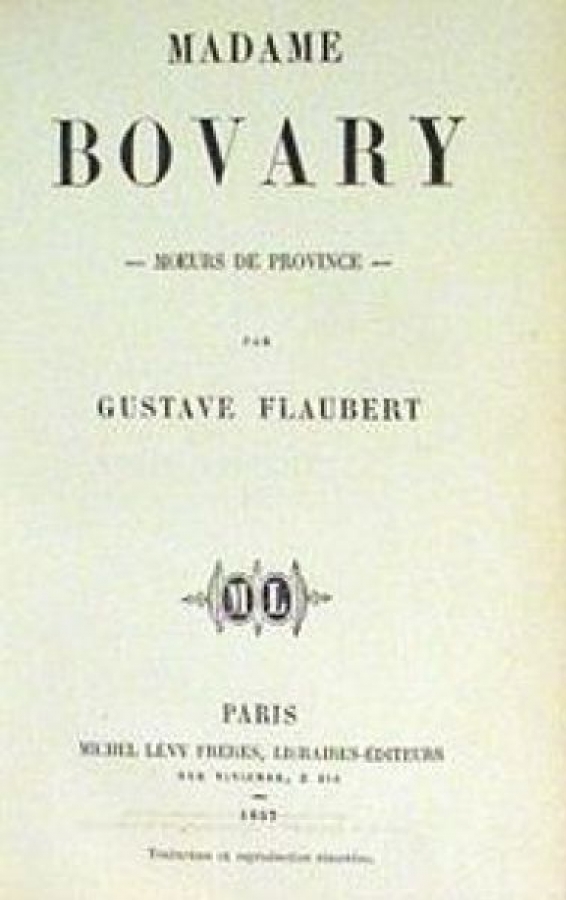
Madame Bovary
The novel recounts the fortunes of Madame Bovary, who, married to a provincial doctor, attempts to escape a prosaic and tedious existence by pursuing a series of affairs and leading an extravagant lifestyle—choices that ultimately lead her to financial ruin, emotional desolation, and, inevitably, suicide. It is a celebrated novel, widely considered the wellspring of nineteenth-century realism, which tackles the theme—subsequently taken up by numerous other authors—of the pettiness of bourgeois morality. At heart, Emma Bovary pursues a dream of happiness, striving not to be trapped within the mediocrity of everyday life. Surrounding her, by contrast, hypocrisy, the pursuit of money, social ambition, and the like prevail. In truth, Madame Bovary is herself a child of her time: there is no genuinely romantic sensibility within her, no sense of guilt, and she is willing to resort to any falsehood to achieve her ends—which are, in reality, modest, such as meeting her lovers, buying elegant dresses, and so forth. The third part of the book, unquestionably the finest, which portrays the events leading to Madame Bovary’s death, is conducted in an almost illustrative manner. The characters, in fact, emerge as cold and flat, devoid of even the slightest introspective probing into their motivations and feelings. Ultimately, this is a social novel that appears to have enjoyed a renown far exceeding its actual merits. It bears the heavy imprint of the nineteenth-century ethos and leaves little room, even in its style and narrative rhythm, for that lyricism so typical of our own day.
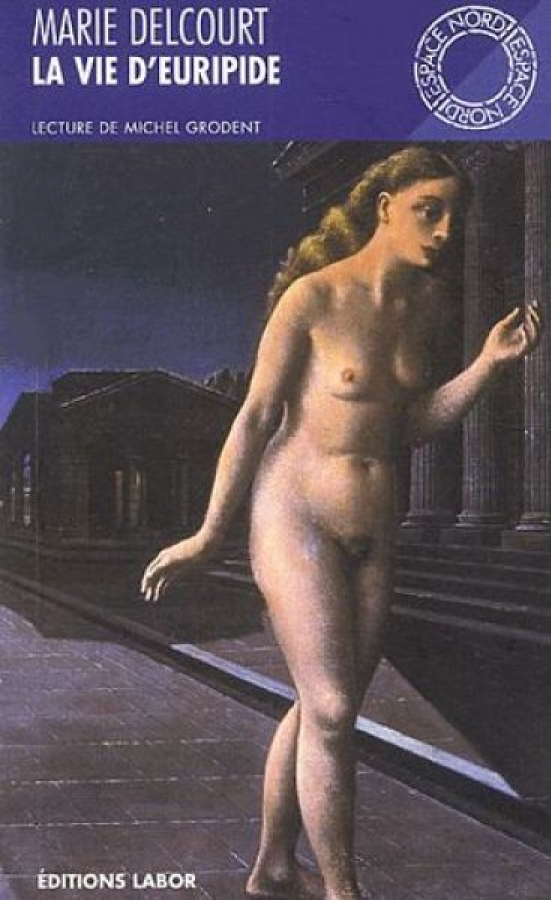
The Life of Euripides
Euripides is one of the three great tragic playwrights of ancient Greece (the other two being Aeschylus and Sophocles) and lived between 480 and 408 B. C. in a historical period characterized by three fundamental phases: the peak years of Athens under the governance of Pericles, the prolonged Peloponnesian War between Athens and Sparta with the consequent decline of the former’s political and cultural life, and the defeat followed by the emergence of Macedonia as a hegemonic power. Marie Delcourt is a Belgian scholar and humanist who belonged to the French literary circles of the 1930s and was particularly influenced by Gide. Her biography of Euripides highlights the link between the evolution of his literary output and three fundamental aspects: the political and civic fortunes of Athens: the author paints a portrait of Euripides as deeply nostalgic for the Periclean era and underscores the constant invocation in his tragedies of the values of civic coexistence, tolerance, and hospitality characteristic of the Athens of that time. It is precisely the quest for a “prince” that drives Euripides to leave Athens and move to the court of the King of Macedonia, where he would meet his death; the philosophical currents of the era: the figure of Anaxagoras (and therefore the influence of his naturalistic views and critical stance toward myth and religion in general), the dialectic of the Sophists as a destructive force against truths and rules, and finally the thought of Socrates, as a search for values no longer rooted in religion but grounded in individual conscience. In reality, this familiarity seems to translate in Euripides into a confused syncretism in which the individual dimension prevails, with difficulty, over the collective one; the innovative and contradictory nature of Euripides, who is perpetually exploring new inspirations and expressive techniques, never willing to settle upon what has already been established and achieved. It is difficult to determine how much of these considerations stems from a critically rigorous reading of Euripides and how much, instead, reflects the existential and cultural milieu of the author. The fact remains that the author succeeds in offering a highly stimulating and engaging profile of Euripides, one that also prompts a series of reflections on the current state of disorientation in Italian society: one is led to think how valuable an author like Euripides would be for our country, capable of interpreting it beyond intimistic readings and sociological analyses. Reading the book is at times demanding due to the relentless historical and literary references, yet it is generally smooth and pleasurable: the style is frequently rhetorical and emphatic, the sentence structure convoluted and ornate, as is the vocabulary.