
The Ear of Kiev
In 1919, Kyiv was contested by multiple forces: Anton Denikin’s White Army, backed by the Entente, sought to overthrow the Bolsheviks; the Cossacks under the leadership of the *otaman* Symon Petliura fought for Ukraine's independence; the Red Army struggled to halt counter-revolutionary actions and repel Polish claims over Galicia. Although the novel is set in a specific historical moment, the narrative seems suspended in a timeless world, projected into a despotic reality dominated by disorder and violence—as though conflict, devastation, and crime were the inexorable, immutable hallmark of the borderlands between the West and Greater Russia. A bloody act initiates the tale: the very saber that had killed his father severs clean off the right ear of young Samson; an ear that the boy miraculously manages to retrieve and place inside a candy tin. Samson is frightened and disoriented; left alone, he manages to carry on in a city deprived of heating and food, where everyone’s life hangs by a thread amidst abuses and killings. At that moment, Kyiv is controlled by the Red Army, and it is astonishing how ordinary life persists, and how the new authorities strive to prosecute thefts and murders (even though the "investigators of old" are gone), expend energy taking a census of the population ("three hundred questioning the residents"), persevere in the meticulous bureaucracy of the Tsarist regime (yet paper is running out!), and ensure the supply of electricity, even as the firewood is nearly exhausted. > This is the cacophony of the revolution: too many weapons around, zero security, and a hundred times more bandits and robbers! (...) All that remains are the signatures on the official reports! It is precisely bureaucracy that saves young Samson, providing not only a daily meal, but also a purpose to his solitary life. He turns to the militia to protest the requisition of his furniture, particularly his father’s desk, where he had stored the candy tin containing his ear. The fine penmanship and lucid phrasing of his formal complaint lead to his hiring in the investigative department. And from here unfolds a thriller, as young Samson is determined to discover the perpetrators of an atrocious crime. The police investigation intertwines with a love story; a census worker comes to live with Samson, yet between them there is only a whisper from the young man, "Marry me"—a word timidly uttered while the young woman sleeps, or pretends to sleep. With a touch of irony, Kurkov writes how > the closeness, unhurried by any passion, breaks the loneliness of young Samson, who feels in his dreams like > an exhausted hero, (...) while a half-naked nymph watched over him. The skillful plot and nimble prose cannot conceal the weaknesses of the thriller, and above all do not spare the reader a sense of disappointment. From the title, one would expect the severed ear to be at the very center of the novel. Through the ear, by some miraculous phenomenon, young Samson can hear from afar, distinct and precise, the intrigues and dangers looming over him. Yet this conceit is never fully exploited; and this is because the author has no intention of resorting to magical elements, choosing instead to remain firmly rooted in a narrative realism, which in turn is laden with a "melancholy anticipation" of something that might alter Ukraine's destiny. Why read it? With gentle irony, it recounts the fraught, agonizing history of Ukraine.
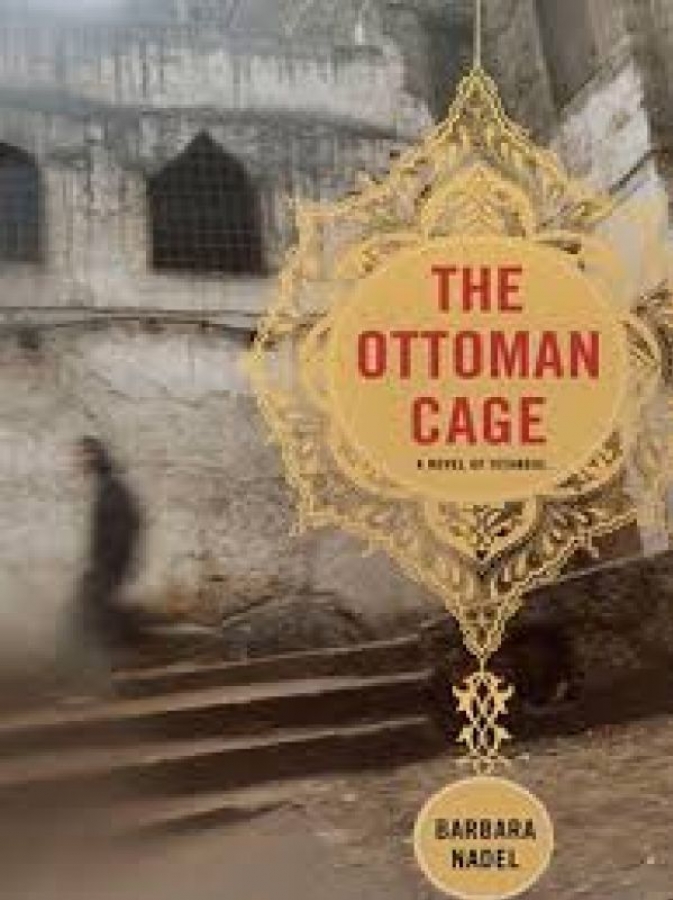
The Ottoman Cage: a novel of Istanbul
A body is found in an old, typically wooden building adjacent to the Topkapi Museum, in Istanbul. It is a young man, kept locked away for years, sedated by the constant use of drugs. He is uncircumcised, and the apartment’s tenant is described by the neighbors as a reserved Armenian gentleman. Everything points to a crime within the Armenian community, but > the inhabitants of Istanbul are not known for their predilection for simple things . A difficult investigation begins. Leading it is Inspector Ikmen: a typical modern Turk, secular, seemingly broad-minded, but in fact deeply attached to tradition. Devoted to his work and to frequenting bars at night, he neglects his large family and his sick wife. Despite her serious condition, he has left his father in her care, now ravaged by senile dementia. The coroner, and Ikmen’s best friend, is a well-to-do Armenian physician, while his primary colleague on the police force is Jewish. It is a mixture of communities that reflects the history of Istanbul, with the distinction that Armenians, owing to the 1915 genocide, are > somehow a special case, even compared to the other non-Turkish communities . This distinction is called distrust. Can an Armenian be trusted, even if he has been a friend and colleague for years? Or is it true, instead, that the bond among Armenians is stronger than friendship and the institutional role one holds? Alongside the investigation, which progresses through unexpected revelations, the novel deals with cooperation among people belonging to different cultures, histories, and religions. Only if institutional loyalty takes precedence over clan solidarity is there any guarantee that freedom can exist. As Ikmen says > we who have chosen to serve the law must put it first, ahead of our personal feelings , because as long as “there are men like us, the ‘others’ cannot really take control.” It is a well-crafted noir. The author unravels the clues with skill, albeit with a narrative pace devoid of suspense, at times tedious. Alongside the main plot, the personal affairs of the various protagonists unfold. In particular, the narrative lingers on the figure of Ikmen. His indifference toward his wife makes him genuinely unsympathetic, beyond the emblematic function the author seems to assign him: that of modern Turkey’s contradiction between East and West. The inclination to dwell on sexual perversions and the trite, predictable ending compromise the quality of a novel that is, in other respects, well written. Why read it? It is a good noir.