
Siberian Education
Nicolai Lilin comes from Transnistria (a no man’s land between Moldova and Ukraine) and writes in Italian. He belongs to that cohort of immigrant authors who are making a significant contribution to the renewal of our literature, so often bloodless. And indeed, the novel overflows with energy, with a vitality and brutality barely kept in check by the canons and formative paths generated within the communities of origin, beyond and outside the State. The narrative opens with a few intense, harrowing pages. We are in Chechnya and the Russian soldiers are exhausted: “we kept going like water waves.... we fought always, always.” And precisely where respect for rules and hierarchy should be paramount, a soldier, > as soon as the captain turned his back... with an insolent look on his face, shot the prisoner in the head and chest. He was sleepy and tired, like all of us . There follow two long chapters, “The Hat and the Knife” and “When the Skin Speaks”, in which the author describes, with anthropological meticulousness, the rules of coexistence and the modes of communication of the Siberian criminal community, which had been forced to relocate from Siberia to Transnistria. A profound nostalgia for a world, whether real or merely envisioned, forcefully emerges: > I knew for certain that I was living through the death of our society, and so I tried to survive, passing through this great vortex of souls, of human stories, from which I drifted further away with each passing day . A narrative that still imparts a sense of security (just as in territory ruled by the mafia one feels protected from petty crime) is followed by two chapters in which the clash between gangs devolves into pure violence. In “The Day of My Birthday”, the protagonist, along with a friend, must deliver a message to a representative of another criminal community. It is a simple errand, yet it translates into clashes, fights, ambushes, all set against a degraded urban landscape abandoned to itself. And where coercion, promiscuity, and corruption prevail, as in “Juvenile Prison”, violence turns into moral, physical, and sexual subjugation. From the outset of the next chapter (the decisive one in the protagonist’s coming of age), one might expect a glimmer of hope, and perhaps of love. Ksjusa is a fragile autistic girl, protected by the Siberian community both as a woman and on account of her disability. Yet she falls victim to a gang rape, and the hunt for the rapists begins: a protracted chase through every district of the city leading up to an inexorable, bloody vengeance. Yet for the young protagonist, it is > impossible to feel peace. It was right to punish them for what they did, but by punishing them we didn't help Ksjusa. What still tortures me is her pain, against which all our justice proved useless . The epilogue is “a free fall”. It seems the protagonist has managed to carve out a different future for himself, outside the criminal community. Until, forcibly conscripted into the Russian army, he finds himself sucked into a new spiral of violence. Yet here is where one realizes that what is truly needed in life is a Siberian education. It is unclear how much of the novel is autobiographical and how much pure invention. Certain gang battles recall those recounted by other contemporary Russian authors, such as Elizarov in *The Librarian*, just as the sexual violence in the juvenile prison relies on common tropes of prison life, and some descriptions in this context are decidedly pornographic and overwrought. Yet whether fact or fiction matters little. The message is clear: the fragmentation of modern society, whose rules of coexistence seem increasingly rooted in kinship communities and clan logic rather than in state institutions. In this descent toward a medieval world, there are rare moments of serenity: the relationship with nature (the fishing scenes are the most evocative), camaraderie among peers, the connection to the wisdom of the elders, the adherence to rules and rituals. It is an anti-Enlightenment world that turns inward on itself. The painstaking description of the rules and the various criminal communities, the repetitiveness of episodes that ultimately become predictable, the deficiency in narrative pace and in character depth—characters who remain, at bottom, stereotypical and often indistinguishable—are all factors that make the reading tedious. One struggles to reach the end of the novel. Why read it? It prompts reflection on modern society, but it fails to captivate.
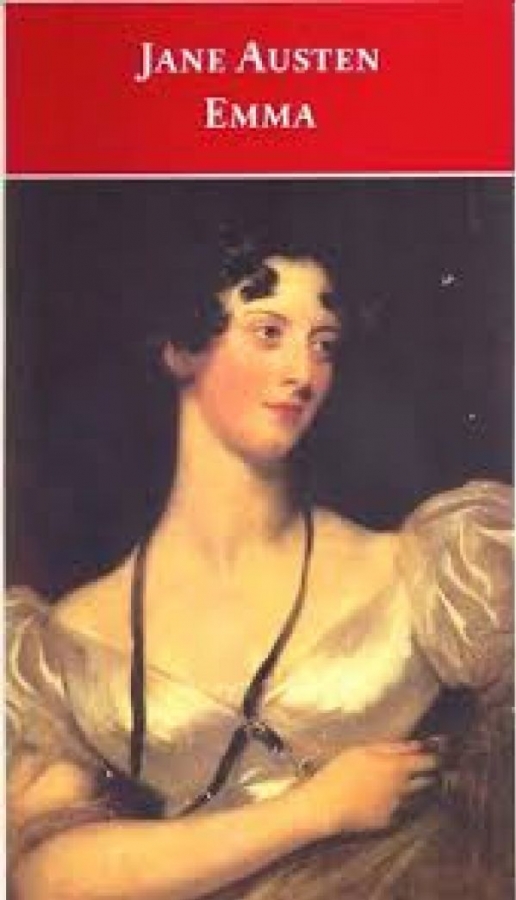
Emma
Emma is a young woman, determined, independent, but inclined “to think a little too well of herself.” She lives in a small English country town with her father: a frail widower, fearful of novelties and above all of being abandoned by his adored daughter. Then again, why marry? > If I were to fall in love, indeed, it would be a different thing! But I have never been in love; it is not in my way or in my nature; and I do not think I should. And, without love, I am convinced that I should be a fool to change such a situation as mine; (...) and never, never could I expect to be so truly beloved and important; so always first and only in any man’s eyes as I am in my father’s . It is not merely pride and the desire to be mistress of herself; it is also her ideal of a husband: high integrity, adherence to truth and principles, contempt for deception and pettiness. Will she remain faithful to these criteria, so confidently asserted and lived? In part. The story begins with the decision of her governess, Mrs. Weston, to marry and leave the house where she had been in service for so long. While her father is distraught, for Emma it means losing the only person in whom she could confide, the only one who managed in some way to restrain the young woman’s temperament—sensitive, reflective, yet also headstrong and determined to impose herself upon others. There is also her brother-in-law, Mr. Knightley, who has known her since childhood, but with him it is a continuous bickering, a perpetual clash of differing perspectives. Emma meets Harriet Smith, with whom she strikes up an intense friendship. But if > Mrs. Weston was an object of respect, based on gratitude and esteem, Harriet would be loved as one to whom she could be useful. For Mrs. Weston there was nothing to be done; for Harriet, everything . Harriet possesses no dowry and comes from a low social class, but that is no reason she must demean herself by marrying just any suitor! With a healthy dose of presumption and recklessness, Emma persuades the docile Harriet not to marry Martin (a humble tenant farmer!) and to set her sights on the hand of Mr. Elton, the vicar of the small town. When Mr. Elton, rejected by Emma herself (why, then, was he the right husband for her friend?), marries a vain and shallow girl who nonetheless brings a handsome fortune, Emma consoles Harriet, pointing out to her that Elton was not such a reliable man after all. Two new characters appear: Jane, a beautiful but ailing young woman who comes to live with her aunt and whose only prospect is to become a governess in wealthy households; Frank, the son of Mrs. Weston’s husband, who resides with a rich and overbearing aunt. Emma attempts to befriend Jane (another young woman to manage?), but is somehow rebuffed and kept at a distance. During the few days he spends with his father, Frank manages to pay court first to Emma and then to Harriet. Although Emma, initially flattered and intrigued by the young man, senses that there is something false in Frank’s conduct, it seems Harriet’s turn has arrived—at least so Emma thinks, and she convinces her friend accordingly. In vain does Mr. Knightley warn her, pointing out Frank’s weak character, but once again Emma stubbornly disregards her friend’s far wiser judgment. It is precisely during one of these conversations, often punctilious and contentious, that a premonitory incident occurs. > With a slight movement, quite unlike ordinary friendship, (...) Mr. Knightley took her hand; whether she had not herself made the first motion she could not say; she might, perhaps, have rather offered it . Frank’s aunt dies, and the young man, freed from constraints, confesses that he was secretly engaged to Jane and that his alleged courtship of Emma and Harriet had merely been a ploy to divert attention from the true object of his affections. Hence the cause of Jane’s distress: the false position in which she found herself. Emma feels sorry for Harriet and realizes she was mistaken once again in her assessments, but she is deeply offended by the conduct toward Jane, who was forced to submit to deception through Frank’s lack of courage and dignity. On the other hand, > it might well be said that the world does not belong to woman; its rules are not hers . For Emma, there is a surprise. When she goes to inform Harriet of the affair, she discovers that her friend is in love with Mr. Knightley and is convinced that her feelings are reciprocated. Emma ought to be happy; why then does she feel a sense of pique, of subtle jealousy, of the loss of the beloved object? > What blindness, what madness had led her on! It struck her with the force of overwhelming misery! Emma discovers that she loves and has always loved her friend; great then is her joy when Mr. Knightley, at first diffidently and then with growing assurance, confesses that he loves her too and wishes to marry her. But is Harriet deceived once more? No matter: through a subterfuge, Emma dispatches her to London to stay with her sister, so as to get her out of the way; and then, when she must finally face her, she learns that Harriet had deceived her all along, having never stopped loving Martin, whom she had continued to see in spite of Emma. All ends well, but what remains of the independent and proud Emma? She will live with her father and Mr. Knightley, withdrawing into the domestic sphere typical of a woman. Even female friendships, particularly that with Harriet, will dwindle into mere superficial acquaintances; it is difficult to sustain them when one loves a man. It is a highly intricate novel, perhaps overly long and complex, in its plot as well as in its writing. The core remains female independence, with certain distinctive elements compared to the author’s other novels. While in her other books the setting—the small town, the early nineteenth-century petty bourgeoisie, the English countryside—serves as a backdrop, here it occupies the center of the narrative. One need only consider the second volume: the superficial conversations, the drawing-room gatherings, and the country outings portray a shallow, prudish society, intensely preoccupied with appearances and fortunes. It is like reading Marcel Proust’s *The Guermantes Way* and, as in this volume of the *Search*, the endless dialogues are equally tedious, verbose, and inconclusive. Another aspect that links the novel to Proust’s work is the theme of the discrepancy between what is imagined and reality. “Myself creating what I saw,” Mr. Knightley quotes at one point; and indeed Emma imagines situations that prove to be quite different from those spun by her fancy. Addressing Harriet, Emma exclaims, “Good God! how have I never seen her!” The story unfolds slowly, devoid of narrative pace, lacking in action. Dialogue predominates, frequently repetitive. Only intermittently are the characters explored in depth; they all revolve around Emma, yet without completing or explaining her. The syntax is extremely arduous and convoluted, as though the author wished to showcase her prowess in writing and her mastery of “cultivated” English. Why read it? It is worth reading if one wishes to gain a comprehensive view of Austen’s splendid characters; otherwise, it is better left unopened, for it is long, difficult, and prolix.
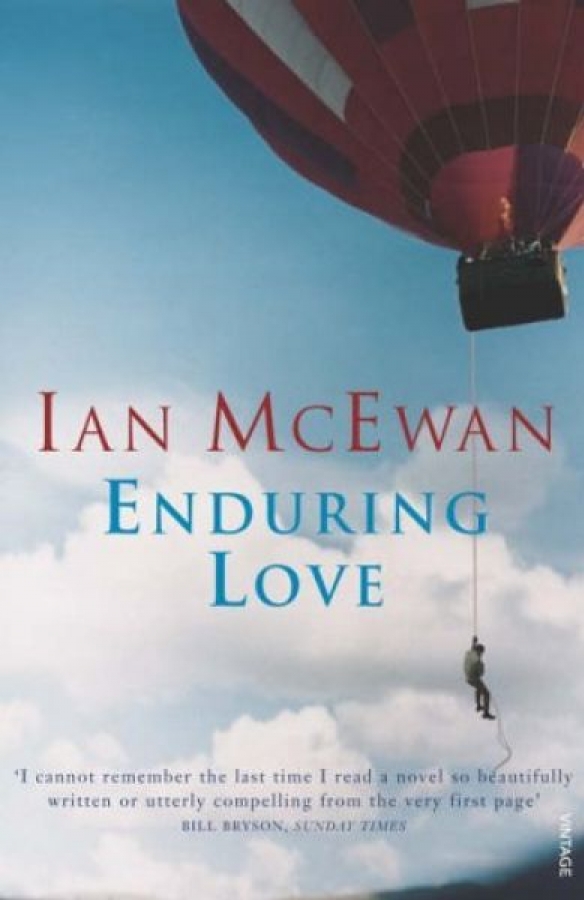
Enduring Love
Like much of McEwan’s fiction, we are confronted at the outset with an extraordinary event (in this case, the death of a person falling from a hot-air balloon) that brings profound upheaval to a life that seemed quiet and settled: the couple’s relationship enters a crisis, an undercurrent of paranoia and instability emerges within the protagonist, and his professional choices are called into question. And up to a point, the novel follows this trajectory, with some truly fine and effective pages on the breakdown of the marital bond; it almost seems as though everything the protagonist endures (in particular, his harassment at the hands of a religious fanatic) were a figment of his imagination, the result of an increasingly pronounced depressive and paranoid spiral. The protagonist discovers himself to be different from who he thought he was. Then, just as the story seems to have reached an impasse, a happy ending emerges—almost worthy of a detective story—but along with it comes the reader’s disappointment. McEwan writes very well, in an English that is simple, fluid, and yet richly expressive: individual pages are remarkable, the whole somewhat less so.
Aeneid
The poem recounts the journey of Aeneas toward Italy and the war he was forced to wage > so that he might found his city and bring the Penates into Latium, giving rise to the Latin race, the Alban fathers, and the lofty walls of Rome (Book One). The poem is divided into two parts. The first, which chronicles his wanderings until his arrival on the shores of Latium, adopts the structure of the *Odyssey*, while the second, recounting the clash with the Latins, takes the *Iliad* as its model. The poem is remarkably complex, as several interpretive keys coexist and overlap. First and foremost, the *Aeneid* is the song of a preordained destiny: laying the foundations for the building of Rome. To this grand design all must submit, mortals and gods alike. Unlike in the Homeric poems, the dynamic unfolding among the gods—and in particular the clash between Juno, Aeneas’s nemesis, and Venus, the hero’s protective mother—is only apparent. In the final book, the twelfth, Jupiter addresses Juno: > What shall be the end, my wife? What remains? You well know, and must know, that as the tutelary deity of his homeland, Aeneas belongs to heaven and is raised by the fates unto the stars. What do you seek? With what hope do you cling to the icy clouds? The *Aeneid* is the epic of human history (in philosophical terms, one might say of Being becoming manifest in history) rather than that of individuals. Beneath providence, however, life quivers, yearning to break out into the open. Disrupting the established order are, above all, the female figures: Dido; the Trojan women who refuse to journey on; Amata, mother of Lavinia, the bride destined for Aeneas; Camilla, the warrior woman; and Juturna, sister of Turnus, the foe doomed to succumb. These are women who reject destiny with a furor that swells and spreads through a progressive loss of control, culminating in self-destruction. Amata’s fury is portrayed by Virgil through the famous metaphor of the spinning top (“as, driven by a lash, a top spins wild” in Book Seven), while Dido’s cries rail against the betrayal of love and trust: > Did you hope, then, to conceal such villainy, you traitor, and slip away in silence from my shores? Can neither our love, nor the hand you once pledged me, hold you back? Nor Dido, doomed to die a cruel death? . (Book Four); and Juturna, who, acknowledging her powerlessness to save her brother, begs to die, though immortal herself: > But what joy can remain sweet to me, brother, without you? Is there an abyss deep enough to open for me, plunging a goddess down into mortal depths? Having spoken, amid long moans, she veiled her head in her azure mantle and hid herself in the river’s depths .(Book Twelve). Aeneas himself at times steps outside his role as a hero obedient to duty, revealing an individuality of his own. When Vulcan gifts him a splendid suit of armor, already emblazoned with Rome’s future exploits, Aeneas behaves, at last, like any other human being: > All this Aeneas admires upon the shield of Vulcan, given by his mother, and, ignorant of the events, delights in the images, shouldering the fame and the fates of his descendants (Book Eight). Another major, and strikingly modern, theme is war. Virgil, unlike Homer in the *Iliad*, lingers over the cruelty of war, not least through a meticulous description of the wounds inflicted upon bodies by the warriors’ blows. Yet what is compelling is that the war is framed as the consequence of King Latinus’s weakness; though conscious of the need to ally with Aeneas and welcome him as a son-in-law, he retreats into seclusion, allowing events to run their course. > Swept away by the storm, at the mercy of fate, alas, we are. For all of this with sacrilegious blood, he cries, you, you, wretched men, shall pay the forfeit. For me quiet approaches: in sight of the final haven, a happy death will strip me of all things. He said no more, shut himself in his palace, and abandoned the reins of events . (Book Eight). War is always brought about by the weakness of those who desire peace yet cannot bring themselves to resist. The primary interpretive key—that of the fulfillment of an already written destiny—is so dominant that it often renders the reading heavy and tedious. The translation by Mario Ramous is splendid, just as Gianluigi Baldo’s commentary is deeply compelling. Why read it? It is well worth it for the delineation of the female figures and for certain seemingly marginal episodes, such as the heroic friendship of Nisus and Euryalus.