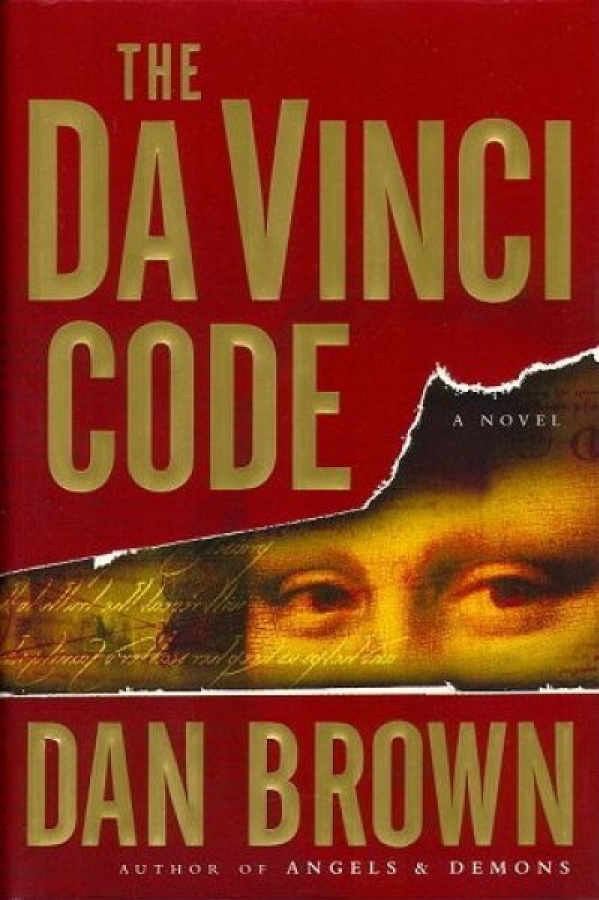
The Da Vinci Code
The novel is set in France and recounts the search for the Holy Grail—which purportedly points to the existence of a female apostle—and for a sect that has concealed and guarded this secret across the centuries, one of which Leonardo da Vinci was allegedly a member. Following the murder of the Louvre curator who was the custodian of the secret, his granddaughter and a scholar of medieval symbology set out in pursuit of the Holy Grail, while a high-ranking Opus Dei prelate is, in turn, hunting for the hidden secret. The novel enjoyed immense success, but it is, quite frankly, thoroughly dreadful from every perspective: the plot is tedious and implausible, narrative rhythm is nonexistent, and the prose is flat—opaque without being rich or complex. Why it could have achieved such widespread success remains a mystery. Despite my best efforts, I was unable to finish it.
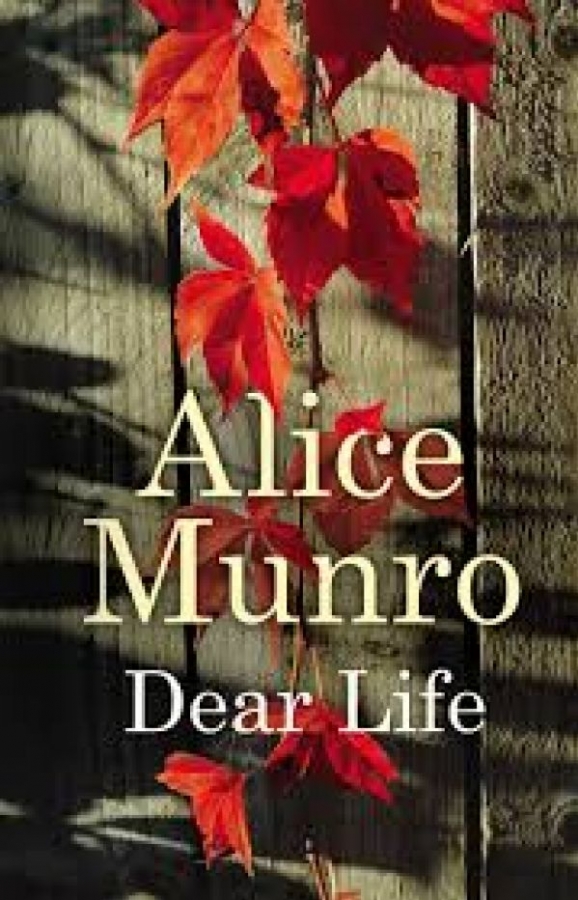
Dear Life (Getting Out Alive)
The book brings together fifteen stories, the last four of which > form a separate unit, autobiographical in feeling, sometimes even in fact . To make overall sense of stories that might otherwise be viewed as episodes of a female condition devoid of evolution and without outlets ( > too late to do anything else. When it could be worse, much worse ), one should perhaps start from the final story, *Dear Life*, which also lends its title to the entire collection. > I lived when I was young at the end of a long road, or a road that seemed long to me. Behind me, as I walked home from primary school, (...) lay the real town with its businesses and sidewalks and streetlights for when it got dark. (...) Marking the end of town were two bridges..... the road divided, one part of it heading south toward a hill (...) to become a proper highway, and the other running around old abandoned fields to turn west. This western road was my road . Reading this effective depiction of a childhood suspended between town and countryside, in that urban and social void that now characterizes our spaces, one's mind inevitably turns to a poem by Pasolini: > poor as a Colosseum cat, I lived in a borgata all lime and dust, far from city and countryside... that borough bare to the wind, not Roman, not Southern, not working-class, was life in its most current light.... bone of daily existence, pure, for being all too proximate, absolute for being all too miserably human (Pier Paolo Pasolini, *Il pianto della scavatrice*). Munro draws a clear and vivid portrait of how strange, perilous, and important our life can be, so dear to us; all this, however, not in the abstract, nor within a prevailing gender dimension (female sensibility contrasted with male indifference), but within the specific social and almost anthropological context in which we all live. Let us take, for example, a few stories. In *Amundsen*, the protagonist arrives in a small town to teach in a sanatorium for children and adolescents suffering from tuberculosis. “The world beyond the lake and the forest had vanished”; life is lived in isolation from external reality; small things prevail: the chill of the houses, the narrow road running through the woods and near the sawmill, the bar frequented by lumberjacks waiting to be called up for service. The relationship between the protagonist and the sanatorium’s director is predictable and prosaic, unfolding without clamor or enthusiasm in flat, modest, squalidly petty-bourgeois settings, ending in an obvious way, without any real reason. Yet it is precisely the banality of the affair and the cramped context of the small town that lead the protagonist to say: “nothing really changes when it comes to love.” In *Corrie*, into the routine of an apparently solid marriage bursts an old flame of the husband. The protagonist reacts by fleeing, takes the car and seeks refuge in the anonymity of the big city, in a squalid motel, eating and drinking in a restaurant where she wonders whether “any man, any old man, would think of hitting on her.” She returns home only to be told by her husband: > it’s not so much the person. It’s like a kind of atmosphere. It’s a scent , a desire for transgression. > What a mix of rage and admiration I could feel, facing his will to do it. All our life together came to an end . Here too, one would fail to grasp the entire affair if the story did not proceed from > a non-life, but survival (...) in whose arcane orgasm there is no other passion than for daily labor (Pasolini, *Ceneri di Gramsci*). In the story *In Sight of the Lake*, a woman suffering from Alzheimer’s goes in search of a specialist. She has been given an address in a small town; hesitant, frail, the woman wanders through the town, getting lost and asking passers-by—themselves uncertain—where the doctor's office might be. She arrives at a clinic, deserted and isolated: she tries to leave, to escape, but the door has become immensely heavy. > She opens her mouth to call for help but it seems no cry will come . Suddenly she is safe. It is the story of a woman who feels she is losing her memory, but why does this vanishing of consciousness take place in a squalid urban landscape, and not among glittering skyscrapers bursting with life, or in a gentle, wondrous meadow filled with flowers? A refined and elegant writer, Munro unfortunately loses herself in slight, inconclusive stories. The characters are ostensibly delineated, yet it is sheer literary technique; there is no real psychological depth: everything remains suspended. An overarching impression of fatigue prevails, of stories already written, rewritten in a masterful style, yet devoid of passion. Only in the final stories does narrative power resurface, but it is too late. Why not read it? It is slight, inconclusive, and dull.
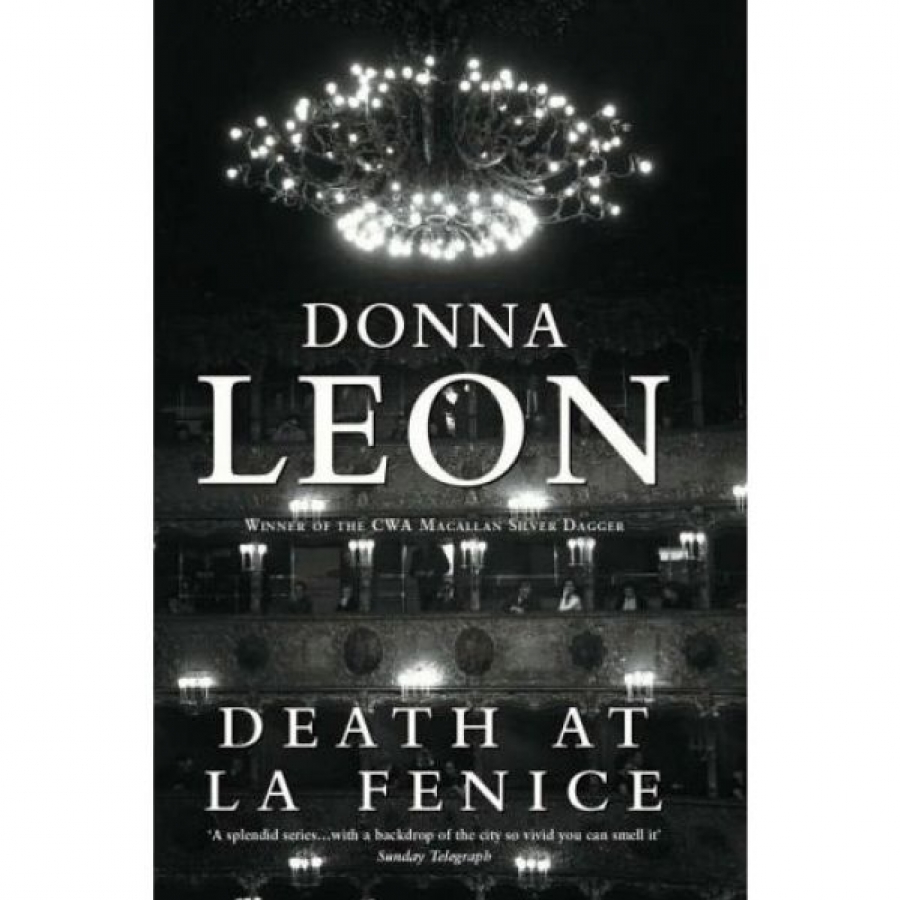
Death at La Fenice
The book is set in Venice and is a detective novel. A renowned conductor dies in his dressing room during an opera performance. A police inspector investigates, naturally suspecting homicide. In the end, it turns out to be suicide. The conductor had abused his wife’s daughter, who, by administering antibiotic injections, renders him progressively deaf. Driven by despair, the conductor killed himself. As a mystery, it unfolds slowly and even tediously. The author attempts to depict life in Venice and the dynamics within the inspector’s family: yet it all unfolds superficially and laden with stereotypes, ultimately ringing false.
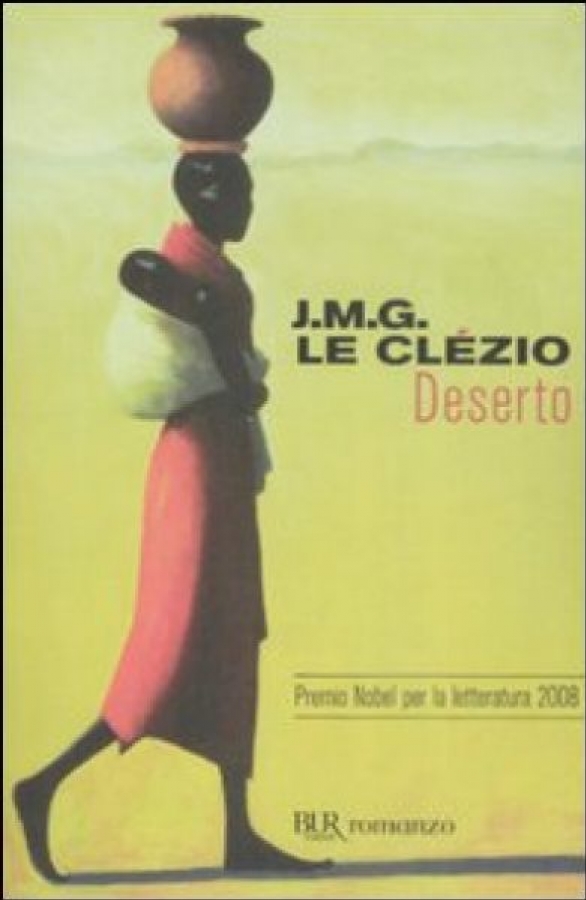
Desert
This is a book that develops along two narrative paths that are seemingly distinct, yet bound together by an ideal thread. On the one hand, it narrates the story of a desert people, followers of a sheikh revered as a saint, who intend to resist the French conquest of Saharan Africa. The desperate march of these people is seen through the eyes of a boy, who may well be the grandfather of Lalla, the novel’s protagonist. On the other hand, the novel chronicles the story of Lalla, born amid the scrub and taken in by her aunt in a small seaside village. Lalla lives a wild existence, in the wind and among the dunes, a lover of solitude and of the desert. During her long, solitary walks, she is accompanied by a shepherd, Hartani, a boy who does not speak her language but who possesses a profound understanding of nature, of birds, of flora, of the sea and the desert. Hartani belongs to the "blue men," the men of the desert, the very same people who took part in the grand and disastrous march recounted in the novel’s other thread. Lalla is meant to be wed to a wealthy merchant, and so she flees with Hartani toward the desert. The story then picks up with Lalla arriving aboard a small vessel in Marseille, seeking shelter with her aunt, who has relocated there. Lalla is pregnant, but hides her condition and leads a life just as wild in the great French city: yet what in the village had been light and symbiosis with all living beings turns, in Marseille, into darkness and loneliness. Lalla lives in a tenement hotel that houses scores of immigrants who come, out of desperation, to work in France. There she also meets a boy who survives by stealing and begging. Lalla has descended into the underworld, yet among the desperate she discovers a profound solidarity and support. By chance, she meets a photographer who turns her into a famous model; in the end, however, Lalla resolves to return to Africa and give birth to her child amid the dunes, in the coolness and sweetness of a tree’s shade. The true subject is the contrast between Western and North African civilization. This contrast is crystallized not so much in the characters—too stereotypical, devoid of depth and complexity—nor in the plot, virtually non-existent and in certain respects implausible (such as the episode of the photographer who makes Lalla famous), but rather in the landscapes and in the author’s ability to impart density and chromatic richness to the descriptions. Upon the sand dunes, "Lalla opens her eyes wide, lets the sky enter into her," and senses the presence of God: > where is the road? Lalla does not know where she is going, adrift, swept along by the desert wind that blows, vengeful and cruel, the wind that sweeps men away and brings down the rocks at the foot of the mountains. It is the wind that moves toward infinity, beyond the horizon, beyond the sky all the way to the cold constellations, the Milky Way, to the sun . If the desert is light, infinity, and bliss, the city is death. > Lalla watches those who depart for other cities, toward hunger, cold, misfortune, those who are going to be humiliated, who are going to live in solitude. They move toward dark cities, toward low skies, toward steam, toward the diseases that ravage the chest . Yet Lalla harbors a dream: it is the desert people’s dream of freedom, of living free in the sun and the wind. It is written in magnificent French, with a powerfully lyrical style, brimming with evocative resonance and musical cadence, succeeding in rendering through words the sensory impressions of a natural world and an environment. Beyond individual pages, however, this vision of a "virtuous" society set in opposition to Western civilization feels somewhat disingenuous—more an intellectual, aestheticizing posture than a genuine impulse to chronicle the true complexity and suffering of an oppressed, shattered, and migrant society. It is, in a sense, the Westerner’s quintessential search for the presumed purity of the Other.

Dirty Love
The bottom line is very simple: a wasted talent. Remarkable stylistic skill is placed at the service of tedious stories devoid of narrative development, inconclusive and cynical relationship dramas: in short, an unbearable book. In *Listen Carefully as Our Options Have Changed*, Mark has discovered that his wife, Laura, is cheating on him: he knows because he hired a detective to tail her and has proof on a video, which he watches obsessively. He is a successful project manager and thus wants to approach the problem according to the rational tenets of project management. > No, the project of saving his marriage appears to have failed, and he is faced with a new objective. This is not unusual. Some projects collapse for various reasons. (...) In this case, there was simply a change of heart. Or, more accurately, a shift from concealing love’s troubles to displaying them, though Mark was forced to acknowledge them, wasn’t he? (...) There was the cold politeness toward his mother. (...) There was Laura’s habit of getting the detailed grocery instructions Mark gave her wrong, (...) to the point that he had to drop everything and go to the supermarket himself. (...) There was Laura’s habit of watching banal detective shows late at night, her eyes glued to the screen, vacant like a child’s. There was her mediocre cooking, her preference for frozen, heavily salted foods, and unremarkable dishes she was not ashamed to serve with ketchup. And now she was deceiving him, making a fool of him, and betraying him. Uprooting their home from its foundations and hurling shards of boiling glass into Mark’s blood, his brain, and his heart: and all this intense pain for what? For her? Look at her; what was he losing anyway? But that was a question that died before it was even fully thought, because he loved her . Mark fails to understand the reasons behind the failure of his marriage, even when numerous signs should tell him that it is his very own cold, rational approach that has driven Laura away. His habit of judging, evaluating, and treating the people around him as though they worked for him. He does not understand, but he is a stubborn man: > he would not throw his wife out of his house. (...) He would step back, take no action, and let things run their course. He would let his wife’s mistake resolve itself . Hypocritical forbearance is the sole means to make a relationship survive. This is also the outcome of another story: *Marla*. She is a woman no longer young, very fat, a drab bank clerk destined to remain an old maid. It seems an inescapable fate, until she meets Dennis, an equally obese man, affectionate and kind. It is unexpected love. The two move in together, and cohabitation reveals traits in the man that Marla dislikes: an obsessive fixation with order, a preference for a repetitive and mundane life, the risk of slipping into a tedious routine. What is more, the man does not want children. Leave him? But that’s marriage, my dear, her friends tell her; children will come later, even if the husband doesn’t want them (just deceive him about your fertile days so he won’t wear a condom!). Now well on his way toward squalor, Dubus tackles the third story (*The Bartender*): two young people marry full of enthusiasm, she gets pregnant, and he cannot resist sleeping with a curvaceous coworker—quite a bitch, truth be told. In the seventh month, the wife discovers the affair and risks miscarrying; miraculously, both she and the baby girl survive. > He walked over beside her bed and stood still. (...) Soon she would open her eyes, (...) eyes he did not deserve but hoped to earn, eyes of dark hope . At this point, I should have tackled *Dirty Love*. I confess: I could not bring myself to do it, so grating did the reading promise to be. From the story, it is useful to quote a sentence to convey Dubus’s remarkable ability to sustain long periods through a masterful use of words—a succession of impressions not underpinned by punctuation or the unfolding of content (events, character descriptions, feelings), but anchored in a carefully and skillfully calibrated syntax. In Italian, much of this writing is undoubtedly lost, and a great translator would be required; nonetheless, I shall try. > Now everything is lined up, her feelings and the music in her head, and all of it keeps making her feel as if she were moving forward, gliding silently on an airport moving walkway, that time she was on one, back in the past when she was little and her mother and father seemed happy, or at least laughed together a lot, her mother still pretty or at least looking it because she took care of herself, heavy but still sexy, though Devon never thought about these things, she only sensed them, as if she were lying in a soft bed surrounded by cool, deep pillows and the scent of something sweet was in the air, and that day the three of them were boarding a plane to Disney World where everything was realer than real could ever be . Why not read it? Monotonous, ponderous, even superficial at times.

Disguises
*Disguises*—in Italian, *travestimenti*—is a short story centered on the theme of disguise as an ambiguous game leading to the distortion of reality and of the self. Henry, a ten-year-old boy, is orphaned and goes to live with his aunt, a former actress. The boy is made to undergo an evening ritual in which the two dress up and perform the roles inherent to their assumed appearances. It is a game that turns unsettling when the aunt forces the boy to dress as a girl and, met with her nephew's resistance, displays an authoritarian and aggressive temperament. As was to be expected, the boy makes friends and meets a girl his own age who invites him to her house. Henry is no longer a child; he is becoming an adolescent, and his aunt's inclinations grow increasingly intolerable. The aunt throws a costume party, and the story culminates in a crescendo of illusions, masquerades, and scenes either real or merely imagined, at a gathering where it is difficult to tell who is doing what: > now it came back to him, if you are dressed as someone else pretending to be them, you take the blame for what they have done, or for what you do being them... or that you did? It is a muddled story, tangling together several themes: disguise as play, the forging of identity in adolescence, and a conception of reality as illusion—an impression created by one's own senses rather than an objectively existing world. There are too many psychological and philosophical motifs for the story to remain intelligible; it seems merely an occasion to experiment with new subjects and cement stylistic virtuosity. Why not read it? It is difficult to read, inconclusive, and weighed down with literary preciousness.
Prohibition of Residence
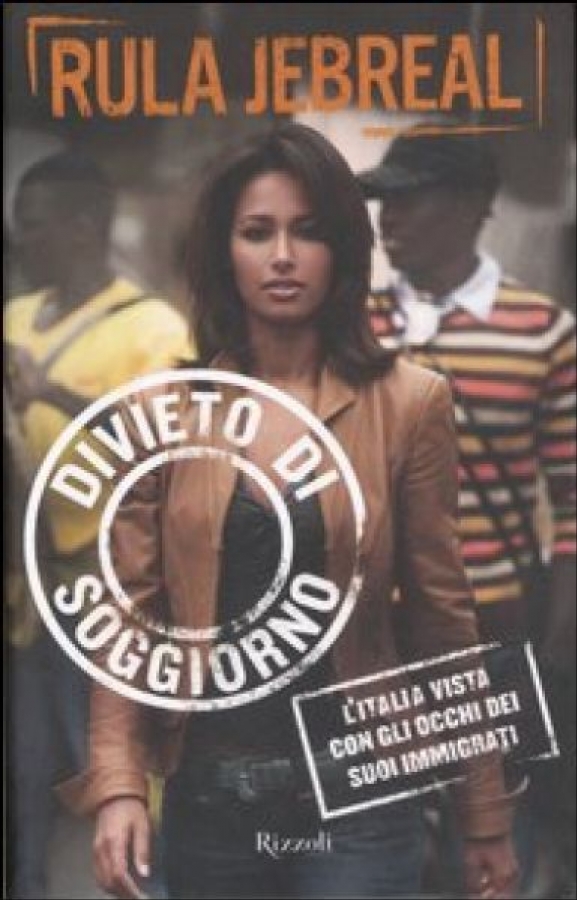
The book is an investigative narrative, presented through a series of interviews with immigrants. It spans from the Eastern European prostitute to individuals who have achieved success in the economic, social, and political spheres. What emerges is a highly variegated picture, revealing that, paradoxically, integrating and climbing the social ladder was easier for immigrants who arrived in 1970s Italy than for those who have come more recently. In truth, immigration mirrors the deterioration of Italian society: a growing inward turn, indifference toward novelty, and thus a tendency toward an "ostrich" policy—refusing to see that Italy is changing. There are two aspects of the book of considerable interest: the first is encapsulated in the quote cited in the book itself: "We wanted workers, but people arrived" (Max Frisch). As the author notes, it is the cultural and ideological framework underpinning Italian legislation that is flawed: > it is still the economic utility of the migrant's labor that validates their right to live in our country . Or, as a Somali domestic worker puts it in other words: I am treated > essentially well, even though when I told my story I sensed a general indifference. It is a business relationship: I provide a service and they pay me . In political terms, Jean-Léonard Touadi, a commissioner for the Municipality of Rome: > move beyond the logic of social assistance, stop approaching the category of immigrants, however fragile, through the lens of emergency welfare interventions. Instead, each of us needs equal opportunities, access to culture, access to housing, easier access to credit . Yet aren't these the problems of Italians as well? The second aspect concerns how Italians are viewed by immigrants. It is an intriguing perspective, revealing a somber world in which, for example, the elderly have lost much of their authority while spoiling children has become the norm, a division of roles persists between men and women, emotional life is bleak, and indifference prevails. "There is great individual care and little, or rather none, for the collective space." > I happened to share what we eat in my country, and most of the time they looked at me with disgust . The art of getting by prevails, as workers are selected based on referrals from relatives and friends, and consequently > the worker is not chosen based on qualifications and professional training, but as a member of a category of peers sharing the same origin . The book is engaging, yet it relies too heavily on interviews with successful figures and official representatives of the immigrant community, neglecting the essential labor of digging on the ground—that is, among ordinary people. Beneath a clean prose style and a well-constructed narrative, a journalistic weakness and an investigative fragility emerge, lending an impression of artificiality to what is recounted.
Where are you tonight
> He wears old boots, one gaping open at the toe, like a toothless grin. (...) But ultimately nobody sees him, because in Milan, even with the Universal Exposition and its status as the center of the world, a homeless man pushing a cart filled with his life is merely part of the landscape, and thus invisible . With this image of commonplace social indifference, the novel held out the promise of a Noir with a strong social imprint; especially when paired with another hallmark of Milan as "capital of the world": the world of television and major annual trade fairs, such as the Salone del Mobile. The protagonist, Carlo Monterossi, is a famous producer of a television show that even he despises; he lives in a splendid apartment with an efficient, protective housekeeper: it is a fake, superficial life that could go on forever, comfortable amid parties, fleeting affairs, and self-pity. Until everything is upended. At the end of a party, he finds a Japanese man in his home, dazed and terrified. Who is he? What is he doing in his house? And why is he murdered, and Monterossi's fine residence ransacked? It is from this premise that a Noir sets off, bogged down by an entangled and redundant plot featuring everything except the essential ingredient: suspense. Like a grand mélange of Simenon and De Cataldo (see the citation of *Romanzo Criminale* on this site), we have police intrigue, the secret services, an alienated yet sharp inspector, the cynical, wheeling-and-dealing backdrop of the "Milano da bere," marginalization, illegal immigration, and finally—why not?—even love. In short, it is a miscellany, fortunately seasoned with frequent Bob Dylan quotations steeped in a melancholy romanticism, as in these lines: > In the early morning rain with a dollar in hand / An aching in the heart and pockets full of sand / I am far away from home and I miss my only love so much . The narrative style is dynamic, alternating effective descriptions with tight, rapid-fire dialogue; yet narrative fluency is undermined by the constant entrance and exit of various characters—tiresome and confusing in its repetition—and by the recurrent psychological introspection devoted to Carlo, who slowly evolves from a frivolous dandy into a "real" man. It is, perhaps, an attempt to introduce an inner transformation in the character: a shift that remains unresolved because it is never fully explored, reducing it to a mere literary device. The writing is elegantly simple; it deserved a sturdier, better-constructed story. Why not read it? It is prolix—the worst possible flaw for a Noir.