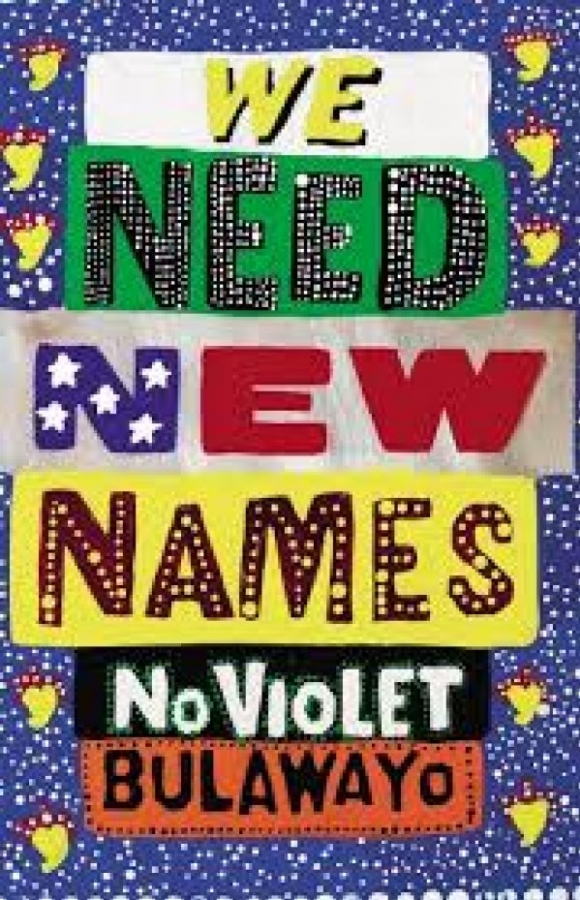
We need new names
The author was born in Zimbabwe and has lived in the United States since the age of eighteen. The novel unfolds across these two worlds, so different yet fundamentally similar, because in both the individual is torn apart and oppressed by the violence of circumstances and of men. The first part of the narrative, undoubtedly the most accomplished, is set in a Zimbabwean village: > Paradise is a cluster of tin cans spread out in the sun like wet sheepskin pegged to the ground to dry; the shacks have the muddy color of dirty puddles after the rains. The shacks themselves are hideous, but from here they look much better, almost pretty even, as if looking at a painting . Darling, protagonist and narrator, guides us through a succession of episodes, scenes of the country’s material and moral devastation. It is a story told through the eyes of a gang of children, who reenact through play the dramatic circumstances they are forced to witness. When two BBC reporters ask with astonishment what they are doing among the graves of the village cemetery, simulating death and burial, the leader of the little gang replies with equal astonishment: “Can’t you see this is reality?” On the other hand, through play, the children manage to rid themselves of the anger that oppresses the helpless adults like “a big, terrible, toothless dog.” At a certain point, nothing remains but flight. > Look at them leaving in droves, the children of the land, just look at them leaving in droves. (...) Moving, running, emigrating, going, abandoning, walking, leaving, flying, fleeing; everywhere, to countries near and far, to countries never heard of, to countries whose names they cannot pronounce. (...) Look at them leaving in droves despite knowing they will be received with suspicion in those strange lands to which they do not belong, knowing they will have to sit on one buttock because they must not sit comfortably, so as to be ready to get up and leave, knowing they will have to speak in whispers because their voices must not drown out those of the natives . Darling goes to America, taken in by an aunt. It is still she who tells us the story of a young girl becoming an adolescent in a world that is not hers, but inevitably must become so. It is not the America she had dreamed of when she lived in Zimbabwe. > This place doesn’t feel like my America, it isn’t even real. It is as if we were in a terrible story, as if we were in some crazy part of the Bible where God is busy punishing men for their sins and making them miserable. (...) In America the streets are like the devil’s hands, like God’s love, reaching everyone, only the sad thing is that these streets don’t really take me home . The young Darling grows up like any Black American teenager: she integrates seamlessly, yet the events involving her, the friendships and the people she encounters, continually draw her back to her childhood, to her playmates, to her native land. One day, to return home—if only via the internet—she connects via Skype with her mother in Zimbabwe; instead, a childhood friend answers. Darling adopts the typical attitude of Westerners toward Africa, expressing our solidarity from afar, comfortably and complacently, with the suffering of these peoples. > But you are not the one suffering (her friend reacts). You think watching on the BBC means you know what is happening? No, you don’t; (...) it is us who are here who truly feel the suffering, so it is us who have the right to say something (...) If it were your country, you would have loved it enough to live in it and not leave it. You had to fight for it (...) You left it, Darling, my dear, you left the house burning and you have the nerve to tell me with that stupid accent (...) that this is your country? (...) Her sarcastic tone (...) slaps me in the face, catching me by surprise. I am so shocked that I don’t know what to say . One must belong somewhere; one cannot remain suspended between too many worlds, as an outsider. We must have new names, live new experiences intensely, become involved, feel part of something. > When someone speaks about their home, you have to listen carefully because that way you know exactly who they are . This complex and profound book conveys something else as well. In the final pages, Darling remembers (or perhaps merely dreams of) when, as children, they used to play at catching Bin Laden. It was not a very amusing game, so at a certain point the little gang turned their attention to an old dog, solitary and cantankerous, standing in the middle of the road. Suddenly a truck came along and ran over the animal, crushing it to a pulp without killing it instantly. And it is with this terrible image—of laceration and incomprehensible death—that the author closes the book. Then we understand what the novel’s title means: we need new names to speak of displaced peoples, to integrate with other cultures and customs, but we also need new words to narrate the blind violence that oppresses and divides us all, Westerners and non-Westerners alike, binding us to a common destiny. The prose is the fundamental triumph of this splendid book. The author moves across two worlds that are distinct from a stylistic standpoint as well. In the first part, the English language is interwoven with vocabulary and idioms from the native tongue, leading the reader to identify with the places and the people not merely through the story, but above all through the use of language. When she turns instead to Darling’s adolescence in America, the author frequently resorts to youth slang, without overlooking the linguistic hybridity of the diverse ethnicities that comprise the vast immigrant populace. There is, moreover, a stylistic nuance that reveals the meticulous craft of the writing. When Darling speaks in America of her homeland, she no longer uses that creative blend of English and native words: her gradual estrangement from her land is mirrored in her language, increasingly detached and sterile. It is reflected, ultimately, in her consciousness. Why read it? It is a book of exceptional caliber, truly beautiful.
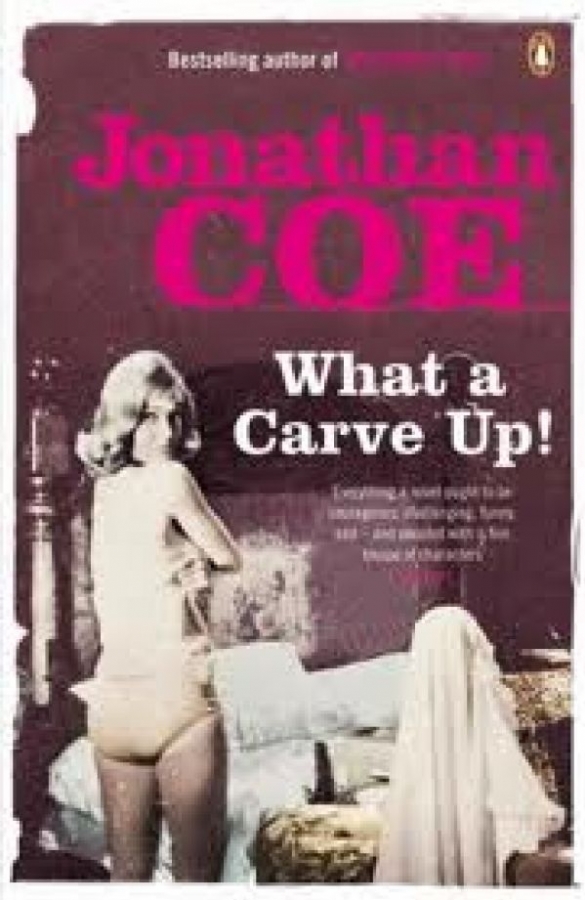
What a Carve Up: The Winshaw Family
The book's English title, *What a Carve Up!*, is an explicit reference to a 1961 comedy horror film in which several characters gather for the reading of a will and are murdered one by one. Michael, the protagonist of Coe's novel, was taken by his parents as a child to see this cinematic version, along with a documentary about his hero, Yuri Gagarin. The film's sex scene and the astronaut's death in a mysterious plane crash put an end to Michael's innocent childhood, hurling him into the world of the "apparent and insoluble mysteries of adults," giving rise to a "story with no real ending, whose mysteries I had to unravel soon." Tabitha Winshaw, an elderly woman widely regarded as mad, entrusts Michael, a promising yet penniless writer, with the task of writing her family's history. The young writer sets out to produce a literary work in which anger and passion take over, preventing him from pursuing both the investigation and the writing. If this book, Coe has his protagonist say, > communicates anything at all, it is how much I hate these people, what bastards they are, how they have stripped everything bare, with their vast interests and their influence and their privileges and their grip on every centre of power: how they have backed us all into a corner, how they have carved up the blood of the entire country . The biography of the individual members of the Winshaw family delineates an extremely harsh yet unfortunately realistic social portrait of the Margaret Thatcher era. The general perception of the "Iron Lady" is that of a decisive, unyielding woman—conservative, yet rigorous and honest. In reality, the Thatcher era was a stagecoach robbery orchestrated by reckless, unscrupulous businessmen. At times redundant and verbose, this part of the book stands as a fierce indictment of the contempt shown toward, and the betrayal of, an entire country. Upon learning that a member of the Winshaw family has been murdered, another member of this perverse cabal quips ironically: > Stabbed in the back, how appropriate; does that mean Mrs Thatcher is in the house somewhere? In parallel with the socio-political narrative, Michael's life unfolds through constant chronological shifts, which often fragment and distract the reading experience. It is, however, the finest part of the novel, as well as the most indecipherable. Michael spends his days watching television, overwhelmed by the news and obsessively rewatching the film he had been unable to see in its entirety as a child, when his parents dragged him away during the sex scene. Yet he was left with > the strange feeling that that film had never ended, that I had continued living inside it . The often inexplicable sequence of events and the characters who enter or re-enter Michael's life seem to be > potential bridges to the past: a way of retracing my steps until I found myself face to face with the innocent eight-year-old child who loved to write and who now seemed like such a complete stranger . Yet if life—whether real or imagined?—is nothing more than a perpetual return to oneself, the novel could only conclude with a reenactment of the scene from the beloved film: the members of the Winshaw family gather together for the reading of a will and are progressively murdered by the relative they believe to be dead. And Michael, too, could only meet a mysterious death mid-flight, like Yuri Gagarin. The author himself, through his protagonist, defines the book as > a terrible book, an unprecedented book, part personal memoir, part social narrative, all bound together in a lethal and devastating fermenting concoction . This statement neatly encapsulates the author's attempt to recount a social and political reality through the filter of the imagination. Michael's life is ultimately an ongoing return to the age of freedom, when in childhood everything seems possible to us, even becoming astronauts. The loss of this freedom is a private matter (one grows into adulthood, confronts reality, contends with illness), but it is also a social reality: witnessing, often as helpless spectators, a political catastrophe—the disappearance of a society, of its culture, of its mechanisms of solidarity, of an honest press, of peace, and of the rejection of war. And what, in the end, is left to us? The hope for an extraordinary event: that all the villains might be locked in a room together, allowing for the exaction of a collective vengeance. And only then can one contemplate losing oneself once more in freedom, just as Yuri Gagarin did, dying a hero. The problem with the book is that this blending of personal memoir and social narrative does not entirely succeed, as the author is overly tempted to indulge in literary contrivances (the ending of the book is trite), overtly psychoanalytic references, and an excessive reliance on interlocking plots and stories within stories. Synthesis is thus lost, the characters pale, and the entire narrative fragments. Why read it? It is undoubtedly very well written, engaging, and ironic.