Finished reading on: February 22, 2015
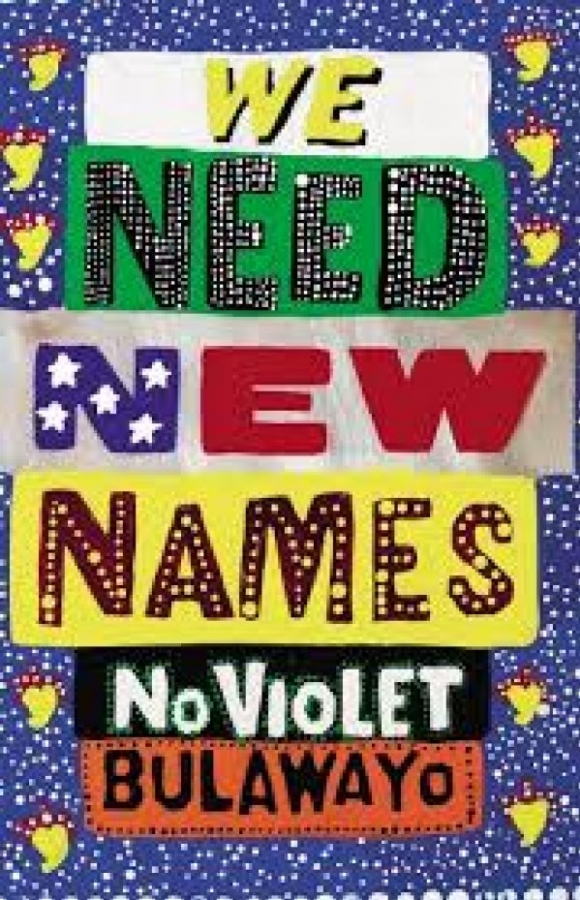
We need new names
AI Translation Notice: This review was translated from the original Italian using artificial intelligence. Book quotes and excerpts are translated interpretations and will not match the author's original English phrasing or official published translations.
The author was born in Zimbabwe and has lived in the United States since the age of eighteen.
The novel unfolds across these two worlds, so different yet fundamentally similar, because in both the individual is torn apart and oppressed by the violence of circumstances and of men.
The first part of the narrative, undoubtedly the most accomplished, is set in a Zimbabwean village:
Paradise is a cluster of tin cans spread out in the sun like wet sheepskin pegged to the ground to dry; the shacks have the muddy color of dirty puddles after the rains.
The shacks themselves are hideous, but from here they look much better, almost pretty even, as if looking at a painting
.
Darling, protagonist and narrator, guides us through a succession of episodes, scenes of the country’s material and moral devastation.
It is a story told through the eyes of a gang of children, who reenact through play the dramatic circumstances they are forced to witness.
When two BBC reporters ask with astonishment what they are doing among the graves of the village cemetery, simulating death and burial, the leader of the little gang replies with equal astonishment: “Can’t you see this is reality?” On the other hand, through play, the children manage to rid themselves of the anger that oppresses the helpless adults like “a big, terrible, toothless dog.”
At a certain point, nothing remains but flight.
Look at them leaving in droves, the children of the land, just look at them leaving in droves.
(...) Moving, running, emigrating, going, abandoning, walking, leaving, flying, fleeing; everywhere, to countries near and far, to countries never heard of, to countries whose names they cannot pronounce.
(...) Look at them leaving in droves despite knowing they will be received with suspicion in those strange lands to which they do not belong, knowing they will have to sit on one buttock because they must not sit comfortably, so as to be ready to get up and leave, knowing they will have to speak in whispers because their voices must not drown out those of the natives
.
Darling goes to America, taken in by an aunt.
It is still she who tells us the story of a young girl becoming an adolescent in a world that is not hers, but inevitably must become so.
It is not the America she had dreamed of when she lived in Zimbabwe.
This place doesn’t feel like my America, it isn’t even real. It is as if we were in a terrible story, as if we were in some crazy part of the Bible where God is busy punishing men for their sins and making them miserable. (...) In America the streets are like the devil’s hands, like God’s love, reaching everyone, only the sad thing is that these streets don’t really take me home
.
The young Darling grows up like any Black American teenager: she integrates seamlessly, yet the events involving her, the friendships and the people she encounters, continually draw her back to her childhood, to her playmates, to her native land.
One day, to return home—if only via the internet—she connects via Skype with her mother in Zimbabwe; instead, a childhood friend answers.
Darling adopts the typical attitude of Westerners toward Africa, expressing our solidarity from afar, comfortably and complacently, with the suffering of these peoples.
But you are not the one suffering (her friend reacts).
You think watching on the BBC means you know what is happening? No, you don’t; (...) it is us who are here who truly feel the suffering, so it is us who have the right to say something (...) If it were your country, you would have loved it enough to live in it and not leave it.
You had to fight for it (...) You left it, Darling, my dear, you left the house burning and you have the nerve to tell me with that stupid accent (...) that this is your country? (...) Her sarcastic tone (...) slaps me in the face, catching me by surprise.
I am so shocked that I don’t know what to say
.
One must belong somewhere; one cannot remain suspended between too many worlds, as an outsider.
We must have new names, live new experiences intensely, become involved, feel part of something.
When someone speaks about their home, you have to listen carefully because that way you know exactly who they are
.
This complex and profound book conveys something else as well.
In the final pages, Darling remembers (or perhaps merely dreams of) when, as children, they used to play at catching Bin Laden.
It was not a very amusing game, so at a certain point the little gang turned their attention to an old dog, solitary and cantankerous, standing in the middle of the road.
Suddenly a truck came along and ran over the animal, crushing it to a pulp without killing it instantly.
And it is with this terrible image—of laceration and incomprehensible death—that the author closes the book.
Then we understand what the novel’s title means: we need new names to speak of displaced peoples, to integrate with other cultures and customs, but we also need new words to narrate the blind violence that oppresses and divides us all, Westerners and non-Westerners alike, binding us to a common destiny.
The prose is the fundamental triumph of this splendid book.
The author moves across two worlds that are distinct from a stylistic standpoint as well.
In the first part, the English language is interwoven with vocabulary and idioms from the native tongue, leading the reader to identify with the places and the people not merely through the story, but above all through the use of language.
When she turns instead to Darling’s adolescence in America, the author frequently resorts to youth slang, without overlooking the linguistic hybridity of the diverse ethnicities that comprise the vast immigrant populace.
There is, moreover, a stylistic nuance that reveals the meticulous craft of the writing.
When Darling speaks in America of her homeland, she no longer uses that creative blend of English and native words: her gradual estrangement from her land is mirrored in her language, increasingly detached and sterile.
It is reflected, ultimately, in her consciousness.
Why read it? It is a book of exceptional caliber, truly beautiful.