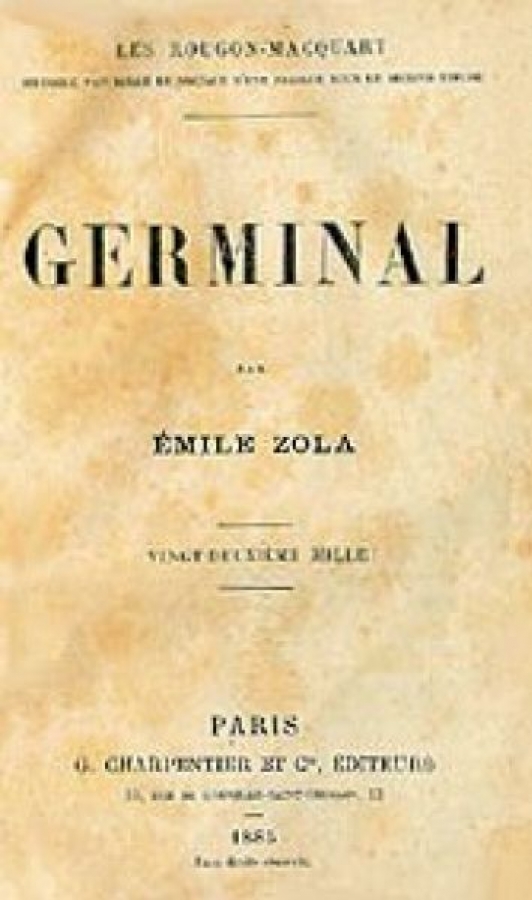
Earth and Germinal
These are two naturalist novels of a pronounced sociological stamp: almost social inquiries. In *La Terre*, Zola depicts, ruthlessly and without the slightest concession to idealism or optimism, the economic and social reality of French agriculture at the close of the nineteenth century. Nothing is spared; in particular, the family and human relationships are shattered by the greed for property and an ingrained habituation to violence. In *Germinal*, which portrays the plight of the miners and one of the earliest workers' strikes, the style remains strictly realistic, yet idealistic notes emerge, tied to the conviction that one is witnessing the first steps of a great movement—the labor movement—destined to achieve social and political gains. Although the novel’s conclusion is tragic, the reader comes away with a certain optimism. Contemporaries favored *Germinal* over *La Terre*, but today it is undoubtedly the latter that stands out with greater validity, particularly for its narrative pacing (that of *Germinal* is somewhat tedious) and its depiction of the French countryside. These are two great social novels that place Zola among the greatest writers of this genre.
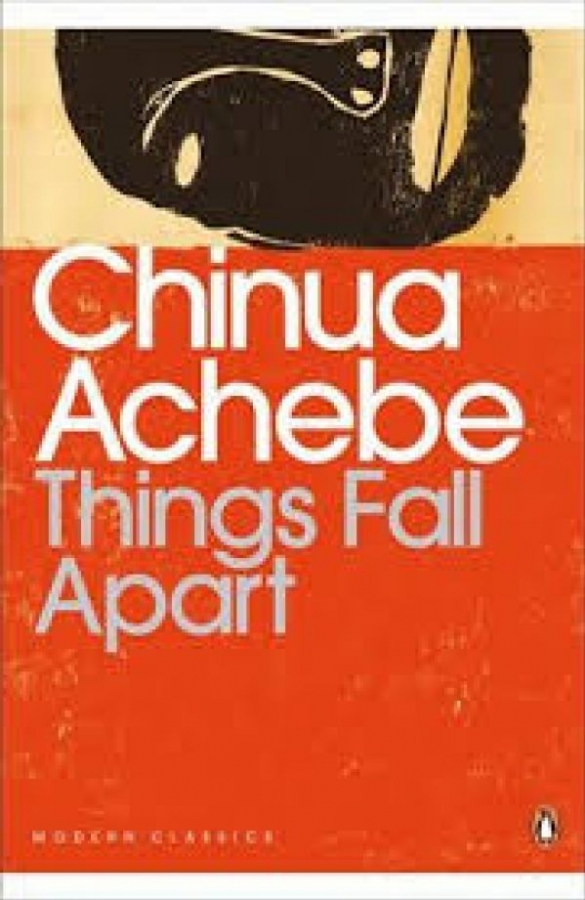
Things Fall Apart (things fall apart)
The novel forms part of a trilogy alongside two other works, *No Longer at Ease* (1960) and *Arrow of God* (1964): an expansive fresco depicting the impact of colonialism on African society. In this narrative, the setting is established across the nine villages of Umuofia, in Nigeria; the historical period is that which immediately precedes the arrival of the colonizers. *Things Fall Apart* recounts, precisely, the demise of an agrarian civilization, shaped by the cycle of the seasons and governed by immutable, perennial codes. It is a realm forged of certainties yet inherently magical, teeming with elusive and mythical figures; its people are immersed in a living natural world, accustomed to accepting its benevolence alongside its wrath. A person's existence > unfolded from birth to death through a continuum of transitional rites, drawing them ever closer to the realm of their ancestors . Achebe depicts this society through exquisite and stately elegiac forms; he does so without self-indulgence or nostalgia, for those certainties also stemmed from the collective acceptance of an unyielding hierarchy and an inertia that entrapped human beings. The arrival of the white conqueror and his religion does not shatter an idyllic world; it also dismantles laws and customs that were often brutal and inscrutable, leaving > Umuofia bewildered like a startled animal, ears pricked, scenting the silent, ominous air without knowing which path to take . It would be reductive, however, to read the novel solely through its social and political dimensions; it chronicles the story of a man, meditating on power and its eventual fall. Okonkwo is a formidable warrior whose renown reaches beyond Umuofia, to the extent that the elders regard him as > among the bravest champions since the clan's founder wrestled a wilderness spirit for seven days and seven nights . His extensive properties and grand compound, his numerous wives and many children enable Okonkwo to aspire to the highest ranks of society. For him, this represents redemption from the legacy of his father, who had squandered everything and brought dishonor upon the household. It is an honor of high standing when the village elders resolve to place in Okonkwo’s charge a boy from another tribe, surrendered as compensation for the killing of an Umuofia maiden. Ikemefuna is resilient and robust, swiftly earning Okonkwo’s esteem and affection. Ah, if only he were his eldest son, instead of Nwoye, who is so frail as to recall Okonkwo’s own father! A deep bond also forms between Ikemefuna and Nwoye, the former assuming the role of an elder brother, at once protective and vigorous. The Oracle of the Hills and the Caves hands down Ikemefuna’s death sentence; he must be slain in accordance with an unbending, immutable law governing those given in retribution for a crime. > This boy looks to you as a father. Take no part in his death , an elder cautions, conveying the village’s decree to Okonkwo. Okonkwo would be excused from taking part in the gruesome execution; yet he cannot bring himself to withdraw, bound by a social standing he feels driven to maintain. And so Okonkwo follows Ikemefuna on his unsuspecting path toward death. The unfortunate boy recalls the tunes his mother used to sing to him: > he felt like a child all over again, comforted by the thought of returning home to his mother . He is struck down and cries out: > Father, they are killing me! Seized by terror, Okonkwo unsheathed his machete and dealt the finishing blow, terrified of being perceived as weak. (...) Nwoye had heard rumors that twins were cast into clay vessels and abandoned in the forest, yet he had never crossed paths with them until now. A sudden shudder had coursed through him and his mind seemed to grow dim, like a solitary wanderer encountering a sinister spirit upon the road at night. Something had broken within his spirit then. That very tremor fell upon him once more when his father walked through the door that evening after putting Ikemefuna to death. With this episode begins Okonkwo’s downfall; after all, what he has done is > the sort of transgression for which the deity obliterates an entire lineage . During a funeral gathering, Okonkwo accidentally slays a youth of Umuofia: custom dictates that he must go into exile for seven years, accompanied by his entire family. He resigns himself to this destiny; clearly his personal guardian spirit, his *chi*, was not forged for greatness. He knows, too, that once he returns to his village he will no longer be able to aspire to the summit of society, no matter how immense his valor and wealth might be. Yet while Okonkwo bows to ancestral mandates, he can in no way reconcile himself to the colonizer's rules, particularly when they strike at his own flesh and blood: his eldest son Nwoye converts to Christianity, renouncing family, tradition, and the ancient gods. Then, upon realizing that Umuofia is capitulating without resistance, he commits an individual act of rebellion: he strikes down the white man’s messenger, a traitor to his own people. Nothing remains for him but to end his own life, hanging himself: his world has collapsed. Much like in Aeschylean tragedy, Okonkwo seems driven solely by the divine, by his *chi* > , by ancestral decrees, by ageless rituals: at bottom, he carries no guilt for participating in Ikemefuna's execution. Achebe is too accomplished a writer to lapse into stereotypes: a pivotal strength of the novel lies precisely in the psychology of its characters; they maneuver within their human contradictions, caught between social strictures, affections, and ambitions. Ezinma, Okonkwo’s favorite daughter (ah, if only she were a boy!), is carried off by an ecstatic priestess to the shrine of the cave deity. Her mother trails behind in despair, yet lacks the courage to cross into the cavern, such is the awe commanded by the ancient faith. Okonkwo arrives with his machete, the consummate warrior, prepared to defend and, if necessary, tear his beloved daughter away, even against the divine will. Yet we must ask: why was he not willing to make that very same choice for Ikemefuna, or for Nwoye? Out of ambition, or simply because he did not love them enough? Furthermore, why do the gods strike him down, even when he complied with the cruel ancestral laws? And why does he resort to suicide, fully aware that one who takes his own life may only be buried by strangers, bringing ruin upon his entire house? As observed in the introduction, Achebe's characters do not seek our consent to be human; they offer no apologies for their complexity (or for being African, or human, or so extraordinarily alive). The setting, narrative, and characters captivate because they are rendered in prose that approaches perfection: unadorned, fluid, capable of interweaving English with vernacular idioms, conveying both the ambiguous allure of a civilization and the profoundly authentic, layered feelings of its protagonists. It is true that the subject is Africa, yet the refined craft and narrative pacing—with its deliberate suspensions and its oscillation between quietude and catastrophe—lead us into a universal dimension: the underlying subject is the enduring fate of the human condition, transcending both time and space. Why read it? Mesmerizing, a masterpiece.
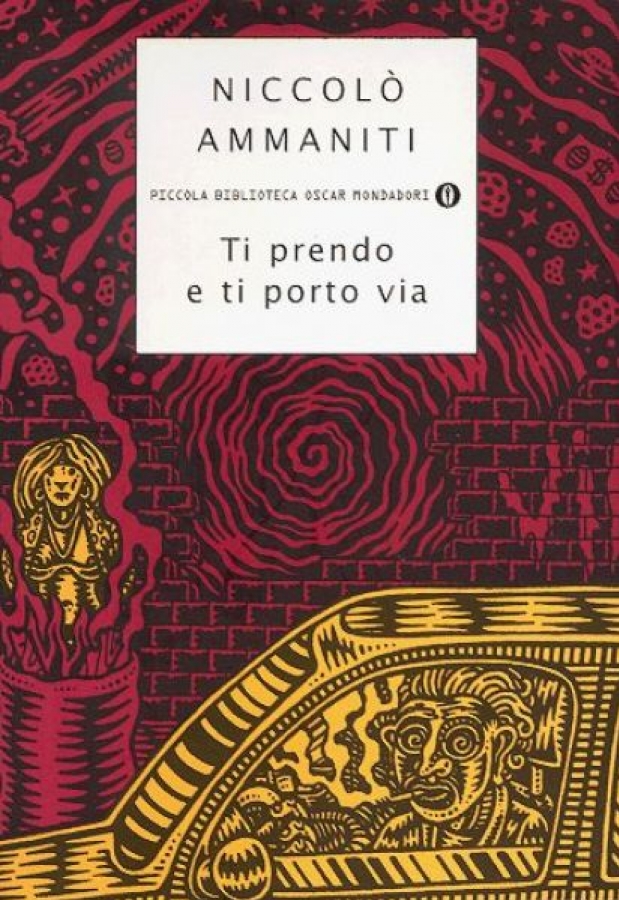
I'll take you and carry you away
It is a book that complements the previous one. Set in the provinces, it recounts a squalid context inhabited by characters marked by a profound sadness over the bleakness of their dead-end lives: the group of violent youths predestined for crime or for an opaque existence like that of their parents; the family of Pietro, the protagonist, defined by the mother’s depression, the father’s violent alcoholism, and the brother’s mediocrity; Graziano Biglia, a squalid provincial *vitellone* who does not even realize he is in love with Flora; and Flora herself, who leads a hard but orderly life caring for her sick mother, until she meets Graziano, becomes pregnant with his child, and is subsequently abandoned, sinking into a state of depression and neglect: “didn’t you know, perhaps, that promises are made to be broken?”. So Flora says on the terrible evening when Pietro kills her. In this provincial setting, a friendship develops between Pietro and Gloria, who, despite coming from very different social backgrounds, forge a bond that cannot help but blossom into a love story. Yet Pietro cannot endure it, and the murder of Flora constitutes, essentially, a way of escaping such a desolate environment. > I understood why he had done it. To fight an evil thing inside us that grows and turns us into beasts. He cut his life in two to be rid of it... I didn’t want to end up like Mimmo... I didn’t want to become like them . Only murder, a violent and irreversible act, shatters a situation that feels destined only to worsen. The desolation lies not only in the present, but above all in the impossibility of a better future and a world devoid of prospects. The style is highly effective, shaped by an ensemble of episodes and characters moving within the realm of chance and unpredictability. The narrative pace is intensely sustained, making it a thoroughly compelling book to read.
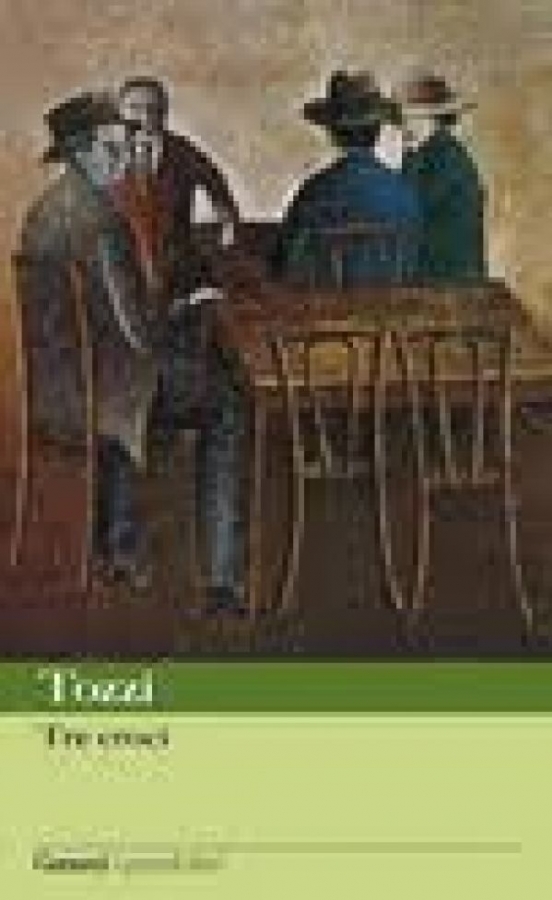
Three Crosses
We are in Siena in the early twentieth century: a city "wholly gathered within itself and unapproachable," where one lives gladly because it is possible to "know what one desires of others." Three brothers, Giulio, Niccolò, and Enrico, are sliding into poverty and attempt to save themselves by forging a friend's signature to discount promissory notes at the bank. It is a short-lived expedient, of which they are well aware, yet to which they cling in order to go on living in abundance. What interests the author is not so much the underlying social issue as the psychology of the three brothers, so distinct yet complicit in their fraud. Giulio > was the most melancholy of the three brothers... the most intelligent, and the only one who felt like working . It was he who had proposed the idea of forging the notes, yet he needed a justification capable of clearing his conscience: > no one can expect of me that I not be as God brought me into this world. I have never willingly done harm to anyone. I forged the signatures only because my real signature would have counted for nothing . Niccolò > was always disposed to good cheer, but so mercurially that he would insult anyone who said one word more to him than he cared to hear. Outside, he walked with his head held high, right down the middle of the street, playing the grand gentleman; he barely replied if greeted, striding past as though he despised everyone . Enrico > had been one of those cheeky, brazen boys of whom it is said that nothing good will ever come . Niccolò and Enrico would like to boss around and impose themselves upon Giulio, but then—one out of laziness, the other because he is less intelligent—they leave it to their brother to get them out of trouble. Yet there are endless quarrels and disputes, joined also by friends, which unfailingly end in bouts of heavy eating and drinking. The novel unfolds through a series of domestic sketches, largely set in the old, dusty bookstore—the three brothers' failing business. And life might have carried on amid chatter, squabbles, and feasts, when the bank, presented with yet another promissory note for discount, grows suspicious and alerts the unwitting friend. It is bankruptcy, disgrace, and destitution. And it is Giulio who grasps the full extent of their ruin, both financial and moral. To Niccolò, who insists he will certainly not lose his appetite over having swindled a friend ( > if we had half a dozen roasted woodcocks tonight, I’d clean the bones dry ), Giulio replies that > my will consists precisely in realizing my collapse. It is a sort of inverted pride; but pride all the same . Suicide is Giulio's inevitable fate. With a lapse in style, giving way to a lachrymose pietism, the novel closes with the deaths of Niccolò and Enrico as well. The novel is dedicated to Luigi Pirandello, and never was a reference more fitting. Indeed, of the realism so often invoked by critics, the narrative retains only the backdrop—the pretext for a psychological exploration into the impact of fraud and its inevitable exposure upon the behavior and conscience of its perpetrators. Furthermore, that this investigation centers on three brothers, bound to one another by affection as well as family dynamics, makes the narrative all the more compelling. Certainly, there are distinctively Tuscan idiosyncrasies, but they form merely the setting for a drama universal in both time and space. The account of Giulio’s suicide is a passage of startling modernity, in which objects themselves master the character's will: > on the chest, all those faux-antique objects told him: you are just like us. It is pointless for you to try to avoid us! He answered aloud: Wait, I’ll sign. And he saw his forged signature hopping along the floor. he bent down to catch it; he thrust his head beneath the shelves.... Then he turned out the light. And, in the dark, without realizing he was killing himself, he put his head inside the noose . With this passage, Tozzi surpasses Pirandello himself, establishing himself as one of the most original writers in Italian literature: social issues, regional milieu, psychological mechanics, and postmodern symbolism all merge in this novel. Why read it? If we read without prejudice and beyond clichés, we can discover wondrous, and overlooked, masterpieces within our literature.
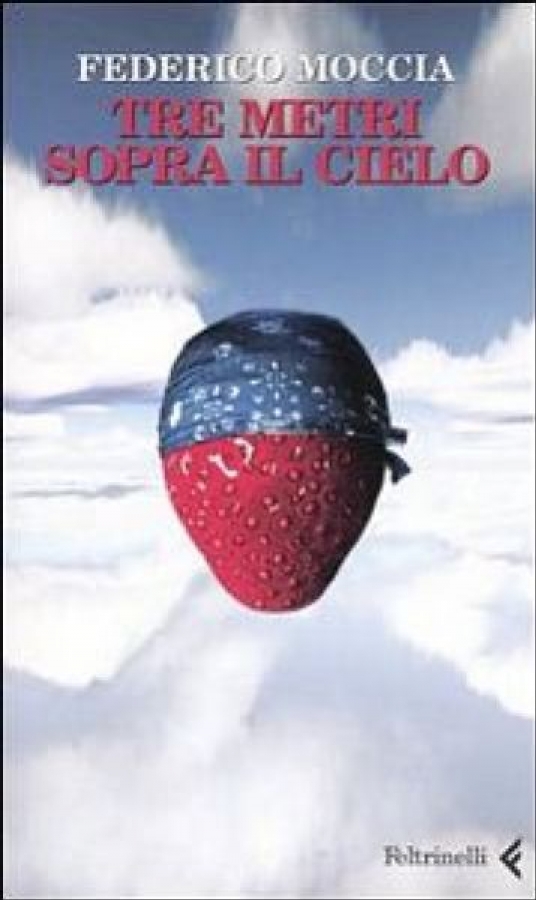
Three Meters Above the Sky
The book recounts a love story set among the youth of the Roman upper-middle class. Babi falls in love with a wayward boy, clashing with her parents over him and allowing herself to be drawn into a series of episodes—some even violent—that are entirely foreign to her disposition as a sensible, poised young woman. In the end, however, her social milieu prevails, and Babi leaves the boy for someone closer to her own upbringing and traditions. It is a romantic story whose primary merit lies in its depiction of the world of upper-middle-class youth, their violent values, the indifference of school and parents, and the pursuit of intense, unconventional thrills. In truth, it all concludes in the most predictable fashion, with the characters returning to a “quiet bourgeois life” that, in reality, they never genuinely left. The book is very well written, in an ironic and detached style that is simultaneously capable of eliciting feelings of both sympathy and antipathy, yet always framed within a context of lightness and pleasantness. Aspirations, heartaches, happiness, and loves are rendered in a lean, highly effective tone. Yet an upbeat tone consistently prevails, which at times renders the whole work somewhat contrived and artificial, particularly in the novel’s concluding section.