Toilet
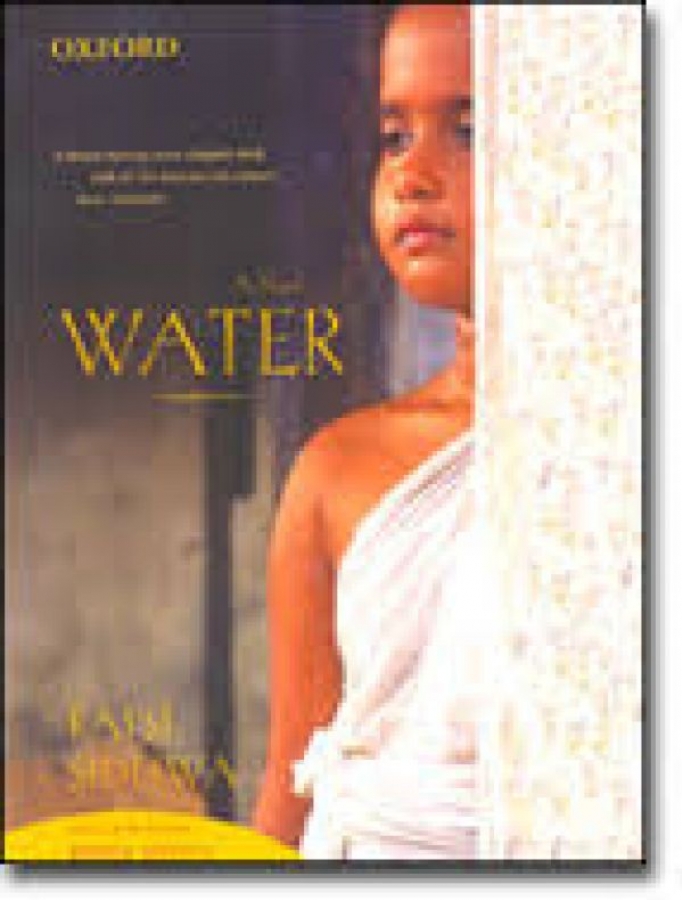
In Hindu tradition, a widow > must remain in perpetual mourning... her head is shaved clean. her ornaments removed... she must eat no cooked food in order to cool sexual energies, avoid worldly gatherings because a widow brings misfortune (having caused her husband's death), and she must remain chaste, devout, and faithful to her husband’s memory . Religious tradition is compounded by economic motives. Through the marginalization of widows, sequestered in dedicated dwellings, the relatives—of both the woman and the deceased—rid themselves of a claimant to the inheritance. Yet > the combination of moral unworthiness and innocence lends (widows) an irresistible erotic appeal. And eroticism is heightened by their vulnerability and availability . The lack of financial means (they are frequently abandoned by their families), loneliness, and social ostracism render widows easy victims of prostitution. The book addresses the lives and destinies of these widows. It does so through the story of a young girl. Chuyia is not yet six years old when she is given in marriage to a man far older than herself. She is still living with her family, waiting to become a woman, when her husband dies. She is cast out mercilessly into a house for widows. Uprooted from her world, abandoned and forgotten by her parents, the child must rebuild an emotional sphere of her own. She finds it in several companions in misfortune, older than she: old Bua, who still reminisces about the sweets and delicacies served at her lavish wedding; Shankuntala, who lives out her fate as a widow with profound devoutness and wonders whether her life is not > an illusion that burst like a bubble and opened into another illusion in which she was a widow , and the radiant Kalyani, who, precisely because of her beauty, has been coerced into prostitution and has learned to “live like a lotus, uncorrupted by dirty water”. Kalyani’s life is, in fact, a series of discrete episodes, of compartments—some opened to the sunlight, others (“the nocturnal calls”) repressed and hidden from herself. In their own way, each of the widows has found a modus vivendi to render life bearable, an existence otherwise intolerable. And this would have been Chuyia’s fate, were it not for two terrible events: Kalyani takes her own life upon learning that the young man she loves is the son of the man to whom she is prostituted; Chuyia, not yet nine years old, is drugged and raped, so as to initiate her into prostitution. How can the pious Shankuntala continue to believe in a religion that justifies such cruel and unjust destinies? Is it truly that God is Truth, or is it not rather, as Gandhi says, that Truth is God? Meaning that we must act out of the awareness of being part of a whole, in which every being possesses equal dignity and the right to live. With this awareness, which finally sets her free, Shakuntala resolves to save Chuyia at least, entrusting her to Gandhi. The happy ending is not an unexpected twist—though a welcome one nonetheless. It is the consequence of a cultural and psychological maturation. It is the sign of liberation. The novel unfolds slowly, with a rhythm that mirrors the inexorability of the widows' destiny. The opening scene radiates a childhood serenity that is prematurely dispersed. > Birds hopped among the tree branches, making the leaves tremble and filling the forest with chirping... All of Chuyia’s senses sharpened in the wild beauty of the forest, her breathing slowed to harmonize with the deep rhythm of the plant world, and her heart was at peace . It is the image of that communion with the “whole,” with Truth—Gandhi’s message: a communion shattered by the cruel rules of society. We then follow the young girl into the house of widows. There is no facile moralizing, no overt social denunciation: things are as they are, and as they have always been. Admittedly, small acts of defiance occur, yet a melancholic resignation to one's fate prevails. The women always return to memory, immersing themselves in prayer and the veneration of the dead. A nostalgic gentleness prevails, reflected in the prose: rich in vocabulary, full of refined adjectives, serene as widows are expected to be. The novel gathers speed in its final pages, when, confronted with the horror of what has occurred, Shankuntala reclaims control of her own destiny, and the tumult of the crowd, the cries of the people, and the headlong rush of events take over. Why read it? It depicts the Indian world, suspended between ancestral traditions and renewal. It also depicts the absurd and oppressive rules of any religion and tradition.
White Fang
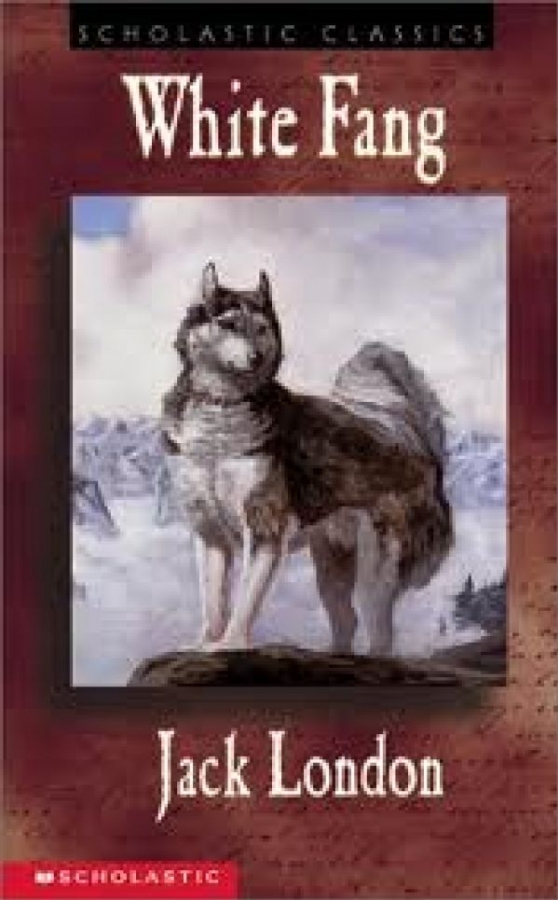
*White Fang* is the tale of the birth of friendship between wolf and man, but also the chronicle of a catharsis, of a transition from solitude to sociability. The novel opens with the mortal conflict between the two animal species. Two men, with their dogs, are pursued by a pack of wolves desperately seeking food in the cold North American winter. Patiently, with lucid and ruthless precision, the wolves gradually eliminate the various members of the party before launching their final assault on the sole survivor. In this fateful moment, there is no longer room for the arrogance of the human species, for its intellectual contortions, for its presumed supremacy. The man > cast a terrified glance at the circle of wolves that would predictably form around him, and suddenly the realization struck him that this wondrous body of his, this pulsing flesh, was nothing more than meat, quarry for voracious beasts, to be torn and ripped apart by the ravenous fangs (of wolves) to become their nourishment, just as the mouse and the rabbit had often been nourishment for him . Upon the arrival of some hunters, the wolf pack flees, disbanding. A female and two males depart together. This is the finest part of the book, in which London effectively depicts the wilderness of the forest, the clash of the two males for the female, mating and the birth of the pups, their discovery of the surrounding world, and the famine that decimates the family, sparing only the she-wolf and one of the cubs, White Fang. Nature is fascinating yet brutal; among the various species there is a relentless struggle for food, in which the strongest and most cunning prevails. The competitive vision of the nineteenth century, of a triumphant bourgeoisie, emerges in London’s pages, alongside a romanticism nourished by the richness and mystery of the wilderness. White Fang's mother is a cross between a wolf and a dog. For London, genetic inheritance is an imprinting no being can escape, > because life reaches its summit when that which it is equipped to do is realized to the fullest . The encounter with a tribe of Indians revives in White Fang’s mother her nature as a “dog,” dependent on man. Contact with man is an extremely harsh trial for White Fang, an ongoing conflict between his independent nature and devotion to man’s strength, who in his animal psychology is experienced as a "god > . There is no affection toward man; instead, in White Fang there is fear and admiration. Alongside the men are the dogs. Alone against all, White Fang grows hard, ruthless, a warrior: he never learned to play with (the dogs), he only knew how to fight > . He becomes a cold fighter, but also a solitary and sorrowful animal, having never known the affection and play of other pups. His qualities as a fighter will prove invaluable when, sold to a cruel white man, he is used in dog fights, in which he always emerges victorious. White Fang comes to know the world of hatred to its depths, knowing he can defend himself against it only through strength and cunning: he has no friends and seeks none. And it is during one such fight that White Fang, gravely wounded, is rescued, tended to, and cared for by a wealthy gold hunter. From this point onward, the story becomes trite and predictable. Little by little, day after day, White Fang discovers that he is capable of affection and devotion toward man; he is no longer alone, he is surrounded by an environment full of love, he discovers friendship and, with it, fatherhood: the pup sprawled in front of him. (White Fang) pricked up his ears and looked at him curiously. Then their noses touched and he felt the pup's warm little tongue upon his jaw. White Fang's tongue came out, he knew not why, and licked the pup's muzzle. The first two parts of the book are splendid and clear in their meaning. The wolves’ attack on the men and the expert naturalist’s depiction of the forest are an evident exaltation of wild nature, of the untamed strength of environments where one fights on an equal footing" to survive and not for amusement. Then, instead, the complexity of human relationships takes over: hatred, amusement at the expense of the innocent (animals), the ambiguity of human affection, which demands fidelity and obedience regardless. White Fang is ultimately a victim of man, as are all animals. His instinct must bend to the laws of man, and only in fatherhood does he reclaim his wolfish destiny. From the standpoint of writing, Jack London’s fundamental virtue is his narrative pace, action-packed yet set within an exceptionally compact plot. The author has no need to expand the story, which is instead a continuous deepening of the same theme, entrusted to a rich and multifaceted use of verbs and adjectives. Why read it? It is a pleasure to let oneself be swept away by London’s love for wolves and nature.
The White Tiger
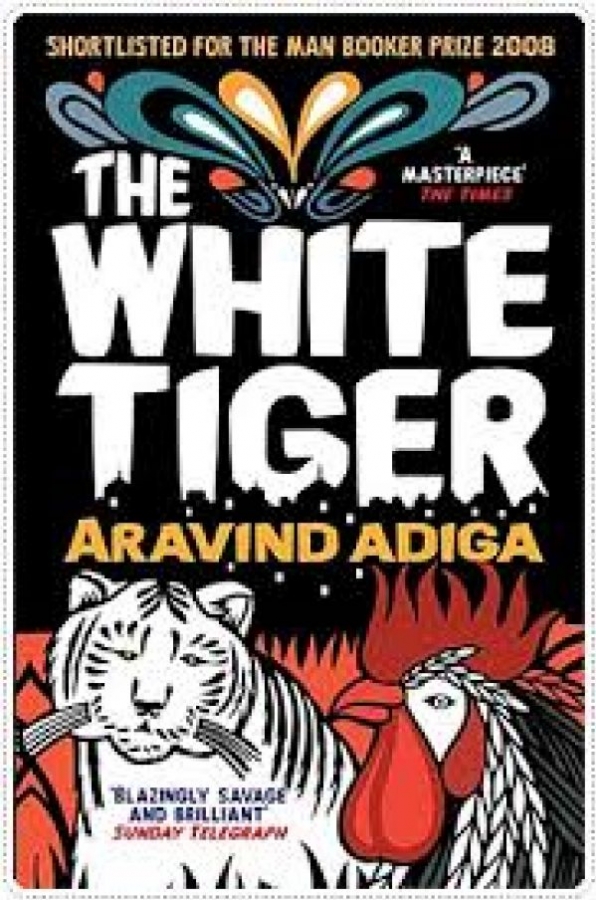
In the splendid stories of *Between the Assassinations*, Arvind Adiga had developed a pessimistic chronicle of an unalterable social destiny, from which one can escape only through a desperate individual choice. The Indian writer returns to this theme with this novel, which recounts the story of a man's rebellion against the petrification of caste, the exploitation of the poor by the rich, and the social imprisonment forged by tradition and family ties. There are no grand ideals behind the revolt; there is merely the desire to have > the chance to be a man, and for that, it was worth killing . The author imagines the protagonist writing to the Chinese premier to explain how one becomes a successful entrepreneur in modern India, "the centre of technology and outsourcing." One need not have attended university or worn fine clothes: entrepreneurs are made of "half-baked clay," they must emerge from the dark side of society and possess the resolve of those who have nothing to lose, who know that there are "only two destinies: eat or be eaten." The protagonist fits the profile. True, in the impoverished village where he was born and raised, they did not even give him a name, calling him merely Munna—boy—yet, from childhood, he senses that he is not destined to "remain a slave." Only, it is not so easy to "spit out one's past." One must break free from the "cage" in which one has been trapped since birth. To depict this social and psychological condition, the author employs an effective metaphor: the poultry slaughterhouse. > Go to Old Delhi and watch how they keep the chickens there in the market. Hundreds of pale hens and brightly coloured roosters, stuffed tightly into wire cages, packed together like worms in a belly (...). On a wooden table (...) sits a young butcher, smiling complacently, displaying the flesh and organs of a freshly slaughtered chicken (...). The roosters see the organs of their brothers lying around them. They know they will be next. Yet they do not rebel. They do not try to escape from the coop.(...) Because the desire to be a servant has been bred into me; carved into my brain, nail after nail, and injected into my blood, in the same way that waste and industrial poisons have been poured into Mother Ganga. (...) Servants must prevent other servants from becoming innovators, experimenters, or entrepreneurs. (...) The coop is maintained from the inside . The narrative is precisely the protagonist's liberation from this subtle yet unbreakable prison. By chance, he manages to move to New Delhi as a driver for the brother of the village boss. He remains a servant in every sense, at beck and call for any need; yet driving the car grants him access to every facet of his master's life, from intimate matters to shady dealings. It is a kind of unveiling, a discovery of the sins and emptiness of the rich. The obedience and subservience inculcated over centuries would have nevertheless kept him a faithful servant; at most, he might have indulged in some petty, innocent pleasure, as other drivers do: urinating in the masters' flowerpots, slapping them while they sleep, beating their pets. An incident helps awaken his consciousness. The master's wife runs over a poor person, and the boss's family demands that Munna take the blame and go to prison. Even the protagonist's own relatives urge him to make this sacrifice, as though it were the most natural thing in the world. Fortunately, the police, suitably bribed, close the investigation, leaving no consequences; but the protagonist grasps the hollow nature of traditional values of loyalty and the hypocrisy of the benevolent paternalism displayed by his master. He often has to drive the latter, carrying a bag full of cash, to bribe government officials. He decides to seize the opportunity: he murders the master and takes the money, laying the groundwork to become a successful entrepreneur. The caustic irony of the narration must not mislead: the novel is staunchly realist, a cold social accounting and a vigorous political indictment. The whole of Indian society emerges desecrated and exposed in its true nature, both modern (the myth of the world's largest democracy, the headlong and all-resolving economic boom) and traditional, which so fascinates Westerners. The protagonist is a stereotypical figure, as cold and cynical as the master he killed: a true "white tiger," because he is cruel and at the same time rare. Munna achieves success, but this offers no solace to the reader. The hope lies in the fact that he performs two acts of humanity: fleeing after the crime, he risks capture by the police to save a young cousin who lives with him; he compensates the mother of a man struck by one of his drivers. Slight gestures of solidarity, which cannot make us forget that the protagonist failed to warn his relatives of the vengeance of the boss's family, who will indeed slaughter them all. Where what matters is "the size of the belly"—money—there is little room to be "good"! The novel's primary virtue is its narrative style: prose that is spare yet rich. The flaw lies in the plot, which fails to sustain an intense narrative pace, rendering the tale often repetitive, burdened with too many sociological and political digressions. In its execution, the author fails to sustain the expectations raised by the intriguing literary device of the letter to the Chinese premier. Why read it? A strong realist stamp, highly effective prose.