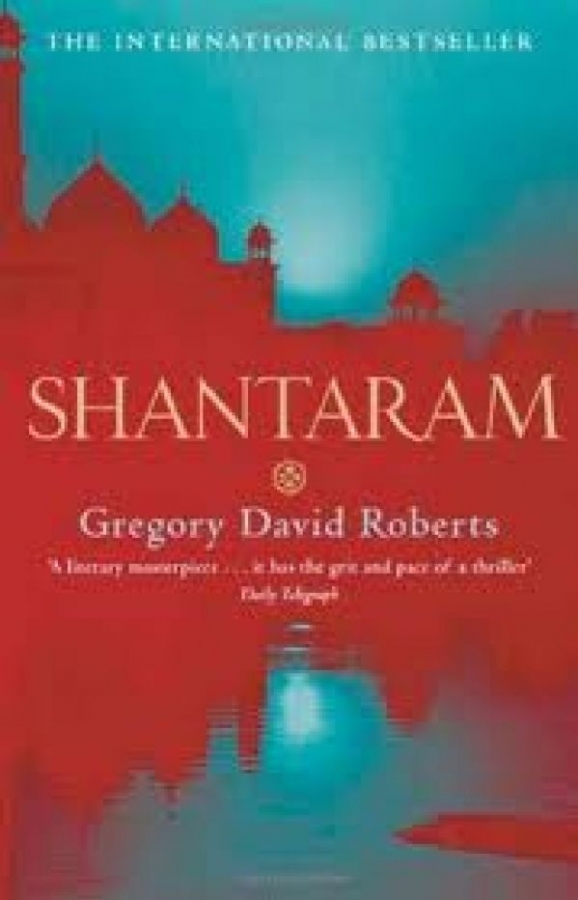
Shantaram
*Shantaram* is a book of roughly 1,200 pages and, in some reviews, has even been compared to *War and Peace*. In reality, it is a bloated potboiler, an implausible yarn that blends every Western stereotype about India with that inevitable refrain claiming economic backwardness should be celebrated as cultural authenticity. The trouble is that the novel—written, it must be said, in excellent English—is verbose, tedious, devoid of action, and lacking any psychological depth in its characters, whose personalities remain mere outlines, beginning with the protagonist himself. I must confess that my judgment, harsh as it is, rests on less than half the book: exhausted and disheartened, I resolved to abandon the reading, something I almost never do. It may well be that the second half of the novel is splendid, but I leave the burden of proof to other, far more patient readers. The plot purports to draw from the author's own life. The protagonist has escaped from an Australian prison and sought refuge in the vast, multifaceted expanse of Bombay. There he falls in with a circle of Western expatriates living on the borderline between the Indian world and the West. Circumstance, curiosity, and his friendship with a local man (Prabaker, the sole character delineated with any care) lead him to abandon this stance of "spectator": > I suddenly realized that if I wanted to live here, in Bombay, the city I had fallen in love with, I had to change, I had to get involved.... I had to expect it to drag me into the flow of its joy and its rage. Sooner or later, I knew, I would have to leave the safe zones and throw myself into the violence of the crowd, putting my own body on the line . And so he does, going to live in one of the city's many slums. From this point on, the implausibilities begin to mount: he sets up a clinic to provide basic first aid to the slum dwellers, befriends a syndicate of mafiosi who rule the shantytown (gangsters who happen to love debating philosophy), even finds the occasion to embrace a bear, fights wild dogs, and on and on. The episodes follow one another without any coherent thread, assembling every trope a tourist might expect from India. The narrative, which aims to be gritty and realistic, is instead steeped in hypocrisy and contrivance. To be sure, our protagonist is moved by the suffering, the squalor, and the sudden outbursts of violence among the populace, yet he complacently basks in the communal solidarity that permeates the poor, blind to the fact that these values are not rooted in an aspiration for change, but stem rather from resignation—from the passive acceptance of an unjust world. Indeed, change is deemed pointless: > when we act, even with the best intentions, when we interfere with the world, we always risk a new disaster that might not have directly stemmed from our action, but would not have happened without us. Some of the worst injustices are caused by people trying to change things . With such a philosophy, it comes as no surprise that the protagonist feels far more at ease with the mafiosi who run the city and the circle of Westerners idling away their days smoking marijuana. Nor should anyone be shocked when he finds himself embroiled in gang warfare. Yet on that portion I cannot comment because, as I have already mentioned, I put the book down. The sheer elegance and fluency of the prose arouse the suspicion that this book is fundamentally a marketing product—artfully engineered around a tired, overused trope in Western literature and culture: the fugitive who discovers a new lease on life in multifaceted India. > Like all fugitives, the more successful I was, the longer and further I went, the less of my identity I retained. But there were people, some who could reach me, some new friends for this new identity I was learning to inhabit..... such a desperate crowd—the richest and the most wretched, educated and illiterate, virtuous and criminal, old and young—it seemed the only thing they had in common was the power to make me feel something Western egocentrism at its finest! Why avoid it? It is tedious, cloying, and thoroughly exasperating.
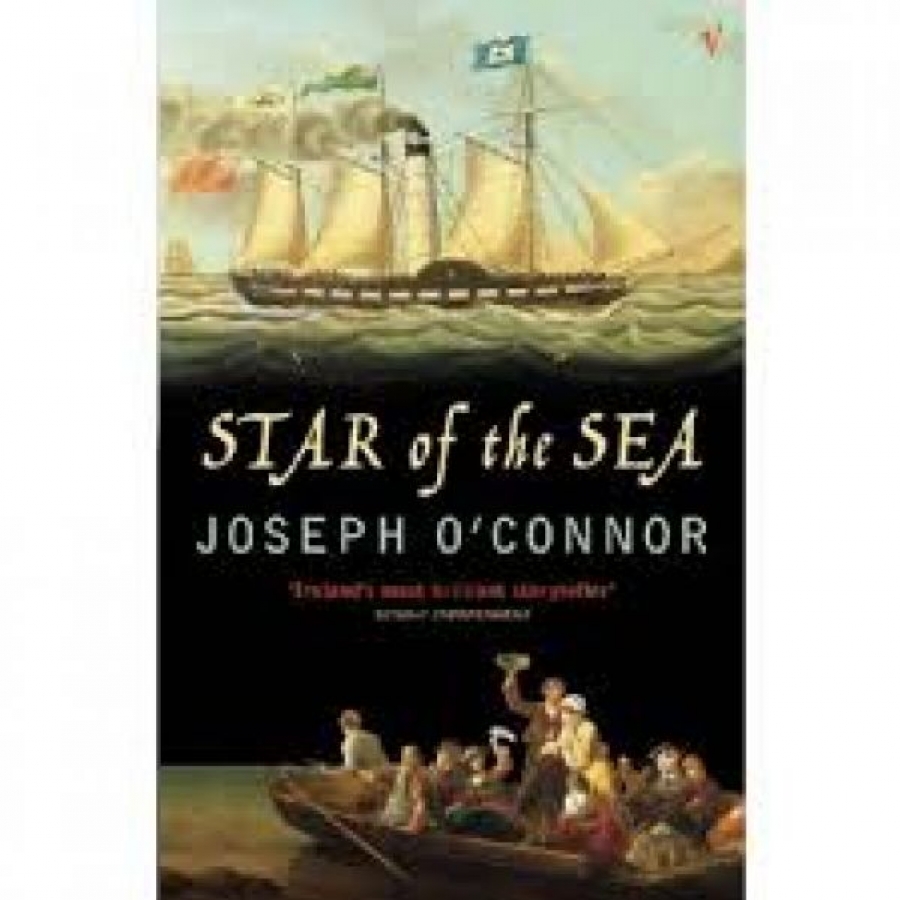
Star of the Sea: Farewell to Old Ireland
Between 1845 and 1849, a famine struck Ireland, giving rise to massive emigration toward Great Britain, the United States, and Canada. It was an enormous mass of people pushed to their absolute limits, malnourished and afflicted by typhus, tuberculosis, and cholera, already reduced to poverty and starvation in previous years by the rapacious policies of the landlords. The novel aims to recount this human tragedy and does so in an original, intriguing way: in the bitter winter of 1847, a ship sets sail for New York carrying hundreds of people fleeing a devastated land. > The ship was not bound for America, but for any country or territory that was not the United Kingdom; no matter how hostile and cold it might be . In tones reminiscent of Conrad, if not Melville himself, the author presents the ship as > a colossal beast of oppressive weight, its vertebrae creaking as if about to snap, dragged by some deity through their final tribulation, its skeletal frame already half-devoid of life and we passengers its parasites. (...) the shattered organ of a once majestic cathedral ; the metaphor, in short, of a ruined Ireland, of a desperate people. The multiple narrative voices are seductive as well, such as the captain’s log, which punctuates the days of the voyage with a roster of those who succumbed to disease and wasting; or the letters of certain passengers, bearing witness to hope, but also to the toil and despair of the emigrants. It is a pity that the plot and characters neither sustain this narrative approach nor reflect the historical and existential tragedy the work intends to portray. Aboard, alongside hundreds of emigrants, are a maid with a devastating secret, a bankrupt landlord with his family, a writer chasing elusive success, and a murderer thirsting for revenge. The lives of these characters are intertwined. Dissolving everything in its wake, the Great Famine shattered conventions and hierarchies, simultaneously releasing latent energies and repressed desires: one is finally free, yet this freedom also leads to self-destruction. At the center of the story stands the figure of the landlord, David Merridith: in love with the maid—whom we discover to be his sister—he must resign himself to a platonic relationship that no longer makes sense in this new state of affairs; drawn to darker, more ambiguous sex, he entered into a marriage of convenience rather than love, and mourns the life he could have had; driven by social aspirations, he has assumed, in spite of himself, the role of the "villain" toward his tenants, so much so that he fuels their hatred and desire for revenge. In the end, David Merridith dies mysteriously (murdered? suicide?), freeing the other protagonists from his now burdensome presence and allowing them to forge a new life in America. Does he embody the old society, and does his demise bear witness to a rupture with the past? Begun with high expectations, the novel soon collapses into yet another hodgepodge: it lingers over the characters' backstories, abandoning the ship and its passengers to recount the premises in exhaustive detail, stripping away any sense of surprise; it dwells at length on lurid, violent scenes, even on the wretched David Merridith’s syphilis; it strains to deliver a broad yet predictable panorama of mid-nineteenth-century Ireland and England. By attempting to pack in too many themes and situations, the author renders the plot tedious and prolix, fraying the narrative style, which sheds its Conradian, imaginative evocations only to become banal and redundant. Why not read it? It is long and boring.
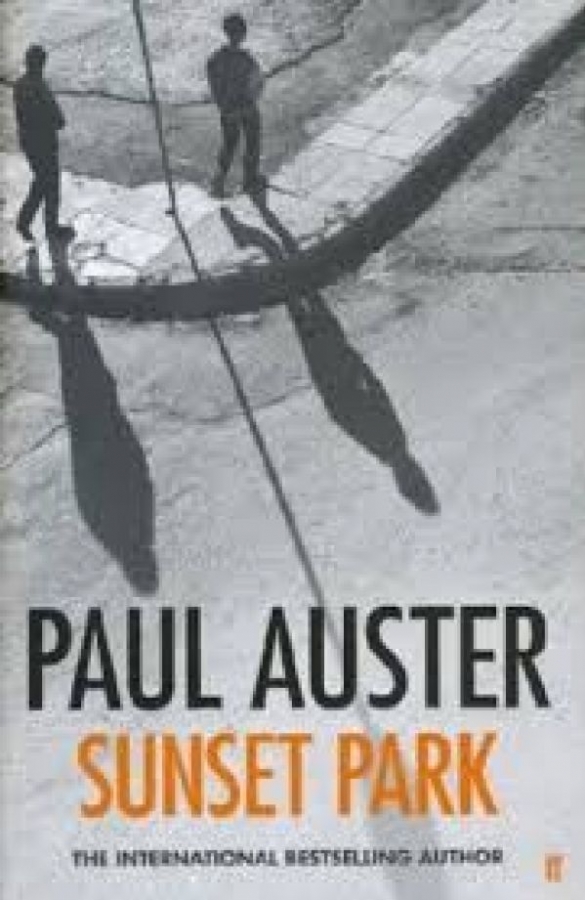
Sunset Park
Morris Heller, the protagonist’s father, is on an airplane watching an old Hollywood film (*The Best Years of Our Lives*), which deals with soldiers returning home from the Second World War and having to rebuild their lives; and what an old friend, a well-known writer, once told him comes to mind: > the idea he is toying with is to write an essay about things that do not happen, about the unlived lives, the unbought wars, the shadow world that runs parallel to the world we take to be real, the unsaid and the undone, the unremembered. A hazardous territory, perhaps, but it might be worth exploring . Miles Heller, Morris’s son, has a passion for photographing the belongings abandoned by those forced to vacate their homes in haste following an eviction notice. He has no plans, no hopes; “piece by piece” he has reduced his desires to a bare minimum. Why does a young man in his twenties, once a brilliant student, lead such an empty life? He is fleeing from guilt, from an existential malaise he cannot bring himself to confess: he is convinced he killed his stepbrother by pushing him under a car. What drove him to disappear was an exchange he overheard between his father and his stepmother. > He is a brilliant boy, I admit it. But cold, fragile, desperate, it chills me to think about his future. (...) They were cutting him to pieces. Carving him up with the calm, efficient strokes of pathologists at an autopsy, talking about him as if he were already a dead man walking. (...) Perhaps the best thing for everyone would be to remove himself from their lives, to disappear . His suffering runs so deep that he cannot even open up to a young girl with whom he has fallen deeply in love. He met her by chance because both were reading *The Great Gatsby*, the emblematic novel of a forceful personality. For a few pages, we hope that Miles might find in love the resolution to his anguish, regain his serenity, and be happy. Yet he is forced to leave Florida in a frantic rush and return to New York, as he faces potential charges of statutory rape—his girlfriend has not yet reached the age of majority. He accepts an invitation from a friend (Bing Nathan), who repairs all kinds of objects in a sort of “Hospital for Broken Things” and has taken up residence in an abandoned house alongside two young women: Ellen and Alice. The narrative then shifts its focus to the stories of the other characters, just as it traces the lives of Miles’s parents: his father, his stepmother, and his mother. We discover that each of them harbors an inner suffering, an unsaid and an unremembered: something they are incapable of expressing, acknowledging, or admitting. As the narrative progresses, glimpses of light and prospects of hope seem to emerge: Miles gets in touch with his parents and finally confesses the reasons for his flight, seemingly freeing himself from his feelings of guilt. Then everything plummets once more. During the eviction of the squat by law enforcement, Miles lashes out, striking an officer. Facing prison, he could turn himself in, yet chooses flight instead. > He wonders if it is worth hoping for a future when there is no future, and from now on, he tells himself, he will stop hoping for anything and live only for today, this moment, this passing instant, the today that is here and not here, the now that is gone forever . Why? Perhaps we can never truly rid ourselves of the anguish within us; perhaps existence can only be endured by retreating into the mundanity of everyday life. As in much of Auster’s fiction, an intellectualist imprint prevails; behind the characters’ refined psychology emerges a sense of contrivance, as though they were mere extras in an abstract line of reasoning, sealed within the author’s mind and largely detached from the actual mechanics of life. Indeed, Miles, Bing, Ellen, Alice, and the rest are not the true subject of the tale: in the background lies New York, the cultured and refined milieu of intellectuals—an enclosure beyond which lies the real world, the one of which Auster either cannot or will not speak. The narrative style is marked by sprawling periods in which commas separate clauses that are grammatically complete in their own right. It flows like a river in spate, a relentless succession of words and syntactic structures; at first captivating and highlighting the author’s undeniable skill, but gradually growing tedious, turning the story into an extended soliloquy: is it Auster speaking? Is it an essay, or a novel? Why not read it? Beautiful at first, it ultimately turns dull.