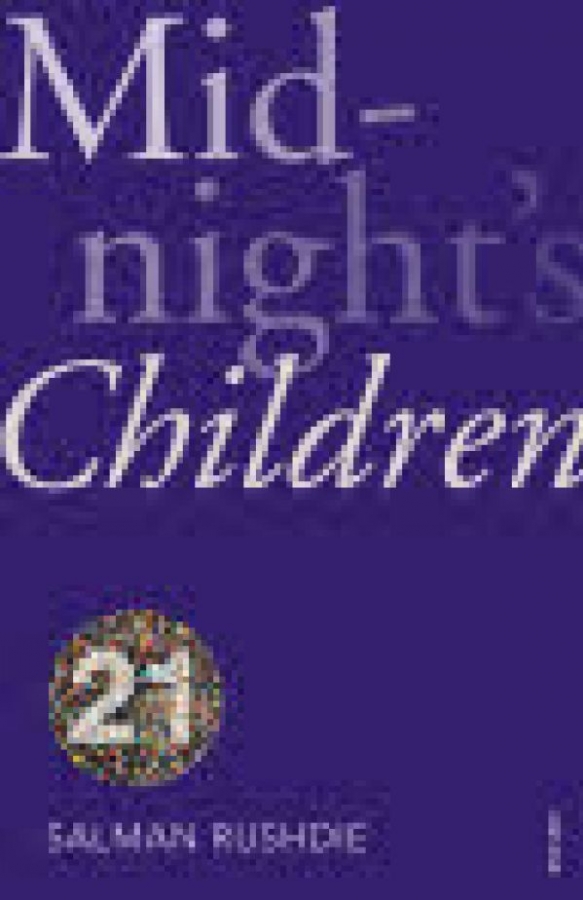
Midnight's Children
Can "a person's life be the mirror of a country"? To this question Rushdie responds not with a historical-biographical novel (the classic story of a family intertwined with that of a nation), but with a fantastical, imaginative, and astonishing tale. The protagonist is born in Bombay at midnight on August 15, 1947, the day of India's independence, but also of Pakistan's separation: the so-called "partition." And through this coincidence he has been mysteriously "tied to history" both literally and metaphorically, both actively and passively. Duality is the guiding thread of the narrative, of the protagonist's life as well as of the vast Indian subcontinent, characterized precisely by interdependence and diversity at once. The author imagines that the protagonist, Saleem Sinai, narrates his family's story and his own up to 1984, when Indira Gandhi was assassinated. Saleem's grandparents are Muslims originating from Kashmir, the "mother" of Indian Islam. His grandfather, a Westernized doctor, had been called to treat his future wife, permitted to examine only parts of her body, which remained covered out of modesty. He had therefore fallen in love "in pieces." It is a primary metaphor that recurs frequently throughout the narrative: that of fragmentation. Just as the > ghost of that perforated sheet condemned me to see my own life, its meanings and its structures, in fragments as well , the detachment of Pakistan weighed like a curse upon the new nation, leading to an endless conflict with India. Saleem's grandparents have a daughter who, after her marriage, moved with her husband to Bombay in India, where Saleem was born. At the moment of birth, the midwife swaps the couple's real child with Saleem, who thus usurps his place as a well-to-do child, while the other is destined for poverty. Does independence, then, bear the mark of betrayal? On the day of Saleem's birth, a thousand children were born in India. All possess extraordinary powers, and Saleem has the incredible faculty of communicating telepathically with them all: that is, he manages to forge in his mind an interdependence among distant children with entirely different languages and customs. The mystery of this great country is metaphorically fulfilled—constituted, at the moment of independence, by over five hundred states and a religion, Hinduism, made up of thousands of local deities. How can a country so vast and so fragmented hold together? In 1966 Nehru died, ushering in the era of Indira Gandhi, who introduced authoritarian rule culminating in the phase of the so-called Emergency, when she instituted an outright dictatorship. Saleem's family moves to Pakistan, where they hope to be safer from discrimination and violence against Muslims. Here, strangely, Saleem loses his telepathic powers (has Indira destroyed the unity of the country?). He enlists in the Pakistani army and goes to fight in Bangladesh against the Indian army. Having deserted the army, by then in total disarray, and after hiding in the jungle (a metaphor for the abyss into which India had fallen?), he flees to India, where he marries, lives in a village of acrobats and musicians, and takes up political activity, notably alongside a snake charmer. He seems, perhaps, to have found his path, when Indira Gandhi's crackdown erupts and Saleem discovers that he is one of the few surviving children born on August 15, 1947, > because it is the privilege and the curse of midnight's children to be both masters and victims of their times, to have no private life of their own and to be sucked into the cauldron of the multitudes, and to be unable to live and die in peace . Alongside the bond between personal life and national history, the novel also confronts more intimate themes: Saleem's ugliness (afflicted by an enormous nose), his incestuous love for his half-sister, and the nostalgia for childhood, which, nevertheless, "disappears, or rather, is killed." And the pride of childhood is precisely one of the most intriguing and universal themes of the book: the ability to hide and to travel in one's mind, through one's own imagination, creates a unity that does not exist in reality: > Wonderful irony; the Widow (Indira Gandhi), by bringing us here to separate us, has in fact brought us together! Children, something is being born here, in this dark time of our captivity; let the Widows do their worst; unity is invincibility! Children: we have won ! As happens all too often with Rushdie, the pursuit of baroque, wondrous prose overpowers the narrative, which seems to become—especially in the final part of the book—merely an occasion for "special effects." Already lengthy in its own right, difficult to follow—owing also to its references to Indian history—as one advances through the reading, one becomes completely lost in a deluge of words, neologisms, and complex, rhetorical syntactic structures. One must allow oneself to be carried away by the prose, yet at times it is a struggle to read on. Why read it? The core premise is truly remarkable, just as it remains a remarkably timely book for us Italians: the duality between interdependence and diversity, between unity and fragmentation, constitutes a defining trait of every Italian. Having managed to depict this in imaginative terms represents the fundamental merit of the book. As Paolo Bertinetti wrote in the daily newspaper *La Stampa* on August 12, 2017, the novel's greatest merit, > besides a very fine sense of humour and a pyrotechnic gift for linguistic invention, lies in dismantling the criteria of verisimilitude by placing reality and dream, realistic narrative and mythic invention on the same plane .
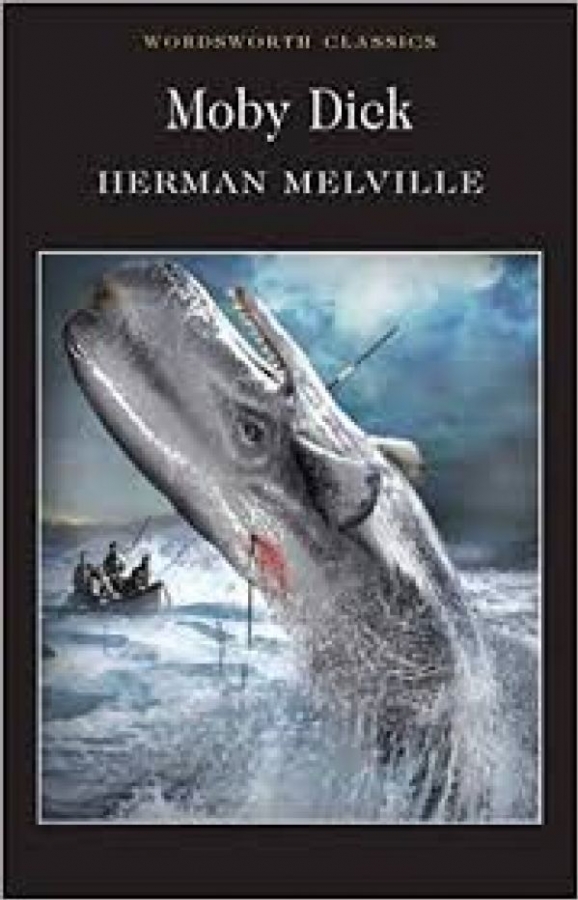
Moby-Dick
> Oh, the rare old Whale, mid storm and gale, In his ocean home will be, A giant in might, where might is right, And King of the boundless sea . This anthem closes a vast preamble in which Melville, like "a mere painstaking burrower and grub-worm of a poor devil of a Sub-Sub," compiles an extensive catalogue of citations on the Whale, spanning from the Bible to world literature. Self-taught and an insatiable reader, Melville seeks to forestall the accusation of being a mere chronicler of seafaring life. We must not fall into this trap. *Moby Dick* is the greatest sea novel ever written; and it is so because Melville truly lived the experiences he recounts. > I, Ishmael, was one of that crew. (...) With greedy ears I learned the history of that murderous monster against whom I and all the others had taken our oaths of violence and revenge . What misleads the reader is the pervasive, intense religious atmosphere; yet it could not be otherwise. For Melville, as for most of his contemporaries, the Bible permeates every facet of life: hence the metaphors, the reflections, and indeed the anxieties that define the novel. The narrative may be divided into four parts. In the first, the narrator and protagonist is Ishmael: still a youth, he resolves to ship aboard a whaler out of a vague yearning for adventure and knowledge. In the mid-nineteenth century, Nantucket stood as one of the premier American ports for fleets engaged in the sperm whale fishery; with a narrative style suspended between Charles Dickens and Edgar Allan Poe, Melville crafts a portrait of it that is simultaneously realistic and hauntingly evocative. One is captivated by the figure of Queequeg, a cannibal with whom Ishmael forges a profound friendship. The pivotal moment is the sermon devoted to the biblical episode of the prophet Jonah, swallowed by the whale by the will of God and saved by God alone. It is no myth; it is the truth, thundered to the faithful (sailors and the widows of men lost at sea), that they may know that salvation proceeds solely from faith, from the literal, devout reading of Scripture. He who flouts the words of the Lord is doomed to self-annihilation and damnation. > The world’s a ship on its passage out, and not a voyage complete; and the pulpit is its prow . At last, the vessel sets sail on a long voyage. > We found ourselves almost defenseless upon the hostile ocean. (...) Consider the subtleness of the sea; how its most dread creatures glide under water, unapparent for the most part, and treacherously hidden beneath the loveliest tints of azure. (...) Consider, once more, the universal cannibalism of the sea; all whose creatures prey upon each other, carrying on eternal war since the world began . (...) As this appalling ocean surrounds the verdant land, so in the soul of man there lies one insular Tahiti, full of peace and joy, but encompassed by all the horrors of the half-known life. God keep thee! Push not off from that isle, thou canst never return. > The second part introduces the novel's dramatis personae: the mates and the harpooneers, delineated in chapters bearing evocative titles: Knights and Squires > . It is an effective depiction, for what revolves around Captain Ahab, the monomaniac "protagonist," is essentially a feudal system. He looked like a man cut away from the stake. (...) His whole high, broad form, seemed made of solid bronze, and shaped in an unalterable mould, like Cellini’s cast Perseus > . Yet it is not his physical semblance that marks Ahab’s defining trait; it is his soul, shut up in the caved trunk of his body, there fed upon the sullen paws of its gloom > . A scene of mesmerizing power concludes this gallery of characters and constitutes a watershed for the entire narrative. Ahab reveals to the crew that the voyage's true quarry is the white whale: Moby Dick. Amid a crescendo of collective frenzy, only the first mate, the pious Starbuck, dissents, knowing as he does that it was Moby Dick who reaped Ahab’s leg. Vengeance on a dumb brute, that simply smote thee from blindest instinct! Madness! To be enraged with a dumb thing, Captain Ahab, seems blasphemous > . The pious Starbuck is right, the more so because what Ahab seeks is not mere vengeance; the captain repudiates his own destiny, even in defiance of God's will. They think me mad; I am demoniac, I am madness maddened!(...) The prophecy was that I should be dismembered; and—Aye! I lost this leg. I now prophesy that I will dismember my dismemberer. Now, then, be the prophet and the fulfiller one. > The third part chronicles the circumnavigation of the globe's oceans and the pursuit, slaughter, and flensing of the whales. It constitutes a monumental treatise on marine zoology, authored by a scientist enchanted by, if not enamored of, these great cetaceans. Only intermittently does the plot resurface, now narrated in the third person, so that it may cease to be the mere impressions of a boy and become the chronicle of a detached observer. Certain scenes remain indelibly etched in the imagination: the sharks ravenous for blood while the whale is flensed; the valiant Queequeg plunging underwater amidst the sharks to rescue a fallen shipmate who, like the prophet Jonah, has tumbled into the dark cavity of the whale’s cavernous head; and like a divine obstetrician, he, the cannibal, delivers his friend into new life, pulling him forth from the cranial vault. And what can be said of the enthralling Chapter 87, entitled The Grand Armada > , in which the whaleboats pursue a vast pod of cetaceans, complete with nursing dams and their calves? Equally arresting are the gams with other vessels, they too years into their voyages, aboard which one frequently encounters fanaticism and collective lunacy. After all, there is no folly of the beasts of the earth which is not infinitely outdone by the madness of men. (...) For, lurid-like, as the slaughtered monster slues you deeper and deeper into the panics of the herd, our whole panoply of reason falls from us; we live only in a delirious gasp > . At last, one arrives at the final section, an authentic tour de force. The White Whale is finally sighted: the desperate chase commences. A gentle joyousness—a mighty mildness of repose in swiftness, invested the gliding whale. (...) From each soft side, (...) from each bright side, the whale shed charm upon the sea > . With that very elegance, yet within a terrifying vortex, Moby Dick hurls himself upon the whaleboats, and upon Ahab in particular. Oh, Ahab, cried (the pious) Starbuck, it is not too late (...) to desist. See! Moby Dick seeks thee not. It is thou, thou, that madly seekest him > . What hast thou done, Ahab? How couldst thou contend with the great Leviathan? How couldst thou set thyself against the will of God, rather than surrendering to Him as did the prophet? Without ever losing sight of Melville’s principal design (to illuminate the whaling industry, so little understood and appreciated), *Moby Dick* lends itself to diverse interpretative lenses, and herein lies its modernity. One fruitful avenue of inquiry is to examine the novel through the prism of how humanity has depicted animals across literature and art. A fine study by Gianni Valente ( *Dall’arca di Noè a Moby Dick* > , Edizioni Blu 2004) provides compelling avenues of reflection for assessing the work. Ever since the Bible, our relationship with the animal kingdom has been fraught with ambivalence: symbols of vice and virtue > . We are all familiar with the sinister attributes of the biblical serpent, yet in numerous other passages of the Old Testament, animals bear a redemptive image: as the hart panteth after the water brooks, so panteth my soul after thee, O God > (Psalm 42:1). Animals serve as the expression of a wondrous, vital force; thus are they chronicled by Marco Polo, celebrated in *Orlando Furioso*, and delineated in the travelogues and cartography that accompanied the Age of Discovery. Animals are likewise the object of scientific, artistic, and moral inquiry (witness Leonardo da Vinci). Indeed, all these facets (emblems of vice and virtue, wondrous vitality, empirical science, and morality) converge within *Moby Dick*. The White Whale is an extraordinary monster, the supreme beast of Creation, an emblem of enduring fortitude and eternal solitude, a cruel and terrifying presence propelled by demonic fury. Simultaneously, the great sperm whale is anatomized, dissected with fastidious precision, the subject of dispassionate scrutiny. Viewed through the perspective of our relationship with the animal realm, *Moby Dick* is an unfinished project; it demonstrates the difficulty of establishing a harmonious footing toward our fellow creatures and toward nature as a whole. We project onto the animal our own rational constructs alongside our deepest phobias; we fail to apprehend it as an other > , endowed with an autonomous essence. It is an arduous text, and in many stretches, outright tedious. Its architecture is intricate, marked by an incessant shifting of narrative voice (Ishmael, the third-person narrator, the scientist > , Melville the declamatory orator, Ahab as Melville’s tormented conscience), and by an incessant layering of disparate registers—clinical, evocative, allegorical, and picaresque. The dense fabric of quotations, whose provenances are often vexingly difficult to trace, hardly eases comprehension. The prose is, naturally, laden with the nautical lexicon of the whaling fishery; yet this is not what renders the reading so demanding. Rather, it is the syntax—frequently tortuous and punctuated in a manner that arrests the cadence of thought. It must also be said that one has to let oneself go": surrender the impulse to decipher every nuance, abandon oneself to the evocative resonance of the phrasing, and pursue the musicality of its stride. Finally, the scientific and anatomical digressions regarding the whale are so frequent and protracted as to render the reading genuinely cumbersome; a word of advice: just as one did in one's youth with *War and Peace* and *Anna Karenina*, skip the pages outright, without the slightest pang of guilt. Why read it? It is magnificent; do not labor to absorb every word—heed your own instinct.
Murder for the wrong reason
This is a short story, divided into three chapters. In the first, the corpse is discovered and, as in classic detective fiction, the inspector arrives with his assistant. The author seems to take pleasure in reconstructing the dynamics, well-tested by crime literature, between the seasoned superior and the young officer. From the outset, however, certain peculiarities emerge. The inspector claims to have arrived too late to save the victim (did he know then that he was about to be killed?), who deserved, according to the inspector, to be murdered, being a blackmailer who had numerous affairs with women. Solving the case is difficult, he then adds, “as there are five hundred men, and other women, with a motive.” It must be said that the reader is left disoriented by the first chapter, sensing something unusual yet not quite able to grasp the direction of the story. The second chapter opens receptive to any development. The inspector visits the alleged killer’s house (and, tellingly, goes alone, without his assistant), and here the narrative turns into a continuous oscillation between past and present. The inspector addresses the suspect, who does not reply, reminding him of bygone events: the man had once been in love with a woman who ultimately chose the victim over him because he was wealthy and powerful. The story now abandons the order and rationality of a detective tale, increasingly becoming a sequence of images from the inspector’s mind. The memory of his life resurfaces: > a succession of images drifted through his mind, of days and nights of great passion, tenderness, and continuous peace. He forgot the days during which he had watched the slow disintegration of his own personality and corruption; he even forgot that he was Detective Inspector Mason of Scotland Yard . Yet the bond between past and present is like a mirror in which one is reflected, and through which one can view the present from the past and vice versa. At this point, the mystery grips the reader, and, as in all detective novels, the solution is simple: the inspector is the murderer. One realizes that the second chapter has conveyed the inspector’s thoughts, and that the entire sequence lasted only a few minutes. The third chapter details the mechanics of the crime as well as the evidence that pins down the murderer. A brief yet fascinating story, albeit a challenging read. First of all, the theme of reality’s ambiguity emerges, which only in death finds a consistency beyond imagination: “after all, everything was reduced to a biological fact.” Secondly, the story is a display of virtuosity, both in terms of narrative structure—capable of generating disorientation and suspense in the reader—and in its writing technique. The author readily resorts to idioms and vocabulary belonging to colloquial speech, which does not always make the text immediately accessible: this contributes to the mysterious allure of the story. Why read it? To appreciate the author’s narrative technique.