The Count of Monte Cristo
The plot of the novel is well known. Edmond Dantès is wrongfully imprisoned. He manages to escape, becomes immensely wealthy, and consequently devotes his life to vengeance through a series of deceptions and acts of cruelty. The novel appears to have been inspired by a true story. It unfolds across three distinct levels: adventure, sustained only at times by a gripping pace, as in the first part (the imprisonment, the acquaintance with Abbé Faria, and the escape) and at certain subsequent moments. All too often, the novel develops in a slow and tedious manner, even in the face of surprises and plot twists; the setting, which emerges from the description of Rome, of the island of Monte Cristo itself, and of Parisian society. In some instances, it is an effective, if somewhat mannered, fresco (as in the case of Rome); in others, one is confronted with a superficial and hurried description; the superhero, embodied in the figure of the Count of Monte Cristo—a hero who proves to be negative, insofar as he pursues his revenge with a sadism and a voluptuousness that cannot be justified solely by a desire for justice. From this perspective, the novel’s “villains” appear far more vivid and real; they are, in fact, the true characters, endowed with a depth of their own and driven by contradictions that make them human. The novel is repetitive and tedious, and it is truly difficult to make it all the way to the end.
Desert
This is a book that develops along two narrative paths that are seemingly distinct, yet bound together by an ideal thread. On the one hand, it narrates the story of a desert people, followers of a sheikh revered as a saint, who intend to resist the French conquest of Saharan Africa. The desperate march of these people is seen through the eyes of a boy, who may well be the grandfather of Lalla, the novel’s protagonist. On the other hand, the novel chronicles the story of Lalla, born amid the scrub and taken in by her aunt in a small seaside village. Lalla lives a wild existence, in the wind and among the dunes, a lover of solitude and of the desert. During her long, solitary walks, she is accompanied by a shepherd, Hartani, a boy who does not speak her language but who possesses a profound understanding of nature, of birds, of flora, of the sea and the desert. Hartani belongs to the "blue men," the men of the desert, the very same people who took part in the grand and disastrous march recounted in the novel’s other thread. Lalla is meant to be wed to a wealthy merchant, and so she flees with Hartani toward the desert. The story then picks up with Lalla arriving aboard a small vessel in Marseille, seeking shelter with her aunt, who has relocated there. Lalla is pregnant, but hides her condition and leads a life just as wild in the great French city: yet what in the village had been light and symbiosis with all living beings turns, in Marseille, into darkness and loneliness. Lalla lives in a tenement hotel that houses scores of immigrants who come, out of desperation, to work in France. There she also meets a boy who survives by stealing and begging. Lalla has descended into the underworld, yet among the desperate she discovers a profound solidarity and support. By chance, she meets a photographer who turns her into a famous model; in the end, however, Lalla resolves to return to Africa and give birth to her child amid the dunes, in the coolness and sweetness of a tree’s shade. The true subject is the contrast between Western and North African civilization. This contrast is crystallized not so much in the characters—too stereotypical, devoid of depth and complexity—nor in the plot, virtually non-existent and in certain respects implausible (such as the episode of the photographer who makes Lalla famous), but rather in the landscapes and in the author’s ability to impart density and chromatic richness to the descriptions. Upon the sand dunes, "Lalla opens her eyes wide, lets the sky enter into her," and senses the presence of God: > where is the road? Lalla does not know where she is going, adrift, swept along by the desert wind that blows, vengeful and cruel, the wind that sweeps men away and brings down the rocks at the foot of the mountains. It is the wind that moves toward infinity, beyond the horizon, beyond the sky all the way to the cold constellations, the Milky Way, to the sun . If the desert is light, infinity, and bliss, the city is death. > Lalla watches those who depart for other cities, toward hunger, cold, misfortune, those who are going to be humiliated, who are going to live in solitude. They move toward dark cities, toward low skies, toward steam, toward the diseases that ravage the chest . Yet Lalla harbors a dream: it is the desert people’s dream of freedom, of living free in the sun and the wind. It is written in magnificent French, with a powerfully lyrical style, brimming with evocative resonance and musical cadence, succeeding in rendering through words the sensory impressions of a natural world and an environment. Beyond individual pages, however, this vision of a "virtuous" society set in opposition to Western civilization feels somewhat disingenuous—more an intellectual, aestheticizing posture than a genuine impulse to chronicle the true complexity and suffering of an oppressed, shattered, and migrant society. It is, in a sense, the Westerner’s quintessential search for the presumed purity of the Other.
The Abyssinian
The novel is set in the late seventeenth century, during the reign of Louis XIV, and recounts the exploits of a Frenchman, Poncet, who journeys to Abyssinia on an expedition mounted by the Jesuits to restore ties with the empire fifty years after the expulsion of Catholic priests. The protagonist is an adventurous young man who commits himself to this enterprise out of love for the daughter of the French consul in Cairo. He thus finds himself entangled in a web of intrigue between rival religious orders (the Capuchins against the Jesuits) and competing factions within the court of the French king. The story predictably features a happy ending, with the two lovers managing to wed after numerous adventures. The work reads like a cross between *The Three Musketeers* (the great French novel) and the tales of Maalouf, yet it completely lacks historical atmosphere, narrative momentum, and character analysis. For instance, the transformation of the consul’s young daughter from a devout maiden into an adventuress unfolds so flatly as to render it entirely implausible.
The Saint-Fiacre Affair
Maigret returns to the village where he grew up, as an elderly countess has died and he suspects she was murdered. All the figures of a potentially sordid affair are present: the countess’s young lover, the playboy son living the high life, a young parish priest who perhaps knows more than he lets on, and so forth. What emerges is a portrait of a provincial milieu, sketched, in truth, in a superficial and unengaging manner. The characters, too, emerge flat, devoid of any genuine analysis of the motivations underpinning their actions and the events. The detective element is virtually nonexistent, and Maigret feels more like an extra than a police superintendent capable of steering and managing the investigation. Perhaps I am simply unlucky, as I cannot seem to read a book by Simenon that I truly enjoy.
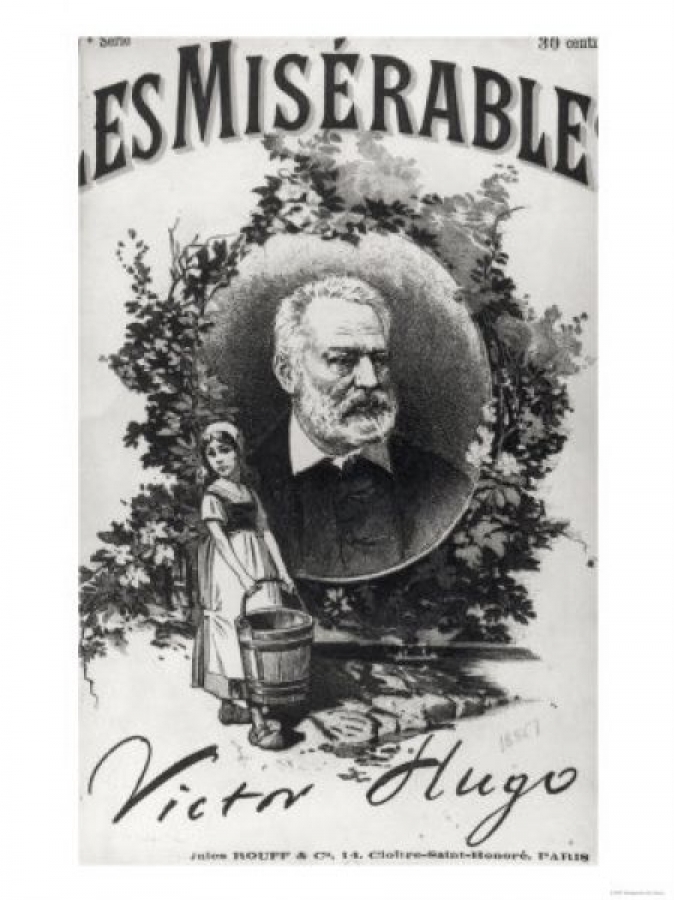
Les Misérables
The novel chronicles the life of Jean Valjean, a convict who, following an encounter with a bishop (a saint), is transformed into a good and righteous man: he first becomes a wealthy industrialist, then, returned to prison, escapes in order to save and raise a young girl, Cosette, who, upon reaching adulthood, falls in love with a young revolutionary. Jean Valjean rescues the young man from certain death (during the 1832 rebellion), and then chooses to disappear so as not to jeopardize the couple's future with his status as an escaped convict. Yet goodness triumphs and, as the author writes, “the night was starless and profoundly dark.” Doubtless in the shadows, some immense angel had come forth, with outspread wings, to await the soul from the supreme shadow to the supreme dawn. As Victor Hugo wrote: “the book which the reader has before his eyes at this moment is, from one end to the other, in its entirety and in its details, whatever its intermittences, exceptions, and lacunae, the march from evil to good. From the unjust toward the just, from the false to the true, from night to day, from appetite to conscience, from putrefaction to life; from bestiality to duty, from hell to heaven, from nothingness to God. Starting point: matter; destination: the soul. The hydra (evil) at the beginning, the angel at the end > This conception is based on faith in progress (which Hugo identifies with God, and therefore with a humanistic and Christian socialism) and on the uprising of the world of the wretched > driven by unstoppable social forces. From this point of view, the countless characters in the novel become archetypes > , representatives of a role to be fulfilled in the great transformation of the world, and thus devoid of any true depth: feelings and motivations are only ostensibly analyzed and explored; in reality, it is merely a succession of rhetorical devices (the interrogative form predominates) to illustrate contradictions and dilemmas that do not belong to the intimate sphere (and in this sense universal), but rather to a social and historical function. One need only think of the conversion > of Jean Valjean and the analysis of the crises of conscience the protagonist faces throughout the novel (the decision to appear at a trial to prevent an innocent man from paying for his crimes, and the decision to withdraw into the shadows so as not to jeopardize the young couple's happiness): in every case, one is confronted with a sort of divine illumination and moral imperative, while the depiction of the character's resulting misery (due to the loss of Cosette) is flat and schematic. Even more paradoxical and astonishingly devoid of any psychological or philosophical depth is one of the most dramatic episodes in the entire novel. Inspector Javert (Jean Valjean’s relentless persecutor) is caught in a vice between human law, which demands the arrest of the former convict, and his conscience, which compels him to release Jean Valjean, who had saved his life. His inability to break free from this dilemma drives him to suicide. It is clear that Hugo intends to attack bureaucratic, callous approaches to the enforcement of the law—a law that is often unjust because partisan (Javert’s final piece of writing, a mere list of recommendations for the chief of police, is incisive and remarkably effective). Yet one need only imagine what a Dostoevsky would have made of the contradiction between the human conscience and the imperatives imposed by institutional rules and norms to realize how far removed the French author is from the modern spirit, anchored as he is to a cold, moralistic vision of humanity and its struggles. His depiction of French history (from the French Revolution to the Citizen King) is likewise a series of epic events governed by Providence: the very defeat at Waterloo is attributed to a destiny bent on closing the Napoleonic era in order to inaugurate a new phase of social transformation that will lead to the great upheavals of 1848. Yet do individuals and social classes truly exist, or is everything already predetermined by an obscure, immanent force, at once religious and scientific: Progress? *Les Misérables* is a deeply dated work, enclosed within nineteenth-century culture, with little left to say to the man of postmodernism and globalization. As often happens with great authors (take Dante’s *Divine Comedy* itself), the most valuable parts involve components and approaches that cannot be traced back to the stated intentions. Victor Hugo is a Romantic author who ceaselessly pursues the grotesque and the visionary: stylistic traits that occasionally render the reading cumbersome, yet contribute to producing pages of great beauty and suspense. Consider the description of Cosette, an eight-year-old child sent to fetch water in the dead of night, watching the setting of Jupiter and feeling the surrounding nature seem to stir to capture her: the tall grasses swarmed beneath the north wind like eels. The rocks twisted like long claw-armed arms, seeking to seize prey…. > ; of the episode of the trap set by the criminals for Jean Valjean, so full of twists and unforeseen turns; and finally of the magnificent chapter ( Comment de frère on devient père > ) in which the two abandoned children seize the bread thrown to the swans to feed themselves. In a few pages, the author manages to capture the stillness of the Jardin du Luxembourg, the solitude of childhood, the solidarity among children, and the narrow-minded hypocrisy of bourgeois culture. The novel’s true masterpiece is the episode of the elephant: a striking, visually magnificent scene in which a monument built to glorify power becomes the sanctuary of three children. Then there is another protagonist of the novel: the city of Paris. The author’s toponomastic precision, the minute description of streets and houses (many of which had already vanished during Victor Hugo’s own lifetime), provide a romantic setting for the novel and its backdrop. This is prior to the grands boulevards, in the midst of a reticular city where it is easy to lose oneself and disappear. The pages devoted to the Parisian argot spoken among the wretched" are also of great interest, indicating an almost anthropological attentiveness on the author’s part. Yet is the idea of Progress truly authentic, or merely literary and political, concealing in truth a Romantic nostalgia for the Middle Ages and pre-revolutionary history? The novel is, on the whole, prolix, tedious in many stretches, and fundamentally a potboiler.
Monsieur Malaussène
In the neighborhood of Belleville lives the Malaussène tribe, and with them a myriad of characters. Belleville is a Parisian periphery, ravaged by the postmodernist manias of architects, the stupidity of politicians, and the greed of speculators; but it is also a magical place, a sort of Sherwood Forest, where Robin Hood is Benjamin Malaussène and the Sheriff is embodied by those who seek to evict long-standing tenants to demolish the old buildings and erect new ones for corporate offices and the wealthy bourgeoisie. > If one day you ask me what happiness looks like, and you will ask me, I will answer: like here In Belleville, where it is possible to screen the last film in the history of cinema (a film destined to be destroyed afterward) in a forgotten theater, where it is possible to tattoo all the streets of Belleville onto a person's body as a living testament to the neighborhood. In Belleville there is also an illusionist, who makes you see things that are not there; in Belleville > angels, who at times grow bored, are drawn toward us by the warmth and the surging of feelings and are personified in a detective nun. The novel features countless characters and a wealth of intertwining events: murders, disappearances, love affairs, bizarre twists of fate, persecutions. At the center, hero-like, stands Benjamin Malaussène, a fixed point in a magic lantern, in a kaleidoscope full of lights and illusions. There is no real plot, and the novel is difficult to follow. I must confess that I was unable to read it to the end, having lost my way among so many characters and so many words. Yet perhaps this was the author's very purpose: to demonstrate that no rationality governs existence, and that everything unfolds along a tenuous boundary between reality and imagination. Why not read it? Quite frankly, it is deeply muddled and verbose.
Father Goriot
Balzac lived in the first half of the nineteenth century and thus depicts the society of Louis-Philippe. The novel recounts the story of a man who, out of love for his daughters, leads a wretched and despised life. His paternal devotion stands in stark contrast to a society dominated by money, appearances, and climbing the social ladder at all costs. The approach is moralistic, the style tedious and ponderous, the French difficult: in short, a "bad" novel, which I could not bring myself to finish. When one compares Balzac (at least the Balzac of this book) with Stendhal, the disparity in quality is striking: where Stendhal is nimble yet profound in his characterizations (figures rich in contradictions), Balzac appears rigid, didactic, and predictable. In Stendhal there are "heroes"; in Balzac, opaque figures already condemned to an existence trapped within the constraints of money and social ambition. Perhaps Balzac’s society is truer to life, but it is undeniably duller. To say nothing of the French. In Stendhal it flows, and it is the very structure and rhythm of the sentence that endow the narrative with meaning (with no need for an excess of adjectives); in Balzac, an elaborate vocabulary is required merely to give expression to the tale.