Alina Bronsky
Books by this author (2)
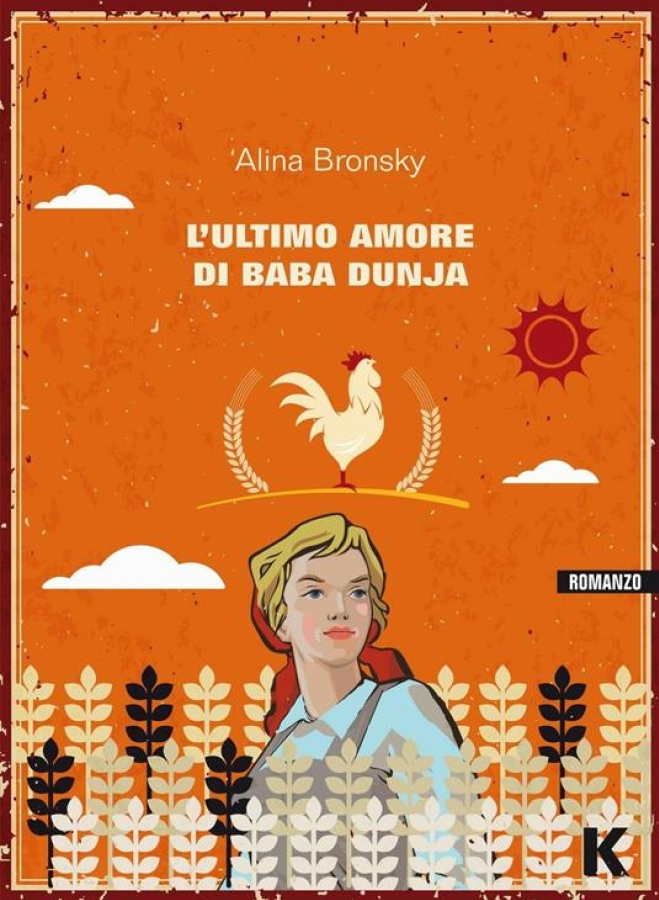
Baba Dunja's Last Love
> She has a small, wrinkled face and narrow, dark-brown eyes. She is tiny and round, barely reaching a meter and a half . This is Baba Dunja, and this is how a journalist describes her; but the name the author gave her would suffice: *baba*, synonymous with old woman, and *dunja*, an affectionate diminutive that in South Slavic stands for "quince." Unlike Baba Yaga, the witch of Russian fairy tales, Baba Dunja is good-natured, ready to shoulder the burden of her small community, Chernovo, the village of death. Only further into the reading do we discover that Chernovo is near the Chernobyl power plant and lies within a radioactive zone: an abandoned village inhabited by a sparse handful of exiles in search of solitude and death. > The village has a story of its own, intertwined with mine, like two locks of hair in a single braid . There are the living, few in number: Marja, the fat and lazy neighbor ( > her former beauty has not entirely vanished; it still lingers in this room like a ghost ), Sidorov, a mad old man in love with Marja, Petrov, a young man with little time left to live, Lenochka, "who from behind looks like a young girl and from the front like a doll," and the Granilovs, husband and wife, "walking past their land one can smell honey and rose oil." And there are the dead: > the old liquidator in the striped shirt, (...) the baby stillborn in my hands, (...) the mother lifted a corner of the towel and smiled. (...) Soon she would follow him. (... The young girl with the red braid....(...) These are my dead who followed me to Chernovo, and there are still others who passed before my eyes, by the dozen, along with their cats and dogs and goats . In this landscape suspended between the living and the dead, time seems not to flow, in the serene anticipation of death. Then a man bursts into the small community with a little girl, the latter inevitably destined to die from the effects of radiation on her fragile immune system. When Baba Dunja urges him to leave quickly, the man reacts violently, throwing the old woman to the ground. Petrov intervenes in her defense, killing the man. At this point, all the inhabitants are arrested or summoned as witnesses. It would be enough to say that it was Petrov, but once again the benevolent fairy-tale witch shoulders the burden of Chernovo's small group of the living: she alone claims guilt for the crime. Baba Dunja of the village of the dead becomes famous; she saved a child—let the poor old woman die in peace! Send her to Germany to her daughter! Pardoned by the president, the airplane awaits to take her to her daughter, far from the village of the dead. > In the end, I learned too (Baba Dunja tells her daughter). (...) In fact, I learned to smile after returning to Chernovo. (...) I walk for more than three hours. It is as if the road had lengthened, as if Chernovo had receded during my absence . (...) The houses of Chernovo loom on the horizon, like sparse, crooked teeth inside a mouth. (...) Hopefully at least someone is there, I think; if no one is, it will mean I'll live alone, with all the spirits and the animals. "Baba Dunja recalls the protagonist of a recent novel by Alina Bronsky:" *My Grandmother's Braid* > (see review on this site): here, however, the grandmother is exceedingly sweet, steeped in love for all living beings and for the dead as well. One wonders why Baba Dunja did not channel such inner strength into helping her daughter and granddaughter, lost in the loneliness of big cities. To me, the reason is clear: Baba Dunja can only be at peace with herself and with others in Chernovo, in her own place. True, the factory is abandoned, no one has worked the fields for decades, above all, lush green weeds and large-leaved plants grow, with faint purplish reflections > , but Chernovo is where she got married, raised her children, where they ate the chocolate treats given by the factory for New Year's Eve. One can grow up in Capri or in the Tamburi neighborhood of Taranto, right against the toxins of the massive steel mill, spend one's childhood or raise children in a gorgeous or a wretched place, yet one always longs to return to one's own place. Chernovo, precisely because it is the village of death > , through its extreme conditions is a metaphor for how important our physical space is to us: the landscape, the smells and sounds, the streets and squares, the inhabitants and animals with their everyday faces, so familiar as to become parts of ourselves. In no part of the earth can I settle, (...) I seek an innocent land," so sings Ungaretti in *Girovago* (from the collection *Allegria*). At first, the writing is made up of short, rudimentary, almost truncated sentences, giving the impression of an unsteady hand. Then the narrative style takes flight: the landscape emerges, memories and emotions deepen in intensity, characters are sketched in muted yet striking tones that leave a lasting impression, and the dialogue sets the narrative pace. If one criticism can be leveled, it is that towards the end the story takes on melodramatic, cloying notes that could easily have been spared. Why read it? Fascinating in her sweetness, the figure of Baba Dunja is a fine metaphor for the importance of place
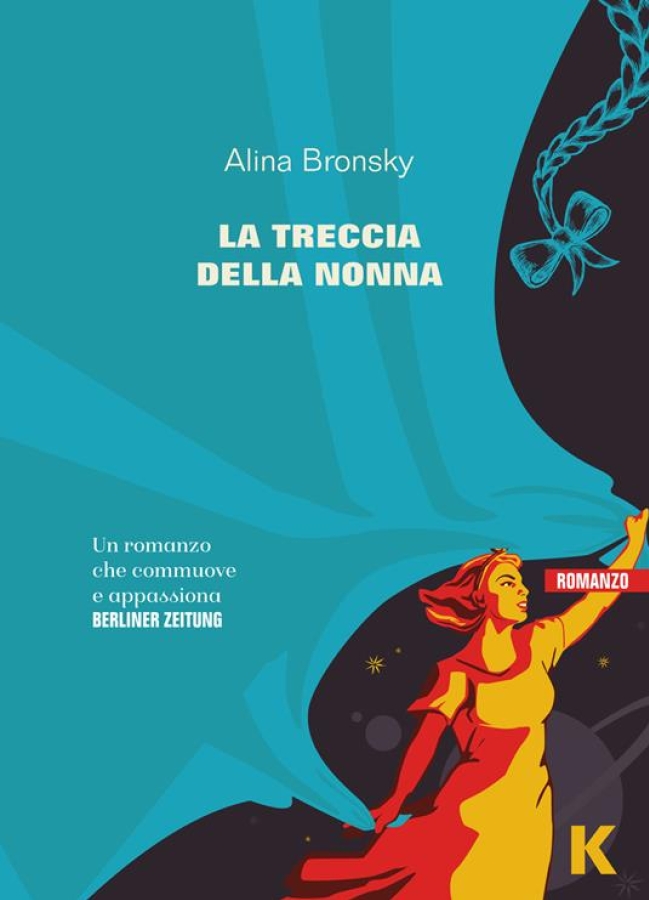
The Grandmother's Braid
The theme of this novel is closely akin to that of Domenico Starnone’s *Vita mortale e immortale della bambina di Milano*, recently reviewed on this site. Just as the Neapolitan writer’s narrative turns on the figure of the “servant grandmother” and her love—subsequently betrayed—for her grandson, here too a grandmother stands at the center of the story: a grandmother ready to place herself at the service of the young orphan—frail, sickly, somewhat dim-witted, and on that account a dead weight. > When we arrived in Germany, the first thing my grandmother did was take me to the pediatrician. In fact, she explained on the way, that was the real reason we had emigrated: so that a proper doctor could finally treat me, someone who might give us hope (...) that one day I would reach adulthood . The grandson nests comfortably beneath his grandmother’s maternal wing, establishing an affectionate relationship steeped in an unmentionable eroticism. And for this reason, it is the boy, still a child, who is the first to notice that the grandfather, the “handsome Asian,” has fallen in love with another woman. The novel opens with this discovery. > To me he was already an old codger (...) and his new, tender secret swept over me in a wave of admiration mixed with gloating , thus writes the boy, who serves as narrator and protagonist alongside the grandmother. If the story had explored the complex, perhaps incestuous relationship between an overbearing mother figure (authoritarian, intrusive, and overpowering) and a personality that could mature only through emancipation, the novel would undoubtedly have been intriguing and well worth reading. Instead, the author focuses on the figure of the grandmother to the point of turning her into a caricature. Confined to her matriarchal role, once she realizes her husband's infidelity, the woman does not fly into a rage, does not throw him out, nor does she even seem to suffer: everything is permitted to the “handsome Asian”—it is simply his nature. She goes further still. She takes charge of the child born of the man’s affair with a young woman; she takes in the young woman herself when she sinks into severe depression; she opens a dance studio and takes over the management of her husband’s company upon his death. It is all too much to remain plausible. Confronted with such excess, the grandson’s emancipation takes the form of betrayal. The boy cuts off his grandmother’s magnificent braid. > Wrap it in newspaper. Keep it as a keepsake. You’ll be leaving soon. I can smell traitors a kilometer away upwind. (...) She brought her face so close to mine that I could make out my reflection in her pupils. I can see it, she repeated vehemently, and pushed me away . Despite being well-written, fluid, and effortless, charming and witty (one need only think of the grandson’s embarrassment over his grandmother’s presence at school), the novel is insignificant. The author, for instance, fails to delve into the question of language: the grandmother who continues speaking Russian despite living in Germany, and the grandson whose emancipation is achieved partly through the acquisition of German—a fascinating theme of identity addressed by Starnone in the aforementioned novel, as well as by other authors: Jhumpa Lahiri’s *The Namesake* and NoViolet Bulawayo’s splendid *We Need New Names* come to mind (two books reviewed on this site). Here, by contrast, the social, political, and anthropological implications of language are developed in a superficial and trite manner. Why not read it? Insignificant.