Finished reading on: April 18, 2022
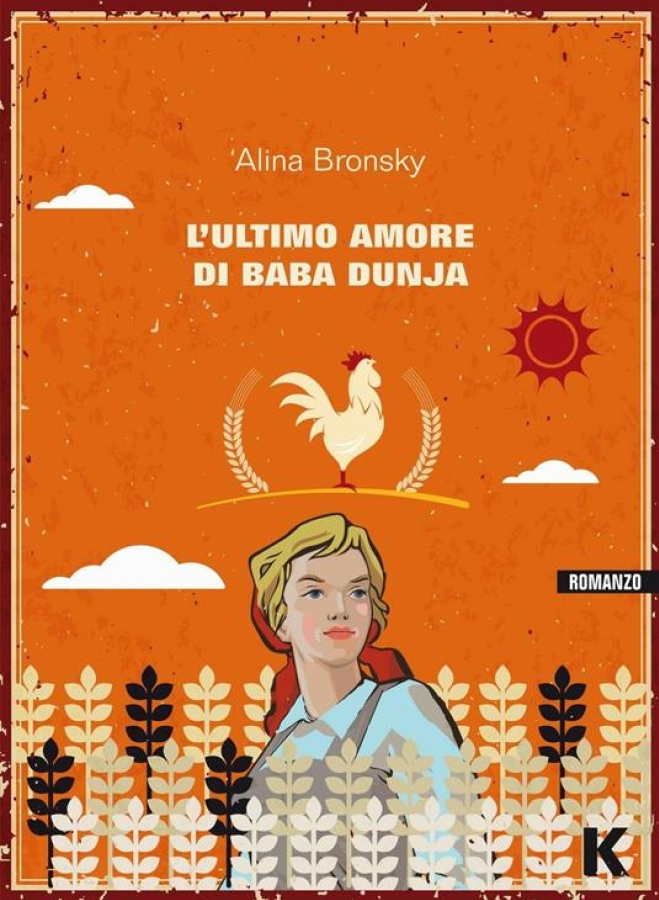
Baba Dunja's Last Love
Title of the original version reviewed: «L'ultimo amore di Baba Dunja»
AI Translation Notice: This review was translated from the original Italian using artificial intelligence. Book quotes and excerpts are translated interpretations and will not match the author's original English phrasing or official published translations.
She has a small, wrinkled face and narrow, dark-brown eyes. She is tiny and round, barely reaching a meter and a half
. This is Baba Dunja, and this is how a journalist describes her; but the name the author gave her would suffice: baba, synonymous with old woman, and dunja, an affectionate diminutive that in South Slavic stands for "quince." Unlike Baba Yaga, the witch of Russian fairy tales, Baba Dunja is good-natured, ready to shoulder the burden of her small community, Chernovo, the village of death. Only further into the reading do we discover that Chernovo is near the Chernobyl power plant and lies within a radioactive zone: an abandoned village inhabited by a sparse handful of exiles in search of solitude and death.
The village has a story of its own, intertwined with mine, like two locks of hair in a single braid
. There are the living, few in number: Marja, the fat and lazy neighbor (
her former beauty has not entirely vanished; it still lingers in this room like a ghost
), Sidorov, a mad old man in love with Marja, Petrov, a young man with little time left to live, Lenochka, "who from behind looks like a young girl and from the front like a doll," and the Granilovs, husband and wife, "walking past their land one can smell honey and rose oil." And there are the dead:
the old liquidator in the striped shirt, (...) the baby stillborn in my hands, (...) the mother lifted a corner of the towel and smiled. (...) Soon she would follow him. (... The young girl with the red braid....(...) These are my dead who followed me to Chernovo, and there are still others who passed before my eyes, by the dozen, along with their cats and dogs and goats
. In this landscape suspended between the living and the dead, time seems not to flow, in the serene anticipation of death. Then a man bursts into the small community with a little girl, the latter inevitably destined to die from the effects of radiation on her fragile immune system. When Baba Dunja urges him to leave quickly, the man reacts violently, throwing the old woman to the ground. Petrov intervenes in her defense, killing the man. At this point, all the inhabitants are arrested or summoned as witnesses. It would be enough to say that it was Petrov, but once again the benevolent fairy-tale witch shoulders the burden of Chernovo's small group of the living: she alone claims guilt for the crime. Baba Dunja of the village of the dead becomes famous; she saved a child—let the poor old woman die in peace! Send her to Germany to her daughter! Pardoned by the president, the airplane awaits to take her to her daughter, far from the village of the dead.
In the end, I learned too (Baba Dunja tells her daughter). (...) In fact, I learned to smile after returning to Chernovo. (...) I walk for more than three hours. It is as if the road had lengthened, as if Chernovo had receded during my absence
. (...) The houses of Chernovo loom on the horizon, like sparse, crooked teeth inside a mouth. (...) Hopefully at least someone is there, I think; if no one is, it will mean I'll live alone, with all the spirits and the animals. "Baba Dunja recalls the protagonist of a recent novel by Alina Bronsky:" My Grandmother's Braid
(see review on this site): here, however, the grandmother is exceedingly sweet, steeped in love for all living beings and for the dead as well. One wonders why Baba Dunja did not channel such inner strength into helping her daughter and granddaughter, lost in the loneliness of big cities. To me, the reason is clear: Baba Dunja can only be at peace with herself and with others in Chernovo, in her own place. True, the factory is abandoned, no one has worked the fields for decades,
above all, lush green weeds and large-leaved plants grow, with faint purplish reflections
, but Chernovo is where she got married, raised her children, where they ate the chocolate treats given by the factory for New Year's Eve. One can grow up in Capri or in the Tamburi neighborhood of Taranto, right against the toxins of the massive steel mill, spend one's childhood or raise children in a gorgeous or a wretched place, yet one always longs to return to one's own place. Chernovo, precisely because it is the
village of death
, through its extreme conditions is a metaphor for how important our physical space is to us: the landscape, the smells and sounds, the streets and squares, the inhabitants and animals with their everyday faces, so familiar as to become parts of ourselves.
In no part of the earth can I settle, (...) I seek an innocent land," so sings Ungaretti in Girovago (from the collection Allegria).
At first, the writing is made up of short, rudimentary, almost truncated sentences, giving the impression of an unsteady hand. Then the narrative style takes flight: the landscape emerges, memories and emotions deepen in intensity, characters are sketched in muted yet striking tones that leave a lasting impression, and the dialogue sets the narrative pace. If one criticism can be leveled, it is that towards the end the story takes on melodramatic, cloying notes that could easily have been spared.
Why read it? Fascinating in her sweetness, the figure of Baba Dunja is a fine metaphor for the importance of place