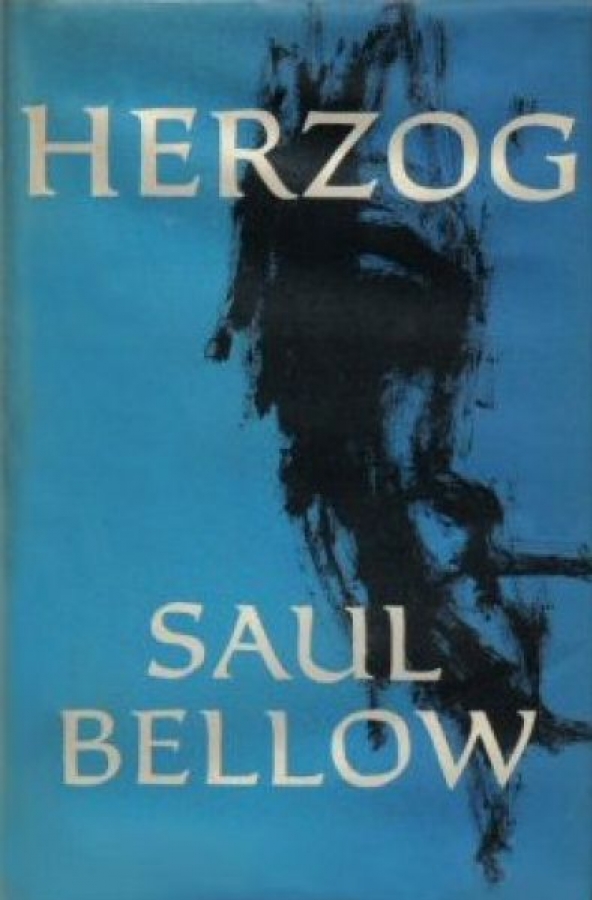
Herzog
What an ordeal! It is an extremely tedious book, so steeped in intellectualisms as to make one lose both the sense and the direction of the reading. Herzog, a scholar of Romanticism, has been left by his second wife. He enters a phase of physical and psychological delirium, wanders between New York and Chicago, and imagines carrying on a correspondence with figures from his life, as well as with scholars and men of letters. In the end, he retreats to his country house and lapses into absolute silence: “at this time he had no messages for anyone. Nothing. Not a single word.” The book’s final sentence encapsulates its profound meaning: a verbosity that conceals the loss of meaning. For 340 pages (for 13. 600 lines) the author sustains an entirely fragmented narrative, devoid of narrative rhythm, yet brimming with adjectives and “parentheses.” Postmodernism engulfs both the philosophical and the personal plane of the book: everything is muddled, and there is neither a metaphysics nor a certainty to anchor oneself to. It is not marriage, which is a source of betrayal and misery (the figure of Madeleine); it is not romantic relationships outside marriage (Ramona, who nevertheless expects an ongoing relationship); it is not cities, by now reduced to mere rendezvous spots and places of rest; above all, it is not philosophy and literature, which often constitute a useless ornament and a cumbersome superstructure. Perhaps children and the family of origin are the only bonds that matter in a world confused and fractured in its unity. > The drama of this stage of human evolution seems to be... the age of a special comedy....perhaps the revenge taken by numbers, by the species on our impulses of narcissism (as well as on our demand for freedom) is inevitable. In this realm of multitudes, self-consciousness tends to reveal us to ourselves as monsters . In the preface to the book, Malcolm Bradbury underscores two important aspects of *Herzog*. The book was published in 1964, and its narrative style and sentence syntax opened a literary strand that is dominant today: the dissolution of the novel's structure. Many modern writers (think of Paul Auster himself) are deeply influenced by Saul Bellow. The novel no longer possesses completeness and unity, but is instead an assemblage of “zig-zags” reflecting the fragmentation and contradiction that dominate the individual, self-consciousness, and society. With the novel, one does not seek to provide a verisimilar representation of the world, but pursues, as Saul Bellow said in his Stockholm Nobel lecture, “a hut in which the spirit takes shelter.” The second aspect is the philosophical one. Herzog quarrels with modern thought and moves through the realm of ideas. His internal turmoil is primarily due to an existential anguish that finds no answer in a world dominated by metropolises, the masses, science, and organized power.
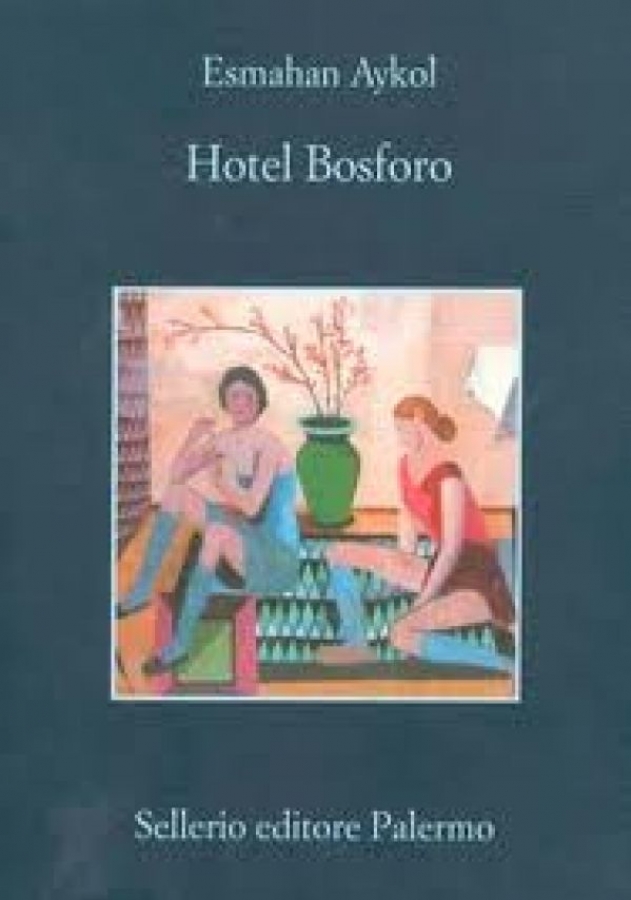
Hotel Bosphorus
Unlike the more accomplished *Appuntamento a Istanbul*, in this novel it is unclear what the author is driving at: a mystery, a novel of local color, or the story of an endearing forty-something woman still searching for herself? What we know for certain is that the protagonist and first-person narrator runs a bookshop specializing in noir fiction, loves spending her time out and about in Istanbul's myriad establishments (take note, anyone planning to visit the city!), and above all dreams of printing on her business card: > Kati Hirschel bookseller - detective, homicide squad consultant . Triggering the story and shaking the listless Kati awake is the arrival of Petra, a childhood friend who soon finds herself implicated as a suspect in the murder of the director of the film in which she is acting. Was it the friend, driven by jealousy or some secret from her past? Was it someone from the crew, perhaps looking to take the director’s place? Or was the man involved in criminal racketeering and taken out by the Turkish mafia? Kati's investigation proceeds slowly and listlessly, with the pieces of the crime never falling into place along any logical trajectory. Surprise twists are lacking as well. The resolution simply arrives in the end, by chance. Instead, the reader is overwhelmed by a whirlwind of characters to whom the protagonist stubbornly and monotonously puts the very same questions. A few erotic scenes clumsily spice up the narrative. Frankly, it is a bad novel. One struggles to find a single redeeming quality. It is not a good noir, because it has no plot. Kati’s personal life is sketched superficially, and we never truly understand who this German woman, infatuated with Istanbul, actually is. The city's atmosphere remains relegated to the background. The observations are indeed trite and cliché, along the lines of: > out of ten million people, it seems no one ever goes home. The streets teem with people and cars at all hours of the day and night . How many metropolises wouldn't fit this description? Only the narrator's mild irony redeems itself, but it is not enough to make the narrative enjoyable. Why not read it? It is boring: a waste of time.
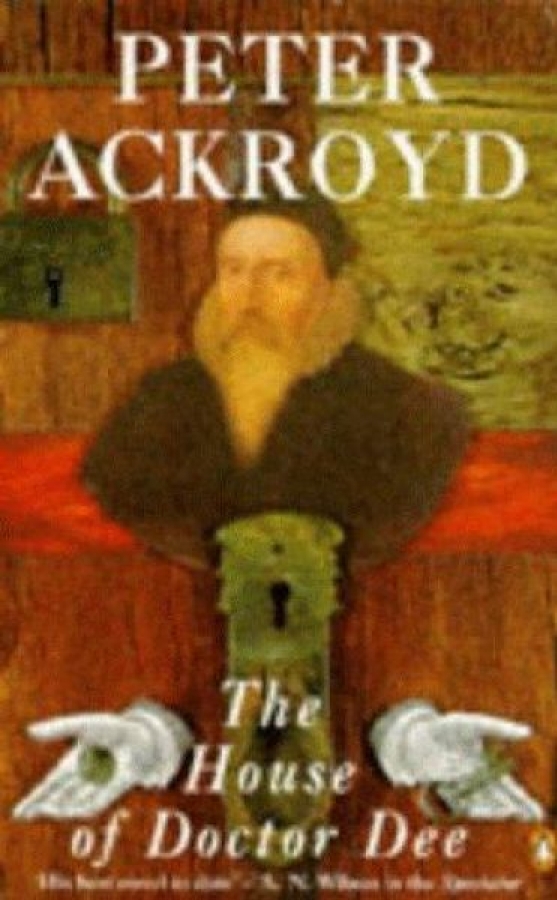
The House of Doctor Dee
The book depicts a parallel narrative set across different historical periods. The protagonist inherits a house that once belonged to an Elizabethan-era alchemist (the setting is London). The story of this figure is thus evoked, overlapping with the narrative of the protagonist's gradual discovery of the house (or of himself). The style is verbose and tedious, devoid of the slightest narrative pace..