Finished reading on: April 21, 2014
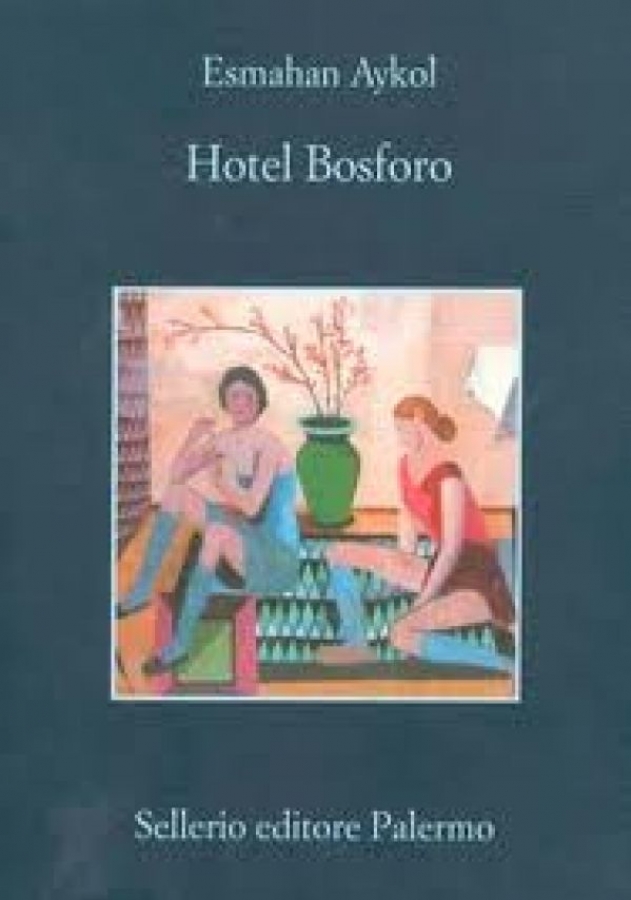
Hotel Bosphorus
Title of the original version reviewed: «Hotel Bosforo»
AI Translation Notice: This review was translated from the original Italian using artificial intelligence. Book quotes and excerpts are translated interpretations and will not match the author's original English phrasing or official published translations.
Unlike the more accomplished Appuntamento a Istanbul, in this novel it is unclear what the author is driving at: a mystery, a novel of local color, or the story of an endearing forty-something woman still searching for herself? What we know for certain is that the protagonist and first-person narrator runs a bookshop specializing in noir fiction, loves spending her time out and about in Istanbul's myriad establishments (take note, anyone planning to visit the city!), and above all dreams of printing on her business card:
Kati Hirschel bookseller - detective, homicide squad consultant
.
Triggering the story and shaking the listless Kati awake is the arrival of Petra, a childhood friend who soon finds herself implicated as a suspect in the murder of the director of the film in which she is acting.
Was it the friend, driven by jealousy or some secret from her past? Was it someone from the crew, perhaps looking to take the director’s place? Or was the man involved in criminal racketeering and taken out by the Turkish mafia? Kati's investigation proceeds slowly and listlessly, with the pieces of the crime never falling into place along any logical trajectory.
Surprise twists are lacking as well.
The resolution simply arrives in the end, by chance.
Instead, the reader is overwhelmed by a whirlwind of characters to whom the protagonist stubbornly and monotonously puts the very same questions.
A few erotic scenes clumsily spice up the narrative.
Frankly, it is a bad novel.
One struggles to find a single redeeming quality.
It is not a good noir, because it has no plot.
Kati’s personal life is sketched superficially, and we never truly understand who this German woman, infatuated with Istanbul, actually is.
The city's atmosphere remains relegated to the background.
The observations are indeed trite and cliché, along the lines of:
out of ten million people, it seems no one ever goes home.
The streets teem with people and cars at all hours of the day and night
.
How many metropolises wouldn't fit this description? Only the narrator's mild irony redeems itself, but it is not enough to make the narrative enjoyable.
Why not read it? It is boring: a waste of time.